
Dubai Real Estate Market Trends: From Flip Market to Long-Term Wealth Hub
Dubai has officially moved beyond its old reputation as a short-term flip market. The city’s property sector is now entering a more mature phase where investors, homeowners, and expatriate families are holding assets for longer, using real estate not only for resale profit but for wealth preservation, residency security, rental income, and long-term lifestyle planning.
This shift is one of the most important Dubai real estate market trends 2025 because it changes how buyers should think about the market. Dubai is no longer only a place to work for a few years and leave. For many residents and overseas investors, it is becoming a place to plant roots. Supported by freehold ownership, infrastructure investment, high-quality communities, and residency reforms such as the Golden Visa, Dubai is beginning to behave more like an established global property market than a speculative frontier.
Dubai Is Shedding Its Flip Market Image
In earlier cycles, Dubai was often associated with rapid price growth, off-plan speculation, and short holding periods. Buyers entered projects early, sold before completion, and treated property mainly as a trading asset. That strategy still exists in parts of the market, but it no longer defines the city’s real estate identity.
Recent market studies show that homeowners are holding properties for longer periods, with some cohorts retaining assets for 11 years or more. This aligns Dubai more closely with mature global housing markets where real estate is viewed as a long-term store of value. The change is important because longer holding periods reduce speculative churn and support more stable community development.
Why Long-Term Property Investment Dubai Is Becoming More Attractive
Long-term property investment Dubai is gaining strength because buyers are now looking beyond quick resale margins. They are evaluating rental income, capital preservation, family stability, residency options, tax efficiency, and quality of life. This is a different mindset from the early flip-driven market.
A long-term investor is less concerned with selling after a short price spike and more focused on whether the property can perform across market cycles. That means checking location fundamentals, service charges, building quality, tenant demand, future infrastructure, developer reputation, and resale liquidity. In a maturing market, the strongest returns are often created by holding the right asset patiently rather than chasing every launch.
Golden Visa Reform Has Changed Buyer Psychology
The Dubai Golden Visa has played a major role in changing how investors view property ownership. The 10-year Golden Visa route gives qualifying property investors a longer-term residency framework, which reduces the old dependency on short work contracts and employer-linked visas. For many expatriates, this creates a stronger reason to buy and hold property instead of renting indefinitely.
Dubai Land Department lists AED 2 million in qualifying property ownership as a key requirement for the Golden Visa investor route, subject to official conditions. Buyers exploring residency should also review Golden Visa impact on Dubai real estate market to understand how long-term residency has influenced buyer demand and market confidence.
Dubai Property Market Maturity Is About Stability, Not Slower Growth
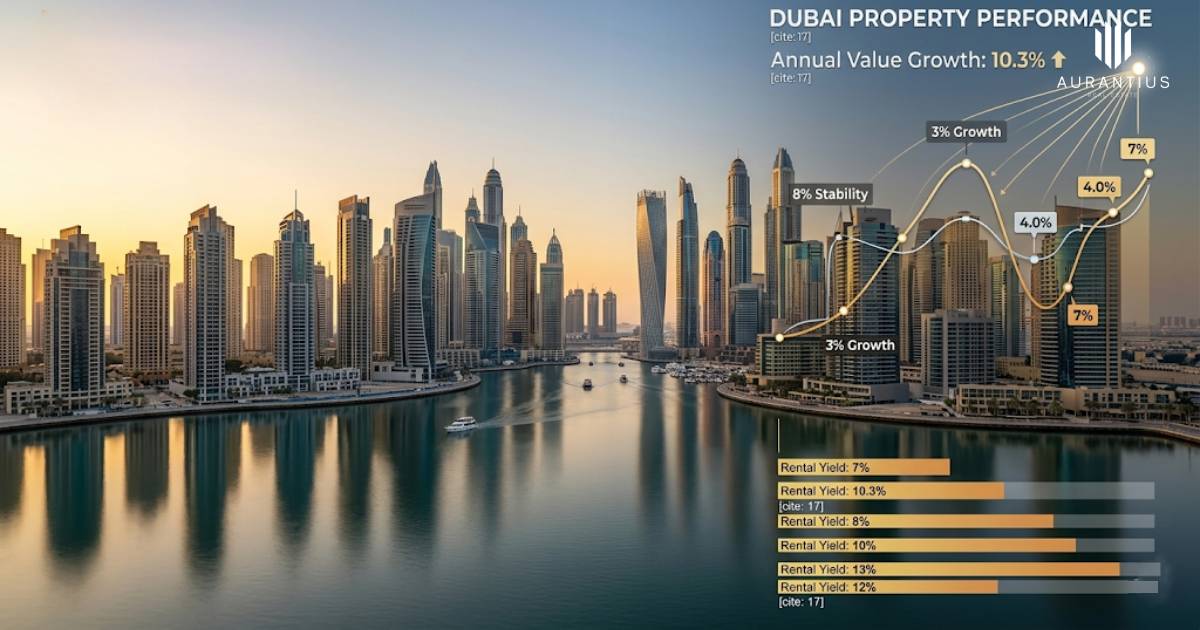
Dubai property market maturity does not mean the market has stopped growing. It means growth is becoming more structured. Official Dubai Land Department data showed AED 761 billion in real estate transactions in 2024 across 226,000 transactions, reflecting deep market activity and continued global demand. The difference is that investors are becoming more analytical about where and how they buy.
A mature market rewards better selection. Buyers now compare master communities, school access, transport links, tenant demographics, service charges, property management, and future supply. This is closer to how investors study markets such as London, New York, Singapore, or Sydney, where long-term performance depends on location quality and asset resilience rather than short-term hype alone.
The End-User Shift in Dubai Real Estate
The end-user shift Dubai real estate is witnessing is one of the strongest signs of market maturity. More buyers are purchasing for personal use, family stability, and long-term residency rather than short-term resale. This changes the type of properties that perform well. Communities with schools, parks, healthcare, retail, transport access, and family infrastructure become more valuable because they support real life, not just investment brochures.
This is why villas, townhouses, and well-planned apartment communities remain important in the long-term story. Buyers are no longer asking only whether prices will rise in six months. They are asking whether the area can support a five-year or ten-year lifestyle plan.
Dubai Flipping Market vs Holding Strategy
The Dubai flipping market vs holding strategy debate is still relevant, but the balance is changing. Flipping can work in specific off-plan projects when the entry price, payment plan, developer demand, and resale timing are favorable. However, flipping carries risks such as market softening, transfer restrictions, oversupply, delayed handover, and weaker secondary liquidity.
Holding, by contrast, creates value through rental income, equity growth, residency planning, and long-term capital appreciation. It is not risk-free, but it is better aligned with Dubai’s current direction as a global city. Investors looking for practical frameworks can review best property investment strategies in Dubai for 2026 to compare income, appreciation, and holding-based approaches.
Freehold Property Dubai for Expats Is Driving Permanence
Freehold property Dubai for expats remains one of the foundations of the city’s long-term investment appeal. Foreign buyers can own property in designated freehold areas, giving them legal ownership rights in communities designed for international residents and investors. This ownership model has helped Dubai attract buyers from India, Europe, China, Russia, the GCC, Africa, and other global markets.
The availability of freehold ownership makes Dubai different from many regional markets where foreign ownership is restricted. When combined with residency pathways, strong infrastructure, and no traditional annual property tax, Dubai becomes more than a place to deploy capital. It becomes a long-term base for families, entrepreneurs, remote workers, and global investors.
How Residency Reforms Support Long-Term Holding
Residency reforms have helped transform Dubai from a transient work destination into a more permanent lifestyle market. The Golden Visa is one route, but Dubai has also updated other property-linked residency pathways. These reforms give property buyers more confidence that ownership can support a longer-term connection to the UAE.
This is especially relevant for buyers who want flexibility. Some investors may qualify for long-term residency through higher-value ownership, while others may explore more accessible property-linked options depending on current rules. For broader context, readers can review Dubai real estate visa updates 2026 and Dubai’s Blue Visa and Golden Visa pathways.
Real Estate ROI Dubai 2025: Income Plus Long-Term Value
Real estate ROI Dubai 2025 should not be measured only by short-term price appreciation. A mature investor looks at total return. This includes rental yield, capital appreciation, occupancy, service charges, maintenance, financing cost, resale liquidity, and potential residency value. A property with a slightly lower headline yield may still be better if it has stronger tenant demand, lower vacancy, better building management, and stronger resale appeal.
This is where Dubai’s market is becoming more sophisticated. Investors are learning that the cheapest unit is not always the best investment, and the most expensive community is not always the safest. The strongest long-term assets usually combine location, livability, liquidity, and sensible pricing.
What Long-Term Investors Should Watch Next
Investors should watch supply, interest rates, population growth, infrastructure delivery, rental affordability, and developer handover quality. Dubai’s strong transaction data shows demand, but a maturing market also requires selectivity. Future performance will depend on choosing the right areas and avoiding overpaying in overheated segments.
Communities linked to long-term infrastructure, employment growth, family living, and lifestyle demand may continue to attract stable buyers. However, investors should not rely on citywide growth alone. For a forward-looking view of prices, supply, and ROI, readers can review Dubai real estate forecast 2026.
Conclusion
The most important Dubai real estate market trends 2025 point toward a more mature global city. Dubai is no longer defined by short-term flipping or speculative buying. It is becoming a long-term wealth hub where investors and residents hold property for income, stability, residency, and legacy planning. With Golden Visa support, freehold ownership, strong infrastructure, and deeper end-user demand, Dubai now sits closer to global property capitals such as London and New York. The opportunity remains strong, but the winning strategy has changed: buy quality, think long term, and treat Dubai property as a serious wealth asset rather than a quick trade.
FAQs
Q: Is Dubai still a flip market in 2025?
A: Dubai still has off-plan resale activity, but the wider market is moving toward longer holding periods, end-user ownership, rental income, and long-term wealth preservation.
Q: What is driving long-term property investment Dubai?
A: Long-term investment is being driven by Golden Visa reforms, freehold ownership, strong infrastructure, rental demand, family relocation, tax efficiency, and Dubai’s growing role as a global lifestyle city.
Q: What are the Dubai Golden Visa property requirements?
A: Dubai Land Department lists AED 2 million in qualifying property ownership as a key requirement for the 10-year Golden Visa investor route, subject to official eligibility rules and documentation.
Q: Why are Dubai homeowners holding properties longer?
A: Buyers are holding longer because Dubai is becoming a permanent home for more residents, supported by residency reforms, lifestyle infrastructure, rental income, and stronger confidence in long-term market stability.
Q: Is real estate ROI Dubai 2025 still attractive?
A: Dubai can still offer attractive ROI, but investors should calculate net returns after service charges, vacancy, maintenance, financing costs, and management fees rather than relying only on headline gross yields.
Aurantius Real Estate helps investors and end-users build long-term Dubai property strategies focused on asset quality, residency planning, rental performance, and sustainable wealth growth.