


Dubai Smart Rental Index 2026: How AI-Based Rent Benchmarking Affects Tenants, Landlords, and Investors
The Dubai Smart Rental Index is becoming one of the most important tools shaping Dubai’s rental market in 2026. Introduced by the Dubai Land Department as an upgrade to the traditional Dubai rental index, the system uses data-driven analysis and real-time market inputs to establish fair rental benchmarks across property types and locations. For tenants, it helps limit unsupported rent increases and improves budgeting visibility. For landlords, it offers a clearer pricing benchmark that can reduce negotiation friction and support long-term tenant retention. As Dubai’s rental market continues to evolve, transparency has become more important for all stakeholders. In periods of fast rental growth, renewal discussions often become more difficult because landlords aim to align rents with market movement while tenants want pricing predictability. The DLD Smart Rental Index is designed to reduce this tension by providing a structured and regulated framework for pricing, renewals, and rent increase decisions. This matters not only for tenants and landlords, but also for investors. A more transparent rental system improves underwriting clarity, supports cash-flow forecasting, and helps investors make better decisions when comparing communities, buildings, and long-term rental strategies. To better understand the broader market context, readers can also explore our guides on Dubai rental laws, Dubai real estate market trends, and the best areas to invest in Dubai.
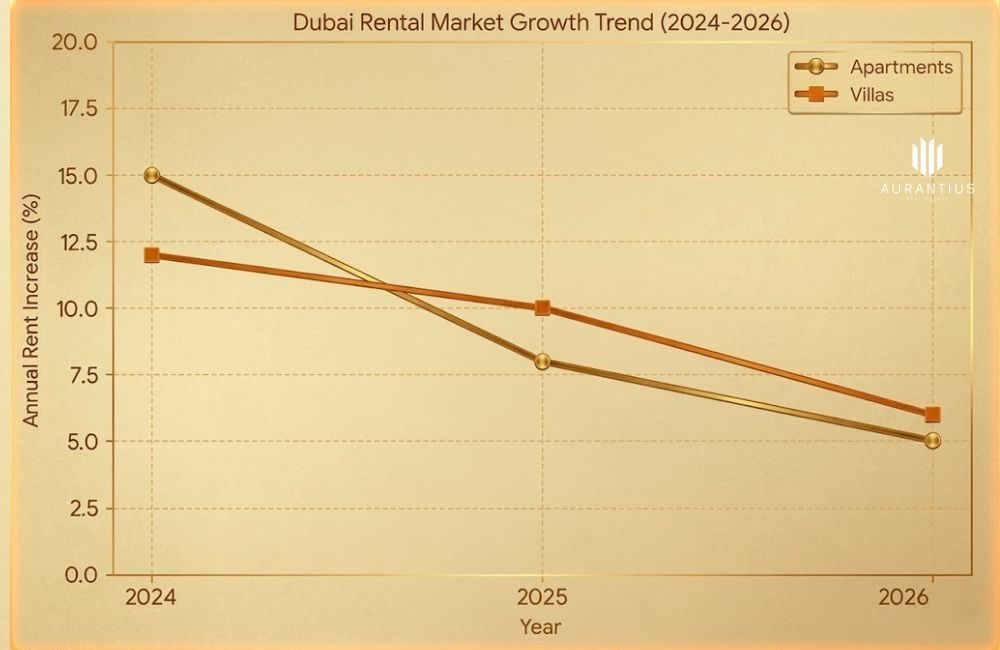
Table of Contents
- What Is the Dubai Smart Rental Index?
- How the Dubai Smart Rental Index Works
- Dubai Rent Increase Rules and Renewal Decisions
- How the Smart Rental Index Affects Pricing, Negotiation, and Market Behavior
- Why the Smart Rental Index Matters for Investors
- Benefits of the Dubai Smart Rental Index for Tenants
- Benefits of the Dubai Smart Rental Index for Landlords
- Key Features of the Dubai Smart Rental Index in 2026
- How to Use the DLD Rental Calculator
- Frequently Asked Questions
- Conclusion
What Is the Dubai Smart Rental Index?
The Dubai Smart Rental Index is a rental benchmarking system designed to regulate rental price movements across the emirate. It is used to show fair rental ranges based on market conditions and property-specific factors, helping both tenants and landlords understand whether a rent increase is justified at renewal time. In practical terms, the system acts as a more advanced version of the earlier rental index Dubai users were familiar with. Rather than relying only on broad area-level benchmarks, the Smart Rental Index is described as considering more granular variables such as property type, size, location, building age, and building condition. This makes rental valuation more specific and potentially more accurate. The system is especially relevant during tenancy renewals. If the current rent is below the fair market benchmark, a rent increase may be permitted within regulated limits. If the existing rent is already aligned with the benchmark, the permissible increase may be limited or zero. This makes the index a key reference point for anyone dealing with Dubai rent increase rules.
How the Dubai Smart Rental Index Works
The Dubai Smart Rental Index is described as using market transaction data collected within the regulatory ecosystem to create rental benchmarks. The pricing logic is based on multiple variables, including property category, location, and size. Compared with older benchmarking approaches, the system also introduces a quality dimension by considering building age and overall building condition. This is important because not all properties in the same district should be priced equally. Two apartments in the same area may offer very different living standards depending on maintenance quality, amenities, management, and age. By factoring in these differences, the Dubai rental index becomes more aligned with actual market behavior. At renewal time, landlords and tenants can use the DLD rental calculator to check whether a rent increase is allowed. The calculator is intended to apply rule-based logic. If a property’s current rent is significantly below the benchmark range, an increase may be allowed. If the rent is already close to the benchmark, the landlord may not be able to apply a significant increase. This structure supports verification instead of assumption. Rather than relying only on negotiation or informal market claims, both sides can refer to the same benchmark framework. That helps reduce conflict and improves transparency in the Dubai rental market.
Key Factors the Index Can Consider
- Property type such as apartment, villa, or commercial unit
- Property size and layout
- Location and community-level pricing patterns
- Building age
- Building condition and maintenance quality
- Current market movement and transaction data
| Current Rent vs. Market Average | Maximum Legal Increase |
|---|---|
| 0% – 10% below market | 0% (No Increase Permitted) |
| 11% – 20% below market | 5% Increase |
| 21% – 30% below market | 10% Increase |
| 31% – 40% below market | 15% Increase |
| More than 40% below market | 20% Increase |
Dubai Rent Increase Rules and Renewal Decisions
One of the most searched topics in the market is how the Dubai Smart Rental Index affects renewals. This is where the system becomes most relevant. During lease renewal, the index serves as a pricing reference to determine whether a landlord can request a rent increase and whether that increase fits within regulated limits. For tenants, this creates a clearer structure around rent increase Dubai law expectations. For landlords, it provides a more defensible framework for discussing rental adjustments. Instead of relying only on listing prices or anecdotal comparisons, the conversation can be based on an official benchmark methodology. In fast-moving markets, this approach can reduce friction. When rental values rise rapidly, renewal discussions often become highly emotional because both sides are trying to protect their own interests. A benchmark-driven framework helps keep the discussion grounded in regulated pricing logic. If you want to better understand how rule-based rent adjustments connect with legal compliance, our article on Dubai rental laws explains the broader legal environment for tenants and landlords.
How the Smart Rental Index Affects Pricing, Negotiation, and Market Behavior
The Dubai Smart Rental Index does more than regulate rent increases. It also affects pricing strategy, negotiation behavior, renewal rates, and investment analysis. In a market without clear benchmarking, landlords may push for aggressive increases based on sentiment, while tenants may challenge those increases based on affordability concerns. A more standardized pricing reference can bring these expectations closer together. For landlords, the index encourages pricing discipline. Setting a rent that is too high can increase vacancy risk, slow renewals, and create unnecessary tenant churn. A pricing benchmark helps landlords align with market conditions while staying competitive. That can support occupancy stability and reduce leasing downtime. For tenants, the index improves predictability. Housing decisions often affect schooling, commuting, family planning, and long-term budgeting. When rent changes are more structured, tenants can make better decisions with less uncertainty. This is one reason why the Dubai rental index has become such a relevant subject in 2026. At the market level, index-based regulation can reduce extreme volatility during renewals. Instead of sudden repricing, rent movement becomes more gradual and benchmark-led. That is generally positive for long-term market health because it supports a more stable relationship between landlords, tenants, and investors.
Why the Smart Rental Index Matters for Investors
For investors, the DLD Smart Rental Index is not just a compliance tool. It is also a framework that affects cash flow forecasting, tenant retention, and long-term yield stability. Investors who depend on rental income need to understand how regulated rent increases influence asset performance over time. In an unstructured rental environment, rent growth assumptions can become overly optimistic. But under an index framework, rent growth tends to be more disciplined. This can produce more realistic underwriting models, especially in communities where long-term occupancy and renewal stability are key drivers of performance. The index also creates incentives around asset quality. Because building age and condition may influence benchmark positioning, owners and investors may benefit from better maintenance, stronger management, and improved tenant experience. In that sense, the Dubai Smart Rental Index may indirectly encourage better building standards and stronger long-term competitiveness. To compare location performance, community demand, and long-duration rental potential, you can also read our guides on Dubai real estate market trends and the best areas to invest in Dubai.
Benefits of the Dubai Smart Rental Index for Tenants
1. Better Budgeting Visibility
The biggest advantage for tenants is predictability. When pricing changes are benchmark-based, households can better plan for future renewals and avoid the shock of unsupported rent hikes.
2. Stronger Protection Against Excessive Increases
The Dubai Smart Rental Index supports fair market alignment by limiting arbitrary rental increases. This can be especially valuable in periods of rapid market growth.
3. Easier Verification Through the DLD Rental Calculator
Tenants can use the DLD rental calculator to check whether a proposed rent increase is within the permitted range. This changes negotiation from opinion to verification.
4. Lower Risk of Disputes
When both parties use the same benchmark, the chance of conflict falls. Instead of debating subjective market claims, tenants and landlords can refer to a standardized framework.
Benefits of the Dubai Smart Rental Index for Landlords
1. Competitive Pricing Guidance
Landlords benefit from a more structured approach to pricing. The Dubai rental index helps define a fair renewal rent that reflects market conditions without overreaching.
2. Better Tenant Retention
Tenants are more likely to renew when they view pricing as fair, regulated, and transparent. This can reduce vacancy, lower reletting costs, and improve net returns.
3. Reduced Negotiation Friction
Using an official benchmark can make renewal conversations faster and more professional. It gives landlords a more defensible basis for discussing rent updates.
4. Improved Long-Term Asset Stability
For investors and portfolio owners, benchmark-led pricing can reduce volatility, support steadier occupancy, and improve the quality of rental income over time.
Key Features of the Dubai Smart Rental Index in 2026
The 2026 rental environment highlights why the Dubai Smart Rental Index matters so much. The system is presented as more dynamic, more data-aware, and more property-specific than earlier benchmarking methods.
| Area Name | Property Type | 2026 Benchmark (AED) | 2026 Growth Trend |
|---|---|---|---|
| Dubai Marina | 1BR Apartment | 110k – 135k | +4% (Stabilizing) |
| JVC | 1BR Apartment | 65k – 85k | +7% (High Demand) |
| Downtown Dubai | 2BR Apartment | 180k – 240k | +3% (Prime Luxury) |
| Dubai South | 3BR Villa | 140k – 175k | +9% (New Supply) |
| Business Bay | Studio | 75k – 95k | +5% (Mid-Market) |
Real-Time Data Integration
Benchmarks are described as being influenced by ongoing market data, which makes the system more responsive than a static rental chart. This is useful in a city where demand and pricing can shift quickly across districts and seasons.
Location-Specific Benchmarking
Dubai is not a uniform rental market. Waterfront areas, central business districts, family communities, and emerging corridors all behave differently. A location-aware system is therefore more aligned with actual market movement.
Property Quality Consideration
By taking factors such as age and condition into account, the rental index Dubai framework can distinguish between stronger and weaker assets even within the same area.
Coverage Across Property Types
The index is described as applying across apartments, villas, and commercial units. This broadens its relevance across the real estate market and makes it valuable for different user groups.
How to Use the DLD Rental Calculator
The DLD rental calculator is one of the most practical tools connected with the Dubai Smart Rental Index. It helps users check whether a proposed rent increase aligns with benchmark conditions and permitted renewal rules.
Why It Matters
The calculator gives both landlords and tenants a common reference point. It supports compliance, reduces uncertainty, and can make negotiations more efficient.
When to Use It
- Before a tenancy renewal discussion
- When reviewing a proposed rent increase
- When comparing current rent with benchmark rent
- When planning investment cash flow assumptions
If you are evaluating rental performance as part of a broader market strategy, our related resources on Dubai real estate market trends and top investment areas in Dubai may also help.
Frequently Asked Questions
What is the Dubai Smart Rental Index?
The Dubai Smart Rental Index is a rental benchmarking system used to help regulate rent levels and renewal increases across Dubai. It is designed to improve transparency and support fair market pricing.
How does the Dubai Smart Rental Index work?
The system uses market data and property-related factors such as type, size, location, age, and condition to estimate fair rental ranges. These benchmarks can then be used during lease renewals.
How much rent increase is allowed in Dubai?
The permitted increase depends on how the current rent compares with the benchmark range shown under the Dubai rental index framework. If the rent is already aligned with the benchmark, the increase may be limited or zero.
Can tenants check if a rent increase is legal?
Yes. Tenants can use the DLD rental calculator to check whether the proposed increase is within the permitted benchmark-based range.
Why is the Smart Rental Index important for landlords?
It helps landlords set more competitive and defensible renewal pricing, reduces negotiation friction, and can improve tenant retention by making rent adjustments appear more transparent and fair.
Why is the Smart Rental Index important for investors?
For investors, the DLD Smart Rental Index improves clarity around rental growth assumptions, cash-flow stability, and long-term underwriting. It can also highlight the importance of asset quality and maintenance.
Conclusion
The Dubai Smart Rental Index is a major development in how rental pricing is understood and regulated in 2026. By combining market data, property-specific analysis, and benchmark-led renewal logic, it creates a more transparent system for tenants, landlords, and investors. Tenants benefit from clearer protection and better budgeting visibility. Landlords benefit from more structured pricing guidance and lower negotiation friction. Investors benefit from improved forecasting, stronger underwriting discipline, and a more stable rental environment. For anyone tracking leasing performance, rent increase behavior, and community-level rental strategy, understanding the Dubai Smart Rental Index is now essential. For deeper research on Dubai communities, pricing trends, and property strategy, visit Aurantius Real Estate and explore data-led insights designed to support informed buying, leasing, and investment decisions.