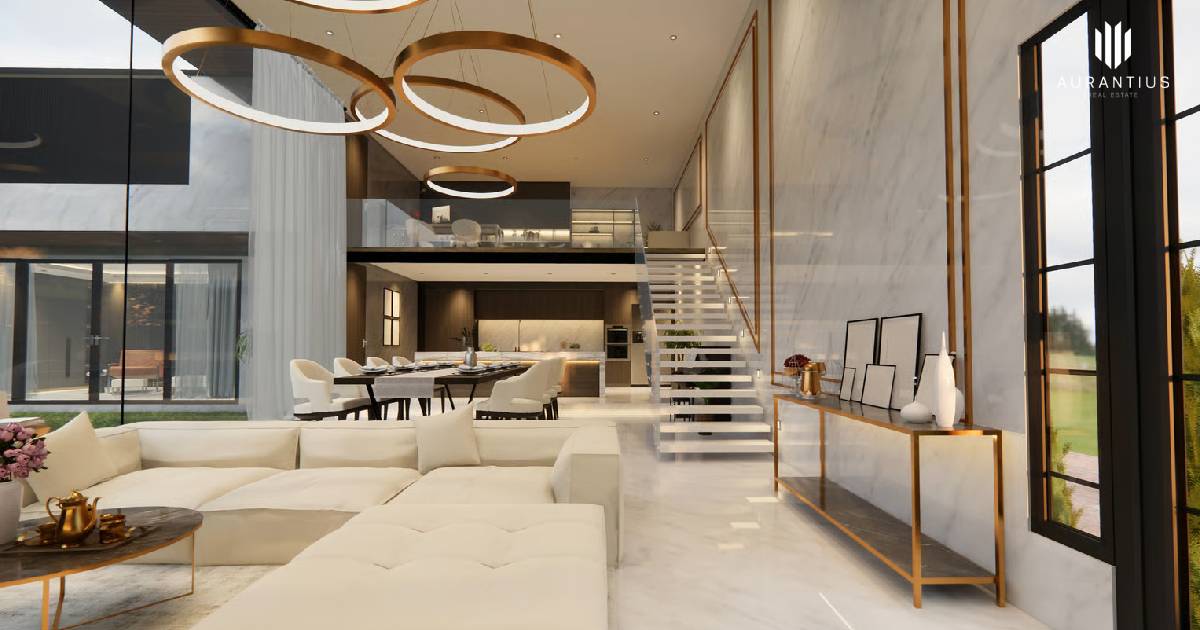

The $5 Million Customisation Boom: Why HNWIs Are Completely Gutting Ready Villas in Dubai
In Dubai’s ultra-prime residential market, buying a ready-made multi-million-dollar villa is no longer the final step for high-net-worth individuals. It is often just the canvas.
A major customisation boom is sweeping through elite enclaves such as Palm Jumeirah, Emirates Hills, Dubai Hills Estate, District One and Al Barari. Wealthy homeowners are increasingly buying ready villas in exceptional locations and then spending millions of dirhams to completely gut, redesign and rebuild them around their personal lifestyle requirements.
This trend is not only about luxury finishes. It is about land scarcity, ageing villa stock, family lifestyle shifts, wellness-focused design, smart-home technology and long-term asset protection.
In a market where prime plots are limited, many HNWIs are choosing the address first and redesigning the property later. The logic is simple: location cannot be recreated, but almost everything inside the villa can be rebuilt.
For broader luxury market context, read Luxury Real Estate Demand Surges in Dubai.
Why Dubai’s Wealthiest Buyers Are Renovating Instead of Moving
The Dubai luxury villa renovation boom is being driven by a practical market reality: ultra-prime land is scarce.
Communities such as Palm Jumeirah and Emirates Hills are already established. The best plots, views, road positions and neighbourhood addresses are limited. When a buyer wants a specific location, waiting for a brand-new villa on a perfect plot may not be realistic.
As a result, HNWIs are buying older or under-modernised villas and treating them as redevelopment opportunities. They keep the land, location and community prestige, then rebuild the villa around their current lifestyle.
This has changed the psychology of buying in Dubai’s prime villa market. The question is no longer only “Is this villa ready to move in?” The better question is “Can this address become the exact home the buyer wants after redesign?”
The Main Drivers of the Villa Gutting Boom
Scarce prime land: The best villa plots in established luxury communities are finite. Buyers who want Palm Jumeirah, Emirates Hills, District One, Dubai Hills Estate or Al Barari often have to work with existing stock rather than wait for new land.
Ageing luxury inventory: Villas built 10 to 20 years ago may have strong locations but dated floor plans, smaller kitchens, older MEP systems, less natural light and layouts that no longer match modern luxury expectations.
Lifestyle upgrades: HNWIs now want wellness suites, private gyms, cinemas, spa rooms, smart-home automation, show kitchens, service kitchens, staff zoning, larger master suites and seamless indoor-outdoor living.
Asset-value strategy: In a maturing luxury market, a well-executed renovation can protect resale value by turning an older villa into a modern, globally competitive luxury residence.
Personalisation: Ultra-wealthy buyers do not want generic luxury. They want a home that reflects their family, brand, entertaining style, wellness habits and privacy expectations.
Why Ready Villas Have Become Renovation Canvases
Ready villas in prime Dubai communities often hold two separate values: the existing structure and the underlying location.
For many HNWIs, the location is the main asset. A villa may sit on a rare plot, face the water, offer skyline views, have direct golf-course frontage or sit inside an address that cannot easily be replicated. Even if the interiors are outdated, the plot itself can justify acquisition.
That is why some buyers are comfortable purchasing a villa they intend to demolish internally. They are not paying only for the walls, kitchen or bathrooms. They are paying for the land, address, privacy and future potential.
The strategy is especially relevant in communities where replacement supply is limited. In these areas, a redesigned villa can become significantly more competitive than older neighbouring stock.
Top Dubai Communities Driving the Customisation Trend
Palm Jumeirah: Waterfront scarcity makes Palm villas especially attractive for buyers who want beach access, skyline views and iconic address value. Renovations often focus on panoramic glazing, pool redesigns, spa areas, modern façades and indoor-outdoor entertainment spaces.
Emirates Hills: Known for large plots, privacy and prestige, Emirates Hills is a major target for full villa redesigns. Buyers often rework floor plans, expand living areas, add basement facilities and redesign landscaping around entertainment and family living.
Dubai Hills Estate: Newer than Emirates Hills but already positioned as a prime family and golf community, Dubai Hills attracts buyers who want modern villa living with park, school, mall and golf-course access.
District One: Lagoon access, large villas and central location make District One attractive for high-end redesigns focused on privacy, wellness and contemporary architecture.
Al Barari: Buyers in Al Barari often prioritise nature, wellness, privacy and biophilic design. Renovations may focus on landscape integration, natural materials, wellness rooms and family retreat-style living.
For community and location strategy, read Aurantius Location Guide.
What “Gutting a Villa” Actually Means
Gutting a luxury villa goes far beyond changing marble, wardrobes or lighting. It usually means stripping the property back to its structural and technical core.
A full gut renovation may include removing internal partitions, replacing mechanical, electrical and plumbing systems, upgrading AC and ventilation, redesigning staircases, restructuring kitchens, opening façades, replacing glazing, changing room flows, upgrading waterproofing and rebuilding the landscape.
In the most ambitious projects, the owner may add a basement, extend the built-up area, reinforce structural columns, build a roof terrace, add smart-home infrastructure, install wellness facilities, redesign the pool and create a completely new architectural identity.
This is why full villa redesigns require proper consultants, engineers, contractors, authority approvals and project management. A luxury gut renovation is not an interior-design exercise. It is a construction project.
Full Structural Redesign: The Regulatory Pathway
A full structural redesign in Dubai requires more than contractor pricing. Before major works begin, the owner needs a proper technical and regulatory pathway.
The first step is appointing a Dubai Municipality-approved consultant or qualified architectural and structural engineering team. This team prepares design drawings, structural calculations, load-bearing assessments, MEP plans and authority submission documents.
The second step is usually obtaining a master developer NOC. In communities such as Palm Jumeirah, Emirates Hills, Dubai Hills Estate or District One, the master developer or community authority must review whether the proposed changes comply with community rules, plot boundaries, height limits, setback requirements and aesthetic guidelines.
The third step is Dubai Municipality approval for structural and building-permit requirements. If electrical load, water connections, fire safety or service infrastructure changes are involved, additional approvals from DEWA and other authorities may be required.
The key point is simple: a luxury villa redesign must be designed for approval before it is designed for Instagram.
Major Structural Changes HNWIs Are Making
Adding basements: Some luxury owners excavate below the villa to create private cinemas, wellness spas, staff facilities, underground parking, wine rooms, gyms or entertainment lounges. This requires serious engineering, waterproofing and authority review.
Expanding built-up area: Where community rules allow, owners may extend the BUA to increase bedrooms, family lounges, kitchens, staff quarters, gyms or entertainment areas.
Replacing internal load-bearing walls: To create open-plan layouts, double-height living rooms and wider internal spans, engineers may replace heavy walls with steel or reinforced structural systems.
Opening façades: Owners increasingly want larger glazing, panoramic views, brighter interiors and seamless garden-to-living transitions. This can require façade redesign, insulation review and structural reinforcement.
Roof terraces and entertainment decks: Depending on community and authority rules, owners may reinforce upper structures to support roof lounges, outdoor kitchens, sunset decks or private entertainment areas.
The Luxury Fit-Out: What Buyers Now Expect
Dubai’s HNWI villa buyers increasingly expect homes to function like private resorts.
Modern renovations often include show kitchens, service kitchens, chef preparation zones, spa bathrooms, steam rooms, saunas, gyms, wellness suites, massage rooms, cinemas, cigar lounges, children’s play wings, staff circulation routes and private guest suites.
Smart-home systems are also becoming standard in the ultra-prime segment. Owners want integrated lighting, climate control, security, blinds, audio, access control, irrigation, pool systems and energy monitoring.
The result is a home that is not only renovated but reprogrammed. The villa is redesigned around the owner’s daily routine, privacy needs, entertaining style and family structure.
Palm Jumeirah Villa Renovation Costs
Palm Jumeirah renovation costs can be significant because many villas involve waterfront exposure, façade work, pool redesign, outdoor entertainment areas, corrosion-resistant materials, luxury glazing and high-end MEP upgrades.
For a light refresh, costs may remain relatively controlled. For a full structural redesign, however, the budget can move into multi-million-dirham territory quickly.
The largest cost drivers are usually structural changes, imported finishes, specialist façade systems, waterproofing, MEP replacement, smart-home technology, pool works, landscaping and consultant approvals.
For Palm buyers, the most important question is not only renovation cost. It is whether the post-renovation villa will command enough lifestyle and resale premium to justify the capital outlay.
Emirates Hills Property Upgrades
Emirates Hills is one of Dubai’s most established ultra-prime villa communities, which makes it a natural market for large-scale upgrades.
Many villas sit on large plots and benefit from privacy, mature landscaping and prestige address value. But some older homes may have layouts, finishes and technical systems that feel dated compared with newer luxury expectations.
This is why Emirates Hills renovations often involve full spatial redesigns: larger entertaining areas, improved master suites, rebuilt kitchens, upgraded staff zones, smart-home integration, modern façades and resort-level outdoor spaces.
For HNWIs, the community’s scarcity makes the renovation thesis powerful. If the location is exceptional, the buyer may prefer to rebuild the home rather than compromise on address.
Cost Breakdown: Full Structural Villa Redesign in Dubai
| Expense Category | Estimated Cost Range | What It Covers |
|---|---|---|
| Consulting, Engineering & Permits | AED 150,000 – AED 400,000 | Architecture, structural design, authority submissions, consultant coordination and approval documentation. |
| Structural Demolition & Shoring | AED 200,000 – AED 500,000 | Controlled stripping, temporary supports, safety works and protection of structural elements. |
| Piling, Foundation & Steel Reinforcement | AED 500,000 – AED 1,500,000 | Foundation strengthening, basement support, column reinforcement and major structural changes. |
| MEP Upgrade & Load Enhancement | AED 300,000 – AED 800,000 | Electrical, plumbing, HVAC, water systems, DEWA-related load planning and technical upgrades. |
| Luxury Interior Fit-Out | Variable; often multi-million AED | Bespoke joinery, kitchens, bathrooms, stone, lighting, flooring, wardrobes, furniture and specialist finishes. |
| Landscape, Pool & Outdoor Works | Variable by plot and scope | Pool redesign, outdoor kitchens, pergolas, irrigation, planting, terraces, lighting and entertainment zones. |
These are indicative ranges. Final budgets depend on villa size, community rules, structural condition, soil conditions, consultant requirements, material selection, contractor capability and whether the project includes basements, façade changes or BUA extensions.
Timeline: How Long a Full Villa Redesign Takes
A complete structural redesign of a luxury villa in Dubai commonly requires a long project timeline. For major works, owners should plan in phases rather than expect a quick cosmetic renovation.
Phase 1: Design and permitting: This stage can take several months as architects, engineers, interior designers and consultants prepare drawings and seek developer and authority approvals.
Phase 2: Structural demolition and shoring: The villa is stripped carefully, temporary supports are installed and structural safety is protected before major construction begins.
Phase 3: Core construction and MEP: The project team executes structural extensions, slab works, framing, wall changes, façade openings, mechanical systems, electrical load upgrades and plumbing infrastructure.
Phase 4: Luxury fit-out and handover: Bespoke interiors, smart systems, landscaping, pools, kitchens, bathrooms, lighting and furniture are completed before testing and handover.
For full redesigns, a 12-to-18-month programme is a reasonable working assumption, while highly complex projects can take longer depending on approvals, imported materials, structural scope and site conditions.
Approvals: What Owners Must Check Before Starting
A luxury villa renovation can fail before construction begins if approvals are not handled correctly.
Owners should first check community rules and master developer requirements. Nakheel, Emaar and other master developers may have specific design guidelines, plot restrictions, façade rules, landscaping controls, work-hour requirements and contractor access procedures.
Next, owners must work through the appropriate Dubai Municipality building-permit route if the renovation involves structural changes, extensions, major MEP changes or construction works requiring approval.
DEWA-related approvals may be needed if the project changes electricity load, water requirements, meter position or infrastructure connections. Fire-safety and Civil Defence requirements may also apply where building systems, layouts or safety equipment are materially affected.
The safest approach is to appoint a consultant and contractor team that already understands villa approval workflows in the target community.
The ROI Logic: Can a $5M Renovation Make Financial Sense?
A $5 million villa renovation can look excessive until the buyer considers the full value stack.
In ultra-prime Dubai, the buyer is not only buying a house. They are buying location, scarcity, lifestyle, privacy and long-term address value. If the location is rare, upgrading the structure can unlock a higher-quality asset without needing to find another plot.
A successful renovation can improve resale value by making the villa more competitive against newer luxury stock. It can also improve rental potential, buyer appeal, personal utility and holding value.
However, ROI is not automatic. Overspending on highly personal design, poor layout decisions, weak contractors, unapproved structural changes or low-quality technical works can reduce resale appeal.
The best luxury renovations are those that balance personalisation with marketability.
What Can Destroy ROI in a Luxury Villa Renovation?
Over-personalisation: A villa designed too narrowly around one owner’s taste may be harder to resell later.
Approval mistakes: Unapproved extensions, façade changes or structural alterations can create legal and resale problems.
Weak MEP systems: Luxury finishes cannot compensate for poor AC, plumbing, electrical or waterproofing works.
Poor project management: Delays, cost overruns and contractor disputes can damage both budget and resale timing.
Wrong community thesis: A major renovation makes more sense in a scarce, high-demand location than in a community where future resale demand is thin.
Luxury renovation should be treated like capital deployment, not just spending.
Buyer Checklist Before Purchasing a Villa to Gut
Check plot value: Is the location rare enough to justify a major redesign?
Review community rules: Can you extend BUA, alter façades, add basements or change external features?
Inspect structure: Commission proper structural and MEP surveys before acquisition.
Estimate approval timeline: Developer NOC, Dubai Municipality permits and utility approvals can affect the programme.
Model renovation ROI: Compare acquisition price plus renovation cost against post-renovation resale value.
Stress-test budget: Keep contingency for structural surprises, material escalation and authority comments.
Plan exit appeal: Personalise the villa without destroying future buyer demand.
For broader ultra-luxury market positioning, read Dubai: A Global Hub for Ultra-Luxury Real Estate.
Investor Strategy: Buy the Address, Underwrite the Transformation
For investors and end-users considering a gut-renovation strategy, the first rule is to separate address value from structure value.
If the address is exceptional, a dated structure can become an opportunity. If the address is weak, even a beautiful renovation may struggle to protect capital.
The second rule is to underwrite the transformation before purchase. Buyers should estimate acquisition cost, design fees, approvals, demolition, structural changes, MEP replacement, fit-out, landscaping, contingency and exit value before signing.
The third rule is to protect future liquidity. A villa that is both personally tailored and broadly desirable will be stronger than a villa designed only for one owner’s very specific taste.
The strongest projects combine prime land, disciplined engineering, timeless architecture, luxury lifestyle features and resale-aware design.
Aurantius View: Renovation Is Now Part of the Luxury Acquisition Strategy
Dubai’s $5 million villa customisation boom shows that the ultra-prime market is maturing.
Wealthy buyers are not simply chasing the newest launch. They are securing irreplaceable locations and reshaping properties around long-term lifestyle and asset-value goals.
This strategy can be powerful, but only when executed with discipline. A buyer must understand community rules, structural potential, approval risk, renovation cost, contractor quality and future resale demand before committing to a gut renovation.
At Aurantius Real Estate, the practical view is clear: in Dubai’s prime villa market, the right address can justify major transformation. But the wrong property, wrong budget or wrong approval path can turn a luxury vision into capital inefficiency.
For serious investors, renovation is no longer just a design decision. It is an underwriting decision.
FAQ: Dubai Luxury Villa Renovations and Structural Redesign
Question: Why are HNWIs gutting ready villas in Dubai?
Answer: HNWIs are gutting ready villas because prime land is scarce. They often prefer to buy an exceptional address in Palm Jumeirah, Emirates Hills, Dubai Hills Estate or Al Barari, then redesign the villa around their personal lifestyle and resale goals.
Question: How much can a luxury villa renovation cost in Dubai?
Answer: Luxury villa renovations can range from smaller interior upgrades to major multi-million-dirham redesigns. Large-scale transformations in prime communities can reportedly reach AED 20 million depending on scope, structure, finishes and approvals.
Question: What approvals are needed for a structural villa redesign in Dubai?
Answer: Major villa redesigns may require master developer NOC, Dubai Municipality building permits, structural engineering approvals and utility-related clearances such as DEWA NOCs where electrical or water infrastructure is affected.
Question: Can I extend the built-up area of my Dubai villa?
Answer: BUA extension depends on community rules, plot limits, setbacks, height restrictions, Dubai Municipality approval and master developer guidelines. Buyers should confirm extension potential before purchasing a villa for renovation.
Question: How long does a full villa redesign take in Dubai?
Answer: A full structural redesign can take around 12 to 18 months or longer, depending on design, authority approvals, demolition, structural works, MEP upgrades, fit-out complexity and imported material timelines.
Question: Which Dubai communities are most affected by luxury villa renovations?
Answer: Key communities include Palm Jumeirah, Emirates Hills, Dubai Hills Estate, District One and Al Barari, where prime plots are scarce and buyers often prefer customisation over relocation.
Question: Does renovating a villa increase resale value?
Answer: A well-executed renovation can improve resale appeal, especially in scarce prime locations. However, ROI depends on acquisition price, renovation cost, design quality, approvals, market demand and avoiding excessive over-personalisation.
Question: Can Aurantius help buyers evaluate villa renovation potential?
Answer: Yes. Aurantius Real Estate helps buyers assess prime villa locations, renovation potential, resale strategy, community rules, structural risk and whether a ready villa is suitable for full customisation.
Conclusion: Dubai’s Luxury Villa Market Is Being Rebuilt From the Inside
Dubai’s $5 million villa customisation boom reflects a deeper shift in the ultra-prime residential market.
HNWIs are no longer waiting for perfect ready-made homes. They are buying scarce addresses and rebuilding older villas into bespoke private estates with wellness zones, smart-home systems, expanded layouts, new façades and resort-style outdoor spaces.
This trend is strongest where location scarcity is highest: Palm Jumeirah, Emirates Hills, Dubai Hills Estate, District One and Al Barari.
For buyers, the opportunity is significant, but so is the complexity. A full structural redesign requires the right property, the right consultant team, the right approvals and a disciplined budget.
The future of Dubai luxury villa ownership is not only about buying finished homes. It is about acquiring rare locations and engineering them into highly personalised, long-term assets.
Aurantius Real Estate helps HNWIs, investors and end-users evaluate Dubai luxury villas, prime locations, renovation potential, resale strategy and long-term asset value before acquisition.
Planning to Buy and Redesign a Dubai Villa? Speak with an Aurantius adviser to compare prime communities, assess renovation potential, understand approval risks and identify ready villas that can become bespoke ultra-luxury homes.
Related reading: Luxury Real Estate Demand Surges in Dubai, Aurantius Location Guide, Dubai: A Global Hub for Ultra-Luxury Real Estate and The Definitive UAE Real Estate Investment Guide.