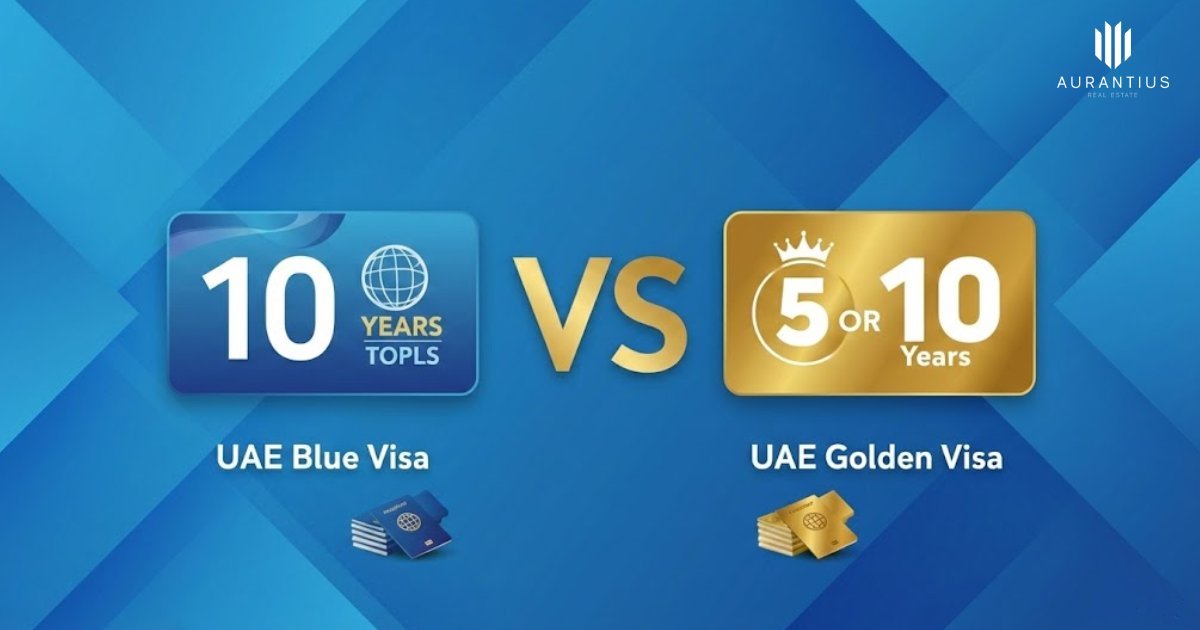

Dubai’s Blue Visa and Golden Visa Outline Two Strategic Paths to Long-Term Residency
A Dual Visa Strategy in a Competitive Global Landscape
As global competition intensifies for talent, capital, and innovation, Dubai has refined its long-term residency framework through two distinct 10-year visa programmes. The Dubai Blue Visa and the Dubai Golden Visa represent a calculated approach to population curation, targeting different contributors to the emirate’s long-term economic and social objectives. Rather than relying solely on tax incentives, Dubai is using residency policy as a strategic instrument to anchor human capital aligned with its future priorities.
Both visas offer renewable 10-year residency, signaling stability and long-term commitment from the state. Yet their objectives differ. One is designed to attract sustainability leaders and environmental innovators, while the other focuses on investors, entrepreneurs, and highly skilled professionals who contribute to economic growth, business formation, and market liquidity.
The Golden Visa as an Economic Growth Engine
The Dubai Golden Visa, introduced earlier and broader in scope, functions as a core pillar of the emirate’s diversification strategy. It is structured to attract capital, business founders, and high-income professionals across sectors such as healthcare, engineering, technology, and finance. Its impact is measurable through increased real estate investment, startup activity, and the relocation of regional and global headquarters.
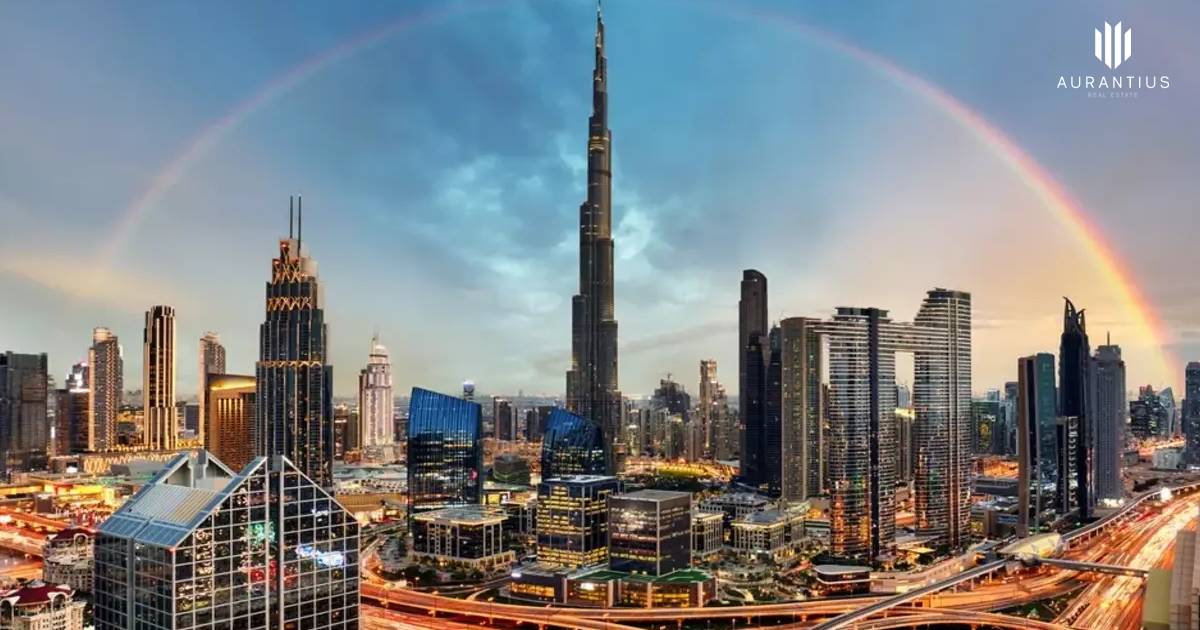
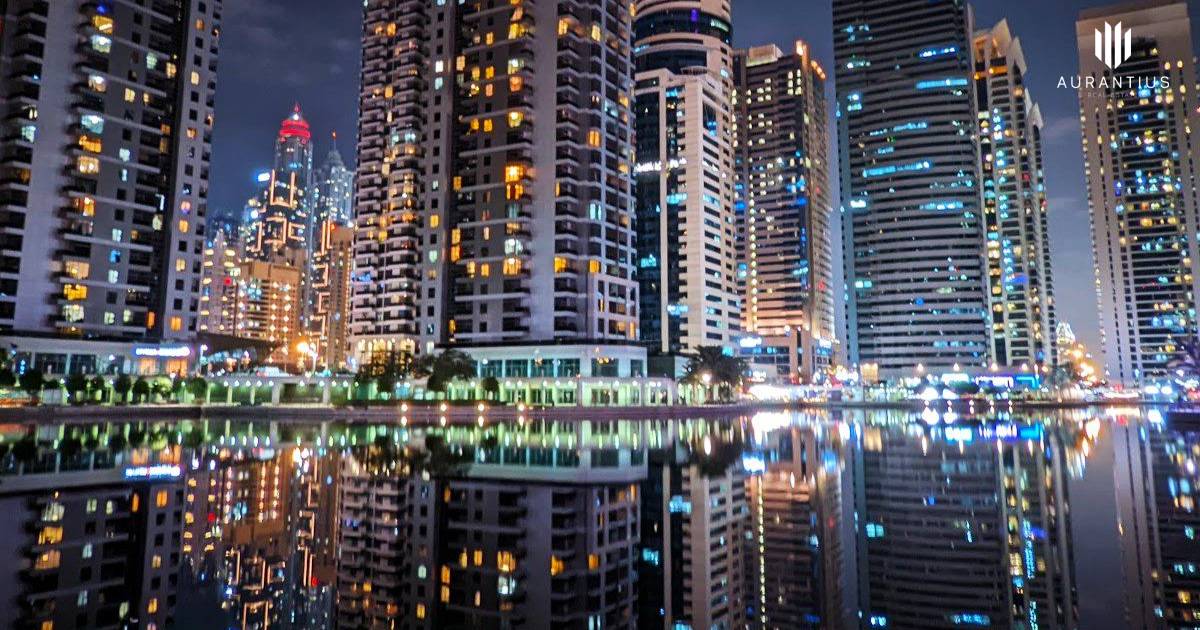
One of the most prominent pathways to the Golden Visa is through real estate investment. Applicants qualify by owning property with a combined market value of at least AED 2 million, verified by the Dubai Land Department. This requirement has created a direct feedback loop between residency policy and property demand, reinforcing activity in established investment zones such as Dubai Marina, Downtown Dubai, and Business Bay.
The Blue Visa and Dubai’s Sustainability Ambitions
The Dubai Blue Visa, announced more recently, serves a more specialised function. It directly supports the UAE’s Net Zero by 2050 initiative and its ambition to become a regional and global hub for environmental innovation. Unlike the Golden Visa, the Blue Visa does not rely on income or investment thresholds. Eligibility is based on demonstrable impact within sustainability-related fields.
Target applicants include environmental scientists, founders of green startups, renewable energy specialists, climate policy contributors, and senior ESG executives. Recognition through international awards, published research, or leadership roles in credible organisations forms the basis of qualification. The currency of this visa is contribution rather than capital.
Eligibility Criteria Reflect Distinct Contribution Models
The defining distinction between the two visas lies in eligibility requirements. The Golden Visa offers multiple structured pathways. Real estate investors qualify through property ownership. Entrepreneurs qualify through approved business ventures. Skilled professionals qualify through a minimum monthly salary threshold, currently set at AED 30,000. Exceptional talents and high-achieving students qualify through endorsement from relevant authorities.
The Blue Visa follows a portfolio-based assessment. Applicants must present evidence of environmental impact, including project documentation, research publications, awards, and endorsements. Applications are evaluated qualitatively by authorities, with emphasis placed on credibility, relevance, and measurable outcomes rather than financial capacity.
Core Benefits and Practical Implications
Golden Visa holders benefit from practical advantages that support business and lifestyle stability. These include 100 percent business ownership without a local sponsor, long-term residency for family members, and simplified travel and residency renewal processes. For property investors, the visa has become a stabilising factor that reinforces long-term holding strategies.
The Blue Visa offers a different value proposition. Its primary benefit lies in access rather than ownership. Holders are integrated into the UAE’s sustainability ecosystem, including research institutions, incubators, grant programmes, and policy forums. The visa functions as an ecosystem enabler, designed to embed global sustainability expertise into national development initiatives.
Application Processes and Timelines
Golden Visa applications, particularly through the real estate pathway, are largely procedural. Applicants obtain a property valuation report, submit documentation through the relevant federal or emirate-level portals, complete medical and biometric checks, and receive approval typically within four to eight weeks when documentation is clear.
The Blue Visa application process is more rigorous and time-intensive. Authorities assess the substance of an applicant’s professional portfolio, often requiring cross-verification with awarding bodies, academic institutions, or government entities. Processing timelines can vary depending on the complexity of the applicant’s profile and the depth of evaluation required.
Implications for Dubai’s Property and Talent Markets
The Golden Visa has become an integral component of Dubai’s real estate ecosystem. Developers increasingly structure and market projects as Golden Visa eligible, particularly in off-plan and near-handover segments. This dynamic has supported demand stability across market cycles and reinforced Dubai’s position as a long-term investment destination.
The Blue Visa, while less directly tied to property transactions, contributes to the city’s broader value proposition by anchoring intellectual and environmental capital. Over time, this is expected to influence demand for residential and mixed-use developments near innovation districts and research hubs.
Choosing Between Two Strategic Pathways
The choice between the Blue Visa and the Golden Visa reflects an applicant’s professional identity and long-term objectives. The Blue Visa is suited to individuals whose careers are defined by sustainability leadership and environmental impact. It offers prestige and ecosystem integration within a narrowly defined global community.
The Golden Visa is designed for a wider audience. Investors, entrepreneurs, and high-income professionals benefit from clear benchmarks, predictable processes, and flexibility across sectors. Its accessibility and scalability make it the dominant residency route for a broad segment of the global population.
Conclusion: Residency as a Tool for Long-Term Nation Building
Dubai’s dual visa strategy illustrates a mature approach to nation building through residency policy. By aligning long-term visas with economic diversification and sustainability objectives, the emirate is not merely attracting capital or talent in isolation but curating a population aligned with its future trajectory.
Aurantius Real Estate advises investors, entrepreneurs, and professionals on residency-linked property strategies across Dubai. Through market intelligence, property advisory, and regulatory guidance, Aurantius Real Estate supports clients in aligning real estate decisions with long-term residency, investment, and lifestyle objectives in the UAE.