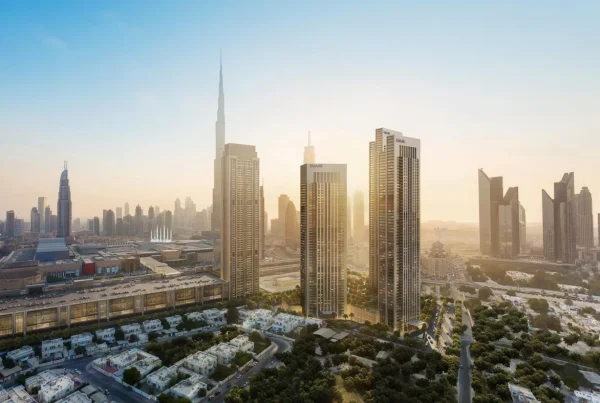


Why Indian Investors are Dominating Dubai Real Estate in 2026
Discover why Indians invested ₹95,000 crore in Dubai property this year. From 9% rental yields to Golden Visa perks, explore the top reasons behind the boom
Dubai’s skyline has long attracted global capital, but in 2026 one buyer group continues to shape the market with exceptional influence: Indian investors. After reports estimated that Indians purchased between ₹85,000 crore and ₹95,000 crore worth of Dubai residential property in 2025, the trend has moved beyond a short-term investment story. It now reflects a deeper shift in how Indian families, entrepreneurs, professionals, and high-net-worth individuals view Dubai as a second base, wealth-preservation hub, and lifestyle upgrade.
The new narrative is not just “Indians are buying Dubai property.” The stronger story is that Dubai is becoming the sixth metro of India for global-minded buyers. It offers proximity to Mumbai, Delhi, Bengaluru, Hyderabad, Chennai, and Ahmedabad, while delivering international infrastructure, tax efficiency, strong rental demand, freehold ownership options, and long-term residency pathways such as the Dubai Golden Visa for Indians. For many buyers, Dubai is no longer only a holiday destination. It is a practical extension of their business, family, and investment life.
Why Dubai Feels Like India’s Sixth Metro
The idea of Dubai as India’s sixth metro is not just a marketing phrase. It reflects real behavior. Indian residents and NRIs use Dubai as a business bridge, family base, education hub, luxury lifestyle destination, and property investment market. The flight time from many Indian cities is shorter than some domestic long-distance routes, and the UAE’s large Indian community creates a familiar cultural environment through schools, restaurants, temples, business networks, and professional services.
This cultural comfort reduces the psychological barrier to overseas property ownership. An Indian buyer can visit Dubai for a weekend, inspect communities, meet brokers, open banking discussions, review mortgage options, and return home with a clearer investment plan. This proximity is a major reason Indian investment in Dubai real estate has become more than a luxury trend. It is becoming part of a broader cross-border wealth strategy.
The Financial Driver: Dubai Property Rental Yields in 2026
Dubai property rental yields 2026 remain one of the strongest reasons Indian investors continue to study the market. While exact yields vary by community, building, property type, and service charges, many Dubai residential assets offer stronger gross rental yields than comparable premium locations in Mumbai, Delhi, Bengaluru, or other major Indian cities. Reports often place Dubai yields in the mid-to-high single digits, with some areas reaching stronger performance depending on entry price and tenant demand.
This yield gap matters because Indian luxury real estate is often capital-heavy but income-light. In cities such as Mumbai or Delhi NCR, prime properties can command high purchase prices while rental returns remain modest. Dubai changes that equation for investors who select correctly. A well-priced apartment in a strong rental community can provide income, currency diversification, and potential capital appreciation, but buyers must still calculate net returns after service charges, vacancy, maintenance, furnishing, and management costs.
Golden Visa Appeal: Residency as a Strategic Asset
The Dubai Golden Visa for Indians is another major driver behind the investment boom. Dubai Land Department states that real estate investors owning property worth AED 2 million or more at the time of purchase can apply for a 10-year renewable residence permit, subject to the official requirements. This can allow eligible investors to sponsor family members, making property ownership more than a financial decision.
For Indian entrepreneurs and families, long-term residency offers practical value. It supports business travel, family planning, banking access, schooling decisions, and lifestyle continuity. It also gives investors a stable base outside India without requiring a complete relocation. This is why the Golden Visa is powerful: it turns a property asset into a mobility and security tool.
LRS Investment UAE: What Indian Buyers Must Understand
LRS investment UAE planning is essential for resident Indians buying property in Dubai. The Reserve Bank of India’s Liberalised Remittance Scheme allows resident individuals to remit up to USD 250,000 per financial year for permitted transactions, subject to applicable rules and banking compliance. Amounts above the limit require prior RBI approval.
This means Indian buyers should not treat Dubai property payments casually. Funds should move through authorised banking channels, with proper Form A2 documentation, tax planning, and disclosure. Families may plan purchases using multiple eligible remitters, but they should take advice from a qualified tax or FEMA consultant before structuring payments. Dubai may be tax-efficient locally, but Indian residents may still have reporting and tax obligations in India depending on their residential status and income profile.
Tax Efficiency: Why Dubai Looks Attractive Compared With Indian Metros
Dubai’s tax environment is one of the strongest reasons Indian investors compare it favorably with domestic luxury property markets. The absence of annual property tax in the traditional Western sense, no personal income tax on UAE-sourced salary, and no UAE capital gains tax on individual property resale can improve the overall investment appeal. However, buyers must remember that Dubai transaction costs still exist, including Dubai Land Department fees, agency commission, trustee charges, service charges, mortgage fees where applicable, and maintenance costs.
For Indian residents, the tax discussion does not end in Dubai. Global income and foreign assets may need to be disclosed in India depending on tax residency status. Rental income, capital gains, and overseas asset reporting can create compliance obligations. The best investors plan both sides: Dubai transaction efficiency and Indian regulatory compliance.
Better Value Than Mumbai and Delhi Luxury Markets
One reason Indian investors are drawn to Dubai is the value comparison with luxury property in South Mumbai, Delhi’s premium zones, and other high-priced Indian urban pockets. In many cases, Dubai can offer newer construction, branded amenities, global infrastructure, waterfront or skyline views, and stronger rental demand at a price-per-square-foot level that feels competitive when compared with India’s most expensive micro-markets.
This does not mean every Dubai property is cheaper or better. It means the value equation is different. Indian buyers often compare lifestyle performance: building quality, parking, security, public realm, community planning, amenities, rental liquidity, and resale market depth. For many, Dubai offers a cleaner connection between price and lifestyle quality than congested domestic luxury markets.
Top Indian Developers in Dubai and the Rise of Indian-Led Supply
Indian influence in Dubai real estate is not limited to buyers. Indian-origin developers and business leaders have also become major players in the city’s property market. Developers with Indian leadership have shaped payment plans, mid-market housing, branded residences, and investor-friendly launch strategies. This has created a familiar bridge for Indian buyers who want Dubai exposure but prefer dealing with names, service styles, and communities that understand South Asian investor psychology.
The rise of Indian-led development also supports the “new home” narrative. Dubai is not simply selling property to Indian investors; Indian entrepreneurs are helping build parts of the market. This creates a stronger emotional and commercial connection between India and Dubai’s real estate ecosystem.
Where Indian Buyers Are Looking in Dubai
Indian investors are not all buying the same type of property. Some are focused on yield in communities such as Jumeirah Village Circle, Business Bay, Dubai Marina, Arjan, Dubai South, and Dubai Silicon Oasis. Others are looking at family homes in Dubai Hills Estate, Arabian Ranches, Tilal Al Ghaf, Jumeirah Golf Estates, and other villa communities. High-net-worth buyers may focus on Palm Jumeirah, Emirates Hills, Jumeirah Bay Island, Downtown Dubai, and branded residences.
The right choice depends on the buyer’s goal. Yield-focused investors should study tenant demand, service charges, purchase price, and occupancy. Lifestyle buyers should consider school access, commute, community maturity, and family infrastructure. Golden Visa buyers should verify property value, ownership structure, and eligibility before assuming residency approval. For more investment context, readers can review Dubai real estate ROI 2026.
Bollywood, Business, and the Soft Power of Dubai
Dubai’s appeal to Indian buyers is also cultural. Bollywood stars, entrepreneurs, athletes, and public figures have strengthened the city’s image as an aspirational but accessible global address. Celebrity ownership and brand association do not guarantee investment performance, but they do influence buyer perception and international confidence.
This matters because real estate is partly emotional. When Indian buyers see familiar personalities living, investing, or promoting Dubai, the city feels closer and more trusted. For a broader cultural view, readers can explore how Bollywood stars are reshaping Dubai real estate.
Risks Indian Investors Should Not Ignore
The Indian investment boom does not mean every Dubai property is a safe or profitable purchase. Investors still need to manage risks such as oversupply in certain segments, high service charges, weak building management, unrealistic rental projections, off-plan handover delays, currency movement, financing costs, and exit liquidity. A high advertised yield can fall sharply after real ownership costs are included.
Indian buyers should also avoid informal payment channels, unclear ownership structures, and pressure-driven launches. Every transaction should be checked through proper documentation, Dubai Land Department registration, RERA-compliant brokerage processes, and verified developer credentials. For cross-border buyers, legal and tax advice is not optional; it is part of protecting the investment.
Why 2026 Is About Strategy, Not Just Demand
The continued strength of Indian investment in Dubai real estate does not mean investors should buy blindly. The 2026 market is more mature, more competitive, and more selective. The best opportunities are likely to come from careful unit selection, strong rental fundamentals, trusted developers, manageable service charges, and locations supported by infrastructure or long-term population growth.
This is why Dubai should be viewed as a serious investment market, not just a lifestyle upgrade. Indian buyers who combine emotional familiarity with disciplined analysis are better positioned to benefit. For market-specific insight, readers can review why Indian investors remain a major force in Dubai real estate in 2026.
Conclusion
Indian investment in Dubai real estate is no longer a side story. It is one of the defining forces behind the city’s residential market in 2026. The appeal is clear: stronger rental yields than many Indian metros, tax efficiency, freehold ownership, Golden Visa potential, cultural familiarity, short flight times, and better lifestyle value. But the smartest investors will not buy simply because Dubai is popular. They will buy with a clear strategy, compliant LRS planning, realistic yield calculations, and a long-term view of Dubai as India’s newest global property frontier.
FAQs
Q: Why are Indians investing heavily in Dubai real estate?
A: Indians are investing in Dubai because of strong rental yields, tax efficiency, freehold ownership options, Golden Visa eligibility, proximity to India, lifestyle quality, and better value compared with some premium Indian property markets.
Q: Can Indians buy property in Dubai?
A: Yes, Indian nationals can buy property in Dubai in designated freehold areas. Buyers should verify the project, title status, developer credentials, payment process, and Dubai Land Department registration requirements before purchasing.
Q: What is the Dubai Golden Visa for Indians?
A: The Dubai Golden Visa is a long-term residency route. For real estate investors, Dubai Land Department lists AED 2 million or more in qualifying property ownership as a key requirement for the 10-year renewable residence permit.
Q: How much can resident Indians remit under LRS for UAE property investment?
A: Under RBI’s Liberalised Remittance Scheme, a resident individual may remit up to USD 250,000 per financial year for permitted transactions, subject to applicable documentation and compliance requirements.
Q: What rental yields can Indian investors expect in Dubai property?
A: Dubai rental yields vary by area, building, property type, purchase price, and service charges. Some market reports cite yields in the 6% to 9% range, but investors should calculate net yield after all costs.
Aurantius Real Estate helps Indian investors identify Dubai property opportunities with strategic location selection, compliance-aware guidance, and long-term investment planning.