
UAE Safety After Regional Conflict: How Public Trust and Key Economic Sectors Remained Strong
Regional conflict and the missile and drone attacks of 2026 tested the United Arab Emirates in a way that cannot be dismissed or rewritten. The country experienced real security threats, casualties, injuries, temporary travel disruption, and limited damage to civilian facilities. The more significant story is how quickly public institutions, emergency services, air defence systems, financial authorities, businesses, and local communities responded while essential daily life continued across the country.
The UAE’s reputation as a safe and stable country is therefore not based on the absence of all external risk. It is based on the strength of its response to risk. Government communication, advanced security infrastructure, functioning public services, regulated financial institutions, economic diversification, and high levels of institutional coordination helped prevent a regional security shock from becoming a prolonged domestic economic crisis.
For residents, this distinction matters. Safety is not only measured by whether an incident occurs. It is also measured by how effectively authorities communicate, how quickly emergency systems operate, whether schools, hospitals, banks, transport networks, property transactions, and businesses continue functioning, and whether residents retain confidence in the institutions responsible for protecting them.
For investors, the same logic applies. A safe-haven market is not a market without geopolitical exposure. It is a market with the institutional capacity, fiscal resources, regulatory systems, and economic diversity required to absorb disruption. The UAE’s performance during the 2026 regional tensions provides a real-world test of that resilience.
The UAE’s Safety Reputation Was Tested, Not Eliminated
The UAE has historically performed strongly in international measures of personal security, public order, and residents’ perceived safety. Crowd-sourced safety indexes have regularly placed UAE cities among the world’s safest urban locations, while international public-opinion research has also placed the country among the leading markets for residents feeling safe when walking alone at night.
Those rankings should be understood carefully. They measure factors such as crime perception, confidence in local law enforcement, personal security, and daily urban safety. They do not mean that the UAE is completely isolated from regional military risks. The 2026 attacks proved that external geopolitical threats can reach even highly secure and advanced economies.
What preserved confidence was the visible response. Air defence systems intercepted a substantial number of missiles and unmanned aircraft. Emergency authorities issued regular updates. Residents were advised to follow official channels and avoid rumours. Public institutions continued operating, and the impact on essential services remained controlled.
This creates a more credible definition of national safety. The UAE should not be described as invulnerable or risk-free. It can be described as highly prepared, institutionally coordinated, well-resourced, and capable of maintaining order during periods of external pressure.
How Residents Reacted to Living Through Regional Tension
Public reaction across the UAE cannot be reduced to a single emotion. Residents experienced concern, monitored official announcements, changed travel plans, contacted family members, and followed safety guidance. At the same time, the broader response showed a high degree of confidence in public institutions and a strong desire to maintain normal daily routines.
The UAE is home to people from more than 200 nationalities. This multicultural population includes citizens, long-term expatriates, business owners, skilled professionals, students, families, and retirees. During a regional crisis, communication and social cohesion become critical because misinformation can create unnecessary fear across such a diverse population.
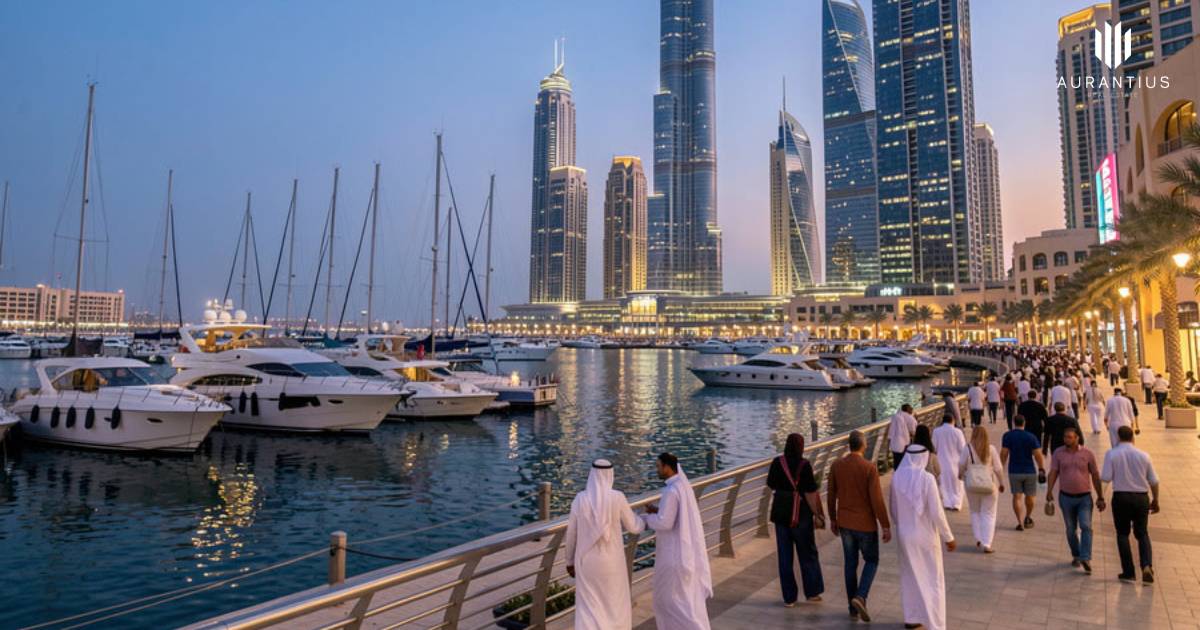
The country’s established culture of tolerance, strict public-order laws, anti-discrimination framework, and visible security presence helped maintain social calm. Residents continued to use public spaces, commute to work, operate businesses, visit shopping centres, and participate in community life. That continuation of routine became one of the clearest signs of public confidence.
For many expatriate residents, the events strengthened rather than weakened their understanding of the UAE as home. Feeling at home does not mean believing that no emergency can occur. It means trusting that institutions will respond, essential services will continue, communities will remain orderly, and residents of different nationalities will be protected under the same legal and security framework.
Economic Diversification Is the UAE’s First Line of Financial Defence
The UAE’s economic resilience is closely connected to its long-term diversification strategy. Non-oil activities now represent roughly three-quarters of national economic output. This reduces dependence on one commodity cycle and distributes economic activity across trade, tourism, finance, construction, real estate, manufacturing, aviation, logistics, technology, professional services, healthcare, and the digital economy.
Diversification does not remove the economic effects of conflict. Aviation, hospitality, logistics, tourism, consumer confidence, and investment decisions can all face short-term pressure when airspace, shipping routes, or regional supply chains are disrupted. The World Bank reduced its wider Gulf growth outlook in response to the 2026 conflict, showing that even strong regional economies remain connected to geopolitical conditions.
The UAE’s advantage is that weakness in one area does not automatically shut down the entire economy. Strong banking liquidity, government reserves, trade relationships, digital infrastructure, property investment, domestic consumption, and diversified business activity provide multiple sources of support.
The broader strategy is reflected in UAE Vision 2031 and its strategic roadmap for the digital economy. Artificial intelligence, advanced manufacturing, fintech, data infrastructure, smart government services, and innovation-led businesses are being developed as long-term economic pillars rather than temporary projects.
How the UAE Protects Banking, Credit and Financial Confidence
The financial system is one of the most important stabilising mechanisms during a regional security crisis. If banks remain liquid, payment systems continue operating, consumer deposits remain protected, and credit continues to reach businesses, the wider economy is less likely to experience a sudden confidence shock.
The Central Bank of the UAE strengthened this protection through financial supervision, stress testing, capital requirements, liquidity management, and a proactive institutional resilience package backed by an asset base of approximately AED 1 trillion. The purpose of these measures is to help financial institutions absorb macroeconomic and market shocks while maintaining lending and payment continuity.
The country’s sovereign credit strength also supports confidence. Strong fiscal reserves, prudent financial policies, non-oil revenue expansion, and institutional backing help the government respond to emergencies without depending entirely on short-term borrowing or emergency taxation.
For residents, financial stability means salaries can be transferred, mortgages can be processed, cards and digital payments continue working, and businesses can access banking services. For investors, it means capital markets and property transactions operate within a supervised financial system rather than an informal or lightly regulated environment.
Why Real Estate Remained a Central Measure of Investor Confidence
Real estate is one of the clearest indicators of how investors interpret long-term UAE stability. Property purchases require buyers to commit capital based on expectations about population growth, legal protection, rental demand, infrastructure, business activity, lifestyle quality, and the future direction of the country.
Dubai recorded AED 252 billion in real estate transactions during the first quarter of 2026, representing strong year-on-year growth despite regional developments. This does not prove that every property segment is immune to pressure. It demonstrates that capital continued entering the market and that investors did not respond to the crisis with a market-wide withdrawal.
The property market remained fragmented. Prime villas, waterfront homes, branded residences, and scarce luxury assets generally attracted stronger demand, while some high-supply apartment areas experienced slower growth and greater buyer negotiation. This selective performance is explored in Dubai Real Estate in 2026: Is It Still a Safe Haven During Conflict?.
Investors continued to compare established districts such as Dubai Marina, Downtown Dubai, Business Bay, Palm Jumeirah, Jumeirah Village Circle, and Dubai Hills Estate according to supply, rental demand, infrastructure, and long-term end-user value.
Developer strength also remained central. Projects by Emaar, DAMAC, Sobha Realty, Nakheel, Meraas, and Select Group continued to be assessed through delivery records, financial capacity, build quality, escrow compliance, and community planning.
Regulation Protects the Integrity of UAE Property Investment
The UAE protects its real estate sector through more than economic demand. Property transactions operate within a framework that includes developer registration, project escrow accounts, digital title records, licensed brokerage activity, tenancy registration, anti-money-laundering controls, customer due diligence, and beneficial-ownership requirements.
Real estate brokers, developers, and other designated non-financial businesses must comply with anti-money-laundering and counter-terrorist-financing obligations. High-risk transactions can be reported through the goAML system, and companies that fail to meet compliance requirements can face fines, suspension, or other enforcement action.
These controls protect more than the country’s international reputation. They help reduce illicit activity, strengthen transaction traceability, improve institutional confidence, and make it easier for legitimate foreign investors to move capital through regulated channels.
Previous market performance provides useful context. The UAE’s record real estate sales during Q3 2025 showed how population growth, international investment, long-term residency, and limited supply in selected locations had already created a strong base before the 2026 security crisis.
Tourism, Aviation and Logistics Faced Greater Short-Term Sensitivity
Not every sector experienced the same level of protection from immediate disruption. Tourism, aviation, hospitality, and logistics are naturally more sensitive to airspace changes, flight cancellations, international travel warnings, shipping delays, and temporary reductions in visitor confidence.
The UAE’s defence against these risks comes from infrastructure capacity, multiple airports and ports, globally connected airlines, alternative trade corridors, emergency planning, and a large domestic and regional business base. The country also uses international trade agreements and economic partnerships to reduce dependence on any single market.
A temporary decline in hotel occupancy, flight activity, or cargo movement should not be confused with permanent economic damage. Investors must distinguish between a short-term operational interruption and a structural loss of competitiveness.
The country’s earlier expansion was already supported by tourism, infrastructure, population growth, and strategic investment, as discussed in Dubai’s 2025 real estate boom amid limited supply and strategic investment.
Long-Term Residency Converts Confidence Into Commitment
The UAE’s long-term residency framework has changed how expatriates relate to the country. Golden Visas, retirement residency, remote-work options, business ownership routes, and property-linked residency pathways allow qualified residents to plan beyond short employment cycles.
This encourages families to purchase homes, enrol children in schools, establish companies, build professional networks, and keep savings and investments in the UAE. The result is a resident population with a stronger long-term stake in economic and social stability.
Residency policy also supports the real estate market because buyers are not purchasing only for short-term resale. Many are buying for personal occupancy, family security, retirement planning, business access, or long-term rental income.
The wider investment foundation is examined in Dubai Real Estate Market Outlook: Growth Drivers, Investor Trends and Emerging Opportunities.
What Investors Should Learn From the 2026 Conflict
The first lesson is that resilience should not be confused with immunity. The UAE remains exposed to regional aviation, trade, energy, and security risks. Responsible investors should include geopolitical events in their financial planning rather than dismissing them.
The second lesson is that institutional quality matters. Defence infrastructure, banking supervision, government reserves, digital systems, emergency communication, and transparent property records can reduce the economic consequences of an external shock.
The third lesson is that asset selection remains critical. A well-located property by a credible developer with genuine tenant demand is more likely to remain liquid than a speculative unit in an oversupplied location. A regulated bank with strong capital buffers is better positioned than an informal lender. A diversified business is better protected than one dependent on a single trade route or customer type.
The fourth lesson is that public confidence is earned through performance. Residents and investors do not maintain trust because of slogans. They maintain trust when emergency systems work, institutions communicate clearly, financial services continue, and normal activity returns quickly.
FAQ: UAE Safety and Economic Stability After Regional Conflict
Question: Did the UAE experience missile and drone attacks in 2026?
Answer: Yes. Official UAE reports confirmed missile and drone attacks, interceptions, casualties, injuries, and limited material damage. The country’s resilience is demonstrated by its response and continuity, not by claiming the attacks never occurred.
Question: Is the UAE still considered a safe country?
Answer: The UAE continues to perform strongly in personal-security and public-safety measures. External geopolitical risk exists, but domestic crime levels, institutional coordination, emergency preparedness, and public order remain important strengths.
Question: How did residents react during the regional attacks?
Answer: Residents experienced understandable concern and followed official guidance, while daily routines, businesses, public services, and community activity largely continued. The response reflected both caution and confidence in public institutions.
Question: Did the conflict damage Dubai’s real estate market?
Answer: The conflict affected sentiment and created short-term uncertainty, but Dubai still recorded strong transaction values. Performance remained segmented, with prime and scarce properties generally showing greater resilience than oversupplied apartment stock.
Question: How does the UAE protect its financial system during a crisis?
Answer: The Central Bank uses supervision, capital requirements, liquidity management, stress testing, payment-system oversight, and institutional resilience measures to help banks continue operating during financial and geopolitical shocks.
Question: Is UAE property a risk-free safe-haven investment?
Answer: No property investment is risk-free. UAE real estate can offer regulatory protection, rental demand, strong infrastructure, and long-term growth potential, but investors must still assess location, supply, developer quality, price, financing, and geopolitical risk.
Conclusion: UAE Stability Is Built on Preparedness, Not the Absence of Risk
The 2026 regional conflict challenged the UAE’s security environment and produced real human and economic consequences. The country should not be described as untouched, invulnerable, or completely insulated from regional events. Such claims weaken credibility and ignore the experience of those affected.
The stronger conclusion is that the UAE demonstrated substantial institutional resilience. Advanced defence systems, coordinated emergency management, banking strength, fiscal reserves, economic diversification, regulatory enforcement, and social stability helped the country contain the impact and preserve confidence.
For residents, safety continues to mean low everyday crime, orderly public spaces, functioning services, and confidence in institutions. For businesses, stability means access to banking, infrastructure, trade networks, digital government, and predictable regulation. For property investors, it means operating in a market with strong transaction systems, recognised developers, escrow protection, and sustained international demand.
Aurantius Real Estate helps local and international buyers evaluate Dubai property through verified market data, developer assessment, location analysis, rental fundamentals, and practical risk management. In a region shaped by changing geopolitical conditions, informed property selection remains more valuable than either fear-driven headlines or unrealistic claims of zero risk.