
Dubai Seafront Apartments vs Global Coastline Properties: Which Delivers Better ROI?
Investing in coastal real estate is often presented as a lifestyle decision: sea views, sunset balconies, beach access and prestige. For serious investors, the real comparison is less romantic. The question is not only which coastline looks better, but which market produces stronger rental income after entry cost, taxes, service charges, maintenance and liquidity risk are included.
Dubai seafront apartments have become one of the most closely watched waterfront property investment categories because they combine international ownership access, modern infrastructure, strong tourism demand, high expat occupancy and a tax-efficient rental environment. Compared with mature coastal markets such as Miami, London, the French Riviera, Sydney or Singapore, Dubai often offers a more attractive relationship between purchase price and rental income.
That does not mean every Dubai beachfront apartment is automatically the best investment. A poorly priced unit with high service charges, weak layout, limited parking or heavy future supply can underperform. The strongest Dubai waterfront investments are those where the purchase price, building quality, rental demand and total ownership costs support a realistic net return.
For investors comparing wider Dubai options, the Dubai Property Investment Guide 2026 explains how area selection, net yield and long-term resale potential should be assessed before committing capital.
Why Dubai Often Beats Global Coastal Markets on ROI
Dubai’s main advantage is not that it always charges higher rent than global coastal cities. In fact, a seafront apartment in Miami Beach, London, Singapore or Sydney may collect a higher absolute annual rent. The difference is that those markets often require a much larger purchase price, higher taxation and heavier ownership costs.
ROI depends on the relationship between income and capital deployed. A property that collects USD 35,000 per year but costs USD 1.2 million can produce a weaker return than a Dubai apartment collecting less rent but purchased at a significantly lower entry cost.
Dubai also benefits from the UAE’s absence of personal income tax on individual rental income. International investors must still consider taxes in their own country of residence or citizenship, but the UAE itself does not apply the same annual property-tax and rental-income-tax drag seen in many mature Western markets.
This is why Dubai can function as a wealth-generation market rather than only a lifestyle market. The investor is not simply buying a sea view. They are buying exposure to a city with high tenant mobility, strong short-term visitor demand, expanding infrastructure and international ownership appeal.
Comparison Summary: What Goes to the Government?
| Tax Category | Dubai Seafront Property | US Coastal Property | UK Coastal Property |
|---|---|---|---|
| Annual Property Tax | 0% | 1.5% – 2% every year | Varies (Council Tax / Surcharges) |
| Tax on Rental Income | 0% | Up to 30% | 20% – 40% |
| Capital Gains Tax | 0% | Up to 20% | 18% – 24% |
| One-time Purchase Tax | 4% registration fee | Varies (Closing/Doc costs) | Up to 7%+ stacked Stamp Duty |
Dubai Marina Rental Yield: Why the Numbers Attract Investors
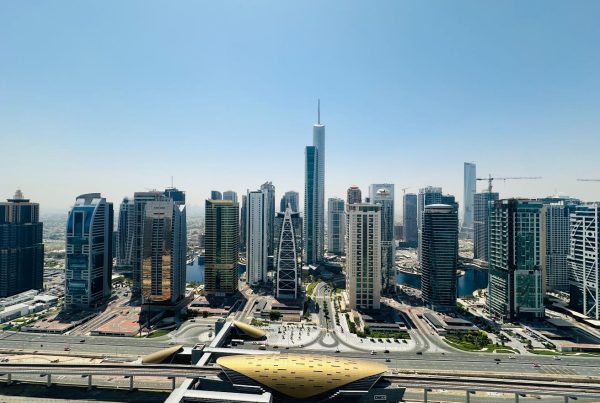
Dubai Marina remains one of the strongest examples of seafront and waterfront rental demand in the city. Its appeal comes from a dense mix of residential towers, marina views, beach access through nearby JBR, restaurants, nightlife, metro and tram connectivity, and constant demand from professionals, tourists and short-term visitors.
Dubai Marina rental yield can vary widely by apartment size, building, view, furnishing, service charges and rental strategy. Smaller units may deliver stronger percentage yields because entry prices are lower and tenant demand is broad. Larger luxury apartments may deliver lower percentage yields but stronger lifestyle appeal and long-term capital value when positioned correctly.
Investors should avoid judging Dubai Marina by one average figure. A studio with efficient layout and strong occupancy can perform very differently from a large, older apartment with high service charges and limited upgrades. Net return depends on the exact asset.
The same logic applies across luxury apartment locations. Investors comparing premium towers can review Top 10 Picks for Luxury Apartment Living in Dubai to understand how building quality, lifestyle amenities and location depth influence buyer and tenant demand.
Dubai vs Miami, London, Singapore and Sydney: The ROI Difference
Global coastline properties usually offer strong prestige but weaker yield efficiency. Miami Beach has international brand recognition, but buyers face high purchase prices, property taxes, insurance costs and potential association fees. London waterfront property can carry exceptional long-term prestige, but rental yields are often compressed by high entry prices and landlord taxation.
Singapore offers stability, safety and global financial-hub status, but property entry prices and stamp duties can be extremely high for foreign buyers. Sydney waterfront property benefits from natural coastline appeal, but investors must consider high acquisition costs, financing restrictions, vacancy exposure and tax treatment.
Dubai’s advantage is the combination of relatively competitive entry price, modern stock, strong tourism demand, freehold ownership in designated zones and tax-efficient income at the UAE level. This can produce a stronger net rental result when compared with mature coastal cities where taxes and ownership costs reduce take-home income.
The comparison should still be made carefully. Dubai’s waterfront towers can carry high service charges, district cooling costs and periodic maintenance linked to humidity, salt air and façade upkeep. Global markets may have lower yields, but some offer deeper legal history, longer-established neighbourhoods and broader resale buyer pools.
Net Profit Comparison: Dubai vs. Miami
| Expense Item | Dubai Seafront Apartment (AED) | Miami Coastal Property (USD equivalent) |
|---|---|---|
| Gross Rental Income | AED 128,555 | $35,000 (AED 128,555) |
| Property Management & Maintenance | −AED 18,365 (approx. 10%) | −$5,250 (approx. 15%) |
| Property Tax / HOA Fees | −AED 0 (No property tax) | −$10,500 (approx. 2.1% + high insurance) |
| Income Tax on Rental Revenue | −AED 0 (0% Tax) | −$5,850 (approx. 30% for non-residents) |
| Total Net Annual Profit | AED 110,190 | $13,400 (approx. AED 49,218) |
| Actual Net ROI | 6.0% | 2.68% |
Illustrative Rental and Currency Comparison
A simple example helps explain the Dubai ROI advantage. Assume a Dubai Marina one-bedroom seafront or waterfront apartment generates annual rent of approximately AED 87,000. At the fixed AED-to-USD reference of around AED 3.6725 per USD, that equals roughly USD 23,700 per year before costs.
Using approximate exchange assumptions, AED 87,000 may be viewed as about INR 22 lakh, GBP 18,000 or CNY 160,000. These figures are only illustrative because INR, GBP and CNY exchange rates move daily against the dirham.
If the apartment purchase price is approximately AED 1.3 million, the gross rent-to-price relationship appears attractive compared with many global waterfront markets. The key calculation, however, is not gross rent. It is net income after service charges, maintenance, vacancy, furnishing, management and any mortgage cost.
A comparable waterfront apartment in Miami, London or Singapore may collect a higher annual rent in absolute terms. Yet if the purchase price is two or three times higher and annual tax leakage is substantial, the final investor ROI can be weaker than Dubai’s lower-rent but lower-entry model.
| Financial Item | Indian Rupee (INR) | US Dollar (USD) | British Pound (GBP) |
|---|---|---|---|
| DUBAI PROPERTY | |||
| Gross Rental Income (7%) | ₹33,01,900 | $35,000 | £26,495 |
| Operating Costs & Taxes | −₹4,71,315 | −$5,000 | −£3,782 |
| Total Net Profit (Take-Home) | ₹28,30,585 | $30,004 | £22,713 |
| Actual Net ROI | 6.0% | 6.0% | 6.0% |
| MIAMI PROPERTY | |||
| Gross Rental Income (7%) | ₹33,01,900 | $35,000 | £26,495 |
| Operating Costs & Taxes | −₹20,37,744 | −$21,600 | −£16,351 |
| Total Net Profit (Take-Home) | ₹12,64,156 | $13,400 | £10,144 |
| Actual Net ROI | 2.68% | 2.68% | 2.68% |
The Tax Advantage: Why Net Income Matters More Than Headline Rent
Many international investors make the mistake of comparing rental income before tax. That can distort the real investment picture. A coastal apartment in a high-tax market may generate impressive rent but lose a significant portion through property tax, income tax, capital gains tax, local levies or non-resident landlord rules.
Dubai’s UAE-level tax environment is simpler for individual property owners. There is no personal income tax on individual rental income in the UAE, and there is no annual property tax comparable to many Western coastal markets. Buyers still need to budget for transaction costs, service charges, maintenance and any tax obligations in their home country.
This difference is central to global real estate ROI. What the investor keeps after all deductions is more important than what the tenant pays on paper.
A practical return analysis should therefore compare after-cost income, not only advertised rent. The guide to calculating ROI on Dubai property explains how investors can move from gross-yield assumptions to a more realistic net-return estimate.
The Hidden Costs of Dubai Seafront Apartments
Dubai’s seafront apartments can generate strong income, but they are not low-maintenance assets. Premium waterfront buildings often carry higher service charges because they include pools, gyms, concierge teams, security, elevators, façade cleaning, landscaping, beach access, parking, common-area cooling and sinking funds.
Service charges can vary significantly by building and location. Prime waterfront and luxury towers may charge much more per square foot than mid-market inland buildings. Investors must check the actual service-charge history for the specific property, not rely on area averages.
District cooling can also reduce net income if costs are paid by the landlord or if the property is vacant between tenants. Furnished holiday-home strategies may produce higher gross revenue but also require cleaning, utilities, platform fees, furnishing replacement and active management.
Salt air and humidity can increase long-term upkeep requirements for façades, balconies, metalwork and exterior glass. Well-managed towers plan for these costs through service charges and reserve funds. Poorly managed buildings may create unexpected special levies or declining resale appeal.
Freehold Ownership: Can Foreigners Buy Beachfront Apartments in Dubai?
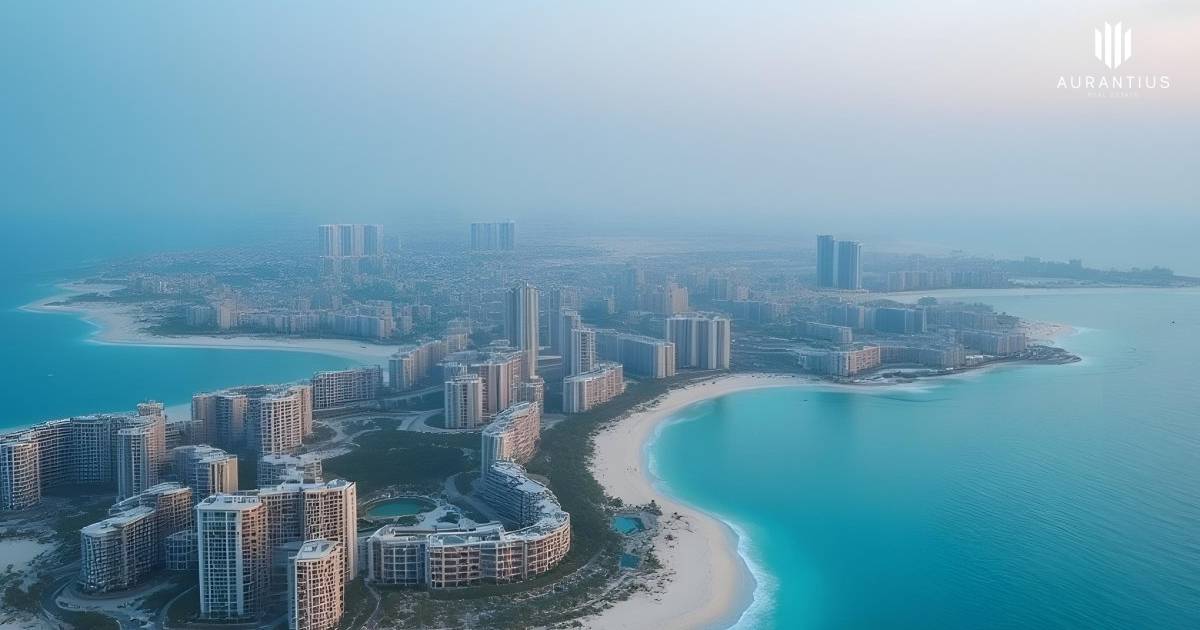
Foreign buyers can own freehold property in Dubai within designated areas approved for foreign ownership. Major waterfront and seafront districts such as Dubai Marina, Palm Jumeirah, JBR, Emaar Beachfront and Dubai Islands are commonly associated with international buyer demand, subject to project and title verification.
Freehold ownership gives the buyer registered property rights and the ability to sell, lease or mortgage the property subject to Dubai law, building rules, community regulations and financing conditions. For apartments, the ownership structure normally includes title to the unit and rights connected to common areas rather than a private land plot in the same way as a standalone villa.
This is still a major advantage compared with markets where foreign buyers face strict ownership restrictions, heavy stamp duties, foreign-buyer taxes or complex approval requirements. Dubai’s designated freehold system gives international investors a clear route into premium waterfront property.
Buyers should always confirm the title, developer, building, service charges and permitted usage before purchase, especially if they plan to operate the unit as a holiday home.
Best Dubai Seafront Areas for ROI and Capital Growth
Dubai Marina and JBR: These areas are among the strongest for rental activity because they combine beach access, nightlife, restaurants, public transport and constant demand from tourists and professionals. They may suit investors seeking income and liquidity, but building selection is critical because service charges and age vary widely.
Palm Jumeirah: Palm Jumeirah is more luxury-led. Yields may be lower than smaller apartments in Dubai Marina, but scarcity, global recognition, waterfront positioning and ultra-prime buyer demand can support stronger long-term capital preservation.
Emaar Beachfront: Emaar Beachfront appeals to buyers seeking newer waterfront stock, private-beach positioning and proximity to Dubai Marina and Palm Jumeirah. Investors should compare off-plan prices with completed rental evidence as the community matures.
Dubai Islands: Dubai Islands is an emerging northern waterfront destination. It may suit long-term investors looking for early exposure to a transforming coastline, but the strategy depends heavily on infrastructure delivery and holding period. The development is explored further in Dubai Islands: The Northern Waterfront Transforming Dubai Real Estate.
Dubai Creek Harbour: This area offers waterfront master-community positioning with modern apartment stock and long-term growth potential. Investors should watch future supply, service charges and the timing of community completion.
Dubai’s Currency Advantage for International Investors
The UAE dirham is pegged to the US dollar, which gives international investors clearer exchange-rate visibility than markets with freely moving local currencies. For buyers whose wealth is already linked to the dollar, this can simplify long-term planning.
For investors from India, the UK or China, the AED value of rental income and property value still changes when converted back into INR, GBP or CNY. The peg stabilises the dirham against the dollar, but it does not remove home-currency fluctuation for every investor.
The peg can be especially relevant for investors from countries where the local currency has weakened against the US dollar. In those cases, Dubai rental income and asset values may become more valuable in home-currency terms, although this depends on future exchange-rate movement.
Currency should be treated as part of the return calculation. A strong property return can be reduced by unfavourable exchange movement, while stable AED income can support portfolio diversification for investors exposed to weaker local currencies.
Dubai Seafront vs Historic Global Coastlines: Lifestyle Still Matters
Not every investor is purely yield-driven. A villa on the French Riviera, an apartment in Monaco, a condo in Miami or a home overlooking Sydney Harbour can offer heritage, lifestyle identity and emotional value that Dubai’s modern waterfront cannot fully replicate.
Historic coastlines often have established cultural depth, natural geography and long-standing prestige. Some investors are willing to accept lower yields because the property serves as a family retreat, status asset or long-term lifestyle holding.
Dubai’s strength is different. It is a commercially engineered waterfront market designed around tourism, accessibility, modern amenities, private facilities, international ownership and rental monetisation. That structure can make Dubai more suitable for investors focused on measurable returns.
The choice therefore depends on objective. If the priority is romance, history and personal lifestyle, global coastlines may win. If the priority is rental yield, tax efficiency and lower friction, Dubai often has the stronger investment case.
Short-Term Rental Strategy: Where Dubai Can Outperform
Dubai’s tourism market gives seafront apartments a strong short-term rental advantage where building rules, permits and management are properly handled. Dubai Marina, JBR, Palm Jumeirah and Emaar Beachfront can attract tourists, business travellers and seasonal residents seeking furnished waterfront stays.
Short-term rentals can increase gross revenue compared with annual leasing, but they also increase operating complexity. Owners must account for licensing, guest management, cleaning, maintenance, utilities, platform commissions, furnishing replacement and seasonal occupancy changes.
A professionally managed holiday-home strategy may outperform a standard annual lease in the right building. In the wrong building, it can underperform because of vacancy, pricing pressure and management costs.
Dubai’s wider luxury-property cycle is discussed in Luxury Boom and New Projects in Dubai’s 2026 Property Market, which helps investors understand how premium demand, new launches and buyer selectivity are shaping high-end real estate.
How to Calculate True ROI Before Buying a Beachfront Apartment
A proper ROI calculation should begin with annual rent and then subtract all recurring property costs. Service charges, district cooling, maintenance, property management, holiday-home fees, vacancy allowance, furnishing replacement and insurance should be included before estimating net income.
The acquisition cost should also be complete. It may include the purchase price, Dubai Land Department registration, agency commission, trustee fees, mortgage costs, valuation, furnishing and renovation.
The simplified formula is:
Annual Rent − Service Charges − Maintenance − Cooling − Management − Vacancy Allowance = Estimated Net Income
Estimated Net Income ÷ Total Acquisition Cost = Estimated Net Yield
Capital appreciation should be measured separately. A property may produce a lower rental yield but stronger long-term value if it is scarce, well located and difficult to replicate. Palm Jumeirah is a common example of a market where capital preservation may matter as much as annual yield.
| Feature | Dubai Seafront Apartments | Global Coastline Hubs (e.g., Miami, Sydney) |
|---|---|---|
| Average Gross Rental Yield | 6% – 8% (up to 10%+ for short-term) | 3% – 5% average |
| Property Income Tax | 0% | 30% – 50% (depending on country) |
| Capital Gains Tax | 0% | High taxes upon selling the asset |
| Coastal Price Premium | 20% – 30% more than inland | 50% – 120% more than inland |
| Tourism Demand | High, year-round influx | Often highly seasonal |
Investor Verdict: Which Coastal Property Market Is Better?
Dubai seafront apartments are usually stronger for investors who prioritise rental yield, tax efficiency, modern infrastructure, freehold access and ease of management. The city is especially attractive for buyers who want income-producing waterfront exposure without the high tax drag and extreme purchase prices of many established coastal capitals.
Global coastline properties may still be better for buyers whose primary goal is lifestyle, heritage, long-term family use or prestige in a specific historic market. A French Riviera villa or Miami Beach condo may carry emotional and status value that cannot be measured only through yield.
For pure global real estate ROI, Dubai often has the stronger investment argument. For emotional lifestyle ownership, some global coastal markets may still justify their lower financial efficiency.
Dubai’s continued investment strength is explored in Why Dubai Real Estate Investment Is Still Strong in 2026 Despite Global Uncertainty.
FAQ: Dubai Seafront Apartments vs Global Coastline Properties
Question: Why can Dubai offer higher real estate ROI than Miami, London or Singapore?
Answer: Dubai often combines lower entry prices, strong rental demand and a UAE-level 0% personal income tax environment. Mature coastal markets may collect high rents, but property taxes, income taxes, acquisition costs and high purchase prices can reduce net returns.
Question: What are the hidden costs of owning a Dubai seafront apartment?
Answer: The main costs include service charges, district cooling, maintenance, insurance, property management, furnishing replacement and possible façade or common-area upkeep linked to waterfront exposure.
Question: Is the UAE dirham safe for international property investors?
Answer: The UAE dirham is pegged to the US dollar, which supports exchange-rate stability against USD. Investors converting income into INR, GBP, CNY or other currencies still face home-currency movement against the dollar-linked dirham.
Question: Which Dubai seafront areas offer strong rental potential?
Answer: Dubai Marina and JBR are strong for rental liquidity and tourist demand. Palm Jumeirah is more luxury-led with capital-preservation appeal. Emaar Beachfront and Dubai Islands may suit buyers seeking newer or emerging waterfront communities.
Question: Can foreigners fully own beachfront property in Dubai?
Answer: Foreigners can own freehold property in designated Dubai areas, including major waterfront communities. Buyers should confirm the title, approved ownership zone, building rules and permitted rental use before purchasing.
Question: Is Dubai better for income or capital growth?
Answer: It depends on the area. Dubai Marina and JBR may suit income-focused investors, while Palm Jumeirah and ultra-prime waterfront assets may appeal more to capital-growth and wealth-preservation buyers.
Question: Should I buy a beachfront apartment for short-term rental income?
Answer: Short-term rental income can be strong in the right seafront building, but it requires licensing, furnishing, cleaning, guest management and seasonal pricing. Investors should compare net holiday-home income with a standard annual lease.
Conclusion: Dubai Wins on Financial Efficiency, Global Coastlines Win on Heritage
Dubai seafront apartments often provide stronger financial efficiency than many global coastline properties because of their competitive entry prices, strong tenant demand, modern infrastructure, freehold ownership access and UAE-level tax advantages. For investors focused on net rental income, Dubai is frequently more compelling than mature coastal cities where taxes and high purchase prices compress returns.
The advantage is not automatic. Waterfront investors must control service charges, cooling costs, management fees, vacancy and building quality. A well-priced apartment in a strong building can outperform, while an overpriced seafront unit with weak net income can disappoint.
Global coastline properties still have a place for buyers prioritising heritage, personal lifestyle and long-term emotional value. Dubai’s appeal is more direct: it converts waterfront real estate into a commercially efficient, internationally accessible, income-focused asset class.
Aurantius Real Estate helps investors compare Dubai seafront apartments, luxury waterfront communities and income-focused property opportunities through transaction-led analysis, ROI calculation, service-charge review and community-level guidance. For buyers deciding between Dubai and global coastal markets, professional advice can help separate lifestyle appeal from real investment performance.
Compare Dubai Waterfront ROI Before You Buy: Speak with an Aurantius property adviser to review Dubai Marina, JBR, Palm Jumeirah, Emaar Beachfront and Dubai Islands opportunities based on your budget, rental strategy and target net yield.