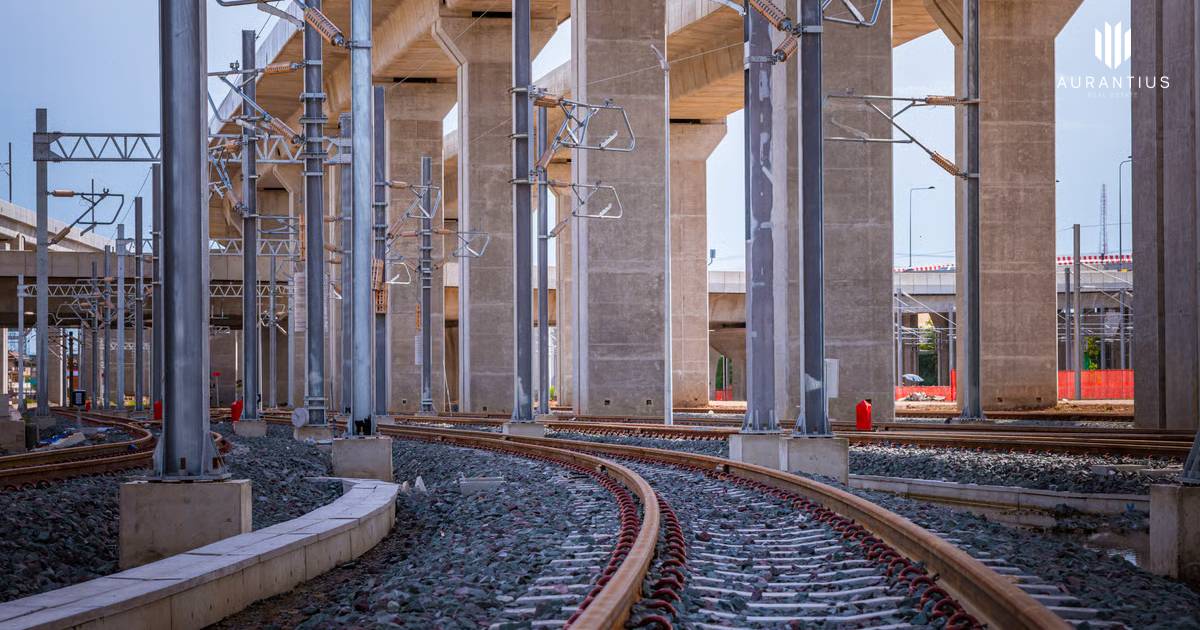

Etihad Rail Dubai Station Opens September 30: Al Yalayis Location, Metro Link, Journey Times & Nearby Communities
Dubai is preparing to join the UAE’s national passenger railway when Dubai Al Yalayis Station opens on September 30, 2026. Located beside Jumeirah Golf Estates in Me’aisem First, the station will connect directly with the existing Jumeirah Golf Estates Dubai Metro station through an approximately 400-metre elevated pedestrian walkway, creating a new interchange between national rail and Dubai’s Red Line.
The scheduled journey between Dubai Al Yalayis and Etihad Rail’s Mohamed bin Zayed City station in Abu Dhabi is approximately 57 minutes. That makes the opening more than a new inter-emirate transport option. For residents around Jumeirah Golf Estates, Dubai Investments Park and the wider southern Dubai corridor, the station changes how practical rail-based commuting between Dubai and Abu Dhabi can become.
The property takeaway: Al Yalayis is now different from a proposed future station because its opening date, physical station and Metro connection are tangible. However, proximity still matters. Jumeirah Golf Estates and nearby communities gain the most direct accessibility benefit, while communities farther south or east still depend on road, bus or Metro connections to complete the first and last mile.
Where Exactly Is Dubai Al Yalayis Etihad Rail Station?
Dubai Al Yalayis Station is positioned next to Jumeirah Golf Estates in Me’aisem First, directly opposite the Jumeirah Golf Estates Metro Station.
The location places the passenger station close to several important roads, including:
• Sheikh Mohammed bin Zayed Road (E311);
• Al Khail Road (E44); and
• Al Yalayis Street (D57).
The site also sits less than 10 kilometres from Al Maktoum International Airport, although the railway station should not be confused with a direct DWC airport rail terminal. The airport connection remains a separate mobility question involving road access and future Dubai transport projects.
| Al Yalayis Station Detail | Current Position |
|---|---|
| Scheduled opening | September 30, 2026 |
| Dubai location | Me’aisem First, beside Jumeirah Golf Estates |
| Nearest Metro station | Jumeirah Golf Estates Metro Station |
| Metro connection | Approximately 400m elevated pedestrian walkway |
| Dubai to Abu Dhabi rail time | Approximately 57 minutes to Mohamed bin Zayed City Station |
| Passenger train speed | Up to 200 km/h on the national passenger network |
The Metro Link May Be More Important Than the Station Building Itself
The Al Yalayis station’s strongest advantage is its integration with Dubai Metro rather than its national rail service in isolation.
Passengers arriving from Abu Dhabi will be able to cross from the Etihad Rail station to Jumeirah Golf Estates Metro Station using the elevated pedestrian connection and continue their journey through Dubai on the Red Line.
Etihad Rail National Network
↓
Dubai Al Yalayis Station
↓ approximately 400m elevated walkway
Jumeirah Golf Estates Metro Station
↓
Dubai Metro Red Line Network
This matters because railway travel time alone does not determine whether people abandon their cars. The real commuter calculation is door-to-door time.
A resident who can reach Al Yalayis quickly, board Etihad Rail and arrive close to their final Abu Dhabi destination may experience a significant improvement. Someone whose home and workplace both require long road transfers may see a smaller advantage even though the train itself takes only 57 minutes.
Dubai to Abu Dhabi in 57 Minutes: What That Number Really Means
The published 57-minute journey is between Dubai Al Yalayis Station and Mohamed bin Zayed City Station in Abu Dhabi.
It should not be interpreted as a guaranteed 57-minute journey from any home in Dubai to any office in central Abu Dhabi.
For a commuter, total travel time will include:
• travel from home to Al Yalayis;
• station arrival and boarding time;
• the 57-minute rail journey;
• onward transport from Mohamed bin Zayed City Station; and
• any waiting time between connections.
Etihad Rail currently advises passengers to arrive with sufficient time for boarding, and its passenger rules state that boarding gates close shortly before departure. Daily commuters will therefore need to compare total rail journey time with their actual road commute rather than comparing 57 minutes with an unusually congested drive in isolation.
Do We Know the Dubai Etihad Rail Ticket Price Yet?
Not yet, based on the latest published information available before the September 30 opening.
The AED55 figure frequently appearing in online reports is the promotional starting Comfort Class fare introduced for the existing Abu Dhabi to Fujairah service. Etihad Rail also introduced a promotional Premium Class fare of AED120 on that route.
Those prices should not automatically be presented as the confirmed Dubai to Abu Dhabi fare.
As of the latest pre-opening reports, specific Dubai fares and the number of daily Dubai services had not yet been formally announced. Buyers, commuters and media should therefore wait for Etihad Rail’s official booking system rather than assuming the AED55 launch fare applies to Al Yalayis.
Important correction: AED55 is a verified launch fare for the Abu Dhabi-Fujairah route. It is not yet a confirmed Dubai-Abu Dhabi fare.
What Will Passengers Get Onboard?
Etihad Rail’s passenger fleet consists of trains capable of operating at up to 200 km/h, with capacity of up to 400 passengers per train.
Current passenger services include features such as:
• guaranteed seating;
• complimentary Wi-Fi;
• charging points at seats;
• luggage storage;
• Comfort Class options; and
• a higher-service Premium Class product.
The network launched its first scheduled passenger service between Fujairah and Abu Dhabi on June 30, 2026, meaning Dubai joins an operating passenger system rather than a railway that exists only on paper.
Which Dubai Communities Benefit Most From Al Yalayis Station?
The station creates a wider connectivity benefit across southern Dubai, but the strength of that benefit is not identical for every community.
| Community | Connection to Al Yalayis | Property Interpretation |
|---|---|---|
| Jumeirah Golf Estates | Immediate station and Metro adjacency | Strongest direct transport benefit |
| Dubai Investments Park / Green Community | Short local connection to the station precinct | Potentially useful for inter-emirate workers and businesses |
| Al Furjan / Discovery Gardens | Existing Red Line access toward JGE interchange | Rail-to-rail accessibility improves without living beside the station |
| Dubai Production City | Road-based access to the wider JGE / Me’aisem transport hub | Useful connectivity improvement, but not a walkable station premium |
| Remraam / Town Square | Road connection required | Potential commuter benefit depends on first-mile driving time |
| Dubai South / Expo City | Part of the wider southern Dubai transport ecosystem | Strategic long-term benefit rather than immediate station adjacency |
Jumeirah Golf Estates Has the Clearest Immediate Property Case
Jumeirah Golf Estates is the obvious direct beneficiary because the national rail station and the existing Dubai Metro station effectively form one transport precinct.
The community is also planning significant future expansion through Jumeirah Golf Estates – The Next Chapter. The development is intended to include a major transit-oriented district and accommodate more than 50,000 people over time.
For an end user, this increases the number of destinations reachable without relying entirely on a car. For an investor, it potentially broadens the future tenant pool to include professionals who work in Abu Dhabi but want to live in Dubai, as well as Dubai employees who regularly travel between emirates.
But that does not mean every villa or apartment in Jumeirah Golf Estates should receive the same “Etihad Rail premium”. Walking distance, internal road position, Metro accessibility, property type and entry price still matter.
Dubai Investments Park Could Gain From Employment-Led Rail Demand
Dubai Investments Park is particularly relevant because its investment case combines residential demand with a large employment and industrial base.
A national passenger rail connection nearby may be more economically useful to an employment district than to a purely residential community because commuting can occur in both directions.
A professional employed in Dubai but living in Abu Dhabi could potentially use the rail network. The same is true for a Dubai resident whose job requires frequent travel to Abu Dhabi.
That could support rental demand around DIP and Green Community, but the eventual scale will depend on timetable frequency, fares and reliable last-mile connections, not just the existence of a station.
Al Furjan and Discovery Gardens Gain Through the Metro, Not Direct Station Proximity
Al Furjan and Discovery Gardens illustrate why the Al Yalayis Metro connection matters.
Residents do not need to live directly beside the Etihad Rail building to use the national network efficiently. Existing Red Line connectivity provides a rail-based route toward the Jumeirah Golf Estates interchange.
For property buyers, this is a more defensible benefit than claiming that every community within a broad driving radius is “next to Etihad Rail”.
Town Square, Remraam and Other Road-Dependent Communities Need a First-Mile Test
Communities such as Town Square and Remraam may benefit from having national rail within practical driving distance, especially for households with frequent Abu Dhabi travel.
But they should not be grouped with Jumeirah Golf Estates as if the accessibility improvement were identical.
For these communities, ask:
• How long does the drive to Al Yalayis take at peak hours?
• Is practical parking available at or near the station?
• Will feeder bus services be convenient?
• How frequent are the Abu Dhabi trains?
• Does the total journey actually beat driving for the resident’s specific destination?
Until full Dubai schedules and fares are published, those questions cannot be answered with one universal number.
Dubai South Benefits From the Wider Rail Strategy, Not Immediate Walkability
Dubai South is strategically important to the UAE’s changing transport geography because of the long-term expansion of Al Maktoum International Airport, Expo City, logistics activity and future rail development.
Al Yalayis adds another transport option within southern Dubai, but investors should not market every Dubai South property as being directly served by the station. The two locations remain geographically separate and require first-mile transport.
The stronger investment argument is cumulative: Etihad Rail, airport expansion, road investment, Metro development and employment growth together make southern Dubai more connected over time.
Could Etihad Rail Increase Nearby Property Values?
Better transport can support property demand, but a station opening should not be converted into a guaranteed appreciation percentage.
The transmission mechanism is more conditional:
New rail connection opens
↓
Accessibility and commute predictability improve
↓
More households may consider the area
↓
Tenant and buyer demand may deepen
↓ Property performance still depends on price, supply and asset quality
Aurantius has previously examined this broader relationship in its Etihad Rail real estate impact and UAE investment areas guide.
The Al Yalayis opening now gives investors an opportunity to move from theoretical rail proximity to measurable evidence. Over the coming quarters, buyers can watch achieved rents, transaction prices and tenant demand around the station rather than relying on forecasts alone.
The Biggest Shift May Be Inter-Emirate Commuting
Etihad Rail can change property search boundaries in a way that conventional Dubai transport projects cannot.
A Metro line changes accessibility within Dubai. National passenger rail can change whether a person needs to live in the same emirate as their workplace.
That matters for:
• professionals with jobs in Abu Dhabi and family life in Dubai;
• couples working in different emirates;
• students and education-related travel;
• business travellers making frequent same-day trips; and
• employers recruiting from a wider labour market.
This wider national effect is why Etihad Rail’s property influence may ultimately extend beyond immediate station districts. Aurantius has explored that theme in Etihad Rail Set to Reshape UAE Real Estate.
The Future Gold Line Will Add Another Layer to Jumeirah Golf Estates
The existing Red Line connection is only one part of the longer-term Jumeirah Golf Estates transport story.
Dubai’s planned Metro Gold Line is currently expected to reach Jumeirah Golf Estates, turning the precinct into a larger interchange when the Gold Line becomes operational. Current plans target 2032.
That could eventually bring together:
• Dubai Metro Red Line;
• Dubai Metro Gold Line; and
• Etihad Rail’s national passenger network.
Investors should still keep the timelines separate. Etihad Rail at Al Yalayis is scheduled to open this month. The future Gold Line remains a separate infrastructure programme with a much longer delivery horizon.
Dubai Will Eventually Have More Than One Etihad Rail Station
Al Yalayis will not be Dubai’s final national rail station.
RTA officials confirmed in September 2026 that another conventional Etihad Rail passenger station is planned in Meydan, where it is expected to integrate with the future Metro Gold Line.
Dubai is eventually expected to have four stations across Etihad Rail’s wider plans. The total includes Al Yalayis, the future Meydan station and two stations associated with the separate high-speed Abu Dhabi-Dubai railway.
The high-speed railway should not be confused with the conventional passenger service opening at Al Yalayis. It is a separate electrified network designed for speeds of up to 350 km/h and an approximately 30-minute Abu Dhabi-Dubai journey.
Detailed locations and delivery timing for the high-speed Dubai stations have not yet been fully published, so property buyers should not speculate on exact future station sites.
A Property Buyer’s Al Yalayis Station Checklist
1. Measure actual access time.
Do not use a community’s marketing distance. Test the journey from the exact building or villa to the station during relevant travel hours.
2. Distinguish walkability from driveability.
A property within walking distance of the transport hub has a different accessibility proposition from one requiring a 15-minute drive.
3. Wait for the full timetable and Dubai fares.
The usefulness of the service for daily commuters depends on frequency and cost as much as journey time.
4. Check current rental demand.
Do not price future Etihad Rail demand before evidence appears in achieved rents and occupancy.
5. Compare future supply.
New development around the transport hub can increase demand and simultaneously create competing inventory.
6. Separate current and future infrastructure.
Al Yalayis and the Red Line connection are near-term realities. Gold Line and high-speed rail benefits belong to different timelines.
7. Verify foreign ownership eligibility.
International investors should confirm the exact project’s registration structure. Aurantius’ Dubai freehold areas guide provides broader ownership context.
FAQ: Dubai Al Yalayis Etihad Rail Station
Question: When does the Etihad Rail Dubai station open?
Answer: Dubai Al Yalayis Station is scheduled to begin passenger operations on September 30, 2026, alongside Al Dhaid Station in Sharjah.
Question: Where is Dubai Al Yalayis Station?
Answer: The station is in Me’aisem First beside Jumeirah Golf Estates and directly opposite Jumeirah Golf Estates Metro Station.
Question: Is Etihad Rail connected directly to Dubai Metro?
Answer: Yes. The Al Yalayis station connects with Jumeirah Golf Estates Metro Station on the Red Line through an approximately 400-metre elevated pedestrian walkway.
Question: How long will the train take from Dubai to Abu Dhabi?
Answer: The scheduled journey between Dubai Al Yalayis Station and Mohamed bin Zayed City Station in Abu Dhabi is approximately 57 minutes.
Question: Will the Dubai-Abu Dhabi Etihad Rail ticket cost AED55?
Answer: A Dubai-Abu Dhabi fare had not been formally published in the latest information available before the station opening. AED55 is the promotional starting Comfort fare currently used on the Abu Dhabi-Fujairah service and should not automatically be applied to the Dubai route.
Question: Which communities are closest to the Dubai Etihad Rail station?
Answer: Jumeirah Golf Estates has the strongest immediate connection. Dubai Investments Park and Green Community are also nearby, while Al Furjan and Discovery Gardens can access the interchange through the Red Line. Other southern Dubai communities benefit more indirectly through road or feeder connections.
Question: Will property prices around Jumeirah Golf Estates rise after Etihad Rail opens?
Answer: Improved transport can support buyer and tenant demand, but no specific appreciation rate is guaranteed. Property performance will still depend on entry price, exact station accessibility, future housing supply, rental demand and individual asset quality.
Question: Is the 30-minute Abu Dhabi-Dubai high-speed train the same service?
Answer: No. The national passenger railway opening at Al Yalayis uses trains operating at up to 200 km/h and has a Dubai-Abu Dhabi journey of about 57 minutes. The planned 30-minute high-speed service is a separate future electrified railway designed for speeds of up to 350 km/h.
Conclusion: Al Yalayis Turns Southern Dubai Into a National Rail Gateway
The September 30 opening of Dubai Al Yalayis Station is important because it changes Dubai’s relationship with the UAE railway from future infrastructure to an operating passenger service.
The most significant feature is not simply the 57-minute ride to Abu Dhabi. It is the combination of national rail with an existing Dubai Metro interchange.
Jumeirah Golf Estates receives the clearest direct benefit because the Etihad Rail and Metro stations sit opposite one another. Dubai Investments Park gains from being close to a national transport hub and having a substantial employment base. Al Furjan and Discovery Gardens benefit through existing Metro connectivity, while communities such as Town Square, Remraam and Dubai South need a stronger first-mile connection before their benefit can be described as equally direct.
For commuters, the next information to watch is straightforward: Dubai ticket prices, service frequency and first/last-mile transport. Those factors will determine whether Etihad Rail becomes an occasional inter-emirate option or a genuine daily commuting alternative.
For property investors, the strongest evidence will come after operations begin. If rents, occupancy and buyer demand around the Jumeirah Golf Estates transport hub outperform comparable locations over time, the market will have measurable evidence of a rail premium rather than speculation.
The biggest risk is paying that entire premium before the market has demonstrated it.
The Al Yalayis property rule: The station opening is real, the 57-minute Abu Dhabi journey is meaningful and the Metro interchange is a major accessibility upgrade. But buy the individual property for its current value, location and rental fundamentals. Let Etihad Rail strengthen the investment case rather than become the only reason the investment works.
Transport and investment note: Dubai Al Yalayis Station is scheduled to open on September 30, 2026. Journey times, fares, timetables, future Metro projects and additional Etihad Rail station plans may change. As of the latest pre-opening information, specific Dubai-Abu Dhabi ticket pricing had not been formally announced. Transport infrastructure does not guarantee rental growth or property appreciation.