
Etihad Rail Dubai Station Opens September 30: Al Yalayis Location, Metro Link, Journey Times and Nearby Communities
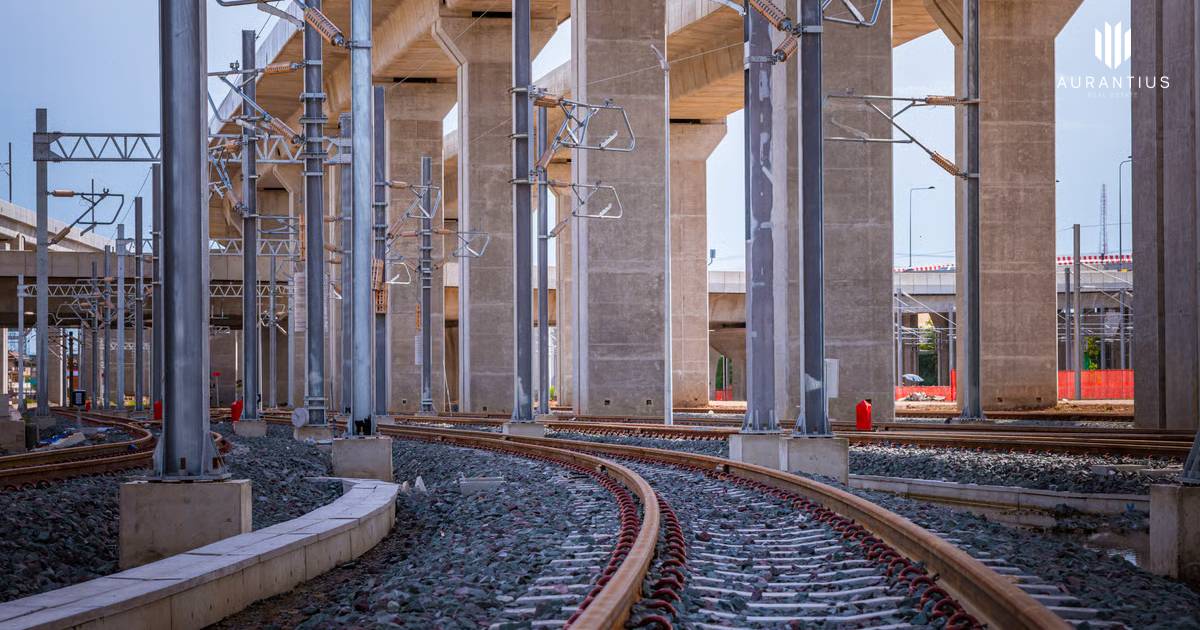
Etihad Rail’s Dubai Al Yalayis Station officially entered passenger service on September 30, 2026, bringing the UAE’s national passenger railway directly into Dubai’s public transport network. The first Dubai–Abu Dhabi passenger train departed Al Yalayis at 6:14am, creating a scheduled rail alternative to one of the country’s busiest inter-emirate road journeys.
The station’s importance goes beyond the railway itself. Al Yalayis is positioned beside Jumeirah Golf Estates and connected to the existing Dubai Metro Red Line through an elevated pedestrian link. That means passengers arriving from Abu Dhabi or Fujairah can continue into Dubai by Metro without requiring a separate long-distance taxi journey.
For property owners and investors, the opening also converts years of Etihad Rail forecasts into something measurable. Jumeirah Golf Estates, Dubai Investment Park, Green Community, Dubai Production City, Sports City and other nearby areas can now be assessed using actual passenger usage, commuting behaviour and property transactions rather than assumptions about future rail connectivity.
Etihad Rail Dubai Station at a Glance
Official station: Dubai Al Yalayis Station
Passenger service launch: September 30, 2026
Location: Al Yalayis / Jumeirah Golf Estates area
Metro connection: Jumeirah Golf Estates Metro Station, Red Line
Dubai–Abu Dhabi: Approximately 64 minutes, fares from AED 39
Dubai–Fujairah: Approximately 70 minutes, fares from AED 29
First Dubai departure: 6:14am on opening day
Where Is Etihad Rail’s Dubai Al Yalayis Station?
Al Yalayis Station sits in the Jumeirah Golf Estates area of New Dubai, close to Al Yalayis Street and major road corridors including Sheikh Mohammed bin Zayed Road. The position is materially different from placing an intercity railway terminal in a remote industrial location because several large residential and employment areas already surround the station.
Jumeirah Golf Estates is the most obvious immediate residential catchment. Dubai Investment Park and Green Community sit close to the transport node, while Dubai Production City and Sports City can connect through the surrounding road and bus network.
The location also places the station within Dubai’s southern growth corridor, where residential expansion increasingly overlaps with logistics, Expo City Dubai, Dubai South and Al Maktoum International Airport-related development.
Aurantius previously examined the wider network geography in Etihad Rail Passenger Network: How the UAE’s National Rail Map Reshapes Mobility, Urban Growth and Real Estate Connectivity. The Al Yalayis opening now gives that national map a functioning Dubai interchange.
The Jumeirah Golf Estates Metro Link Is the Critical Part of the Station
The station’s strongest transport advantage is its direct connection to Dubai Metro. A roughly 400-metre elevated pedestrian walkway links Al Yalayis Station with Jumeirah Golf Estates Metro Station on the Red Line, with the transfer taking around five minutes under normal walking conditions.
This changes the usefulness of Etihad Rail inside Dubai. A passenger arriving from Abu Dhabi does not have to finish the journey at Al Yalayis and arrange a car for the rest of the trip. The Metro connection provides onward access towards areas served by the Red Line, including major residential, commercial and tourism districts.
The same works in reverse. A Dubai resident can reach Jumeirah Golf Estates by Metro, cross to the Etihad Rail station and continue towards Abu Dhabi or Fujairah. That is a fundamentally different travel model from driving the complete journey on E11 or relying on an intercity coach.
The value of this connection is therefore not simply that two train systems meet. It reduces the first-and-last-mile problem that often limits the usefulness of regional rail terminals.
Dubai to Abu Dhabi by Etihad Rail: Journey Time and Ticket Price
Opening-day schedules show the Dubai–Abu Dhabi journey taking approximately 64 minutes between Al Yalayis and the Abu Dhabi passenger station in Mohamed Bin Zayed City.
Comfort fares begin from AED 39, while Premium fares are priced higher and provide a more spacious onboard product. Ticket prices can vary according to fare conditions and availability, so the lowest advertised fare should not be interpreted as the price available on every departure.
The opening schedule includes multiple daily Dubai–Abu Dhabi services. This matters more for commuter adoption than headline train speed alone. A route may be fast, but it only becomes useful for regular work travel if departure and return times align with realistic office schedules.
For passengers accustomed to driving between the two emirates, rail also changes the nature of the travel time. An hour spent driving and an hour spent seated on a train are not economically equivalent for someone who can work, read or rest during the journey.
Dubai to Fujairah in Around 70 Minutes
Al Yalayis also connects Dubai with Fujairah, with the scheduled journey taking approximately 70 minutes and Comfort fares starting from AED 29.
This east-coast link gives Etihad Rail a different use case from the Dubai–Abu Dhabi business corridor. It can support tourism, education, family travel and employment mobility between Dubai and Fujairah without requiring the complete journey by road.
The longer-term property implications may therefore extend well beyond Dubai. Aurantius’ earlier analysis, Etihad Rail Set to Reshape UAE Real Estate, examines why improved access can widen the housing and employment catchment of smaller cities. Those effects should now be tested against actual passenger demand rather than assumed automatically.
Which Dubai Communities Are Closest to Al Yalayis Station?
Jumeirah Golf Estates has the most direct relationship because the rail station and Metro interchange sit within the same immediate transport zone. The community is already an established premium villa and apartment market, so Etihad Rail adds transport functionality to a location that does not depend on the railway alone for its residential identity.
Green Community and Dubai Investment Park also have practical access. These areas combine residential property with large employment and industrial zones, making the rail connection potentially relevant to both residents and businesses.
Dubai Production City and Dubai Sports City sit farther from the station but can access it through the surrounding road and feeder-bus network. On opening, the F38 feeder service also connects the station catchment with Production City and Sports City.
Other southern communities may benefit indirectly where access to Al Yalayis is convenient by road. The important distinction is between being geographically close to a railway line and having practical station access. A property several kilometres away with a fast road connection may be more attractive to commuters than a physically closer property separated by poor pedestrian or road infrastructure.
Could Etihad Rail Increase Property Values Near the Station?
Better transport can support property demand, but the opening of Al Yalayis Station should not be converted into a guaranteed appreciation percentage.
The mechanism is more conditional. Better rail connectivity can make an area practical for more households. A deeper tenant and buyer pool can support occupancy and resale liquidity. But the eventual property result still depends on entry price, unit quality, competing supply, service charges and whether residents actually use the new transport option.
How a Rail Premium Can Develop
Station opens → inter-emirate accessibility improves
Commute becomes more predictable → more households consider the catchment
Tenant and buyer depth may increase → occupancy and liquidity may strengthen
Final property performance → still depends on price, supply, building quality and real demand
Aurantius explores this distinction in Etihad Rail Real Estate Impact: Best High-Yield UAE Areas to Invest. The key point is that investors should evaluate station access rather than simply drawing a fixed radius around the railway.
Why the Al Yalayis Opening Is Different From an Ordinary Road Upgrade
Road improvements reduce journey times while preserving the same basic commuting model: residents still drive. Intercity rail can change where people are willing to live relative to where they work.
A professional employed in Abu Dhabi can now assess Dubai communities using a different commuting calculation. Couples working in different emirates may have more residential options. Businesses can draw employees and clients from a wider geographic area. Weekend and leisure travel can become less dependent on private vehicles.
This is why the effects of Etihad Rail may ultimately spread beyond homes immediately beside the station. The relevant economic variable is accessibility, not just physical distance from the tracks.
Aurantius previously looked at this infrastructure effect through Mudon and Etihad Rail, illustrating how buyers increasingly consider transport corridors when comparing suburban communities. Earlier journey-time forecasts should now be replaced by the operating timetable as the better evidence base.
Station Facilities, Parking and First-and-Last-Mile Access
The Dubai station has been designed as a multi-modal hub rather than a railway platform alone. Current facilities include waiting areas, Wi-Fi, retail and food outlets, ticketing facilities, prayer facilities, pick-up and drop-off areas, taxi and e-hailing access, bus connections and parking.
There are approximately 265 parking spaces at the station, including spaces for electric vehicles. Parking availability and applicable charges should be checked when planning a longer trip, particularly if a passenger intends to leave a vehicle for most of the day.
Taxis and ride-hailing services remain important because not every surrounding community has direct pedestrian or Metro access. The strength of Al Yalayis is therefore the combination of Metro, bus, car, taxi and intercity rail rather than dependence on one transport mode.
What Property Investors Should Measure From October 2026 Onward
Before the station opened, much of the property discussion around Etihad Rail depended on forecasts. From now on, investors can track real behaviour.
The first indicator is passenger usage. A station that becomes heavily used by commuters has a stronger property argument than infrastructure that functions mainly as an occasional leisure connection.
The second is achieved rental evidence. Investors should watch whether rail-accessible buildings experience stronger tenant absorption or reduced vacancy compared with similar properties without equivalent access.
The third is completed transaction pricing. Asking prices can rise quickly after a major infrastructure announcement, but advertised premiums do not prove buyers are actually paying them.
Finally, investors need to monitor competing supply. Better connectivity can attract developers and increase future inventory. If thousands of new apartments enter the same catchment, improved demand may be partly offset by additional competition.
Aurantius’ Etihad Rail Expansion and UAE Connectivity analysis provides wider context on how national rail can influence tourism, mobility and communities outside the major city centres.
The Bigger Change: Dubai and Abu Dhabi Become Easier to Treat as One Employment Corridor
The most important long-term impact may not be a short-term property-price increase around Jumeirah Golf Estates. It may be the gradual reduction in the practical distance between Dubai and Abu Dhabi.
Dubai and Abu Dhabi remain separate property markets with different regulations, supply conditions and employment clusters. Rail does not erase those differences. It does, however, make cross-emirate commuting more realistic for households that previously viewed regular highway travel as too unpredictable or tiring.
If commuter adoption develops strongly, residential search behaviour could expand. Some employees may prioritise home quality, schools, community lifestyle or price over living in the same emirate as their workplace.
That would represent a more durable real estate effect than a short-lived speculative jump in asking prices around the station.
FAQ: Etihad Rail Dubai Al Yalayis Station
Question: When did Etihad Rail’s Dubai station open?
Answer: Dubai Al Yalayis Station began passenger operations on September 30, 2026. The first Dubai–Abu Dhabi train departed at 6:14am.
Question: Where is Etihad Rail’s Dubai station?
Answer: Al Yalayis Station is located in the Jumeirah Golf Estates area of Dubai, close to Al Yalayis Street and major road connections serving New Dubai.
Question: Does Etihad Rail connect directly to Dubai Metro?
Answer: Yes. An elevated pedestrian walkway of roughly 400 metres connects Al Yalayis Station with Jumeirah Golf Estates Metro Station on the Dubai Metro Red Line.
Question: How long is the train from Dubai to Abu Dhabi?
Answer: The opening timetable shows a journey of approximately 64 minutes between Dubai Al Yalayis Station and the Abu Dhabi station in Mohamed Bin Zayed City.
Question: How much does Etihad Rail cost from Dubai to Abu Dhabi?
Answer: Comfort fares currently start from AED 39. Actual ticket prices depend on the fare category, availability and travel conditions.
Question: How long does Dubai to Fujairah take by Etihad Rail?
Answer: The scheduled journey is approximately 70 minutes, with Comfort fares starting from AED 29.
Question: Which communities are closest to Al Yalayis Station?
Answer: Jumeirah Golf Estates has the most direct connection. Dubai Investment Park, Green Community, Dubai Production City and Sports City are also within the wider station catchment, depending on road and feeder-bus access.
Question: Will Etihad Rail automatically increase nearby property prices?
Answer: No. Improved transport can deepen buyer and tenant demand, but property performance still depends on the purchase price, building quality, rental economics, service charges, future supply and actual station usage.
Conclusion: Al Yalayis Turns Etihad Rail From a Future Property Story Into Measurable Infrastructure
The September 30 opening of Dubai Al Yalayis Station changes Etihad Rail from a future connectivity promise into an operating part of daily UAE transport. Dubai now has a passenger rail connection to Abu Dhabi and Fujairah, backed by a direct interchange with the Metro network.
For commuters, the opportunity is straightforward: predictable inter-emirate travel with the ability to connect onward through Dubai’s existing public transport system. For nearby communities, the benefit is an additional layer of accessibility that can widen their potential resident and tenant base.
For property investors, the main risk is paying for a supposed “rail premium” before evidence supports it. The station may improve the value proposition of Jumeirah Golf Estates and surrounding areas, but transport access cannot compensate for an inflated purchase price, weak building quality or excessive competing supply.
The next stage of analysis is therefore empirical. Watch passenger usage, rents, completed transactions, vacancy and new development around the station. Those figures will show where Etihad Rail is creating a genuine property advantage and where it remains primarily a marketing narrative.
Aurantius Real Estate helps buyers and investors assess infrastructure-led property opportunities through transaction evidence, community comparisons, rental-demand analysis, future-supply research and realistic accessibility studies. For Etihad Rail-linked property, the key is not simply buying near the tracks; it is identifying assets where useful station access overlaps with strong housing fundamentals.
Investor check: Before paying a premium for an Etihad Rail-linked property, compare actual station travel time, achieved local transactions, realistic net rent, competing inventory and whether the target tenant or buyer is genuinely likely to use the rail connection.