
Al Khaleej Street Tunnel Opens: What It Means for Deira, Al Mamzar and Dubai Islands Property
Dubai’s Roads and Transport Authority officially opened the 1,650-metre Al Khaleej Street Tunnel on 8 November 2026, creating a new free-flowing road connection between the Infinity Bridge corridor, Deira and Al Mamzar.
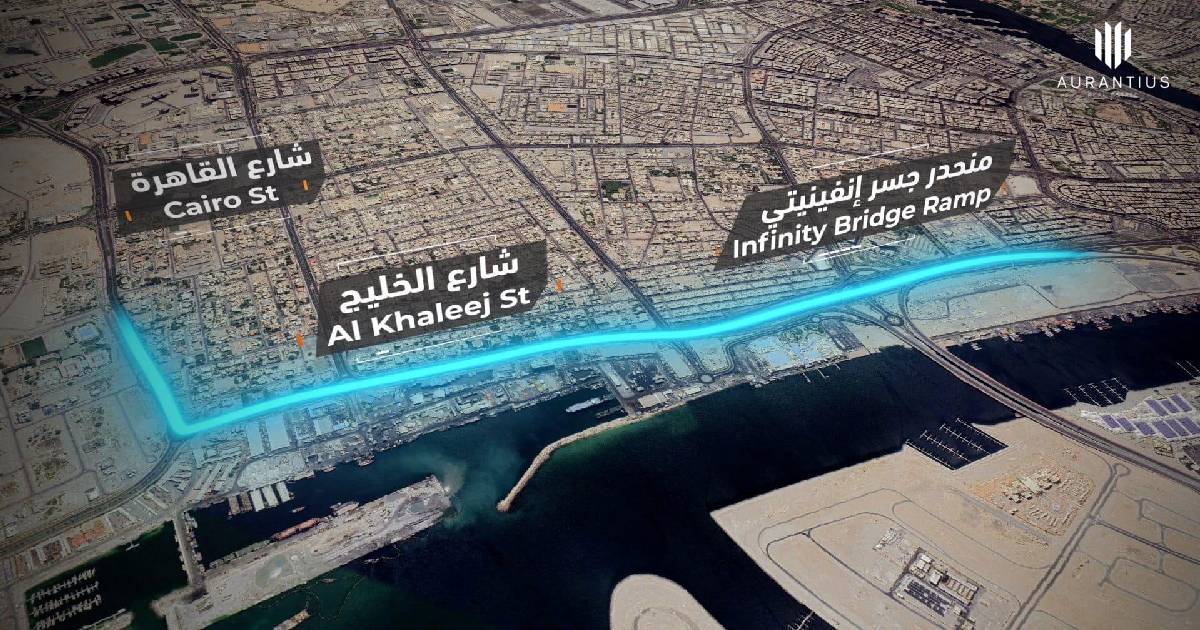
The six-lane tunnel has three lanes in each direction and a combined capacity of 12,000 vehicles per hour. It extends from the end of the Infinity Bridge ramp in Deira to the intersection of Al Khaleej Street and Al Wuheida Street.
For residents, the immediate benefit is straightforward: fewer interruptions along an important coastal route serving Abu Hail, Al Wuheida and Al Mamzar.
For property investors, the more important question is whether the new road connection improves the practical accessibility of established Deira neighbourhoods and the rapidly developing Dubai Islands masterplan.
The answer is yes on connectivity—but investors should avoid turning that infrastructure improvement into an automatic forecast of higher prices or rental yields. Accessibility is one part of a property’s value proposition alongside entry price, future supply, building quality, tenant demand and project delivery.
Al Khaleej Street Tunnel — Key Facts
Opened: 8 November 2026
Length: 1,650 metres
Lanes: 3 in each direction
Total capacity: 12,000 vehicles per hour
Route: Infinity Bridge ramp to Al Khaleej Street / Al Wuheida Street
Areas served: Deira, Abu Hail, Al Wuheida and Al Mamzar
Major development connection: Dubai Islands
Wider project: Al Shindagha Corridor Development Project
Where Does the New Tunnel Run?
The tunnel begins at the end of the Infinity Bridge ramp in Deira and runs beneath the Al Khaleej Street corridor toward the Al Wuheida Street intersection.
RTA says the completed route provides free-flowing movement for motorists travelling from Infinity Bridge toward Deira and Al Mamzar and in the opposite direction.
The surrounding road package also includes converting roundabouts on Cairo Street and Al Wuheida Street into signal-controlled intersections, improving Cairo Street and linking the Dubai Islands bridge ramp into the new tunnel toward Al Mamzar.
| Location | Practical Connectivity Change |
|---|---|
| Deira | More continuous movement between Infinity Bridge and the eastern Deira corridor |
| Abu Hail | Improved access to the upgraded Al Khaleej and Cairo Street network |
| Al Wuheida | Reduced dependence on the former roundabout configuration and better through-movement |
| Al Mamzar | More direct movement from the Infinity Bridge side toward the coastal district |
| Dubai Islands | Bridge ramp integrated with the Al Khaleej Street tunnel toward Al Mamzar |
The Bigger Story Is the 13km Al Shindagha Corridor
The tunnel should not be analysed as an isolated road project.
It forms part of the wider Al Shindagha Corridor Development Project, which extends approximately 13 kilometres across Sheikh Rashid Road, Al Mina Street, Al Khaleej Street and Cairo Street.
RTA says the wider programme includes upgrades to 15 intersections and is expected to serve approximately one million people, including residents and users of Dubai Islands, Dubai Maritime City and Port Rashid.
Once the wider corridor works are completed, RTA projects that journey time along the relevant route will fall from 104 minutes to 16 minutes by 2030.
Aurantius has previously examined the wider relationship between transport infrastructure and property demand in its Dubai Infrastructure Push: Blue Line, Roads & Hubs analysis.
What Changes for Deira Property?
Deira is an established urban market rather than a new master-planned community. Its property performance is therefore influenced by a mixture of mature residential buildings, commercial activity, traditional retail, ports, logistics and older road networks.
For areas such as Abu Hail and Al Wuheida, the new tunnel removes part of the traffic friction associated with moving through the Al Khaleej Street corridor.
That can improve the practical appeal of properties for residents whose daily travel depends on links toward Bur Dubai, central Dubai, Infinity Bridge or Al Mamzar.
But improved access should not be converted directly into a guaranteed property-price premium. Many older buildings in Deira differ significantly in age, maintenance, parking provision, unit layout and service quality.
In an established district, the infrastructure benefit is likely to be strongest where a property already has competitive rent, good building management and a location that meaningfully benefits from the new route.
Al Mamzar Gains a More Direct Coastal Connection
Al Mamzar is a lower-density coastal district whose appeal is tied partly to beaches, villas, schools and proximity to northern Dubai and Sharjah.
RTA specifically identifies Al Mamzar as one of the areas benefiting from the new free-flow traffic route from Infinity Bridge.
For end-users, this can reduce one of the area’s practical disadvantages: the need to navigate congested sections of older Deira road infrastructure when travelling toward the central parts of the city.
For investors, the relevant test is whether that improved accessibility translates into stronger tenant demand for the exact property type being considered. Villa demand, low-rise apartments and older buildings do not respond identically to a road improvement.
Dubai Islands Is the Most Important Development-Side Beneficiary
From a future-development perspective, Dubai Islands is arguably the most important location connected to the corridor.
RTA has connected the bridge ramp from Dubai Islands into the Al Khaleej Street Tunnel toward Al Mamzar, integrating the emerging waterfront masterplan more directly into the mainland road network.
That matters because Dubai Islands is still moving through a major infrastructure and construction cycle. Roads, utilities, residential developments, marine works, beaches and hospitality components are being delivered in phases.
Aurantius’ Dubai Islands Property Prices 2026 analysis explains why transaction growth on the islands needs to be interpreted together with infrastructure delivery and future supply.
Infrastructure Is Moving Beyond Roads on Dubai Islands
The new tunnel is only one part of the infrastructure story affecting the islands.
Nakheel is also advancing major marine works along Island B’s western shoreline, including approximately three kilometres of shoreline upgrades, new breakwaters and around 320 metres of new beach frontage.
Those works are targeted for completion in Q4 2027 and sit alongside billions of dirhams of residential and utility construction.
Aurantius covers that programme in the Dubai Islands 3km Beach Upgrade 2027 Investor Guide.
For investors, the relevance is not that infrastructure guarantees appreciation. It is that a future waterfront development becomes easier to value when roads, beaches, utilities and community access move from renderings into physical delivery.
A Second Major Dubai Islands Bridge Is Still Under Construction
The Al Khaleej Street connection is not the final major road upgrade planned for Dubai Islands.
RTA is also constructing a new 1,425-metre bridge across Dubai Creek between the Infinity Bridge and the Port Rashid redevelopment area.
The bridge will provide four lanes in each direction with a combined capacity of approximately 16,000 vehicles per hour.
It will also include a dedicated pedestrian and cycling route and connect with approximately two kilometres of surface roads on the Dubai Islands and Bur Dubai sides.
| Infrastructure | Capacity / Function | Property Relevance |
|---|---|---|
| Al Khaleej Street Tunnel | 12,000 vehicles/hour | Improves mainland movement toward Deira and Al Mamzar |
| Future Dubai Islands–Bur Dubai Bridge | 16,000 vehicles/hour | Adds another major direct mainland access route |
Does Better Infrastructure Automatically Increase Property Prices?
No.
Transport infrastructure can strengthen a location by reducing travel friction, expanding the practical catchment area and improving access to employment, leisure and commercial centres.
But the effect on an individual property depends on what buyers have already priced in.
A property bought at a large speculative premium because a tunnel is opening may still underperform a better-priced asset elsewhere.
Dubai’s broader residential market is also becoming more price-sensitive. Aurantius’ Dubai Property Price Index October 2026 shows why strong liquidity can coexist with softer comparable pricing.
Resident vs Investor: How to Read the Tunnel Differently
| Question | Resident Perspective | Investor Perspective |
|---|---|---|
| Immediate benefit | More efficient movement through Al Khaleej Street | Potentially stronger accessibility proposition for tenants and buyers |
| What matters most | Actual daily travel route | Entry price and whether improved access is already priced in |
| Biggest future catalyst | Completion of the wider corridor | Full road, beach, hospitality and residential infrastructure delivery |
| Main risk | Construction disruption elsewhere on the corridor | Overpaying for an infrastructure narrative before demand is proven |
Technical Features of the New Tunnel
The project also includes several engineering and sustainability milestones.
Nearly 11 million work hours were recorded during construction with no injuries reported by RTA.
2,200 engineers, technicians and workers contributed to the project.
350 pieces of equipment and machinery supported construction.
77% of approximately 522,000 cubic metres of excavated material was reused in other projects.
35 million mosaic pieces form the tunnel’s skyline mural designed by Emirati artist Maryam Al Hathboor.
What Investors Should Check Near the Corridor
1. Measure the property’s actual driving route to the tunnel rather than using a broad neighbourhood name.
2. Compare recent transaction prices before paying an “infrastructure premium.”
3. Separate established Deira assets from under-construction Dubai Islands projects.
4. Check future competing supply, especially on Dubai Islands.
5. For rental property, calculate actual net yield rather than assuming accessibility guarantees higher rent.
6. Check building age, parking, management and maintenance in older Deira stock.
7. For off-plan purchases, review payment plan, construction progress and handover obligations.
8. Treat the 2030 corridor completion as a long-term infrastructure milestone, not an immediate valuation guarantee.
Buyers evaluating under-construction waterfront developments can browse the Aurantius Dubai off-plan property portfolio alongside individual project documentation.
FAQ: Al Khaleej Street Tunnel 2026
Question: Is the Al Khaleej Street Tunnel open?
Answer: Yes. RTA officially opened the tunnel on 8 November 2026.
Question: How long is the Al Khaleej Street Tunnel?
Answer: It is 1,650 metres long and has three lanes in each direction.
Question: How many vehicles can the tunnel handle?
Answer: RTA states that the tunnel has a combined capacity of approximately 12,000 vehicles per hour in both directions.
Question: Which areas benefit from the new tunnel?
Answer: RTA specifically identifies Deira, Abu Hail, Al Wuheida and Al Mamzar, while the wider road package also supports Dubai Islands, Waterfront Market and Al Hamriya Port.
Question: Does the tunnel connect Dubai Islands?
Answer: Yes. The project includes connecting the bridge ramp from Dubai Islands to the new Al Khaleej Street Tunnel toward Al Mamzar.
Question: Will travel time immediately fall from 104 minutes to 16 minutes?
Answer: No. The 104-to-16-minute reduction is RTA’s target for the wider Al Shindagha Corridor after the broader improvement programme is completed by 2030.
Question: Will the tunnel automatically increase Deira or Dubai Islands property prices?
Answer: No. Better connectivity can strengthen a location’s utility and accessibility, but property performance still depends on entry price, supply, project quality, rents and buyer demand.
Question: What is the next major Dubai Islands transport project?
Answer: RTA is constructing a 1,425-metre Dubai Creek bridge linking Dubai Islands with the Bur Dubai side. It will provide four lanes in each direction and capacity of around 16,000 vehicles per hour.
Conclusion: The Tunnel Improves Accessibility — the Investment Case Still Depends on the Property
The opening of the Al Khaleej Street Tunnel is a meaningful infrastructure milestone for northern and historic Dubai.
At 1.65 kilometres long and capable of handling 12,000 vehicles per hour, the tunnel creates a more continuous road connection between Infinity Bridge, Deira and Al Mamzar while also integrating Dubai Islands more directly into the Al Khaleej Street network.
The longer-term significance becomes clearer when the tunnel is considered together with the full Al Shindagha Corridor programme, the future Dubai Islands–Bur Dubai bridge and the wider infrastructure being delivered around the islands.
For residents, the benefit is practical accessibility. For investors, the benefit is improved location utility and reduced infrastructure uncertainty.
Neither should be confused with guaranteed capital appreciation.
November 2026 investor takeaway: Treat the Al Khaleej Street Tunnel as confirmed infrastructure that strengthens access to Deira, Al Mamzar and Dubai Islands—not as a guaranteed percentage increase in property value. The stronger investment case is where improved connectivity combines with a sensible entry price, limited competing supply, good property quality and genuine end-user or tenant demand.