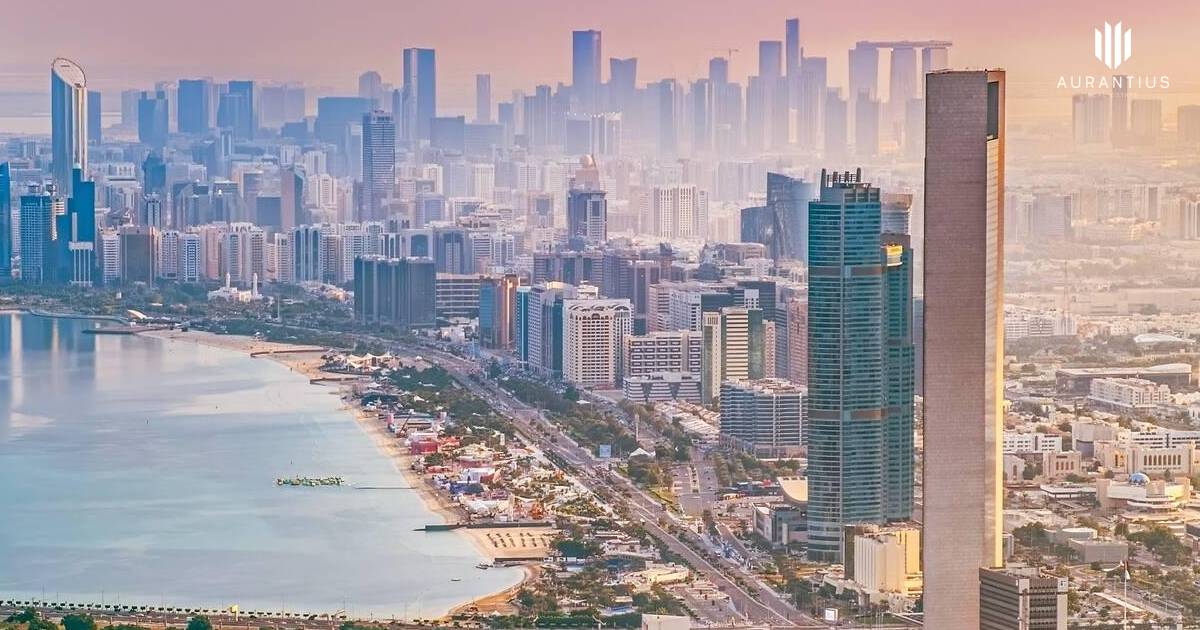

Abu Dhabi Property Market Hits AED 171.26 Billion in 9M 2026: Sales, Foreign Investment and Top Districts
Abu Dhabi’s real estate market recorded AED 171.26 billion in total transactions during the first nine months of 2026, placing the UAE capital on course for one of its strongest property-market years on record.
Data released by the Abu Dhabi Real Estate Centre (ADREC) shows transaction value increased 76.1% year-on-year from AED 97.19 billion, while transaction volume rose 32.8% to 38,483 deals.
The scale of growth is significant because Abu Dhabi generated more transaction value in nine months than the approximately AED 142 billion recorded during the whole of 2025.
The headline, however, needs to be read carefully. AED 171.26 billion is the value of all recorded real estate transaction categories, not simply property purchases. Direct sales accounted for AED 119.33 billion, mortgages for AED 45.92 billion, while Musataha, long-lease and gift transactions made up the remainder.
Abu Dhabi Real Estate — January to September 2026
Total transaction value: AED 171.26B
Total transactions: 38,483
Value growth: +76.1% YoY
Transaction volume growth: +32.8% YoY
Direct property sales: AED 119.33B
Mortgage transactions: AED 45.92B
Investment-zone foreign investment: AED 86.11B
Non-resident individual FDI: AED 17.22B
Property Sales Were the Main Growth Engine
Direct property sales recorded the strongest increase among the major transaction categories.
ADREC registered 23,749 sales worth AED 119.33 billion during the first nine months of 2026. Sales value increased 105% from AED 58.20 billion during the comparable period of 2025, while the number of sales rose 49.2%.
This gap between value growth and transaction growth is important. The number of properties changing hands increased substantially, but the amount of capital deployed increased even faster.
| Transaction Type | Transactions | Value | YoY Value Growth |
|---|---|---|---|
| Sales | 23,749 | AED 119.33B | +105% |
| Mortgages | 14,390 | AED 45.92B | +30.2% |
| Musataha & Long Lease | 268 | AED 5.57B | +52.9% |
| Gifts | 76 | AED 0.44B | +389% |
Mortgage Activity Also Accelerated
Mortgage transactions reached AED 45.92 billion across 14,390 deals. That represents a 30.2% increase in value and 13.2% growth in mortgage transaction count compared with the first nine months of 2025.
The increase matters because it shows that market expansion has not been limited to cash-backed purchases. Mortgage activity is rising as well, even as UAE financing conditions remain more expensive than during the earlier low-rate cycle.
Investors comparing borrowing conditions across the UAE can review Aurantius’ Dubai Mortgage Rates November 2026 analysis, which explains the current CBUAE Base Rate, EIBOR and fixed-versus-variable financing environment.
The Five Leading Abu Dhabi Districts
Abu Dhabi’s transaction growth is heavily concentrated across a group of high-profile island and master-planned districts.
| District | Transaction Value | Share of AED 171.26B Total |
|---|---|---|
| Al Reem Island | AED 29.86B | 17.4% |
| Al Hudayriyat Island | AED 28.62B | 16.7% |
| Al Saadiyat Island | AED 18.69B | 10.9% |
| Yas Island | AED 13.40B | 7.8% |
| Zayed City | AED 5.36B | 3.1% |
Combined, these five districts recorded approximately AED 95.93 billion in transactions, equal to roughly 56% of Abu Dhabi’s total real estate transaction value during the period.
That is substantial concentration, but it should not be described as 57% of “all capital deployed” without qualification. The denominator here is the full AED 171.26 billion transaction market, which includes mortgages and other transaction types as well as sales.
Al Reem Island Leads the Market at AED 29.86 Billion
Al Reem Island ranked first by recorded transaction value at AED 29.86 billion.
Reem’s position is notable because it combines an established stock of completed apartments with new development, employment access and a large existing residential population. That creates a broader transaction base than a district driven almost entirely by future off-plan supply.
High liquidity does not automatically mean every Reem Island building offers the same investment quality. Service charges, building age, management quality, achievable rent and incoming competing inventory can produce very different results within the same district.
Hudayriyat Emerges as a Major Capital Destination
Al Hudayriyat Island followed closely with AED 28.62 billion in transactions, equivalent to approximately 16.7% of emirate-wide transaction value.
The figure highlights the scale of capital flowing into newer premium masterplans, especially where waterfront positioning, villa supply and large-scale community infrastructure are central to the investment proposition.
Investors should nevertheless recognise that Hudayriyat is also one of the districts expected to absorb significant new supply through 2030. Strong current sales and substantial future inventory can coexist.
Saadiyat and Yas Continue to Attract Large-Scale Investment
Saadiyat Island recorded AED 18.69 billion, while Yas Island generated AED 13.40 billion.
The two districts serve different buyer profiles. Saadiyat is more heavily associated with premium beachfront housing, cultural infrastructure and ultra-prime positioning. Yas combines residential communities with major entertainment, hospitality and leisure infrastructure.
Investors should therefore compare individual projects rather than assuming that island-wide transaction momentum translates into identical performance across apartments, townhouses and villas.
Foreign Investment in Investment Zones Surged 131%
One of the strongest indicators in ADREC’s latest release is the growth of foreign capital.
Foreign investment within Abu Dhabi’s designated investment zones reached AED 86.11 billion, up 131% year-on-year.
Foreign investors accounted for approximately 81% of investment value within those investment zones.
Non-Resident FDI Reached AED 17.22 Billion
ADREC separately measures foreign direct investment by non-resident individual investors.
That figure reached AED 17.22 billion in the first nine months of 2026—more than double the AED 8.2 billion recorded during the whole of 2025.
Investors from 121 nationalities contributed, with the largest sources by value including the United Kingdom, China, Russia, the United States, France and Germany.
For international buyers comparing markets across the Emirates, Aurantius’ UAE Real Estate Investment Guide explains why Dubai, Abu Dhabi and other UAE markets should be assessed as separate investment cycles rather than one uniform property market.
Abu Dhabi Moves Into JLL’s “Transparent” Tier
Abu Dhabi’s expansion is also being accompanied by greater institutional transparency.
In JLL and LaSalle’s 2026 Global Real Estate Transparency Index, Abu Dhabi climbed eight positions from 41st in 2024 to 33rd globally in 2026.
With a score of 2.42, the emirate moved from the “Semi-Transparent” category into the “Transparent” tier. ADREC described Abu Dhabi as the most improved market in the 2026 index.
For institutional and cross-border capital, transparency matters because investment decisions depend on reliable market data, legal clarity, transaction processes, governance and professional standards—not only projected capital appreciation.
54 New Projects and More Real Estate Professionals
ADREC’s data also shows expansion on the supply and professional side of the market.
During the first nine months of 2026, the regulator registered 54 new real estate development projects and issued 3,677 real estate professional licences, with licences increasing 32% year-on-year.
ADREC also introduced the mandatory Abu Dhabi Real Estate Broker Transformation Course to strengthen regulatory knowledge, professional conduct and advisory standards.
Where Will Future Abu Dhabi Supply Be Concentrated?
A strong transaction market does not remove future supply risk.
ADREC expects six districts to account for approximately 77% of incremental real estate supply through 2030:
| Major Supply Districts Through 2030 |
|---|
| Al Saadiyat Island |
| Al Reem Island |
| Yas Island |
| Zayed City |
| Khalifa City |
| Al Hudayriyat Island |
ADREC’s H1 2026 market report put the emirate’s residential stock at approximately 409,000 units and projected around 71,000 additional residential units by 2030, with delivery expected to peak in 2028.
This means some of the locations receiving the most investment today are also expected to receive significant new competing inventory.
Investors evaluating off-plan opportunities across the UAE can also use the Aurantius off-plan project portal to compare how staged-payment investments differ from completed-property strategies.
Abu Dhabi and Dubai Are Moving Through Different Market Cycles
The latest Abu Dhabi numbers are particularly interesting when compared with Dubai.
Abu Dhabi is showing very strong year-on-year growth in transaction value and foreign investment. Dubai, meanwhile, remains highly liquid but has begun showing softer comparable residential pricing in several market indices.
Aurantius’ Dubai Property Price Index October 2026 report recorded a 5.5% year-on-year decline in the privately produced PIX© mix-adjusted residential index even as secondary-market activity strengthened.
Neither market should therefore be described simply as “better.” Abu Dhabi currently offers strong transaction momentum and rapidly rising international participation; Dubai offers deeper transaction history, a larger project universe and different liquidity characteristics.
International Investors Are Becoming More Important Across the UAE
Abu Dhabi’s 121-nationality investor base reinforces a wider UAE trend: property markets are increasingly dependent on international capital rather than domestic buyers alone.
The UAE is also continuing to improve the logistical side of repeat international travel. Aurantius’ Dubai Access Club 2026 guide covers a separate five-year visitor initiative for eligible repeat travellers. Such travel programmes can make repeated UAE visits easier, but they should not be confused with property investment returns or residence rights.
What the AED 171.26B Headline Does—and Does Not—Tell Investors
The latest ADREC figures confirm market depth, liquidity and strong international demand. They do not prove that every property in Abu Dhabi is correctly priced.
It does show: Transaction activity and capital deployment are growing rapidly.
It does show: Foreign capital has become a major force within investment zones.
It does show: Reem, Hudayriyat, Saadiyat and Yas are major liquidity centres.
It does not show: That every district has the same rental yield.
It does not show: That every off-plan launch will appreciate before handover.
It does not show: That heavy future supply cannot create localised price or rental competition.
Corporate activity should also be separated from individual property performance. Aurantius’ Emaar Development AED 15 Buyout analysis explains the difference between large-scale corporate real estate transactions and the economics of buying an individual home.
What Buyers Should Check Before Investing in Abu Dhabi
1. Compare actual registered transactions rather than relying only on asking prices.
2. Check the ownership framework applying to foreign buyers in the specific investment zone.
3. Separate off-plan and completed-property comparables.
4. Review the project’s future competing supply through 2030.
5. Calculate net rental return after service charges, vacancy and operating costs.
6. Check developer history, project registration and expected handover timetable.
7. If financing, calculate affordability using current UAE mortgage conditions rather than historical rates.
8. Define the exit buyer before purchasing: end-user, landlord, investor or luxury secondary-market buyer.
FAQ: Abu Dhabi Property Market 2026
Question: How much did Abu Dhabi real estate transactions reach in 2026?
Answer: Abu Dhabi recorded AED 171.26 billion across 38,483 real estate transactions during the first nine months of 2026.
Question: Did Abu Dhabi property sales reach AED 171 billion?
Answer: No. AED 171.26 billion is total transaction value. Direct sales accounted for AED 119.33 billion, while mortgages and other transaction categories make up the remainder.
Question: Which area had the highest transaction value?
Answer: Al Reem Island led at AED 29.86 billion, followed by Al Hudayriyat Island at AED 28.62 billion.
Question: How much foreign investment entered Abu Dhabi investment zones?
Answer: Foreign investment in designated investment zones reached AED 86.11 billion, up 131% year-on-year and representing 81% of investment value within those zones.
Question: How much non-resident FDI entered Abu Dhabi real estate?
Answer: Non-resident individual real estate FDI reached AED 17.22 billion in the first nine months of 2026.
Question: How many nationalities invested in Abu Dhabi?
Answer: ADREC recorded non-resident real estate FDI from investors representing 121 nationalities, led by the UK, China, Russia, the US, France and Germany by investment value.
Question: Is Abu Dhabi becoming a more transparent real estate market?
Answer: Yes. Abu Dhabi rose from 41st to 33rd globally in JLL and LaSalle’s 2026 Global Real Estate Transparency Index and moved into the Transparent tier.
Question: Which districts will receive most new supply through 2030?
Answer: Al Saadiyat, Al Reem, Yas, Zayed City, Khalifa City and Al Hudayriyat are projected to account for approximately 77% of incremental real estate supply through 2030.
Conclusion: Abu Dhabi’s 2026 Growth Is Significant, but Investors Still Need Project-Level Analysis
Abu Dhabi’s AED 171.26 billion transaction total confirms a major acceleration in market activity during 2026.
Direct property sales more than doubled in value to AED 119.33 billion, mortgage activity increased to AED 45.92 billion and international investment expanded sharply across designated investment zones.
Al Reem, Hudayriyat, Saadiyat, Yas and Zayed City are currently absorbing a large share of transaction value, while six major districts are expected to account for most new supply through 2030.
That combination creates an attractive but more analytical investment environment. Strong liquidity and foreign demand can support a market, but they do not remove project-level risks related to supply, pricing, service charges, developer execution and exit liquidity.
2026 investor takeaway: Use the AED 171.26B headline to understand Abu Dhabi’s market momentum, then move immediately to district and property-level analysis. The strongest investment is not automatically the area with the largest transaction value—it is the asset where purchase price, future supply, tenant demand, developer quality and exit strategy align.