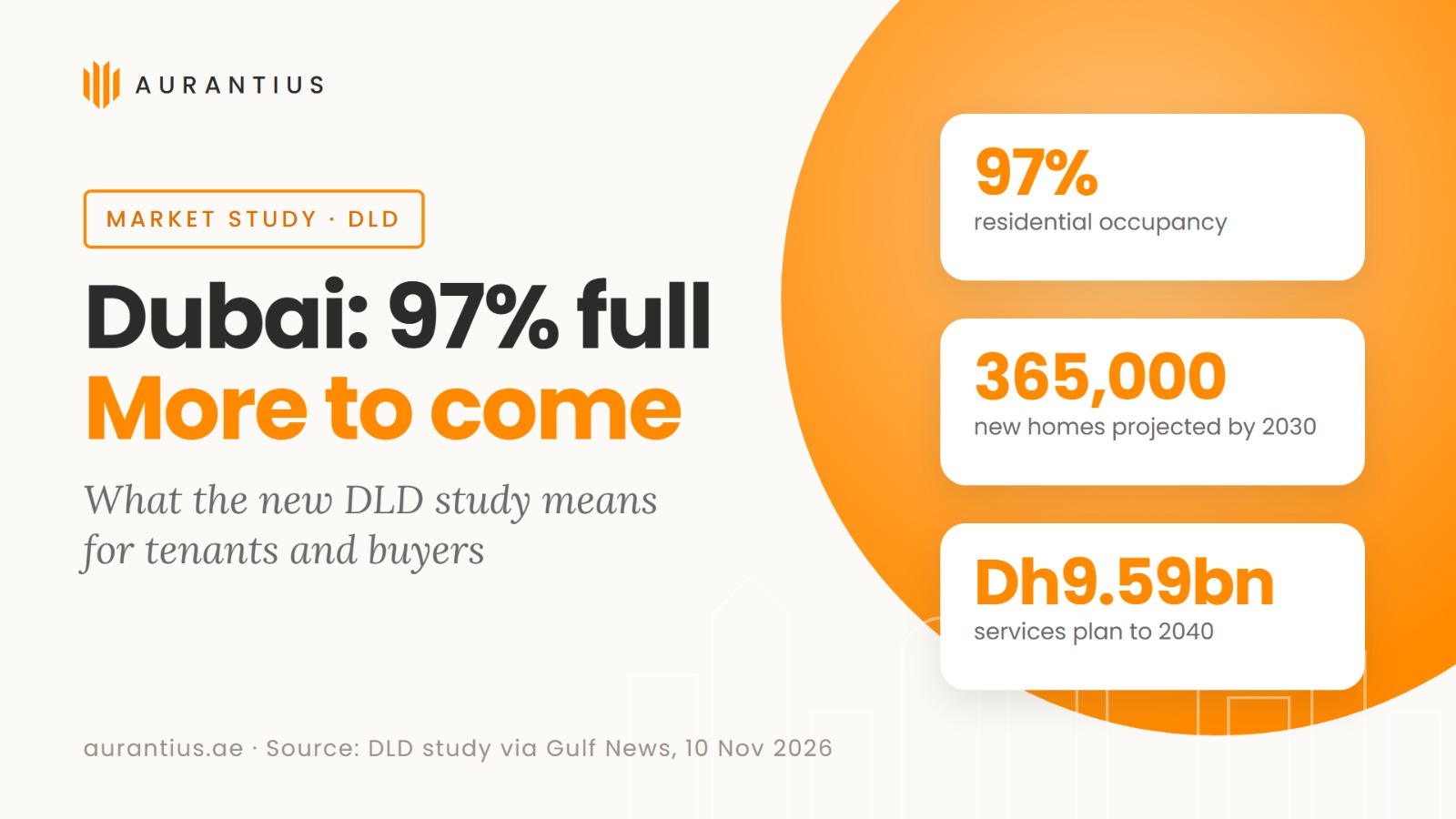

The Dubai occupancy rate has reached a level most cities can only imagine. According to a Dubai Land Department study approved by the Executive Council on 10 November, 97% of the city’s homes are occupied. Retail space is 98% full and offices sit at 94%.
The same study looks ahead to 2030, and the government paired it with a multi-billion dirham plan for schools, clinics and parks. Together they give the clearest picture yet of where Dubai’s housing market is heading. Here is what was announced and what it means for you.
The numbers in brief
| Dubai property indicator | Reported figure | Period / context |
|---|---|---|
| Residential occupancy | 97% | DLD study, November 2026 |
| Retail occupancy | 98% | DLD study, November 2026 |
| Office occupancy | 94% | DLD study, November 2026 |
| New residential homes | About 365,000 | Projected by 2030 |
| New office and retail space | About 1.1 million m² | Projected by 2030 |
| Community services plan | Dh9.59 billion | Through 2040 |
Source: Dubai Land Department study and Executive Council measures cited in the supplied article.
- Residential occupancy: 97%
- Retail occupancy: 98%
- Office occupancy: 94%
- New homes projected by 2030: about 365,000 residential units
- New office and retail space by 2030: about 1.1 million square metres
- Community services plan: Dh9.59 billion, running to 2040
Why 97% matters
A healthy rental market usually keeps some homes empty at any time, so people can move without a long search. At 97% occupancy, that buffer is thin. It explains why good units in popular communities are often taken within days, and why tenants feel they have little room to negotiate at renewal.
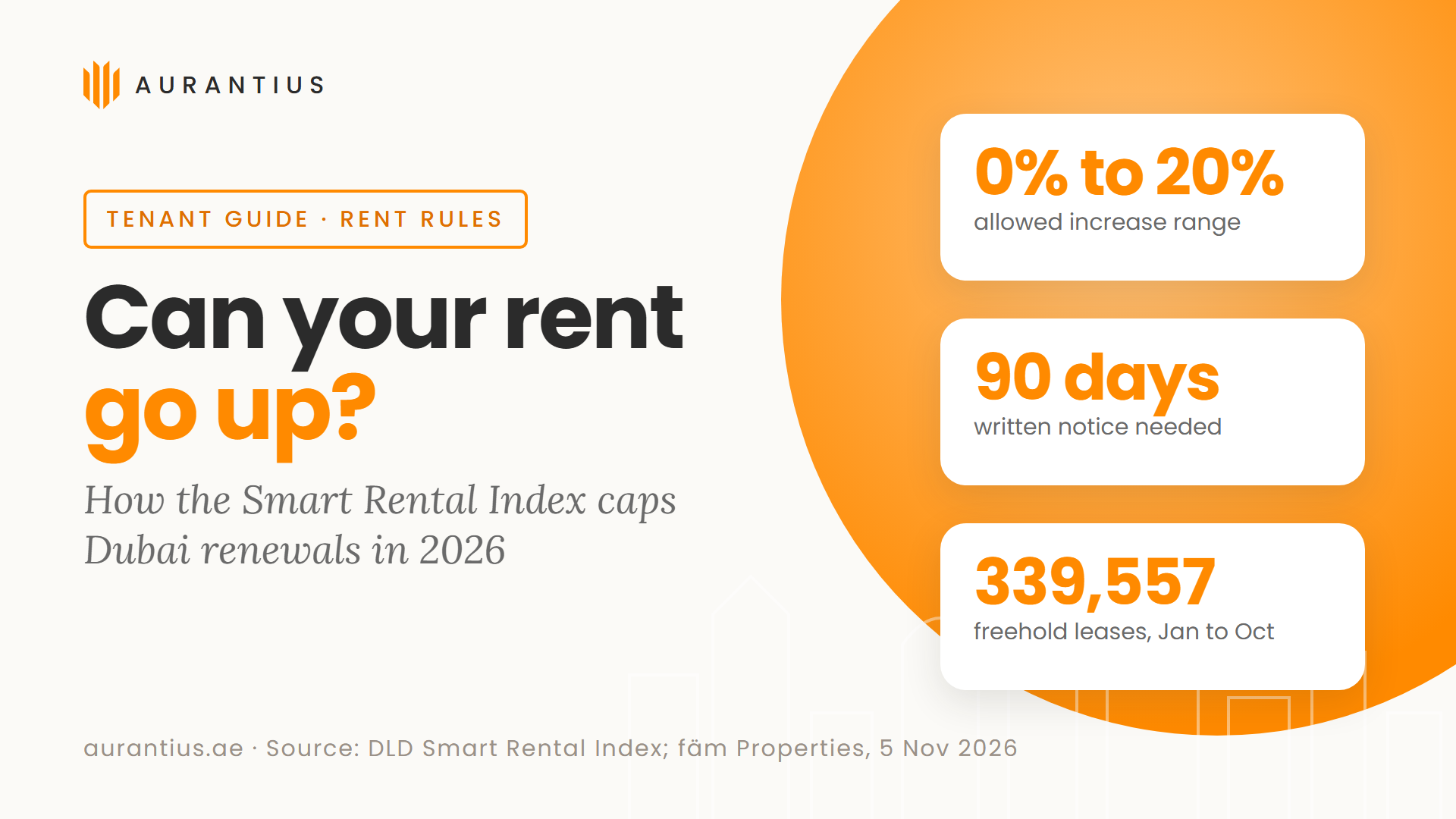
It also explains the strong rental activity this year. Freehold rental registrations reached 339,557 contracts between January and October 2026, up 6.8% on the same period last year.
The pipeline: 365,000 homes
The study projects the development of around 365,000 new residential units by 2030, along with about 1.1 million square metres of new office and retail space. That is a large pipeline by any standard, and it will reach the market in stages over the next few years.
New supply tends to land first in growing areas on the edges of the city, where much of the off-plan activity has been concentrated. Prime, central communities with little land left will see far less of it.
Dh9.59 billion for community life
Alongside the study, the Executive Council approved a Dh9.59 billion plan to improve community services and facilities across Dubai up to 2040. It covers healthcare, education, sports, safety and security, plus spaces for families and amenities for senior Emiratis. It will be rolled out in phases, with priority given to Emirati residential neighbourhoods.
The aim is to distribute services fairly across existing and planned communities, so new neighbourhoods get schools and clinics as they grow.
What this means for tenants, buyers and landlords
Tenants: Today the market is tight, so check your renewal against the DLD Smart Rental Index before agreeing to any increase. Over the next few years, new supply in growing areas should give you more choice, especially if you are flexible on location.
Buyers: High occupancy supports rental income and resale demand. When choosing an off-plan project, look closely at how much competing supply is planned nearby and how soon schools, transport and shops will open.
Landlords and investors: 97% occupancy is good news for income today. Over the medium term, well-located, well-maintained homes in established communities should hold their appeal best as more supply arrives.
Our view at Aurantius. The study shows a city that is full and planning for more people, not a market running out of steam. We expect the gap between strong locations and average ones to widen as the pipeline delivers. Location, transport and community amenities will matter more than ever.
FAQ: Dubai Occupancy and New Homes
What is the occupancy rate in Dubai?
Residential occupancy is 97%, retail 98% and offices 94%, according to a Dubai Land Department study approved in November 2026.
How many new homes will Dubai have by 2030?
The study projects around 365,000 new residential units by 2030.
Will rents in Dubai go down?
Rents depend on location and timing. New supply should widen choice in growing areas, while prime central communities with little new land are likely to stay in demand.
What is the Dubai community services plan 2040?
A Dh9.59 billion plan for healthcare, education, sports, safety and community facilities across Dubai, rolled out in phases to 2040.
Looking for a Home or Rental Investment?
Speak to Aurantius Real Estate
Looking for a home before the next wave of supply, or wondering what your property will earn? DM us HOMES or visit aurantius.ae.
Sources
- Gulf News, “Sheikh Hamdan unveils more than Dh11 billion plan for Dubai’s future”, 10 November 2026
- Gulf Business, “Dubai approves over Dhs11bn plan for community facilities, includes new airport Metro link”, 11 November 2026
- fäm Properties market update on DLD rental registrations, 5 November 2026 (Jan to Oct 2026 freehold rental contracts)