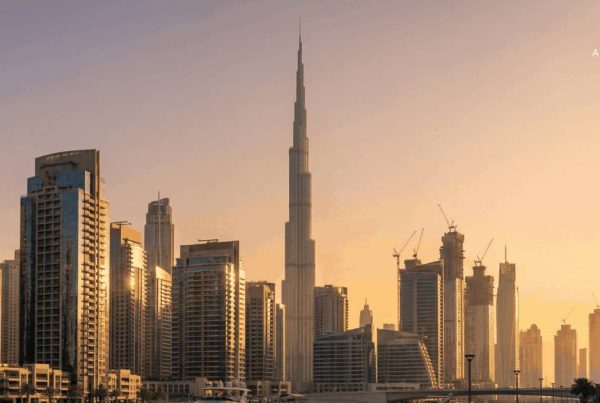


Buy Property in Dubai in 2026: Prices, Yields, Financing, and Investment Strategy
Dubai’s property market in 2026 continues to attract both regional and international capital, supported by population growth, business migration, infrastructure expansion, and sustained demand across residential segments. For investors, the market now requires a more disciplined approach than in earlier momentum-driven cycles. Returns remain attractive by international standards, but outcomes depend increasingly on asset selection, pricing discipline, financing structure, and location-specific supply dynamics.
For buyers considering whether to enter the market this year, the core question is no longer simply whether Dubai is investable. The more relevant question is where, at what price point, and for which objective. Some locations remain income-focused, others are better suited to capital appreciation, and premium districts continue to behave differently from mid-market communities. Understanding these distinctions is essential before committing capital. For a broader perspective, see this complete investor guide.
Dubai Real Estate Market Overview in 2026
Dubai’s residential market has moved into a phase of more measured expansion after the sharp gains seen in recent years. In 2026, price growth is expected to remain positive, but more selective. Prime and supply-constrained districts continue to show resilience, while some mid-market locations may experience more moderate performance as additional stock is delivered. This shift matters for investors because it reduces the margin for error. Entry timing, community selection, and product type now have a greater effect on returns than broad market momentum alone.
From an investment perspective, the market remains supported by several structural drivers. These include continued inward migration, Dubai’s business-friendly tax environment, strong demand from overseas buyers, and ongoing infrastructure-led expansion. At the same time, investors should monitor the pace of new supply, mortgage affordability, and service-charge burdens, all of which affect real net returns. You can also explore why Dubai real estate remains strong in 2026.
Why Investors Continue to Buy Property in Dubai
Dubai remains attractive to property investors for three main reasons: rental income, capital preservation potential, and accessibility to international buyers. Gross rental yields in many parts of the city remain above those seen in major gateway markets such as London, Paris, or Singapore. In addition, there is no annual property tax in the conventional sense that applies in many mature Western markets, which supports income efficiency for landlords.
The market also offers a broad spectrum of entry points. Investors can access affordable apartment-led communities for income generation, growth corridors linked to infrastructure for appreciation, or established luxury districts for asset quality and long-term demand durability. This diversity is one of Dubai’s strongest competitive advantages, but it also means investors need a clearly defined strategy before buying.
Property Prices in Dubai in 2026
Pricing in 2026 varies significantly by location, product quality, developer reputation, and whether the asset is ready or under construction. Broadly, apartments in mainstream communities tend to trade within a lower price-per-square-foot range than villas or branded luxury stock. Prime waterfront and central districts command a clear premium, while outer growth areas remain more accessible but carry a different risk-return profile.
| Property Type | Indicative 2026 Price Range (AED per sq. ft.) | Typical Investor Profile |
|---|---|---|
| Apartments | 900 to 1,500 | Yield-focused and mid-market investors (see full guide) |
| Villas and Townhouses | 1,300 to 2,500 | End-users, family offices, long-term investors (market insights) |
These are broad market ranges rather than universal benchmarks. Investors should analyse pricing at the building and developer level rather than rely only on area averages. In Dubai, two assets within the same district can perform very differently depending on maintenance standards, handover quality, layout efficiency, and service charges.
Rental Yields and Return on Investment
| Area | Indicative Gross ROI | Primary Investment Case |
|---|---|---|
| Jumeirah Village Circle | 7.0% to 9.0% | Income-driven apartment investment (why Dubai is strong) |
| Business Bay | 6.0% to 8.0% | Balanced yield and centrality (investment strategy) |
| Dubai Marina | 6.0% to 7.0% | Established rental demand and liquidity (safe haven analysis) |
| Downtown Dubai | 5.0% to 6.0% | Prime positioning and long-term asset quality (growth forecast) |
Indicative mortgage rates generally range from around 3.49 percent to 5.25 percent, depending on borrower profile and lender structure. Investors using leverage should assess stress-tested repayment assumptions rather than relying only on current rate conditions.
Cost of Buying Property in Dubai
The purchase price is only part of the required capital outlay. Buyers should budget for transaction costs that typically add around 6 to 8 percent to the property value. These costs may include the Dubai Land Department transfer fee, brokerage commission, registration and administrative fees, valuation charges, and mortgage-related processing costs where applicable.
For investors, service charges deserve equal attention. In some buildings, high annual service charges can materially weaken net rental yield even when the gross return initially appears attractive. This is particularly important in premium towers and amenity-heavy communities. A realistic underwriting model should therefore include acquisition costs, annual operating expenses, financing costs, and vacancy assumptions before any investment decision is made.
Freehold vs Leasehold: What Foreign Investors Need to Know
Dubai allows foreign investors to buy property in designated freehold areas, which has been one of the key drivers behind international capital inflows into the market. In a freehold structure, the buyer owns the property outright and can generally sell, lease, or hold it as an investment asset. Leasehold arrangements, by contrast, provide rights for a limited term rather than full perpetual ownership.
For most international investors, freehold areas are the more relevant framework. The quality of the freehold district, however, matters just as much as the ownership structure itself. Not all freehold communities offer the same liquidity, tenant demand, or appreciation profile.
Risks and Market Considerations
Dubai remains an attractive real estate market, but it is not without risk. Supply expansion in certain submarkets can place pressure on rents and resale values. Off-plan investors face execution and delivery risk. Mortgage users are exposed to interest-rate movements. International buyers must also consider currency exposure if their income or funding base is denominated outside the UAE dirham.
Another key risk is buying into a project or community on headline marketing rather than financial fundamentals. Investors should pay close attention to developer track record, service-charge sustainability, tenant demand depth, and comparable market pricing. In a market with strong narratives, disciplined underwriting remains a competitive advantage.
Who Should Buy Property in Dubai in 2026?
Dubai in 2026 is best suited to investors who are clear about their objective. Income-focused buyers may find compelling opportunities in established apartment communities with strong leasing demand and manageable service-charge structures. Long-term growth investors may prefer development corridors with improving connectivity and future commercial significance. Premium buyers seeking asset quality and international prestige may continue to favour prime central and waterfront districts despite lower initial yields.
By contrast, investors seeking quick speculative gains without regard to entry price, net yield, or supply risk are more exposed than in earlier phases of the market. The current cycle rewards selectivity rather than indiscriminate exposure.
Conclusion
Buying property in Dubai in 2026 can still make financial sense, but the market now requires more precision than broad optimism. The strongest outcomes are likely to come from buyers who match product type to investment objective, underwrite net rather than gross returns, and evaluate locations based on actual supply-demand fundamentals rather than general sentiment.
Dubai remains one of the more compelling global real estate markets for investors seeking a combination of rental income, international accessibility, and medium-term growth potential. However, as with any mature market, performance will be driven less by the city in general and more by the specific asset chosen within it.
Frequently Asked Questions
Is 2026 a good year to buy property in Dubai?
For many investors, yes. The market remains supported by structural demand, but returns are becoming more asset-specific. Buyers should focus on pricing discipline and strategy rather than assume broad-based gains.
What rental yields can investors expect in Dubai?
Gross rental yields in many residential locations typically range from 6 to 9 percent, though net returns will vary after service charges, vacancy, management costs, and financing expenses.
Is off-plan better than ready property?
Off-plan may offer stronger capital appreciation potential and lower initial capital outlay, while ready property offers immediate income and greater execution certainty. The better option depends on investment objective and risk tolerance.
Can foreigners buy property in Dubai?
Yes. Foreign buyers can purchase property in designated freehold areas, which has been a major factor in Dubai’s appeal as an international investment market.
What additional costs should buyers budget for?
In addition to the purchase price, buyers should usually budget around 6 to 8 percent for transaction costs, as well as ongoing service charges and any financing-related expenses.