

DIP Holding IPO 2026: What Dubai Investments Park’s DFM Listing Means for Property Investors
Dubai Investments Park is moving from being primarily a physical real estate and infrastructure ecosystem to also becoming directly accessible through the public equity market.
On 19 October 2026, Dubai Investments PJSC announced plans to sell 1,735,243,300 existing shares in DIP Holding, representing 20% of the company’s issued share capital, through an initial public offering on the Dubai Financial Market.
The subscription period is expected to open on 27 October 2026 and close on 3 November 2026. The final offer price is scheduled to be announced on 4 November, with trading expected to begin on or around 11 November 2026, subject to regulatory approvals and market conditions.
For Dubai property investors, the interesting question is not simply whether the IPO will perform well after listing. DIP Holding offers exposure to a fundamentally different real estate model: investors are buying shares in a company whose core business is long-term ground rent and infrastructure services rather than buying an individual apartment, villa or off-plan unit.
That creates an alternative way to obtain real estate-linked income exposure — but it also introduces equity-market risks that physical property owners do not face in the same way.
DIP Holding IPO — Key Facts
Selling shareholder: Dubai Investments PJSC
Shares offered: 1,735,243,300 existing ordinary shares
Stake offered: 20%
Dubai Investments ownership after IPO: Approximately 80%, assuming offer size is unchanged
Subscription opens: 27 October 2026
Subscription closes: 3 November 2026
Final offer price: Expected 4 November 2026
Expected DFM listing: 11 November 2026
Retail minimum application: AED 5,000, according to the offering terms
What Exactly Is DIP Holding?
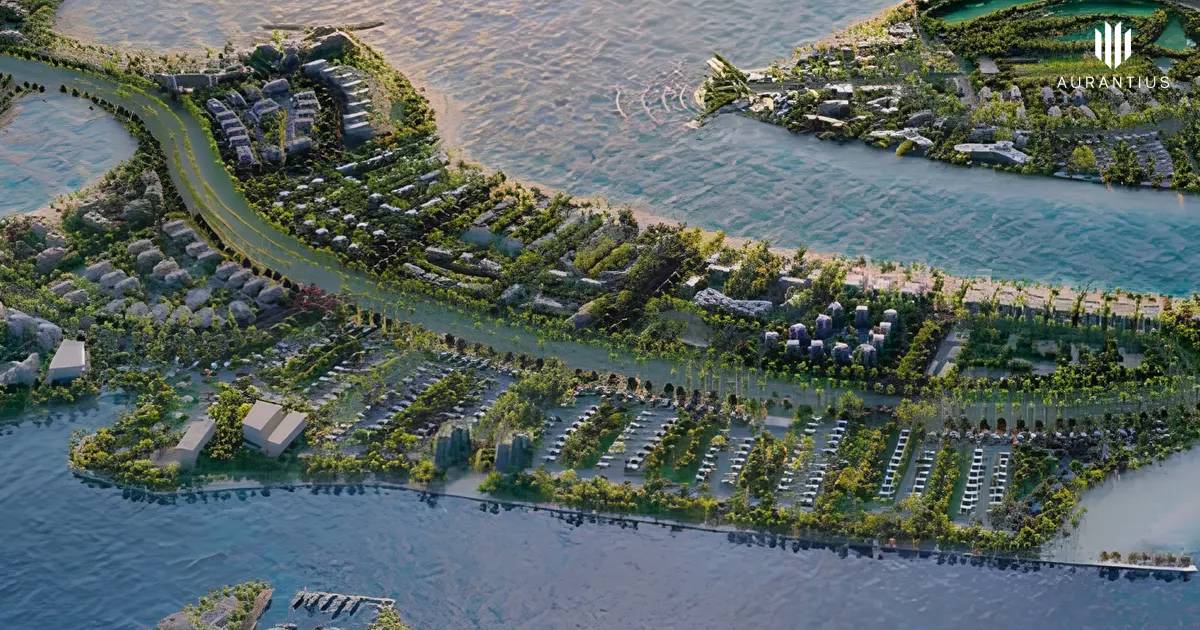
DIP Holding is the company behind Dubai Investments Park, or DIP, a mature mixed-use business and residential district covering approximately 23 million square metres.
Through Dubai Investments Park Development Company, the group operates what it describes as an infrastructure-like ground-rent and services platform.
Rather than following the traditional developer model of constructing towers and selling individual apartments, DIP generally leases serviced land plots to tenants on long-term agreements. Those tenants can then develop industrial, logistics, commercial or residential facilities on the leased land.
The company’s main income streams include:
Ground rent: Long-term rent paid by tenants for use of serviced land.
Sub-leasing fees: Revenue generated when tenants sublease space to third parties.
Services and ancillary income: Infrastructure, maintenance, sewerage, treated wastewater and transfer-related charges.
This gives DIP Holding a different risk profile from a conventional developer whose revenue depends heavily on selling new homes every year.
The Park Is Already a Mature Operating Ecosystem
Unlike an early-stage masterplan, Dubai Investments Park is already heavily occupied and economically active.
| DUBAI INVESTMENTS PARK — OPERATING SCALE | |
|---|---|
| Metric | Reported Position |
| Master-Planned Area | Approximately 23 million sq. m. |
| Gross Leasable Land Area | Approximately 17.1 million sq. m. |
| Tenants | Approximately 1,000 |
| Sub-Leases | Approximately 5,700 |
| Residents | More than 150,000 |
| Ground-Lease Occupancy | 99.9% as of 30 June 2026 |
The 99.9% figure requires careful interpretation. It refers to ground-lease occupancy across DIP’s portfolio. It should not be interpreted as meaning every apartment, warehouse or commercial premises inside Dubai Investments Park is 99.9% occupied.
Why the Business Model Matters to Property Investors
A conventional residential investor normally purchases one specific asset.
That investor then carries risks such as vacancy, tenant quality, maintenance, service charges, mortgage costs and the resale value of the individual property.
DIP Holding shareholders instead obtain an equity interest in a company with revenue spread across a large land and infrastructure ecosystem.
There is no individual title deed, no personally selected tenant and no ability to renovate or sell one specific underlying property.
For investors used to direct ownership, Aurantius’ Ready vs Off-Plan Dubai 2026 analysis provides a useful comparison of the control and cash-flow characteristics of physical property investment.
DIP Holding’s 2025 and H1 2026 Financial Performance
| Financial Metric | FY 2025 | H1 2026 |
|---|---|---|
| Revenue | AED 960 million | AED 492 million |
| Adjusted EBITDA | AED 678 million | AED 355 million |
| Adjusted EBITDA Margin | 71% | 72% |
| Cash Conversion | 98% | 97% |
| Profit | AED 1.093 billion | AED 444 million |
The high EBITDA margin reflects the relatively capital-light nature of the operating model compared with a business that continuously needs to finance large new development programmes.
That does not make earnings risk-free. Future income remains sensitive to lease pricing, tenant activity, subleasing levels, economic demand and the broader performance of Dubai’s logistics, industrial, commercial and residential sectors.
The Dividend Story: AED 700 Million Target for 2026
DIP Holding is positioning income distribution as a central part of its investment proposition.
The company currently expects annualised dividends of:
| Financial Year | Expected Annualised Dividend |
|---|---|
| 2026 | AED 700 million |
| 2027 | AED 725 million |
| 2028 | AED 750 million |
The first post-IPO distribution is currently targeted at AED 350 million in April 2027 in respect of the second half of 2026.
All dividend distributions remain subject to board recommendation, shareholder approval and available distributable reserves.
An exact IPO dividend yield cannot yet be calculated as of 20 October 2026 because the IPO price range has not been announced. The price range is scheduled for 27 October, with the final offer price expected on 4 November.
Investors should therefore be cautious with early claims that the IPO will produce a guaranteed 7%, 8% or any other specific yield. Dividend yield depends directly on the eventual share price.
How the IPO Is Divided Between Investors
| Tranche | Share of Offering | Shares | Eligible Investors |
|---|---|---|---|
| First Tranche | 5% | 86,762,165 | Retail and other eligible UAE investors |
| Second Tranche | 92% | 1,596,423,836 | Qualified / professional investors |
| Third Tranche | 1% | 17,352,433 | Eligible Dubai Investments employees |
| Fourth Tranche | 2% | 34,704,866 | Eligible natural-person Dubai Investments shareholders |
Retail investors in the first tranche can apply from AED 5,000. Successful first-tranche subscribers have a guaranteed minimum allocation of 2,000 shares, subject to the prospectus terms and sufficient application amount.
Existing Dubai Investments shareholders seeking access to the dedicated fourth tranche must meet the published record-date conditions. The record date is 28 October 2026, with shares required to have been acquired no later than 26 October to qualify under the announced terms.
This Is a Secondary Offering — DIP Holding Does Not Receive the IPO Cash
This is one of the most important details for investors analysing the transaction.
All shares being offered are existing shares owned by Dubai Investments PJSC. DIP Holding is not issuing new shares to raise expansion capital.
The IPO proceeds therefore go to Dubai Investments as the selling shareholder rather than into DIP Holding’s balance sheet.
That differs from a primary IPO where a company issues new shares and receives fresh capital directly.
DIP Holding Shares vs Buying a Dubai Property
| DIP HOLDING IPO VS DIRECT PROPERTY OWNERSHIP | ||
|---|---|---|
| Factor | DIP Holding Shares | Physical Dubai Property |
| Entry Capital | Retail IPO applications from AED 5,000 | Typically substantially higher |
| Ownership | Equity in company | Direct title to specific property |
| Income | Potential dividends | Rental income |
| Tenant Management | Handled operationally by company | Owner or property manager handles tenant relationship |
| Service Charges | Not billed directly to shareholder as unit owner | Recurring cost can materially reduce net yield |
| Liquidity | Tradable on DFM after listing, subject to market liquidity | Sale process normally takes longer and carries transaction costs |
| Price Volatility | Market price can move daily | Valuation changes are less continuously visible |
| Control | Minority shareholder has limited operational control | Owner controls leasing, furnishing and sale decisions within legal framework |
Direct property ownership also comes with operating expenses. Aurantius’ Dubai Service Charges 2026 guide explains how annual building costs can reduce net rental returns even when headline gross yields look attractive.
The Southern Dubai Growth Corridor Is Part of the Investment Case
Dubai Investments Park sits between two of Dubai’s most important long-term economic assets: Jebel Ali Port and Al Maktoum International Airport.
DIP also has direct access to major highways and a dedicated Dubai Metro station.
This positioning is particularly relevant to logistics and industrial demand because occupiers value connections between warehousing, manufacturing, aviation, ports and the regional road network.
For physical property investors, the same infrastructure-led principle applies when evaluating emerging locations. Buying near a growth corridor can be attractive, but infrastructure should be assessed alongside entry price, future supply and actual occupier demand rather than assumed to guarantee appreciation.
Where Future Revenue Growth Could Come From
DIP Holding has identified three important organic growth mechanisms.
First, ground-rent repricing. Lease rates are periodically reset according to contractual and market mechanisms. As of June 2026, approximately 0.8 million sq. m. had reportedly been repriced at an average rental increase of around 28%.
A further approximately 10.7 million sq. m., representing around 86% of the operating ground-rent portfolio, is due for contractual repricing between the second half of 2026 and 2030.
Second, increased subleasing activity. Higher occupancy and tenant subleasing can increase fee income.
Third, repositioning land toward higher-value use. Industrial plots can, where commercially and legally appropriate, be repositioned toward logistics or other higher-rent uses.
These are potential growth drivers, not guaranteed earnings outcomes. Future rent resets still depend on market conditions and contractual implementation.
The Main Risks Property Investors Should Not Ignore
IPO price risk: The offer price range has not yet been announced as of 20 October 2026, so valuation remains incomplete.
Equity-market volatility: Share prices can move quickly because of investor sentiment, interest rates, geopolitical events or broader market conditions.
Dividend risk: Published dividend targets are intentions and remain subject to approvals and distributable reserves.
Concentration: The operating platform is heavily tied to one large master community, Dubai Investments Park.
Majority-shareholder influence: Dubai Investments is expected to retain approximately 80% after the IPO.
No direct property ownership: Shareholders do not own individual plots, apartments or warehouses and cannot control specific underlying assets.
Lease-market risk: Ground-rent and subleasing performance ultimately depend on sustained occupier demand.
Why Direct Property Still Has Advantages
The DIP Holding IPO should not be treated as a replacement for physical Dubai property. The two assets solve different investment objectives.
A property owner can live in the asset, lease it, renovate it, choose a tenant, use financing and potentially benefit from an individual unit’s scarcity or location.
Off-plan buyers can also spread capital across developer instalments rather than committing the entire purchase price on day one. Aurantius’ Dubai Property Payment Plans 2026 guide explains how those structures affect liquidity and handover risk.
Investors researching current developer inventory can also compare projects through the Aurantius Dubai Off-Plan Property section.
DIP Holding IPO Timeline
| Date | IPO Event |
|---|---|
| 19 October 2026 | Intention to float announced |
| 27 October 2026 | Offer opens and price range expected |
| 3 November 2026 | Subscription closes for all tranches |
| 4 November 2026 | Final offer price expected |
| 10 November 2026 | Retail allocation and refund process expected |
| 11 November 2026 | Expected DFM listing |
What Does a Retail Investor Need to Subscribe?
Investors need a valid Dubai Financial Market Investor Number, or NIN, before subscribing.
Applications are expected to be available through the DFM platform and participating receiving banks.
A subscription application is not the same as a guaranteed full allocation. If demand exceeds the shares available to the relevant tranche, investors may receive fewer shares than requested and excess subscription money is returned according to the offering timetable.
Property Investor Decision Framework
Choose direct property exposure if: You want ownership of a specific asset, potential personal use, leverage through mortgage finance and control over leasing or resale.
Consider listed real estate-linked equity if: You prefer smaller entry capital, market liquidity and exposure to a diversified operating platform without direct property management.
Do not compare only headline yields: Property rental yield must be net of service charges, vacancy and operating costs, while equity dividend yield must be assessed against the actual IPO or market share price.
Do not ignore valuation: A strong business can still be an expensive investment if the IPO price implies an aggressive valuation.
Physical property investors should also account for ownership liabilities around completion. Aurantius’ Dubai Service Charges Before Handover guide explains how those costs can arise when a new property moves from construction into ownership.
FAQ: DIP Holding IPO 2026
Question: When does the DIP Holding IPO open?
Answer: Subscription is expected to open on 27 October 2026 and close on 3 November 2026, subject to the offering timetable.
Question: When will DIP Holding shares start trading?
Answer: Admission to trading on the Dubai Financial Market is currently expected on or around 11 November 2026, subject to regulatory approval and market conditions.
Question: How much of DIP Holding is being sold?
Answer: Dubai Investments intends to sell 1,735,243,300 existing shares representing 20% of DIP Holding’s issued share capital.
Question: What is the minimum retail investment?
Answer: The first retail tranche has a minimum application amount of AED 5,000, with further application amounts structured according to the prospectus terms.
Question: What dividend yield will DIP Holding offer?
Answer: An exact IPO dividend yield cannot yet be calculated as of 20 October 2026 because the offer price has not been announced. DIP Holding currently targets an annualised AED 700 million dividend for 2026, but the percentage yield will depend on the final share price and future approved distributions.
Question: Does DIP Holding own individual apartments and villas?
Answer: Its core model is different from a traditional residential developer. DIP Holding operates a long-term ground-rent and services platform through Dubai Investments Park, where tenants typically lease serviced plots and develop their own facilities.
Question: Does DIP Holding receive the money raised in the IPO?
Answer: No. The offering consists of existing shares sold by Dubai Investments PJSC. The proceeds therefore go to the selling shareholder rather than DIP Holding itself.
Question: Is buying DIP Holding shares the same as investing in Dubai property?
Answer: No. A shareholder owns equity in a listed company, while a property buyer owns a specific real estate asset. The income, liquidity, control, transaction costs and risks are materially different.
Conclusion: A New Type of Dubai Real Estate Exposure — but Price Still Matters
The DIP Holding IPO gives investors access to an unusual Dubai real estate-related business.
Rather than purchasing one apartment or funding a new off-plan development, investors can buy equity in the operator behind a 23 million sq. m. mixed-use ecosystem with approximately 1,000 tenants, 5,700 sub-leases and ground-lease occupancy of 99.9% as of June 2026.
The financial profile is also income-focused. DIP Holding reported AED 960 million of revenue in 2025, a 71% adjusted EBITDA margin and 98% cash conversion, followed by a 72% margin and 97% cash conversion in the first half of 2026.
Its announced dividend intentions further reinforce that income proposition.
However, none of these figures alone answer the most important investment question: what price will investors be asked to pay for those earnings and distributions?
Until the price range is announced on 27 October, claims about the IPO’s exact dividend yield or whether it is cheaper than physical Dubai property remain premature.
For property investors, the IPO is best viewed as a different portfolio tool rather than a direct substitute for owning real estate. Physical property provides control, potential leverage and ownership of a specific asset. DIP Holding offers diversification across a mature operating platform, lower entry capital and potentially greater trading liquidity — but with daily equity-market pricing and no direct control over individual properties.
Investor rule before 27 October: Evaluate the business now, but evaluate the investment only after the offer price range is published. Occupancy, margins and dividend targets describe the quality of the operating platform; the IPO price will determine how much investors are being asked to pay for it.
Investment note: This article is for general information and real estate market analysis. IPO participation involves equity-market risk. Investors should review the official prospectus, final offer price and their own financial circumstances before subscribing.