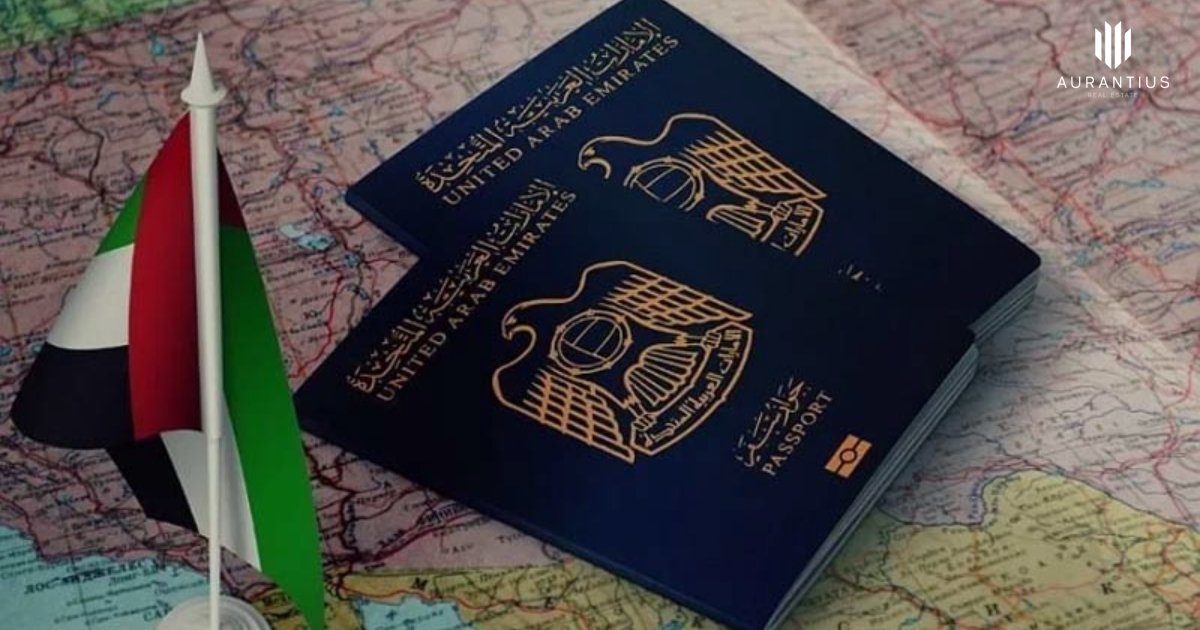

UAE moves to “grant citizenship” to companies, clarifies it is not personal citizenship
The UAE is sharpening its positioning as a global business base, and a new announcement from the Ministry of Economy and Tourism signals a clearer, more strategic direction for how the country wants companies to think about “national identity” in a commercial sense. During a media briefing linked to amendments to the Commercial Companies Law, the Ministry said it will “promote granting of UAE citizenship” to existing companies and to new companies established in the country.
The wording has attracted attention, so it is important to understand what is actually being proposed. The Minister of Economy and Tourism, Abdulla bin Touq Al Marri, clarified that this is not about granting citizenship to investors or company owners. Instead, the idea is closer to how businesses are commonly categorized worldwide: if you incorporate and operate in a country, you are treated as a company of that country, and you gain the practical benefits that come with that status.
In the minister’s explanation, the logic is straightforward. If you establish a company in Germany, you are a German company. If you establish a company in the UK, you are a UK company. In the same way, if you establish a company in the UAE, you are a UAE company. That is the method behind the concept being described as “granting UAE citizenship” to companies.
Why the UAE is emphasizing “company citizenship” now
The Ministry framed the decision as part of a broader effort to consolidate the UAE’s identity and economic reputation, strengthen national brands, and make it easier for UAE-based companies to access markets. The principle is that companies operating from the UAE should be able to benefit not only from domestic advantages, but also from the UAE’s expanding commercial network abroad.
One of the key points raised is that companies registered and established in the UAE can benefit from initiatives such as the Comprehensive Economic Partnership Agreement framework, which the UAE has been signing with a growing number of trade partners. The commercial idea is that a UAE company is not only positioned to operate efficiently inside the country, but can also use the UAE as a platform for wider regional and global market access.
The Ministry also highlighted that this is aligned with the UAE’s business environment: ease of doing business, modern infrastructure, and the ability to serve global markets from a highly connected location. Whether a company is locally owned or foreign owned, the UAE wants it to build long-term roots, establish a recognizable commercial identity, and scale from the Emirates.
Context: company growth and the policy levers behind it
The announcement sits within a bigger story of rapid corporate expansion in the UAE. The Ministry noted that the UAE added 250,000 new companies in 2025 alone, taking the total to over 1.4 million companies. This is positioned as a continuation of strong growth over the last few years.
The minister pointed to two policy changes that were central in accelerating this momentum. First, allowing 100 percent ownership in 2021 increased the UAE’s attractiveness for entrepreneurs and international investors who wanted to build and fully control businesses without mandatory local shareholding structures. Second, the Golden Visa programme strengthened the country’s ability to retain long-term talent, founders, and investors by linking residency stability to investment and professional contribution.
In the same briefing, the minister also referenced the UAE’s investment into infrastructure over the last five decades. Airports, hotels, conferences, leisure and luxury tourism have all contributed to creating a commercial environment where founders and executives not only do business, but also enjoy living and operating from the UAE. This lifestyle and infrastructure advantage is part of what converts a short-term business entry into long-term company establishment.
Commercial Companies Law updates: what is changing
The “company citizenship” concept was discussed alongside updates to Federal Decree-Law No. 20 of 2025, which amends certain provisions of Federal Decree-Law No. 32 of 2021 on commercial companies. The changes are designed to increase flexibility in ownership structures, governance, and capital formation, while modernizing how companies can restructure and raise financing.
One headline change is the reduction of the lock-in period for private joint stock companies from two years to one year, with the possibility of further reductions through a ministerial decision. The amendments also provide an exemption from the lock-in period in cases where the company undertakes a private placement in financial markets. The practical impact is that companies can obtain financing and attract investment with fewer restrictions on shareholders and capital movements.
Beyond that, the amendments introduce a range of corporate tools and options that align with global best practice. These include drag-along and tag-along clauses, the establishment of non-profit commercial companies, and the ability for free zone companies and financial free zone entities to operate across the country through branches and representative offices. Another major point is that companies will be allowed to change from one legal form to another while maintaining their legal personality, meaning they can restructure without creating an entirely new entity. The updates also include provisions related to transferring company registration in the Commercial Register, supporting more flexible corporate lifecycle management.
What this means for founders, investors, and UAE-based companies
For entrepreneurs and investors, the key takeaway is that the UAE is building a stronger “corporate identity” framework, where being a UAE company is positioned as a strategic advantage rather than a simple registration detail. The goal appears to be making UAE incorporation more meaningful in practical terms: access to incentives, structured pathways for financing and restructuring, and a clearer national brand identity that supports international credibility.
For the market, this is another sign of maturity. As the UAE’s corporate landscape grows, the regulatory framework is adapting to support faster capital formation, smoother ownership transitions, and more flexible corporate structures. These are the mechanics that help private sector growth scale sustainably.
If you are setting up a company in the UAE, expanding an existing business, or planning investment activity tied to real assets and long-term residency planning, Aurantius Real Estate can support you with structured guidance and market context that aligns business decisions with property strategy. Visit Aurantius Real Estate to explore advisory support and investment-led real estate options in Dubai and the wider UAE.