
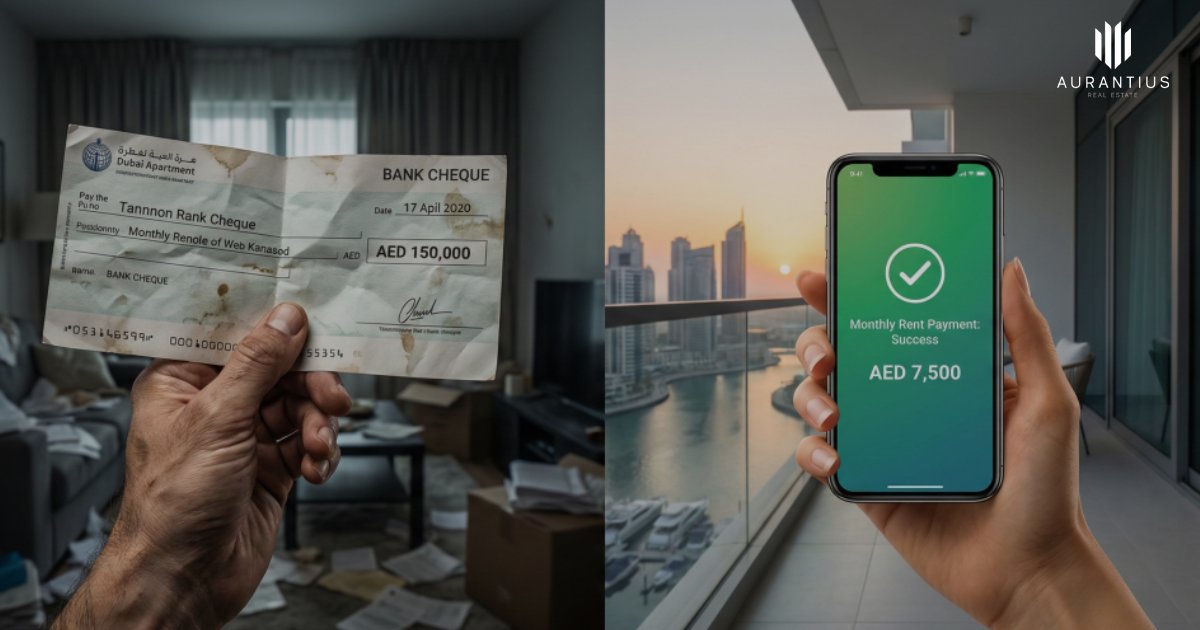

How to Pay Rent in Dubai: Top 3 Payment Methods Tenants Should Know (2026 Guide)
In Dubai, rent is still most commonly paid by cheques, but monthly instalments and direct debit are now real, regulated alternatives. The key is that landlords set the default terms, but tenants can negotiate before signing.
Why this matters: With rents rising and payment flexibility improving, how you pay rent can have a major impact on cash flow, savings, and renewal decisions.
1. Cheque Payments in Dubai (Still the Most Common)
Status: This remains the default method across most residential leases.
In Dubai, post-dated cheques are widely used. Landlords usually ask for:
- 1 cheque (full annual rent upfront)
- 2 cheques
- 4 cheques (increasingly common in 2025–2026)
There is no law that limits the number of cheques — it is purely a commercial agreement.
Landlord perspective: Fewer cheques reduce default risk and improve cash flow.
Tenant reality: Fewer cheques mean higher upfront liquidity pressure.
Trend: As competition for tenants increases in some areas, more landlords are accepting four cheques, especially for apartments.
2. Monthly Rent Instalments (Growing Fast)
Status: Emerging, but not universal.
Monthly rent payments are becoming one of the most important shifts in Dubai’s rental market. In 2025, partnered with fintech firm to enable tenants to pay rent monthly while landlords still receive funds as agreed.
Why tenants like it:
- Rent aligns with monthly salaries
- No need to save several months of rent upfront
- Improves financial planning and liquidity
Important: Monthly payments usually involve a third-party platform. Fees may apply, and landlord approval is still required.
3. Direct Debit Rent Payments (Ejari + Noqodi)
Status: Fully regulated, but adoption depends on landlords.
Direct debit is now officially supported in Dubai. The integrated Ejari with Noqodi Direct Debit, backed by the UAE Central Bank’s UAEDDS system.
How it works:
- Rent is automatically deducted from the tenant’s bank account
- Payments follow a pre-agreed schedule (monthly or otherwise)
- Fully linked to the registered Ejari contract
Key limitation: If you are currently paying by cheques, you can usually switch to direct debit only at renewal, and only if the landlord agrees.
What Tenants Must Know Before Signing
- Everything must be written in the tenancy contract
- The payment schedule must be registered with Ejari
- You can negotiate cheques, instalments, or debit before signing
- Mid-contract changes require mutual consent
Dubai is gradually moving toward more flexible rent systems, but the transition is market-driven, not mandatory.
Bottom Line for Tenants
Dubai still runs on cheques — but that is changing.
Cheques suit landlords.
Monthly instalments suit tenants’ cash flow.
Direct debit offers structure and automation.
Proactive advice: Always negotiate payment terms upfront. In today’s market, flexibility is often possible — but only if discussed before Ejari registration.