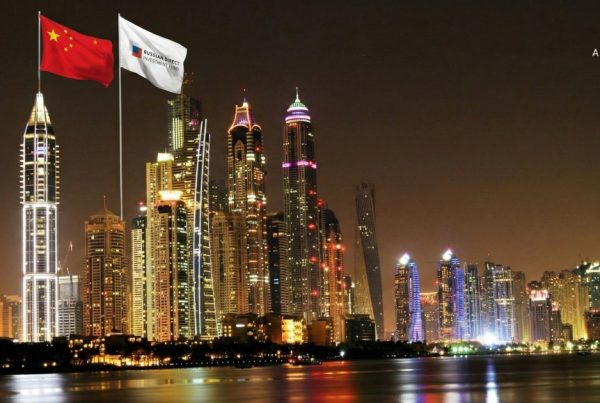


UAE and Hong Kong Deepen Financial Cooperation: What It Means for Investors in 2026
The UAE and Hong Kong have strengthened their financial partnership in 2026, marking another strategic milestone in cross-border capital market connectivity. The Central Bank of the UAE (CBUAE) has officially joined Hong Kong’s Central Moneymarkets Unit (CMU), expanding direct access to Asian debt capital markets and reinforcing the UAE’s global financial positioning.
While this development is primarily financial in nature, its broader implications extend into capital flows, investor confidence, and long-term asset diversification — including real estate.
What Happened?
At their third high-level bilateral meeting in Abu Dhabi, CBUAE Governor Khaled Mohamed Balama and Hong Kong Monetary Authority (HKMA) Chief Executive Eddie Yue confirmed deeper institutional cooperation between the two financial authorities.
The key outcome: the UAE central bank has formally joined Hong Kong’s CMU, the territory’s central securities depository for debt instruments.
This move provides:
- Direct access to Mainland China capital markets
- Cost-efficient cross-border settlement infrastructure
- Enhanced financial market integration between Asia and the Middle East
- Improved liquidity channels for UAE-based institutions
In simple terms, the UAE is expanding its financial bridge into Asia.
Why This Matters for the UAE Economy
Membership in Hong Kong’s CMU strengthens the UAE’s ability to diversify capital market exposure beyond traditional Western markets.
It reinforces three strategic pillars:
- Debt market connectivity
- Offshore Renminbi engagement
- Global financial hub positioning
As Asian capital markets continue expanding, this connectivity enhances the UAE’s role as a gateway between East and West.
For investors, this means stronger financial infrastructure, improved capital mobility, and deeper international integration — all of which support long-term economic stability.
How Financial Connectivity Impacts Real Estate
Major financial integration developments often precede broader capital movement trends. Increased access to Asian capital markets can indirectly influence Dubai’s real estate sector in several ways:
- Greater Asian institutional capital exposure
- Enhanced cross-border investor confidence
- Improved liquidity environment
- Strengthened perception of UAE as a global capital hub
Historically, financial centre strengthening tends to support demand in prime residential and commercial real estate markets.
Dubai’s position as a stable, tax-efficient environment continues to benefit from strategic financial diplomacy and global connectivity expansion.
Strategic Alignment with Long-Term UAE Vision
This move aligns with broader initiatives such as:
- UAE Vision 2071
- Dubai Economic Agenda D33
- Real Estate Sector Strategy 2033
- Dubai Urban Plan 2040
The UAE is not just attracting investors through property fundamentals — it is strengthening its financial backbone to support sustainable long-term growth.
Cross-border cooperation in digital assets, stablecoin regulation, and debt markets further signals a forward-looking regulatory environment.
What Investors Should Take Away
For real estate investors, developments like this reinforce confidence rather than create volatility.
Key takeaways:
| Factor | 2024–2025 Trend | 2026 Outlook |
|---|---|---|
| Rental Growth | High increases | Stabilisation / Selective softening |
| Tenant Negotiation Power | Limited | Increasing in mid-market areas |
| Luxury Segment | Strong demand | Remains resilient |
| New Supply | Under construction | Gradual handovers |
Financial infrastructure growth tends to support asset markets over time. It strengthens currency confidence, investor trust, and cross-border investment flows.
Dubai’s Position in the Global Capital Network
Hong Kong remains a premier offshore Renminbi hub and a gateway to China’s capital markets. The UAE’s integration into this ecosystem positions Dubai even more firmly as an international financial and investment centre.
As global capital continues shifting toward Asia and emerging markets, the UAE is ensuring it remains structurally connected.
For property investors, macro-financial stability remains one of the strongest long-term drivers of real estate performance.
Final Outlook: Stability Through Strategic Expansion
The UAE’s entry into Hong Kong’s Central Moneymarkets Unit is not just a technical regulatory development — it is a signal of deeper financial integration and economic maturity.
As Dubai continues attracting global investors across residential, commercial, and institutional sectors, enhanced financial connectivity strengthens its global positioning.
In 2026, the UAE is not simply participating in global capital markets — it is actively expanding its role within them.