
Why Dubai Real Estate Is Still Growing in 2026 Despite Global Crisis and Regional Volatility
Dubai real estate in 2026 continues to grow despite global economic uncertainty and regional volatility, driven by strong fundamentals rather than speculation. The market is supported by safe-haven capital inflows, population growth, and increasing end-user demand. Key areas such as Dubai Marina, Downtown Dubai, and Business Bay remain resilient due to high liquidity and rental demand. Investors are now focusing on long-term value, stable rental income, and quality assets, making Dubai property investment in 2026 both strategic and opportunity-driven.
It is now supported by stronger structural demand, deeper end-user participation, and a more mature investment base. Recent market analysis shows that external shocks have affected sentiment and listed real estate stocks more quickly than they have affected the physical property market, where transaction activity, rental demand, and asset quality remain more relevant indicators of performance. Investors studying the current cycle are increasingly separating short-term headlines from long-term market fundamentals, especially in core districts such as Dubai Marina, Downtown Dubai, and Business Bay, where liquidity, tenant demand, and investor recognition continue to support resilience.
Safe-Haven Capital and Population Growth Continue to Support Demand
One of the strongest reasons Dubai real estate is still growing in 2026 is the emirate’s continued role as a regional and international safe-haven market for capital. During periods of global crisis, investors often shift funds toward markets that offer legal clarity, tax efficiency, and long-term lifestyle security. Dubai continues to benefit from that positioning. The city’s population growth remains another critical support factor, as demand for housing is being driven by residents, entrepreneurs, executives, and long-term expatriates rather than by a purely speculative investor class. This is one of the reasons communities such as Jumeirah Village Circle and Dubai Hills Estate remain relevant to investors seeking occupancy stability, while Palm Jumeirah continues to attract capital-preservation buyers looking for scarcity-led premium assets.
Resilience by Segment
Dubai’s real estate market demonstrates varying levels of resilience across different segments.
Ultra-luxury and established villa communities continue to show strong stability, while mid-market apartments remain more sensitive to supply cycles and market sentiment.
Below is a breakdown of segment performance and short-term outlook as of March 2026.
| Segment | Resilience Level | March 2026 Trend |
|---|---|---|
| Ultra-Luxury (AED 15M+) | High | Driven by cash buyers and global wealth migration; price appreciation continues at 5–8%. |
| Mid-Market Apartments | Moderate | More sensitive to sentiment; some analysts predict a 10–15% correction due to high upcoming supply. |
| Established Villas | High | Scarcity in prime communities supports long-term value preservation. |
Rental Yields and ROI Remain Globally Competitive
Dubai’s rental performance remains one of the clearest explanations for why the market is still expanding in 2026. Residential yields in many parts of the city continue to exceed those seen in mature global gateway cities, which makes Dubai attractive to investors prioritizing cash flow. Yield-led areas continue to perform because they combine affordability, strong leasing demand, and lower entry barriers for investors. Serious buyers are increasingly moving beyond headline gross yield claims and relying on more disciplined underwriting methods using tools such as Calculate ROI Dubai Property to review service charges, maintenance, vacancy assumptions, and net returns. This matters in a market that is increasingly segmented, where one corridor may deliver stronger income while another is better suited for capital preservation or long-term appreciation.
Prime Assets and Quality Communities Are Outperforming
Another reason the market is still growing is the shift in buyer behavior from speed to selectivity. Investors are placing greater weight on construction quality, master-plan strength, developer track record, and long-term community fundamentals. This is supporting premium and prime districts more than low-conviction inventory in oversupplied corridors. Luxury villas and waterfront homes continue to attract demand from high-net-worth buyers because these assets are less sensitive to financing conditions and more aligned with wealth preservation goals. At the same time, family-oriented communities and mixed-use districts with schools, retail access, and transport connectivity are maintaining stronger absorption because they appeal to genuine resident demand. This transition toward quality-driven acquisition is also strengthening the relevance of long-form market resources such as Dubai Real Estate 2026 and the wider Dubai Real Estate Blog, where investors increasingly look for deeper market context rather than generic promotional content.
Developers With Strong Delivery Records Are Reinforcing Confidence
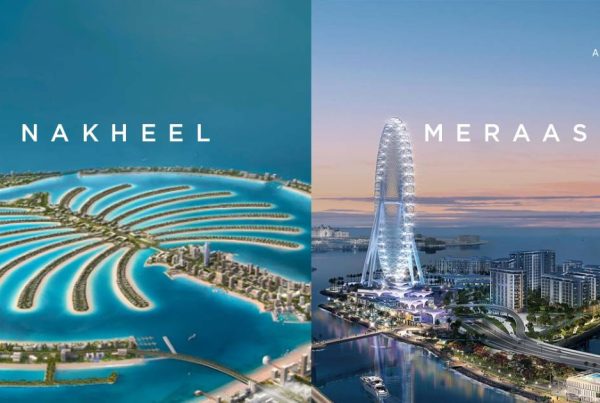
Developer strength is a major reason Dubai real estate has not lost momentum despite global disruption. Buyers are showing more discipline, but they are not exiting the market. They are becoming more selective about who they buy from and where they allocate capital. This supports established names such as Emaar, DAMAC, Sobha Realty, Nakheel, Meraas, and Select Group, whose track records and communities provide a stronger foundation for investor confidence. The same pattern is visible in off-plan selection, where buyers are screening projects based on location logic and expected demand rather than launch hype alone. Projects such as Breez by Danube, Pearl House 4, Golf Verge, Sera at Rashid Yachts & Marina, and Marina Cove are being reviewed alongside Peace Lagoons, Rove Home Marasi Drive, Twilight by Binghatti, Samana Resorts, and Iconic Tower because investors want product diversity tied to realistic absorption and future exit potential.
Cash Dominance, Policy Support, and Infrastructure Are Strengthening the Cycle
Dubai’s current cycle also differs from earlier boom-and-correction periods because the market is supported by stronger cash participation and broader policy backing. A cash-dominant market is less exposed to rapid distress caused by financing stress, and that gives the sector more stability when global rates or regional news create uncertainty. Long-term residency initiatives, including investor-linked visa structures, continue to support foreign ownership demand. Infrastructure growth also remains a key part of the story, as transport expansion and major development planning continue to shape future value corridors. Investors looking at current opportunities are not only asking whether prices will rise in the next quarter. They are asking which locations are likely to retain demand, support lease performance, and remain liquid over a multi-year period. That is a more mature form of market participation, and it is one of the clearest reasons Dubai real estate is still growing through the current crisis narrative.
Off-Plan vs. Ready Property ROI Comparison (2026)
The choice between off-plan and ready property in 2026 comes down to a strategic trade-off between leverage and liquidity.
Off-plan investments are typically positioned as growth engines, while ready properties function as income-generating assets with immediate returns.
| Feature | Off-Plan Property (Growth Engine) | Ready Property (Income Engine) |
|---|---|---|
| Primary ROI Driver | Capital Appreciation: Often 20–30% increase from launch to handover. | Rental Yield: Immediate cash flow of 6–9% annually. |
| Entry Price | Typically 10–20% lower than comparable ready units. | Higher; reflects current market demand and immediate usability. |
| Payment Terms | Flexible instalments (e.g., 50/50 or 60/40) over 3–5 years. | Higher upfront costs (20–25% down payment + 4% DLD fees). |
| Risk Profile | Construction delays and market cycle risk during build period. | Low execution risk; “what you see is what you get” certainty. |
| Target Goal | Maximize total ROI through deferred profit. | Immediate passive income and stability. |
Conclusion
Dubai real estate is still growing in 2026 because the market is being supported by safe-haven capital, population growth, competitive rental yields, stronger regulation, quality-focused buying behavior, and more disciplined developer-led expansion, all of which are allowing the sector to absorb global uncertainty without losing its long-term investment appeal.
FAQs
Q: Why is Dubai real estate still growing despite global crisis in 2026?
A: The market continues to grow because demand is being supported by safe-haven capital inflows, rising population, strong rental yields, and long-term policy support rather than by short-term speculative activity alone.
Q: Are all Dubai property segments performing equally well in 2026?
A: No, the market is highly segmented, with prime waterfront assets, family-focused communities, and high-demand rental districts generally outperforming oversupplied mid-market clusters.
Q: What role does rental income play in Dubai’s resilience?
A: Rental income remains a major support factor because Dubai continues to offer strong yields compared with many global cities, which helps investors maintain cash flow even when price growth becomes more moderate.
Q: Why are reputable developers more important in the current market?
A: Buyers are prioritizing delivery history, construction quality, and community strength, which means developer reputation has become a central part of investment risk assessment in 2026.
Q: Is Dubai’s 2026 market more stable than previous cycles?
A: The current market is generally viewed as more stable because it has stronger regulatory safeguards, a larger end-user base, more cash buyers, and better long-term infrastructure planning than earlier high-volatility cycles.
Aurantius Real Estate delivers investor-focused market insight for buyers tracking Dubai’s strongest real estate opportunities.