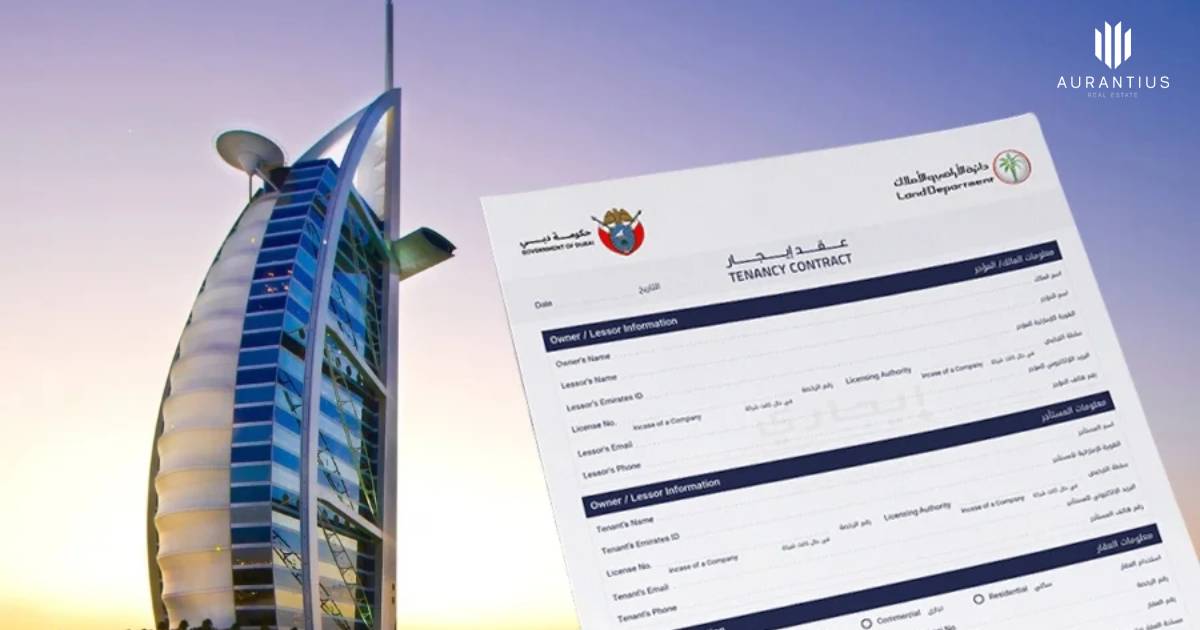

Dubai Rental Contract Cancellation 2026: Can a Signed Lease Be Annulled Before Move-In if Deception Is Proven?
A signed Dubai tenancy agreement is normally a binding contract, but a new judicial principle announced by Dubai’s Rental Disputes Center in October 2026 confirms that signing is not necessarily the end of the legal analysis.
Where one party can prove that they were induced into the agreement through legally recognised deception, the lease may be challenged before implementation of the tenancy begins. In the case that established the principle, the RDC ultimately ordered the lease to be annulled and the parties restored to their positions before the agreement was signed.
This is an important protection for both landlords and tenants, but it is equally important to understand what the ruling does not create.
Dubai has not introduced a general cooling-off period for rental contracts. A landlord or tenant cannot simply cancel a signed agreement because they found a better tenant, a cheaper apartment, changed their budget or reconsidered the deal. Deception must be established and the applicable legal requirements must be satisfied.
Dubai Lease Annulment — Key 2026 Points
Judicial principle announced: 29 October 2026
Authority: Dubai Rental Disputes Center
When it can apply: Before implementation of the lease begins, where deception is proven
Possible remedy: Judicial annulment of the lease
Effect in the precedent: Parties restored to their pre-contract positions
Cooling-off period: No
Pre-signing protection: Free Rental Good Conduct Certificate available through RDC channels
What Happened in the Case That Created the New Principle?
The dispute arose after a landlord signed a lease with a company but discovered serious information about the proposed tenant before handing over the property.
According to reporting based on the RDC announcement, the company had previously been involved in rental cases and judgments arising from failures to pay amounts due on other leased properties used for subletting.
There were also multiple arrest and bring-in orders involving the company’s manager in cases relating to rental obligations, bounced cheques and delayed payments.
The landlord sought to annul the lease before handing over the property because of concerns about whether the company would perform its contractual obligations.
The claim was initially dismissed. It was then reviewed on appeal by the RDC’s General Authority, which concluded that the circumstances constituted deception under the applicable Civil Transactions Law framework.
The Authority ordered that the lease be annulled and that the parties be restored to the position they were in before signing.
What Does UAE Civil Law Say About Deception?
The current UAE Civil Transactions Law contains specific provisions dealing with deception during contract formation.
| Article | Legal Principle | Practical Meaning |
|---|---|---|
| Article 170 | Deception can arise where fraudulent words or conduct induce the other party to agree to something they otherwise would not have accepted. | The misleading conduct must matter to the decision to contract. |
| Article 171 | Deliberate silence about a fact or circumstance may constitute deception where the contract would not have been concluded if that information had been known. | Material concealment can matter as much as an express false statement. |
| Articles 172–173 | The law addresses annulment where deception and gross unfairness are established and defines the concept of unfairness. | The remedy depends on the facts and legal characterisation of the case. |
Reporting on the RDC decision specifically refers to Articles 170, 171 and 173. The current official Civil Transactions Law text separately sets out the deception rule in Article 170, deliberate concealment in Article 171, the annulment provision connected with gross unfairness in Article 172, and the definition of unfairness in Article 173.
This Is Annulment, Not Ordinary Early Termination
This distinction is critical.
An ordinary early termination usually assumes that a valid lease exists and that one party wants to bring it to an end before its contractual expiry. The financial consequences then depend on the lease wording, agreement between the parties and, if disputed, the applicable rental-law framework.
Annulment for deception is conceptually different. The argument is that consent to the agreement was legally defective because material deception influenced the decision to sign.
| Scenario | Typical Legal Character |
|---|---|
| Tenant finds another apartment they prefer | Change of mind; not the deception principle |
| Landlord finds another tenant offering more rent | Commercial reconsideration; not the deception principle |
| A material fact was deliberately hidden and it can be shown that the agreement would not otherwise have been signed | Potential deception issue for RDC determination |
The October ruling therefore should not be treated as permission for either side to cancel unilaterally without legal process.
What Evidence Could Matter in a Deception Dispute?
The precedent turned on evidence showing that relevant information existed and that it was sufficiently significant to affect the landlord’s decision to proceed.
In practical terms, a party considering a deception-based claim should preserve material that can demonstrate exactly what was represented, what was withheld, when it was discovered and why it mattered to consent.
Written communications: Emails, WhatsApp messages and documented representations made before signing.
Contract documents: The signed tenancy agreement, addenda and related correspondence.
Timing: Evidence showing when the relevant fact was discovered relative to signing and handover.
Materiality: Evidence explaining why the party would not have entered the agreement if the true facts had been known.
Official records: Where relevant and lawfully available, records supporting the alleged concealed fact.
Whether that evidence satisfies the legal threshold is a judicial question for the RDC, not something determined simply by sending a cancellation message to the other party.
Use the Rental Good Conduct Certificate Before Signing
One of the strongest practical lessons from the precedent is that some rental risks can be screened before the tenancy is signed.
Dubai’s Rental Disputes Center provides a Rental Good Conduct Certificate service that enables parties to review the other party’s rental-case history within the RDC system before entering a lease.
The official RDC service is available instantly through the RDC website and Dubai REST and currently carries no service fee.
Landlord use: Check available rental-case history before approving an individual or corporate tenant.
Tenant use: Review the available rental-case history of the party offering the property.
Channel: RDC website or Dubai REST
Service time: Instant
Fee: No listed service fee
The certificate is a due-diligence tool, not proof that a party with previous cases has committed fraud. The RDC itself cautions through the precedent that a history of disputes does not automatically establish deception in a new contract.
How Does the New DubaiNow Ejari Cancellation Service Fit In?
Only days after the RDC ruling, Dubai Land Department launched an enhanced Ejari service through DubaiNow covering registration, renewal and termination of tenancy contracts.
It is important not to confuse this digital administrative service with judicial annulment for deception.
Under the DubaiNow termination flow, the owner initiates the cancellation request and the tenant then reviews it and can approve or decline. This is therefore a structured digital contract-termination workflow; it is not a one-click substitute for obtaining an RDC judgment where the parties are in dispute.
| Process | Purpose | Who Decides? |
|---|---|---|
| DubaiNow Ejari termination | Digital administrative cancellation workflow | Owner submits; tenant approves or declines |
| RDC deception claim | Resolve a legal dispute over allegedly defective consent | Rental Disputes Center / competent judicial body |
Aurantius’ DubaiNow Ejari Guide 2026 explains the full registration, renewal and digital termination process, including UAE PASS and the AED 177.75 registration/renewal fee.
What if the Other Party Refuses to Cancel?
Where both parties agree to terminate, the administrative process can be relatively straightforward.
Where one party disputes the cancellation and the other alleges fraud, concealment or another legal ground, the issue becomes a rental dispute rather than a routine Ejari administration task.
The RDC provides an online lawsuit-registration system. Its published procedure requires users to create or access an account, enter the lease and party information, state the claims, upload supporting documents and submit the case electronically.
Case fees and procedural requirements vary according to the type and value of the claim, so parties should check the current RDC service information rather than assume that digital Ejari cancellation fees and court-case fees are the same.
Why This Ruling Matters More in Dubai’s 2026 Rental Market
The legal update arrives during an exceptionally active period for Dubai’s rental sector.
Aurantius’ Dubai Rental Market 2026 report recorded 298,984 tenancy registrations across freehold communities during the first nine months of the year.
At the same time, additional housing supply is giving tenants more choice in several communities. The Dubai Property Handovers 2026 analysis shows approximately 38,000 new homes delivered by the end of Q3.
More options can encourage both landlords and tenants to compare deals more carefully. It also makes accurate pre-contract disclosure increasingly important: a competitive market is not a justification for concealing material facts in order to secure a signature.
Falling Asking Rents Do Not Give You an Automatic Right to Cancel
This is particularly relevant in late 2026 because asking rents have softened in several major apartment communities.
A tenant who signs at AED 120,000 and then finds a similar unit advertised at AED 105,000 cannot rely on the deception precedent merely because the market moved or a cheaper option became available.
Aurantius’ Dubai Rental Market 2026 rent analysis shows meaningful asking-rent adjustments in several areas, but those market movements remain commercially separate from whether consent to a particular contract was obtained through deception.
Renewal Disputes Are Also a Different Issue
A disagreement about a renewal rent should not automatically be framed as deception either.
Dubai has a separate rental-index framework for assessing permitted increases. Landlords and tenants can review the Dubai Smart Rental Index 2026 guide when evaluating renewal pricing and legal increase bands.
The legal issue in the October precedent was defective consent caused by deception before implementation of the lease, not a routine disagreement over the commercial terms of an existing tenancy.
Landlord Checklist Before Signing a New Tenant
1. Verify the identity of the tenant or authorised corporate signatory.
2. Use the Rental Good Conduct Certificate where appropriate before signing.
3. Retain written records of material representations made during negotiations.
4. Check company documentation where the tenant is a legal entity.
5. Do not rely only on verbal assurances where the obligation is financially significant.
6. If serious contradictory information appears before handover, obtain legal advice before transferring possession.
Tenant Checklist Before Signing a New Lease
1. Verify that the person or entity offering the property is authorised to lease it.
2. Inspect the property and document material promises about its condition.
3. Review the full tenancy agreement before paying deposits or signing.
4. Use the Rental Good Conduct Certificate where appropriate.
5. Keep copies of communications concerning major repairs, facilities or contractual commitments.
6. If potentially deceptive information is discovered, preserve evidence and obtain advice before treating the lease as cancelled.
FAQ: Dubai Rental Contract Cancellation 2026
Question: Can a signed Dubai rental contract be cancelled before move-in?
Answer: A signed lease may be judicially annulled before implementation begins where deception is established and the applicable legal requirements are satisfied. It is not an automatic cancellation right.
Question: Does Dubai now have a rental cooling-off period?
Answer: No. The October 2026 principle concerns legally proven deception, not a general period during which either party can change their mind after signing.
Question: What happened in the RDC precedent?
Answer: A landlord discovered significant rental and payment-related litigation involving a corporate tenant and its manager before handing over the property. After the initial claim was dismissed, the RDC General Authority on appeal concluded that the circumstances established deception and annulled the lease.
Question: Is finding a cheaper property enough to cancel?
Answer: No. Market changes, buyer’s remorse or finding a better deal do not by themselves satisfy the deception principle.
Question: What is the Rental Good Conduct Certificate?
Answer: It is an RDC service allowing a party to review the other party’s available rental-case history before entering a lease. It is available through the RDC website and Dubai REST, is instant and currently has no listed service fee.
Question: Can I cancel Ejari through DubaiNow?
Answer: Eligible individual owners can initiate tenancy termination through DubaiNow. The tenant then reviews the request and can approve or decline it.
Question: Is DubaiNow cancellation the same as an RDC annulment?
Answer: No. DubaiNow provides an administrative termination workflow. A disputed claim seeking annulment because of deception is a judicial issue for the RDC.
Question: What should I do if I believe I was deceived before move-in?
Answer: Preserve the contract, written communications and supporting records, avoid assuming the lease has automatically disappeared, and obtain advice on filing the appropriate claim with the Rental Disputes Center.
Conclusion: A Signed Lease Is Binding, but Deception Can Change the Legal Outcome
Dubai’s October 2026 RDC principle adds an important safeguard to the rental market without turning signed tenancy agreements into optional commitments.
The precedent confirms that legal protection can continue after a lease has been signed where deception affected the decision to contract and the tenancy has not yet been implemented.
But the threshold remains materially different from simply wanting to terminate early.
The practical lesson for landlords and tenants is therefore prevention first. Verify the counterparty, use the Rental Good Conduct Certificate where appropriate, document important representations and review the contract carefully before signing.
If both sides later agree to cancel, DubaiNow and other Ejari channels can streamline the administrative termination. If one side refuses and deception is alleged, that is a legal dispute requiring evidence and RDC determination.
2026 landlord and tenant takeaway: Do not treat the new ruling as a cooling-off period and do not treat DubaiNow as a substitute for an RDC judgment. The October precedent protects parties whose consent was affected by proven deception; the November DubaiNow upgrade makes agreed tenancy administration faster. They solve two different problems.
Legal note: This article provides general information on the published 2026 RDC principle and DLD procedures. It is not legal advice. The outcome of any dispute depends on the evidence, contract terms, procedural position and the RDC’s assessment of the specific case.