
Dubai Rental Market Heads for Record in 2026: 298,984 Contracts Already Registered
Dubai’s rental market entered the final quarter of 2026 with 298,984 tenancy contracts registered across freehold areas between January and September, according to market analysis based on Dubai rental registration data. That represents a 6.8% increase from the comparable nine-month period in 2025 and puts the market on course for another exceptionally active year if leasing volumes remain strong through December.
The headline number is significant, but the more useful story lies underneath it. September recorded a sharp increase in activity, new contracts grew substantially faster than renewals, one-bedroom homes continued to dominate leasing volume, and high-value rentals remained active alongside the mass market. At the same time, additional housing supply is giving tenants more options in selected communities, meaning record transaction activity does not necessarily imply that rents will rise at the same pace everywhere.
This distinction is important in 2026. Aurantius has previously examined why the Dubai rent outlook is shifting toward slower growth, greater negotiation and more differentiated sub-markets. The latest contract numbers reinforce that Dubai can simultaneously experience high leasing activity and more tenant choice in particular areas.
Dubai Rental Market 2026: Key Numbers
January–September registered contracts: 298,984
Year-on-year increase: 6.8%
September contracts: 48,639
September month-on-month increase: 22.6%
September new contracts: 25,345
September renewals: 23,294
One-bedroom contracts January–September: 124,113, approximately 42% of registered agreements
September’s 48,639 Contracts Show a Strong Post-Summer Leasing Rush
September was particularly active, with 48,639 rental registrations reported across Dubai’s freehold communities. That was 22.6% higher than August, creating a notable acceleration as the market moved out of the summer period.
Seasonality is important when interpreting this figure. Dubai’s leasing market often becomes more active around periods when residents relocate, employment contracts begin, families settle ahead of school terms and newly arrived professionals establish permanent accommodation. A strong September does not by itself prove that the same monthly pace will continue indefinitely.
It does, however, demonstrate considerable transaction depth. Tens of thousands of households were actively entering, renewing or changing rental arrangements in a single month, reinforcing the scale of Dubai’s resident housing market.
Earlier 2026 data already pointed toward a highly active leasing environment. Aurantius’ Dubai Rental Market 2026 analysis provides additional context on how transaction growth and the Smart Rental Index have been influencing the market throughout the year.
New Rental Contracts Are Growing Faster Than Renewals
One of the most revealing September figures is the split between new agreements and renewals. New rental contracts reached 25,345, up 25.6% year on year, while renewals increased by 7.6% to 23,294.
The difference can reflect several forces at once. Dubai continues to attract new residents, creating fresh household demand. Existing tenants may also be relocating between communities, changing unit sizes or negotiating from a wider pool of available properties instead of automatically renewing their current homes.
That does not necessarily mean tenants are abandoning renewals. More than 23,000 renewal contracts in one month still represents substantial retention. Rather, the faster growth in new leases suggests greater movement within the market.
This is consistent with the broader shift discussed in Aurantius’ analysis of how the Dubai rental market is becoming more tenant-sensitive as housing supply expands. When renters have more credible alternatives, landlords may need to think more carefully about renewal pricing, property condition and retention.
Top 10 Dubai Freehold Areas by Rental Contract Volume
Rental activity is spread widely across Dubai rather than being concentrated only in prime waterfront or city-centre communities. The reported January-to-September data identifies the following freehold areas as the highest-volume leasing locations:
1. Al Warsan First: 28,825 contracts
2. Jebel Ali First: 24,710 contracts
3. Al Barsha South Fourth: 24,564 contracts
4. Business Bay: 19,781 contracts
5. Marsa Dubai / Dubai Marina: 16,453 contracts
6. Nadd Hessa: 15,722 contracts
7. Al Thanyah Fifth: 12,459 contracts
8. Al Barsha South Third: 10,655 contracts
9. Wadi Al Safa 5: 10,009 contracts
10. Dubai Investment Park First: 9,898 contracts
High contract volume should not automatically be interpreted as high rental growth or high investment return. An area can generate thousands of contracts because it contains a large amount of housing stock, has high tenant turnover or serves a broad range of budgets.
For landlords, the volume figures are most useful as evidence of leasing depth. They show where substantial numbers of tenants are actively signing contracts, but investors still need to evaluate achievable rent against purchase price, service charges, vacancy, maintenance and future competing inventory.
Business Bay Remains One of Dubai’s Deepest Rental Markets
With 19,781 contracts reported in the first nine months, Business Bay ranked fourth among the listed freehold areas. This reinforces the district’s position as both a major residential and employment market.
Its tenant base is diverse: professionals working locally, residents commuting to Downtown Dubai and DIFC, corporate tenants, couples and investors seeking centrally located apartments all contribute to leasing activity.
However, Business Bay should never be treated as one uniform rental market. Older towers, new premium buildings, canal-facing properties, branded residences and compact investor-focused apartments can generate very different rent, service-charge and vacancy profiles.
Buyers evaluating the district can use the Aurantius Business Bay property guide as a starting point before moving to building-level transaction and rental comparisons.
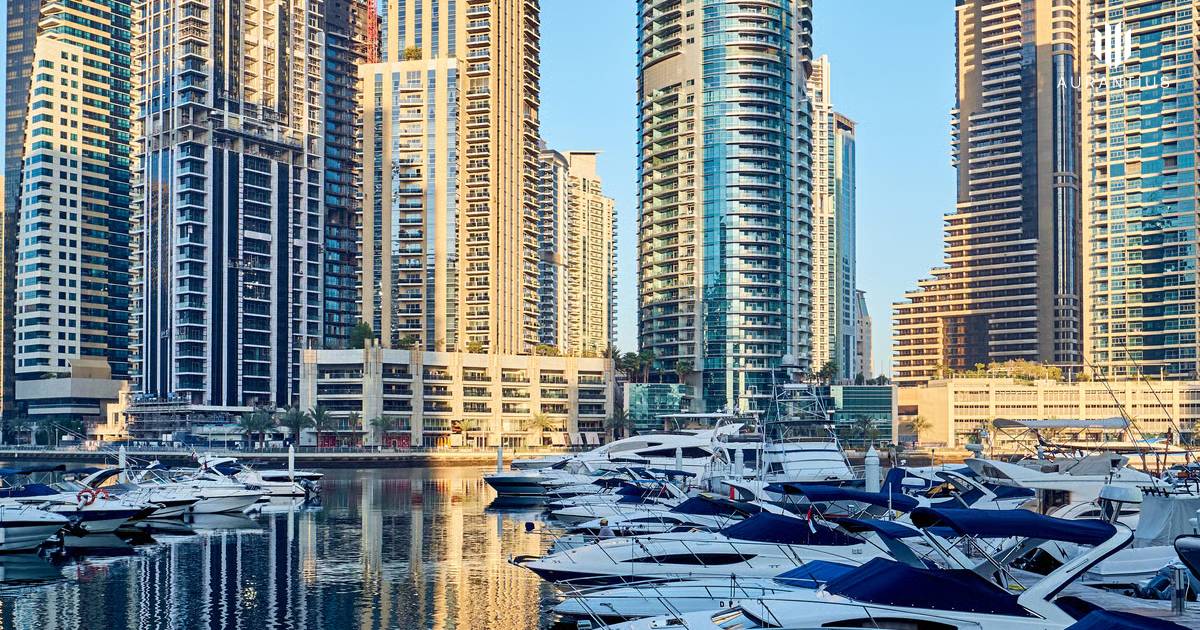
Dubai Marina Records More Than 16,000 Rental Contracts
Marsa Dubai, which includes the Dubai Marina market, recorded 16,453 contracts during the period. Unlike several higher-volume suburban locations, Dubai Marina combines a large resident population with premium waterfront positioning, established public transport, hospitality, retail and a substantial short- and long-term rental inventory.
Strong transaction volume does not mean every Marina landlord has identical pricing power. Building age, view, floor level, renovation, furnishings, parking, service charges and walking distance to key amenities can materially affect achievable rent.
Investors considering the area should therefore compare the specific building with current alternatives. Aurantius’ Dubai Marina property price and investment analysis provides wider context for buyers assessing the relationship between entry price, rental demand and long-term ownership.
One-Bedroom Apartments Dominate Dubai’s Rental Market
One-bedroom homes were the most frequently registered property type, accounting for 124,113 contracts between January and September — approximately 42% of the total recorded agreements.
The popularity of one-bedroom units is logical within Dubai’s demographic structure. They can serve individual professionals who want more space than a studio, couples without children, corporate tenants and investors targeting a broad tenant pool.
Earlier market breakdowns cited in the research indicate that two-bedroom homes represented approximately 23% of activity, studios around 22%, and three-bedroom or larger properties the remaining share.
For investors, the lesson is not simply to buy a one-bedroom apartment because it is the largest segment. High demand can be accompanied by high supply. The better question is whether a specific one-bedroom unit offers the right combination of purchase price, layout, building quality, rent and competing inventory.
Record Contract Activity Does Not Mean Every Tenant Faces the Same Rent Increase
A common mistake is to interpret rising contract volume as proof that rents must be increasing sharply across all of Dubai. Contract volume measures leasing activity. Rental price movement is a separate metric.
Some buildings and communities can remain landlord-favourable because available supply is limited, while others may become more negotiable as new handovers compete for tenants. Even inside the same community, two buildings can experience different rental trends.
Dubai’s Smart Rental Index has also changed how renewal discussions are approached by linking allowable increases more closely to building-level rental positioning. Aurantius’ Dubai Smart Rental Index 2026 guide explains how tenants and landlords can interpret the system when reviewing renewal terms.
Another useful tool is the Dubai Land Department AI-powered rental heatmap, which reflects the wider push toward more transparent, location-specific rental information.
Should Tenants Renew or Move in Late 2026?
The rapid growth in new agreements compared with renewals suggests that more tenants are actively exploring alternatives. That makes renewal decisions increasingly property-specific.
Renewing can make sense when the existing rent remains competitive, the building performs well, commuting costs are manageable and moving expenses would outweigh any saving available elsewhere.
Relocation may deserve consideration when comparable homes are available at meaningfully lower rents, when the tenant can obtain a better property for a similar budget or when commuting and lifestyle needs have changed.
Aurantius’ Dubai Rent Drop 2026 guide provides a practical framework for comparing renewal, relocation and upgrading rather than making the decision from the headline asking rent alone.
The Ultra-Prime Rental Market Is Growing Alongside the Mass Market
Dubai’s rental expansion is not limited to affordable and mid-market housing. The supplied research reports 2,046 residential rental contracts valued at AED 1 million or more during the first eight months of 2026, with a combined contract value of approximately AED 6.79 billion.
Approximately 69.6% of those high-value agreements were reported as new contracts rather than renewals. This suggests that the upper end of the market continues to attract tenants entering or relocating within Dubai, including households choosing premium villas and branded residences.
Palm Jumeirah remained a major anchor of this segment, with very high annual rents among qualifying luxury contracts. The luxury market should nevertheless be considered separately from Dubai’s mainstream rental market because transaction sizes, tenant profiles and property scarcity are fundamentally different.
What 298,984 Contracts Mean for Dubai Landlords
For landlords, almost 299,000 registrations demonstrate substantial underlying rental demand. But high market activity should not be used as a reason to overprice an individual property.
Vacancy has a direct financial cost. A landlord seeking an additional AED 5,000 or AED 10,000 in annual rent can lose that benefit quickly if the property remains empty for several weeks while comparable units secure tenants.
Property condition also becomes more important as tenants gain alternatives. Professional photography, maintenance, cleanliness, realistic pricing, flexible viewing access and timely negotiation can materially influence leasing speed.
Landlords should also separate legal entitlement to a rental increase from the rent they would ideally like to achieve. The applicable tenancy framework, notice requirements, Smart Rental Index and specific contract situation need to be considered before a renewal increase is proposed.
What the Rental Record Means for Property Investors
For residential investors, the size of Dubai’s leasing market is supportive because it demonstrates a deep pool of occupiers. Rental demand is one of the foundations behind buy-to-let property performance.
However, transaction volume is not the same as rental yield. Investors should calculate return using the specific property’s achievable annual rent and total acquisition cost, then deduct service charges, maintenance, management expenses, vacancy allowances and other recurring costs.
They should also consider whether renting remains financially competitive with ownership for the target tenant group. The Aurantius Dubai rent-versus-buy calculator provides a useful framework for understanding when long-term renters may begin considering ownership instead.
FAQ: Dubai Rental Market 2026
Question: How many Dubai rental contracts were registered in 2026?
Answer: The reported data shows 298,984 tenancy contracts registered across Dubai freehold areas between January and September 2026, 6.8% above the comparable period in 2025.
Question: Which Dubai area recorded the most rental contracts?
Answer: In the supplied January-to-September freehold-area data, Al Warsan First ranked first with 28,825 contracts, followed by Jebel Ali First and Al Barsha South Fourth.
Question: What is the most rented apartment type in Dubai?
Answer: One-bedroom properties accounted for 124,113 registered contracts in the supplied January-to-September data, approximately 42% of total agreements.
Question: Are Dubai rents still increasing in 2026?
Answer: Conditions vary considerably by community and building. High leasing volume does not mean every area is experiencing the same rent growth. Additional housing supply is creating more negotiation and tenant choice in selected sub-markets.
Question: Are tenants moving rather than renewing?
Answer: September data showed new contracts growing faster year on year than renewals, indicating strong relocation and new-resident activity. Renewals remained substantial, so the figures do not indicate a broad abandonment of existing leases.
Question: Does high rental volume make a property a good investment?
Answer: Not automatically. Investors should examine purchase price, achievable rent, service charges, vacancy, building quality, future supply and resale liquidity before calculating potential net yield.
Question: Will Dubai set a new annual rental-contract record in 2026?
Answer: The first nine months show Dubai tracking toward a very strong full-year result, but the final annual total depends on registrations during October, November and December. A year-end record should therefore be treated as a likely market direction rather than a completed fact until full-year data is available.
Conclusion: Dubai’s Rental Market Is Growing in Volume, but Becoming More Nuanced
The 298,984 registered contracts recorded through September confirm the scale and depth of Dubai’s residential leasing market in 2026. A 6.8% year-on-year increase, September’s post-summer surge and the continued strength of both mainstream and ultra-prime rentals point to sustained housing demand across very different segments of the city.
The more important conclusion is that transaction growth should not be confused with uniform rental inflation. New contracts are increasing, tenants are moving between communities, additional housing is entering selected locations and building-level rental benchmarks are playing a larger role in renewal decisions.
For tenants, this creates an opportunity to compare before automatically renewing. For landlords, strong overall demand still rewards well-maintained and realistically priced properties, but overpricing can become more costly when competing inventory increases. For investors, large contract volumes provide evidence of a deep rental economy, while actual returns continue to depend on the individual asset and its net income.
Aurantius Real Estate helps tenants, landlords and property investors evaluate Dubai’s rental market using community comparisons, realistic rental evidence, building-level differences, ownership costs and changing market conditions. As Dubai moves toward the end of 2026, the best decisions will come from understanding the specific sub-market rather than relying only on citywide rental headlines.
Planning a rental decision? Compare your current rent with similar registered and advertised properties, review the applicable rental-index position, calculate moving costs and assess building quality before deciding whether to renew, relocate or negotiate.