
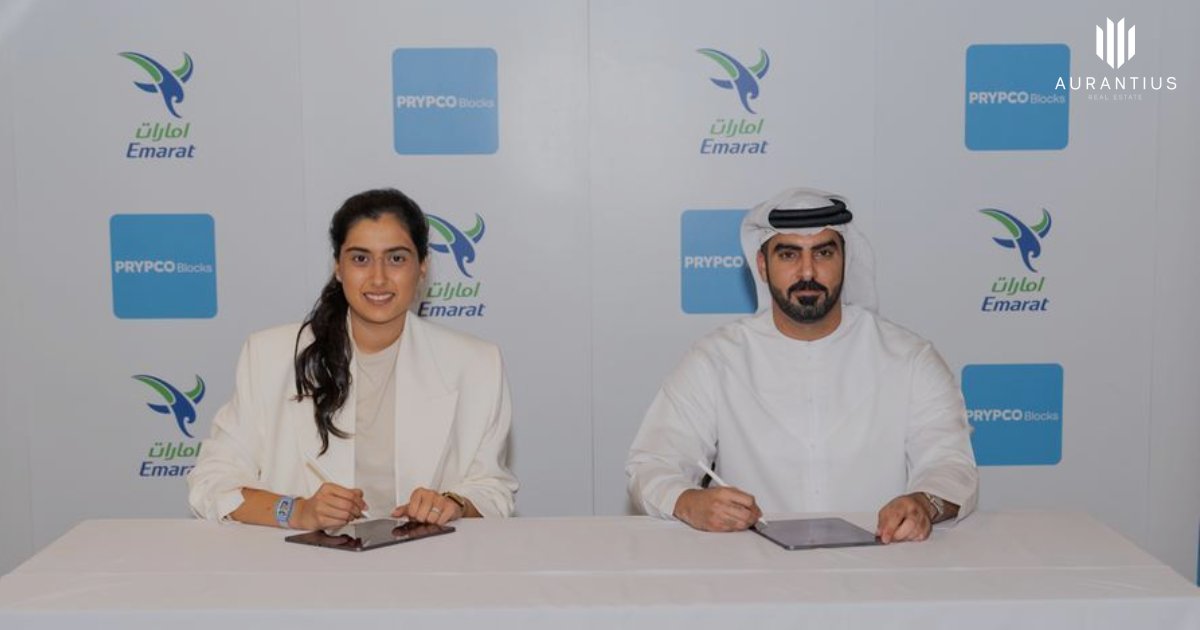

Dubai Introduces Fuel-to-Property Investment Model as Emarat and Prypco Blocks Redefine Real Estate Access
Dubai has introduced a new model of property participation that links everyday consumer activity with long-term asset ownership. Emirates Petroleum Company, Emarat, has partnered with Prypco Blocks to allow motorists to convert fuel loyalty points into fractional ownership of income-generating real estate. The agreement was announced in Dubai and formalised by Amira Sajwani, Founder and CEO of Prypco, and Ali Bin Zayed Al Falasi, Chief Retail Officer and Senior Vice President of Marketing at Emarat. The initiative reflects the continued convergence of retail, fintech, and proptech within the UAE’s evolving investment ecosystem.
The partnership enables Emarat customers to transform Emcan loyalty points earned through fuel purchases into Prypco Blocks, which represent fractional shares in professionally managed rental properties across Dubai. Entry thresholds are set at accessible levels, starting from Dh2,000, allowing participants to accumulate exposure to property assets gradually. A Dh350 onboarding credit is provided to new users who register on the Prypco Blocks platform, reinforcing the focus on accessibility rather than traditional high-capital entry requirements.
This initiative places Dubai among the early adopters of tokenised real estate structures that allow assets to be fractionalised, digitally represented, and distributed across a wider investor base. Locations with established rental performance such as Dubai Marina and Palm Jumeirah continue to attract interest from both institutional and individual participants due to their liquidity, international tenant demand, and long-term capital stability. Fractional access introduces a pathway for smaller investors to participate in similar asset classes without full ownership obligations.
From an urban investment perspective, the integration of loyalty-driven capital into real estate ownership reflects Dubai’s broader strategy to expand participation across its property market. Established business and lifestyle districts such as Downtown Dubai and Business Bay remain central to rental absorption and yield generation. These districts benefit from proximity to employment hubs, tourism infrastructure, and transport connectivity, reinforcing their suitability for structured fractional investment models.
Prypco Blocks operates under DFSA regulation and follows Sharia-compliant investment principles, providing institutional-grade governance to retail participants. Properties are managed centrally, with rental income distributed proportionally to Block holders. This structure reduces operational complexity for investors while maintaining exposure to Dubai’s high-performing residential market. Developers such as Emaar, DAMAC, and Sobha Realty have historically contributed to the depth and quality of assets that underpin Dubai’s rental economy, supporting confidence in long-term residential demand.
The collaboration also highlights the evolution of loyalty programmes from transactional reward systems into financial participation tools. Emarat’s Emcan platform transitions from fuel discounts and retail benefits into an interface that supports asset accumulation. This approach aligns with Dubai’s positioning as a digital-first investment jurisdiction where innovation is applied at scale. Residential communities such as Jumeirah Village Circle and Dubai Hills Estate illustrate how mid-market and master-planned developments continue to support consistent rental demand and diversified investor participation.
Developer-backed urban planning has played a key role in enabling this accessibility. Master developers including Nakheel and Meraas have established mixed-use destinations that combine residential, retail, and lifestyle components, supporting stable occupancy rates. Boutique and waterfront specialists such as Select Group further enhance market segmentation by offering assets aligned with both lifestyle buyers and yield-focused investors.
The fuel-to-property concept reflects a structural shift in how capital is mobilised within the UAE economy. By embedding investment access into routine consumer behaviour, the initiative lowers psychological and financial barriers associated with property ownership. This approach supports Dubai’s long-term objective of broadening participation across its real estate market while maintaining regulatory oversight and asset transparency.
As Dubai continues to attract global capital from over 200 nationalities, models that combine fractional ownership, digital infrastructure, and regulated asset management are expected to play a growing role in market participation. Platforms that enable gradual exposure to real estate assets complement traditional acquisition strategies and align with the city’s emphasis on financial inclusion through innovation.
For investors seeking structured guidance within this evolving landscape, Aurantius Real Estate provides market intelligence, advisory support, and access to Dubai’s established and emerging property districts. Through data-driven insights and developer-aligned expertise, Aurantius Real Estate supports informed decision-making across residential and income-generating assets, helping investors navigate Dubai’s expanding real estate ecosystem with clarity and confidence.