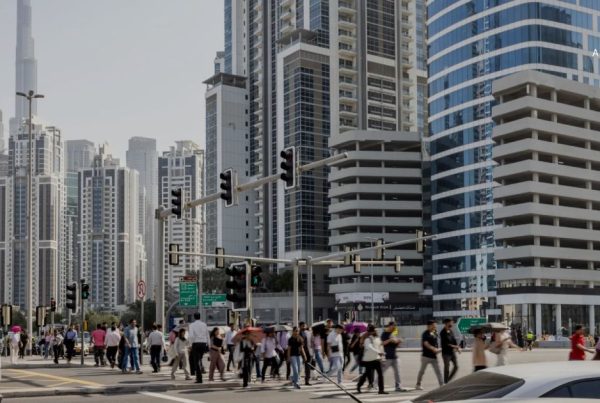


Dubai Luxury Real Estate Market 2026 Sees Strong Growth Despite Regional Uncertainty
Dubai Luxury Real Estate Market 2026 continues to show why the emirate remains one of the world’s most resilient prime property destinations, even during periods of regional tension and broader market uncertainty. Recent market data indicates that luxury residential demand has remained strong, supported by high-net-worth investors, international capital inflows, and a buyer profile focused on long-term value rather than short-term noise. This matters because prime markets usually show their true character during stress periods, not only during boom cycles. In Dubai’s case, luxury sales activity has continued across both trophy assets and upper-tier residential brackets, reinforcing the city’s reputation as a safe-haven real estate market. The performance of the Dubai Luxury Real Estate Market 2026 is not being driven by speculation alone. It is being reinforced by tax efficiency, lifestyle security, residency incentives, and the city’s increasingly global role as a wealth hub.
Luxury Hotspots for 2026
| District | Avg. Price per Sq. Ft. (AED) | Expected Growth (YoY) | Key Appeal |
|---|---|---|---|
| Jumeirah Bay | 8,000 – 12,000 | 9.0% | “Billionaires’ Island”; extreme land scarcity |
| Dubai Hills Estate | 2,100 – 3,800 | 7.2% | High demand for family-oriented luxury villas |
| Palm Jumeirah | 4,500 – 7,000 | 6.5% | Established icon; record price-per-square-foot |
| Downtown Dubai | 3,200 – 5,500 | 5.0% | Proximity to business hubs and iconic views |
Luxury Sales Growth Remains Strong Across March 2026
The latest transaction data offers one of the clearest signals behind the Dubai Luxury Real Estate Market 2026 story. Developer sales in Dubai’s luxury residential segment reached Dh10.92 billion in March alone, while transaction volumes rose 42% year on year to about 900 deals with part of the month still remaining. This is a notable performance because luxury markets often slow during periods of geopolitical uncertainty and seasonal softness. Instead, Dubai’s premium housing segment continued to attract significant capital. The Dh20 million to Dh50 million range recorded 79 transactions worth Dh2.36 billion, while the Dh50 million to Dh100 million bracket generated Dh1.04 billion from 16 deals. This shows that buyers are still active at the top end of the market and are continuing to allocate serious capital into premium residential stock despite the wider macro backdrop. For investors, this is an important distinction. Strong transaction flow at these levels suggests conviction, not hesitation.
Trophy Assets and Upper-Tier Housing Are Both Driving Momentum
One of the most revealing features of the Dubai Luxury Real Estate Market 2026 is that strength is visible both in ultra-prime trophy assets and in the broader upper-tier housing market. A standout Dh422 million luxury apartment transaction on Jumeirah Peninsula and major plot sales in Umm Suqeim First highlight continued demand for scarce, prestigious assets. At the same time, the Dh5 million to Dh10 million segment recorded 650 deals worth Dh4.54 billion, showing that activity is not limited to a very small ultra-rich niche. This breadth matters because it suggests the luxury market is developing deeper layers of demand. It is no longer only about rare record-breaking sales. It is also about consistent absorption across upper-tier homes that appeal to globally mobile professionals, entrepreneurs, family offices, and long-term investors. That broader demand base helps make the market more resilient when sentiment temporarily softens.
Prime Dubai Locations Continue to Attract Global Wealth
Location remains central to the Dubai Luxury Real Estate Market 2026, and global investor interest is still concentrated in districts with strong brand recognition, limited supply, and proven lifestyle appeal. Palm Jumeirah continues to attract wealth-preservation buyers because of waterfront scarcity and international prestige. Dubai Marina remains relevant for investors who want high visibility, strong rental depth, and waterfront appeal. Business Bay continues to perform as a central mixed-use district with luxury and executive demand, while Downtown Dubai remains one of the city’s most defensible core luxury markets due to global recognizability and premium urban positioning. Even family-oriented and master-planned communities such as Dubai Hills Estate are increasingly relevant in the luxury conversation because affluent end users are also prioritizing schools, green space, and longer-term residential utility. In other words, luxury in Dubai is no longer confined to one asset type. It is distributed across multiple high-quality lifestyle districts.
Why Regional Tensions Have Not Broken Buyer Confidence
The resilience of the Dubai Luxury Real Estate Market 2026 during a period of regional tension is being supported by structural factors rather than short-term optimism. Dubai continues to benefit from no capital gains tax, investor-friendly regulation, expanding Golden Visa pathways, and a reputation for fast institutional response during uncertain periods. Global wealth tends to move toward jurisdictions that combine safety, tax efficiency, and property rights clarity, and Dubai continues to check those boxes for many international buyers. This is why market watchers increasingly describe the city’s luxury segment as structurally supported rather than speculation-led. Some sellers have adjusted asking prices in select villa communities, and that kind of recalibration is normal after rapid appreciation. It does not automatically indicate weakness. In a healthy prime market, pricing becomes more selective before demand disappears. The current environment looks more like a pause in pace than a collapse in confidence.
Developers and New Launches Are Supporting Liquidity
Another reason the Dubai Luxury Real Estate Market 2026 remains active is the way developers are responding to changing sentiment. Flexible payment plans, targeted incentives, and master-planned premium communities are helping maintain transaction momentum. Buyers continue to benchmark projects from major developers such as Emaar, DAMAC, Sobha Realty, Nakheel, Meraas, and Select Group, because delivery credibility and community quality matter more when buyers are selective. Even beyond core luxury names, investors are comparing newer opportunities such as Breez by Danube, Pearl House 4, Golf Verge, Sera at Rashid Yachts & Marina, and Marina Cove, as well as Peace Lagoons, Rove Home Marasi Drive, Twilight by Binghatti, Samana Resorts, and Iconic Tower. While not all of these sit in the same ultra-prime category, they show that investors remain engaged across different tiers of premium and aspirational stock, especially where value preservation and future exit potential are clear.
Long-Term Drivers Still Support Upward Momentum
The long-term outlook for the Dubai Luxury Real Estate Market 2026 remains constructive because the forces supporting it are still in place. Global wealth migration, continued entrepreneurial inflows, tourism expansion, and Dubai’s rise as a family office and investment base are all reinforcing demand for high-quality residential assets. Luxury buyers are often motivated by a combination of lifestyle quality, second-home flexibility, residency access, and capital protection. That mix gives Dubai an advantage over cities where taxes are heavier, ownership structures are more restrictive, or price growth has already outrun utility. For investors trying to connect the luxury segment with broader market strategy, it also helps to review Calculate ROI Dubai Property, Dubai Real Estate 2026, and the Dubai Real Estate Blog. These give a wider view of how yields, price resilience, and asset positioning support the city’s long-term appeal.
Conclusion
Dubai Luxury Real Estate Market 2026 continues to strengthen through rising sales, resilient high-value demand, and sustained global investor interest, showing that Dubai’s prime housing segment remains one of the region’s most dependable safe-haven property markets.
FAQs
Q: Is the Dubai luxury real estate market still growing in 2026?
A: Yes, transaction values and volumes in the luxury segment have remained strong, with March 2026 showing robust growth despite regional uncertainty.
Q: Which areas are leading Dubai’s luxury market in 2026?
A: Palm Jumeirah, Downtown Dubai, Dubai Marina, Business Bay, and selected master-planned premium communities remain among the strongest luxury destinations.
Q: Are ultra-prime buyers still active during regional tensions?
A: Yes, recent high-value transactions show that high-net-worth buyers are still deploying capital into trophy assets and prime residential opportunities.
Q: Has the luxury market weakened because some asking prices were adjusted?
A: Not necessarily, because selective price recalibration after strong appreciation is normal and does not by itself indicate structural weakness.
Q: Why do global investors still choose Dubai luxury property?
A: Buyers continue to be attracted by tax efficiency, residency advantages, lifestyle quality, legal clarity, and Dubai’s position as a stable global wealth hub.
Aurantius Real Estate helps investors navigate Dubai’s luxury market with sharper strategy, stronger due diligence, and better market alignment.