
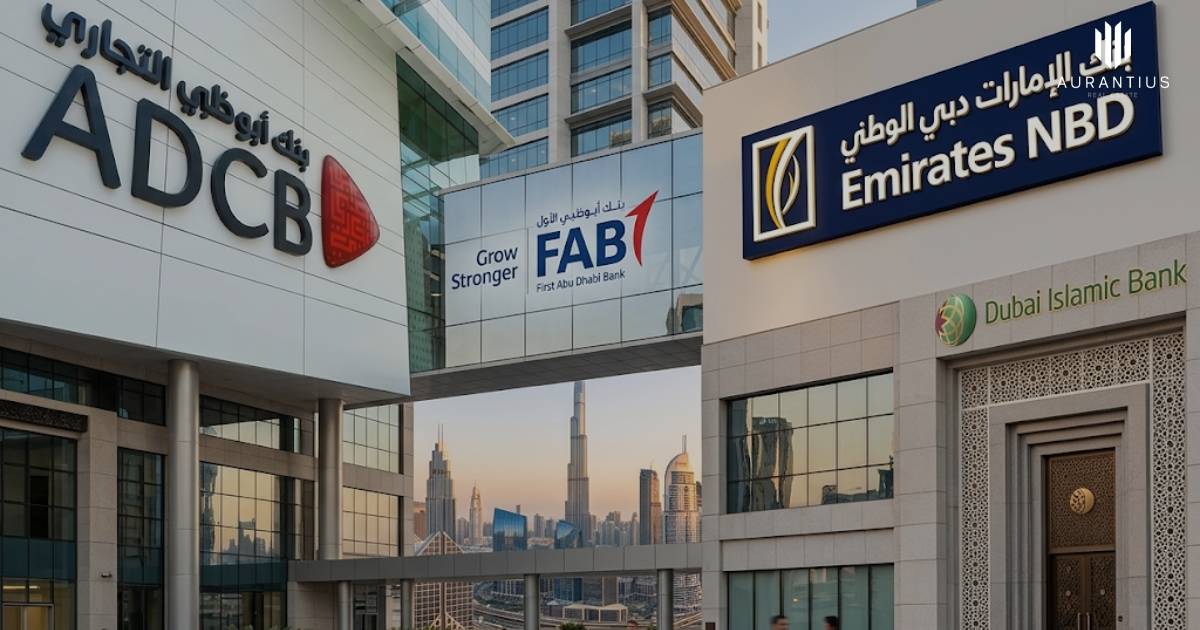

Dubai Off-Plan Mortgages 2026: ADCB’s 3.49% Deal, the 50% Rule and What Buyers Actually Need to Fund
Financing an under-construction property in Dubai is becoming more structured in 2026. Buyers no longer necessarily have to wait until handover before speaking seriously to a bank. New lender-developer arrangements are allowing eligible buyers to obtain mortgage pre-approval during construction, improving visibility over how the final portion of an off-plan purchase may be financed.
One of the clearest examples is ADCB’s current off-plan mortgage programme. The bank advertises financing of up to 50% of the property value, rates starting from 3.49% per annum fixed for three years, 12-month renewable pre-approval for eligible projects, and no processing or valuation fees under the offer.
But buyers need to understand what that 50% figure means. The Central Bank of the UAE sets a maximum 50% loan-to-value ratio for off-plan properties regardless of the property’s value, purpose or buyer category. This is a regulatory ceiling, not a promise that every applicant will receive 50% financing and not necessarily a universal rule that every bank will release funds at exactly the same construction milestone.
The key 2026 financing rule: A buyer should be able to fund at least the portion of the purchase that the bank will not finance, plus transaction costs and any payments falling due before mortgage disbursement. Pre-approval improves financing visibility, but it does not eliminate the buyer’s equity requirement or guarantee final approval.
What ADCB’s 3.49% Off-Plan Mortgage Offer Actually Includes
ADCB’s 2026 off-plan mortgage programme is significant because it moves part of the mortgage decision earlier in the property-buying process.
For eligible customers and qualifying projects, the bank currently highlights:
• financing of up to 50% of the property value;
• off-plan mortgage pre-approval valid for 12 months, with annual renewal through to handover for qualifying key-developer projects;
• rates starting from 3.49% per annum fixed for three years;
• no mortgage processing fee under the promotional offer;
• no property valuation fee under the promotional offer; and
• a Shariah-compliant Islamic Banking version.
ADCB also announced a strategic collaboration with Emaar Development in July 2026. Under that arrangement, eligible Emaar customers can obtain off-plan pre-approval for financing of up to 50% of a property’s value, with the initial 12-month approval renewable during construction until handover.
The important limitation is that 3.49% is a starting promotional rate, not a guaranteed rate for every borrower or project. Credit assessment, property eligibility, customer profile and the terms available when final financing is executed still matter.
For the broader financing landscape, see Aurantius’ 2026 UAE Off-Plan Mortgages Guide.
The UAE 50% Off-Plan Mortgage Rule Explained
The 50% limit comes from the Central Bank’s mortgage regulations.
For property purchased off-plan, the maximum permitted mortgage LTV is 50%, regardless of:
• whether the buyer is a UAE national or expatriate;
• whether the property will be owner-occupied or held as an investment; or
• the value of the property.
This differs from completed first-home purchases, where maximum LTV limits can be higher depending on nationality and property value.
| Mortgage Category | Maximum Regulatory LTV | Practical Meaning |
|---|---|---|
| Off-plan property | 50% | Applies across buyer categories under the CBUAE off-plan rule |
| Expat first home below AED5m | Up to 80% | Applies to qualifying completed-property owner-occupier financing, not the off-plan rule |
| UAE national first home up to AED5m | Up to 85% | Higher first-home limit, but off-plan remains capped separately |
These are regulatory maximums. Banks can approve less depending on affordability, income, liabilities, credit profile, property eligibility and their own risk policies.
Does the Buyer Always Have to Pay 50% Before the Bank Steps In?
This point needs precision.
The CBUAE regulation says that an off-plan mortgage cannot exceed 50% LTV. It does not by itself prescribe one identical disbursement schedule for every UAE bank and every development.
Individual lenders set operational conditions around when approved financing can be drawn.
ADCB’s current offer, for example, states that the transition from pre-approval to final financing occurs once 50% of the property value has been paid or at handover, subject to the bank’s terms and final credit assessment.
That means buyers should not assume the phrase “50% mortgage available” means a bank will finance half of the booking payment on day one.
Off-plan booking and developer instalments
↓
Buyer reaches lender/project disbursement conditions
↓
Pre-approval converts to final mortgage approval
↓
Bank financing funds the eligible remaining portion, subject to final terms
Aurantius explains these mechanics in more detail in Off-Plan Mortgages in Dubai: How They Work, Who Qualifies and When They Make Sense.
Early Mortgage Pre-Approval Solves One Problem, Not Every Financing Risk
Historically, one of the biggest risks in off-plan buying was financing uncertainty at handover.
A buyer might reserve a property years before completion and assume that a mortgage would later be available. But during construction their salary, liabilities, credit position, interest rates or bank lending criteria could change.
Early pre-approval improves visibility because a lender evaluates the borrower while the property is still under construction.
However, pre-approval should not be treated as an irrevocable promise of future money.
Final mortgage funding can remain subject to:
• continued borrower eligibility;
• updated credit assessment;
• income and employment verification;
• project eligibility;
• valuation;
• completion or disbursement conditions; and
• the lender’s final terms at the relevant time.
Why Developer-Bank Partnerships Matter
Banks do not necessarily finance every off-plan development on identical terms.
Developer partnerships can streamline documentation, project verification, pre-approval and the eventual transition to final financing.
The ADCB-Emaar collaboration is a strong example. It gives eligible Emaar Development customers an identified mortgage route while the project is under construction rather than leaving the financing discussion entirely until handover.
For buyers, this creates an additional due-diligence question:
Before booking: Ask not only whether the property is “mortgageable”, but which banks currently finance the exact project, when they can issue pre-approval, when final funds are released and what happens if the lender’s valuation is lower than the SPA purchase price.
The wider role of banks in Dubai’s developer-led market is covered in Off-Plan Mortgage Dubai 2026: Why Banks Are Financing the Market.
2026 Bank Comparison: Compare the Structure, Not Just the Advertised Rate
A mortgage comparison should not be reduced to which bank shows the lowest headline percentage.
| Comparison Point | What to Check | Why It Matters |
|---|---|---|
| Initial fixed rate | Promotional rate and fixed-period length | A low first-year rate may not represent long-term borrowing cost |
| Post-fixed rate | EIBOR benchmark, bank margin and any floor | Determines the cost after the introductory period |
| Off-plan LTV | Approved percentage, up to regulatory maximum | Determines the buyer’s required equity |
| Pre-approval duration | Expiry and renewal rules | Important when handover remains years away |
| Disbursement point | When bank funding actually becomes available | Determines how much cash the buyer needs before mortgage funding |
| Processing / valuation fees | Promotional waiver or standard charge | Affects upfront financing cost |
| Project eligibility | Whether the exact development is accepted | A bank offering off-plan mortgages generally does not mean every project qualifies |
ADCB’s 3.49% offer is currently one of the more visible 2026 examples, but buyers comparing Emirates NBD, DIB, Mashreq, FAB, ADIB or other lenders should request a current written quotation for the exact property rather than relying on third-party rate tables that can become outdated quickly.
Dubai First-Time Home Buyer Programme: What Is Actually Included?
Dubai’s First-Time Home Buyer Programme can provide additional advantages to qualifying residents, but one widespread misconception needs correcting:
The standard DLD registration fee is not automatically waived by the programme. DLD states that standard registration fees continue to apply unless a special offer says otherwise. The programme instead includes flexible payment of registration fees through eligible credit cards using interest-free instalment plans.
DLD currently lists the core eligibility requirements as:
• UAE resident of any nationality;
• age 18 or above;
• does not currently own a freehold residential property in Dubai; and
• seeking a property priced below AED5 million.
Benefits can include:
• priority access to selected new launches and existing inventory;
• preferential prices from participating developers;
• flexible off-plan payment plans;
• interest-free instalment options for DLD registration fees through eligible credit cards; and
• access to tailored mortgage offers and preferential fees from participating banks.
Eligible applicants register through DLD or Dubai REST and receive a First-Time Home Buyer QR code that can be used with participating developers and banks.
First-Time Buyer Benefits Do Not Override the 50% Off-Plan LTV Cap
This distinction is particularly important.
The First-Time Home Buyer Programme can improve access to mortgage offers and reduce cash-flow friction around registration fees or developer payment structures.
But an off-plan purchase still falls under the CBUAE’s specific maximum 50% LTV framework.
In other words, a buyer should not assume that because they are a first-time owner, the 80% expatriate or 85% UAE-national completed-home LTV limit automatically applies to an under-construction unit.
Example: AED2 Million Off-Plan Property
Consider a simplified AED2 million off-plan purchase.
| Illustrative Item | Amount |
|---|---|
| Property purchase price | AED2,000,000 |
| Maximum 50% off-plan mortgage under regulatory ceiling | AED1,000,000 |
| Minimum purchase price not covered by a 50% mortgage | AED1,000,000 |
| Registration and other transaction costs | Additional |
This is deliberately simplified. The buyer’s actual payment timeline depends on the developer plan and the bank’s disbursement rules. A 50% maximum LTV does not mean the buyer writes one AED1 million cheque immediately, nor does it mean the lender must provide exactly AED1 million.
What Happens if Handover Is Delayed?
Early mortgage access creates greater financing visibility, but off-plan buyers still face construction-timing risk.
If handover moves, the buyer needs to understand:
• whether the mortgage pre-approval remains valid;
• whether it needs renewal;
• whether the bank will rerun affordability checks;
• whether the promotional rate is still available;
• what additional developer instalments become due; and
• whether the buyer has enough liquidity if bank disbursement occurs later than originally expected.
Aurantius covers the property-side implications separately in Dubai Off-Plan Handover Delays 2026: What Buyers Should Do Before and After the Completion Date.
Why Mortgage Access Supports Off-Plan Dominance
Off-plan property already represents a major share of Dubai’s residential transaction activity because developers can spread the purchase price across construction.
Earlier bank involvement strengthens that model.
Instead of choosing between developer instalments today and an uncertain mortgage later, eligible buyers can increasingly plan the two funding stages together.
This can make higher-value off-plan purchases accessible to buyers who have substantial equity but do not want to fund the entire remaining handover balance in cash.
The wider role of payment structures in the market is explained in Dubai Property Market 2026: Off-Plan Dominance and the Buyer’s Phase Explained.
The 2026 Off-Plan Mortgage Checklist
1. Confirm the exact project is mortgage-eligible.
A lender offering off-plan finance does not mean every Dubai development qualifies.
2. Ask when the bank actually disburses.
Pre-approval and money being released are two different stages.
3. Calculate your equity requirement.
Do not build a purchase plan that assumes financing above the 50% regulatory ceiling.
4. Keep transaction costs separate.
Registration, brokerage, mortgage and administrative expenses can require additional cash beyond the property equity.
5. Read the post-fixed pricing formula.
A 3.49% introductory rate does not describe the entire mortgage term.
6. Check the pre-approval expiry.
Understand renewal requirements if construction extends beyond the initial approval period.
7. Stress-test the valuation.
If the bank values the completed property below the SPA price, you may need additional equity.
8. Maintain a handover cash buffer.
Do not depend on the maximum possible mortgage to meet every remaining payment.
FAQ: Dubai Off-Plan Mortgages 2026
Question: Can I get a mortgage for an off-plan property in Dubai?
Answer: Yes, eligible buyers can obtain off-plan financing for qualifying projects. Bank policies, approved projects, credit criteria and disbursement conditions vary.
Question: What is the maximum off-plan mortgage LTV in the UAE?
Answer: CBUAE regulations cap mortgage LTV for off-plan property at 50% regardless of purpose, property value or buyer category.
Question: Is ADCB really offering a 3.49% off-plan mortgage?
Answer: ADCB currently advertises eligible off-plan financing with rates starting from 3.49% per annum fixed for three years, together with no processing and valuation fees under the promotional offer. Rates and eligibility are subject to terms, credit assessment and change.
Question: How long is ADCB off-plan pre-approval valid?
Answer: ADCB states that pre-approval for qualifying key-developer projects can be valid for 12 months with annual renewal through to handover, subject to the applicable terms and credit assessment.
Question: Do I have to pay 50% before ADCB finances an off-plan property?
Answer: ADCB’s current offer states that the transition from pre-approval to final approval and financing occurs once 50% of the property value is paid or at handover. Other lenders can have different operational requirements within the CBUAE’s 50% maximum LTV framework.
Question: Does Dubai’s First-Time Home Buyer Programme waive the 4% DLD fee?
Answer: No automatic blanket waiver is stated by DLD. Standard registration fees continue to apply unless a separate special offer says otherwise. The programme provides eligible credit-card instalment options for registration fees, among other benefits.
Question: Who qualifies for Dubai’s First-Time Home Buyer Programme?
Answer: DLD states that applicants must be UAE residents aged 18 or older, must not currently own a freehold residential property in Dubai and must be seeking a property valued below AED5 million.
Conclusion: The Biggest 2026 Change Is Financing Visibility, Not the Removal of Buyer Risk
Dubai’s off-plan mortgage market is becoming easier to plan around.
ADCB’s early pre-approval structure demonstrates how lenders and major developers are reducing the uncertainty that previously existed between the initial booking and mortgage financing at handover.
For eligible buyers, a starting rate of 3.49% fixed for three years, fee waivers and renewable pre-approval can materially improve the financing proposition.
But none of these changes remove the underlying regulatory structure.
Off-plan mortgages remain capped at a maximum 50% LTV. Banks can lend less. Final approval remains subject to credit and project conditions. The buyer still needs substantial equity, and the timing of bank disbursement must match the developer payment plan.
The First-Time Home Buyer Programme can reduce friction through preferential access, developer benefits, financing offers and flexible payment of registration fees. It does not automatically erase the DLD registration fee or override the CBUAE off-plan mortgage ceiling.
That makes liquidity planning the critical part of an off-plan mortgage strategy.
The 2026 off-plan mortgage rule: Do not ask only how much a bank says it can lend. Ask when the money becomes available. Match the developer instalment schedule against the lender’s actual disbursement conditions, keep enough equity to survive a lower valuation or delayed handover, and treat early pre-approval as greater financing certainty rather than guaranteed future funding.
Mortgage note: Mortgage rates, promotional offers, approved projects, credit criteria and lender policies can change. The 3.49% ADCB rate referenced above is an advertised starting promotional rate subject to eligibility and terms. Buyers should obtain a current written mortgage quotation and review their developer payment schedule before committing to an off-plan purchase.