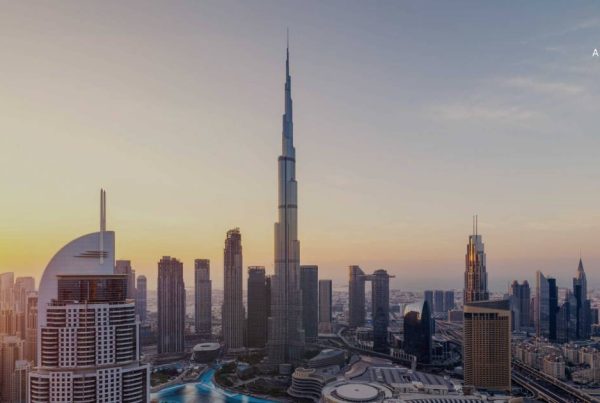


Dubai Property Outlook 2026: Why Stability Is Replacing the Boom, Not Necessarily a Sharp Correction
Dubai’s residential property market is moving into a very different phase in 2026. After several years of rapid post-pandemic appreciation, the market is becoming more selective as substantial new supply reaches completion, buyers gain more alternatives and performance increasingly differs by community and property type.
Rather than pointing to one uniform citywide outcome, current conditions increasingly resemble a soft landing and two-speed property market. Apartment-heavy communities with significant handover pipelines face greater competition and more measured pricing, while villas, townhouses and genuinely supply-constrained prime properties can remain comparatively resilient.
For buyers and investors, the key question in 2026 is therefore no longer simply, “Will Dubai property prices rise or fall?” A more useful question is: which individual assets can continue to perform as supply, affordability and buyer selectivity become more important?
The 2026 market takeaway: Dubai does not need another period of double-digit citywide appreciation to remain investable. A more mature market can create better opportunities for buyers because performance becomes tied more closely to location quality, scarcity, rental demand, developer execution and the price paid at entry.
The Market Is Moving From Rapid Expansion to Selective Growth
The post-2020 Dubai property cycle was unusually broad. Apartments, villas, townhouses and prime homes all benefited from strong population growth, international capital inflows, renewed investor confidence and relatively limited completed stock in some of the most desirable locations.
By 2026, the market is more complicated.
New housing is reaching completion at a faster pace, off-plan launch volumes remain high and buyers can compare a much larger number of projects. That makes it more difficult for every development to achieve the same level of price growth.
Aurantius previously examined this transition in Dubai Property Price Outlook for 2026 Points to Stability Rather Than Sharp Correction. The central theme remains relevant: slower growth and localized corrections are not the same thing as a systemic market collapse.
Why the 2026 Supply Pipeline Matters
The most important structural pressure on Dubai property in 2026 is the volume of residential supply scheduled for delivery.
The pipeline is heavily weighted toward apartments. That means supply risk is not evenly distributed across the city.
A large apartment community can face several new towers handing over at roughly the same time. That immediately increases:
• the number of resale listings competing for buyers;
• the number of rental listings competing for tenants;
• pressure on landlords to differentiate through price or condition; and
• negotiation leverage for end users.
The citywide pipeline therefore matters less than the amount of directly comparable supply entering the same micro-market.
Current demand
+
Population and employment growth
−
New competing supply
= More useful property-level outlook
Apartments and Villas Are No Longer Following the Same Cycle
The difference between apartments and landed homes is becoming one of the most important themes in the Dubai property outlook.
| Segment | 2026 Market Condition | What Buyers Should Watch |
|---|---|---|
| High-density apartments | Greater exposure to new handovers and competing listings | Exact building quality, service charges, future pipeline and achievable rent |
| Established villas | More limited directly comparable supply in many mature communities | Entry price, renovation needs, school access and end-user demand |
| Prime waterfront / scarce assets | Less sensitive to citywide apartment supply | True scarcity, uniqueness and whether the premium is already excessive |
| Emerging off-plan communities | High future supply but potential infrastructure and population upside | Delivery concentration, developer strength and realistic end-user demand |
This is why broad headlines such as “Dubai prices are rising” or “Dubai prices are falling” are increasingly inadequate. The market is becoming much more granular.
A Two-Speed Market Is More Likely Than One Uniform Correction
The strongest way to understand Dubai in 2026 is as a market where different property categories can move in different directions at the same time.
An apartment building facing hundreds of competing handovers can experience slower rent growth even while a family villa community ten kilometres away remains undersupplied.
A prime beachfront property can remain supported by scarcity while a generic off-plan apartment launched at an aggressive price faces difficulty on resale.
Aurantius explores this fragmentation in Dubai Property Market 2026: The End of the Boom or Start of a Mature Two-Tier Market.
For investors, the key implication is straightforward: citywide averages should become the starting point of analysis, not the final decision tool.
Is Dubai Actually in a Buyer’s Market?
In selected segments, buyer leverage has clearly improved. But calling the entire city a buyer’s market can oversimplify conditions.
The more accurate description is a buyer’s phase.
That means:
• buyers generally have more alternatives;
• developers need stronger incentives to differentiate launches;
• ready-market sellers in supply-heavy areas can face greater negotiation;
• buyers have more time to conduct due diligence; and
• weaker projects are less easily hidden by broad market appreciation.
The distinction is explained in more detail in Dubai Property Market 2026: Off-Plan Dominance and the Buyer’s Phase Explained.
Why a Sharp Citywide Crash Is Not the Only Supply Scenario
A large delivery pipeline naturally creates concern about oversupply. But the effect of supply depends on several variables.
First, scheduled completion is not always the same as actual completion. Construction programmes can move between reporting periods.
Second, Dubai continues to add residents, businesses and employment. New demand can absorb part of incoming inventory.
Third, supply is geographically concentrated. A new apartment in a high-delivery district experiences a different risk profile from a villa in an established low-density community.
Finally, not all new homes compete for exactly the same tenant or buyer.
This makes localized adjustment more plausible than assuming every Dubai property will react identically to a headline supply figure.
Off-Plan Supply Creates Opportunity and Risk at the Same Time
Dubai’s off-plan market remains one of the strongest parts of the property ecosystem, supported by large developer pipelines and flexible payment structures.
But high off-plan activity creates two separate effects.
Today: buyers receive more project choice, more payment flexibility and greater competition between developers.
At handover: those projects become completed properties competing for tenants and resale buyers.
An investor therefore needs to look beyond launch demand and ask what the market may look like when the keys are delivered.
A project can sell quickly today and still enter a highly competitive rental environment three years later.
Rental Yield Becomes More Important in a Slower Appreciation Cycle
When property prices are rising rapidly, investors can tolerate a lower income return because appreciation dominates overall performance.
A more stable market changes that equation.
Investors increasingly need to know whether the property generates an acceptable return if capital appreciation is modest.
Gross Rent
− Service Charges
− Maintenance
− Property Management
− Vacancy / Leasing Costs
= More Realistic Net Rental Income
This is particularly important in apartment-heavy markets where new supply can slow rent growth or increase incentives offered to tenants.
Prime and Scarce Assets Still Need Price Discipline
Scarcity can support prices, but it does not make valuation irrelevant.
Prime areas such as Palm Jumeirah and other limited-land locations can behave differently from mass-market apartment districts because additional directly comparable supply is harder to create.
Established villa communities can also benefit from end-user demand from families seeking larger homes, established schools and mature infrastructure.
But buyers should still ask whether they are paying a reasonable premium for that scarcity.
A rare asset can still be overpriced.
High-Supply Communities Need Building-Level Analysis
Communities with substantial apartment construction should not automatically be avoided.
High supply can create buying opportunities because weaker sellers may negotiate and developers may introduce more attractive payment structures.
The stronger strategy is to identify the properties capable of outperforming neighboring inventory.
Factors can include:
• superior building quality;
• lower service charges;
• practical layouts;
• unobstructed views;
• better transport access;
• stronger property management;
• better parking allocation; and
• a purchase price below competing new launches.
When hundreds of similar units reach the rental market, differentiation matters more.
Why Investors Should Stop Waiting for One Citywide “Bottom”
One of the biggest mistakes in a fragmented market is waiting for a single moment when “Dubai prices bottom out”.
Different segments can reach attractive valuations at different times.
A highly supplied apartment market may offer negotiation today while a scarce villa community remains expensive. Six months later, the relationship can change.
The practical buyer strategy is therefore to evaluate properties individually rather than attempting to time the entire city.
Aurantius’ Dubai Property Market 2026 Buyer’s Playbook provides a broader framework for negotiating and stress-testing individual opportunities in this normalized environment.
The 2026 Property Stress Test
1. Remove aggressive appreciation from the model.
Would the property still make sense if its value remains broadly flat for two or three years?
2. Count directly competing supply.
Do not use only citywide delivery figures. Identify comparable units entering the same community.
3. Use realistic rent.
Compare achieved or evidence-based market rents instead of relying solely on optimistic launch projections.
4. Calculate net yield.
Deduct recurring ownership expenses rather than evaluating the gross rental headline.
5. Check developer execution.
For off-plan assets, construction capacity and delivery record matter increasingly as the pipeline expands.
6. Compare ready and off-plan alternatives.
The best value may come from a motivated ready seller rather than a heavily marketed new launch.
7. Identify the end user.
Know who is expected to rent or buy the property after you.
8. Check your exit liquidity.
A strong investment should not depend entirely on another speculative investor paying a higher price before handover.
What Could Change the 2026 Outlook?
The current stability thesis is not guaranteed. Several variables could change the direction of the market.
A faster-than-expected delivery cycle could intensify supply pressure in apartment-heavy communities. A slowdown in population growth or employment could weaken absorption. Financing conditions can affect mortgage buyers. External economic or geopolitical shocks can influence confidence and liquidity.
On the other hand, construction delays can reduce actual deliveries below scheduled supply, while continued population growth and employment creation can support absorption.
For a wider scenario analysis covering supply, pricing and return expectations, see Dubai Real Estate Forecast 2026: Prices, Supply and ROI.
FAQ: Dubai Property Outlook 2026
Question: Is Dubai property crashing in 2026?
Answer: Current conditions are better described as normalization and increasing fragmentation rather than one uniform citywide crash. Some supply-heavy segments can soften while scarce or strongly demanded assets behave differently.
Question: Will Dubai property prices fall in 2026?
Answer: Selected communities and asset types can experience price pressure as new supply increases competition. That does not mean every Dubai property will fall by the same amount or at the same time.
Question: Are villas safer than apartments in 2026?
Answer: Villas in some established communities benefit from more limited comparable supply and strong end-user demand, but they can still be overpriced. The correct comparison depends on the specific community, property condition and entry price.
Question: Which Dubai areas face the greatest supply pressure?
Answer: Apartment-heavy development districts with large handover pipelines generally face greater competition than mature low-density communities. Investors should check building-level and community-level completions rather than relying only on citywide supply figures.
Question: Is 2026 a good time to buy Dubai property?
Answer: The more selective market can create stronger negotiating opportunities, but the decision should be based on the individual property, price, rental fundamentals, supply risk and buyer objectives rather than the calendar year alone.
Question: Should investors wait for a bigger Dubai correction?
Answer: Waiting for one citywide bottom can be misleading because Dubai increasingly behaves as multiple micro-markets. A strong property can become attractively priced before the wider market changes, while another segment can remain expensive.
Question: What matters most when buying in a stable market?
Answer: Entry price, realistic rent, net yield, directly competing supply, developer quality, service charges and resale liquidity become more important when broad market appreciation slows.
Conclusion: Dubai’s 2026 Market Is Becoming More Investable Through Selection, Not Hype
Dubai’s residential market is moving beyond the stage where broad appreciation could make almost every purchase look successful.
That does not automatically make 2026 a weak property year.
It makes it a more analytical one.
Incoming apartment supply can create genuine pricing and rental pressure in high-density districts. At the same time, family housing, established communities, distinctive prime assets and areas supported by genuine end-user demand can follow different trajectories.
The result is a two-speed market where selection increasingly determines performance.
For buyers, this creates an advantage. More supply can mean more choice, longer decision windows and better negotiation. For investors, it means yield, service charges, future inventory and exit liquidity deserve more attention than optimistic appreciation forecasts.
The strongest 2026 strategy is therefore not to assume Dubai will continue rising at the pace of the previous boom, nor to wait indefinitely for a dramatic citywide crash.
It is to identify assets that work under more conservative assumptions.
The 2026 buyer rule: Stress-test the property as if capital appreciation slows. If the price is defensible, the rental demand is real, supply risk is manageable and the asset remains competitive after new handovers arrive, a more stable market can be an opportunity rather than a warning.
Market note: Dubai real estate conditions vary by community, property type and reporting period. Scheduled supply may not equal actual completed supply, and rental or capital-growth forecasts are not guaranteed investment returns. Buyers should verify current project, transaction and market data before making a property decision.