
Dubai Property Buyer Refund 2026: Court Orders AED 1.8 Million Repayment After Failed Registration
A Dubai property buyer has secured the cancellation of a real estate agreement and the return of more than AED 1.8 million after the developer failed to complete the sale and register the property in the buyer’s name.
In a judgment reported on 25 October 2026, the Dubai Court of First Instance ordered the developer to return AED 1,805,040, pay AED 150,000 in compensation, and apply 5% annual interest from the date the judicial claim was filed until full payment.
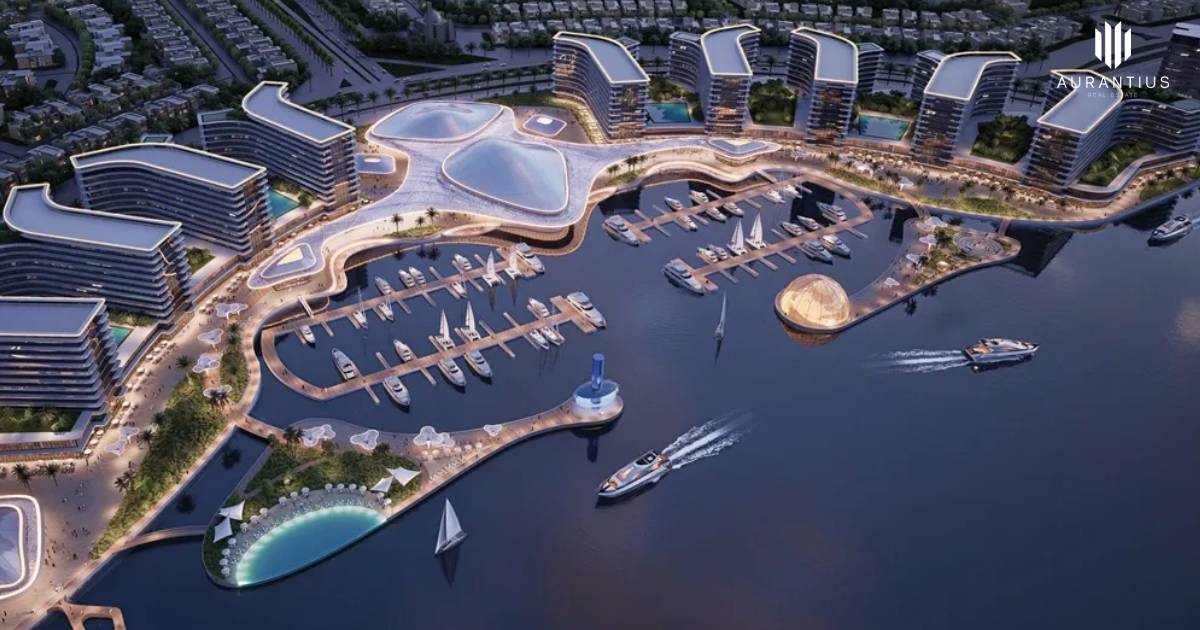
The dispute concerned a hotel unit in the second phase of The Heart of Europe development. The buyer had paid the amounts required under the transaction, but the final sale and purchase contract was not completed and the unit was not registered in the buyer’s name.
One of the most important aspects of the ruling is that the developer produced evidence showing the relevant building was physically 100% complete. The court nevertheless found that physical completion did not remove the obligation to finalise the sale and legally register ownership.
For Dubai buyers, the case is therefore less about whether a building exists and more about a fundamental distinction: construction completion and legal completion of a property transaction are not the same thing.
Dubai Property Refund Case — Key Numbers
Project: The Heart of Europe, Phase Two
Agreement date: 17 April 2025
Purchase price stated in the case: AED 1,651,377
Total amount ordered refunded: AED 1,805,040
Compensation: AED 150,000
Legal fee award: AED 1,000
Interest: 5% annually from the date the judicial claim was filed until payment
Fixed award before interest and other court costs: AED 1,956,040
What Happened in the Property Transaction?
The buyer entered into a reservation agreement in April 2025 for a hotel unit within The Heart of Europe.
According to the reported court record, the buyer paid AED 100,000 on 16 April 2025 and another AED 1.7 million the following day. The latter amount included the remaining payment together with applicable VAT and Dubai Land Department-related fees. A further AED 5,040 was paid in administrative charges.
The reservation documentation also contained specific obligations around the next stage of the transaction. A final sale and purchase agreement was to be executed within seven days after the first instalment and payment of the relevant registration charges.
The buyer argued that despite paying the required amounts, the developer failed to execute the final SPA and did not register the property in the buyer’s name.
| Transaction Element | Reported Details |
|---|---|
| Initial Payment | AED 100,000 on 16 April 2025 |
| Subsequent Payment | AED 1.7 million on 17 April 2025, including remaining payment, VAT and DLD-related fees |
| Administration Charges | AED 5,040 |
| Final SPA Requirement | To be signed within seven days under the reservation terms |
| Core Dispute | Sale not finalised and ownership not registered in buyer’s name |
What Did the Developer Argue?
The developer contested the claim on several grounds.
It argued that the signed document was merely a reservation form rather than a completed final sale agreement. It also maintained that the buyer had contributed to the failure to complete the registration process.
The developer submitted an account statement confirming receipt of approximately AED 1.805 million and provided Dubai Land Department documentation indicating that the relevant project and building were physically 100% complete.
It also referred to a replacement property offered to the buyer in June 2025. The alternative unit was reportedly larger than the original property.
Why Did the Court Rule for the Buyer?
The court focused on contractual performance rather than the label attached to the document.
According to the reported judgment, the agreement identified the property, purchase price and obligations of the parties. Calling the document a “reservation form” did not automatically remove its binding effect where those essential terms and obligations had been established.
The court found that the buyer had paid the amounts required while the developer had failed to complete the final sale and registration process.
Payment was made: The buyer had fulfilled the relevant financial obligations identified in the case.
The sale was not finalised: The final SPA and ownership transfer were not completed.
Physical completion was not enough: A completed building did not replace the obligation to legally transfer and register ownership.
The replacement property was not proven as an agreed amendment: There was no mutually accepted final agreement replacing the original unit.
Rescission was justified: The court ordered the parties restored, as far as possible, to their pre-contractual positions.
A Completed Building Does Not Automatically Mean a Completed Property Sale
This is the most useful legal takeaway for Dubai buyers.
The developer’s evidence showed the building was 100% complete, but the court still considered the failure to complete the sale and register the unit a material contractual problem.
For a purchaser, the transaction does not end simply because construction reaches 100%.
Legal completion may still require contractual documentation, registration, payment processing and the formal steps necessary to put ownership into the buyer’s name.
Aurantius has examined a similar principle in its Dubai Court AED 80 Million Property Deal case, where failure to complete title transfer also became central to the court’s decision.
Why Was the Agreement Rescinded?
Rescission is designed, where legally appropriate, to unwind a contractual relationship after a sufficiently serious breach.
The court relied on UAE civil-law principles governing contractual performance and good faith, together with Dubai property-registration requirements.
Because the developer had not completed the sale and registration despite receiving the required payments, the court cancelled the agreement and ordered the parties restored as closely as possible to the position they occupied before the transaction.
For the buyer, that meant recovering the AED 1,805,040 already paid.
Why Did the Buyer Receive AED 150,000 Compensation?
The refund was not the only financial remedy.
The court also awarded AED 150,000 for loss of investment benefit.
The reservation arrangement had included an investment-return structure, and the court considered the buyer to have lost an investment benefit because the transaction was not completed as agreed.
However, this does not mean courts automatically award all projected profits claimed by buyers.
The Court Rejected the Buyer’s Claim for Expected Property Appreciation
The buyer had sought additional compensation based partly on expected appreciation in the property’s market value.
That claim was rejected because the alleged increase in property value was not supported by sufficient expert evidence.
This distinction is important for property investors.
| Buyer Claim | Court Outcome |
|---|---|
| Return of amounts paid | Granted: AED 1,805,040 |
| Compensation for lost investment benefit | Granted: AED 150,000 |
| 9% interest requested by buyer | Not granted as requested; court awarded 5% from claim filing date |
| Expected property appreciation | Rejected because the claimed increase was not established through expert evidence |
Courts distinguish between proven loss and hypothetical future profit. A buyer cannot simply point to general Dubai property growth and assume that a particular unit would have appreciated by a specific amount.
Why the Alternative Property Offer Did Not Solve the Problem
The developer argued that it had offered the buyer a larger alternative unit in June 2025.
The court did not treat that offer as a proven replacement for the original transaction because there was no final mutually accepted agreement legally amending the original arrangement.
This is an important practical point for buyers who are offered substitutions after a project or unit problem emerges.
A developer proposing another apartment, larger unit or different property does not necessarily mean the original contract has automatically been replaced.
Where a buyer agrees to a substitution, the change should be formally documented and the new unit, price, payment position, registration, delivery obligations and any other amended terms should be clearly recorded.
Does This Mean Every Buyer Can Cancel and Demand a Refund?
No.
This ruling should not be turned into a universal rule that any Dubai property purchaser can cancel a reservation or SPA whenever a registration issue arises.
The result depended on the particular contract, payments, evidence, developer conduct and failure to complete the transaction.
A buyer’s case may depend on: What the signed contract actually requires
A buyer’s case may depend on: Whether the buyer paid on time
A buyer’s case may depend on: Whether the developer was ready and legally able to perform
A buyer’s case may depend on: Whether registration was prevented by the buyer or developer
A buyer’s case may depend on: Whether the project is active, completed, delayed or formally cancelled
A buyer’s case may depend on: The evidence available to prove the breach and financial loss
Aurantius’ Dubai Real Estate Court refund and compensation case provides another example of how remedies depend on the actual contractual breach and supporting evidence.
What About Off-Plan Buyers?
Although the building in this dispute was reported as physically complete by the time of the court case, the transaction originated through a developer reservation structure and raises issues that are highly relevant to off-plan purchasers.
Off-plan buyers need to distinguish between several different problems:
| Situation | Why It Matters |
|---|---|
| Project delayed but still active | SPA terms, extension clauses and official project status become critical. |
| Building physically completed | Legal documentation, registration and title-transfer obligations may still remain. |
| Project formally cancelled | A separate regulatory and liquidation framework can apply. |
| Developer offers another unit | Any substitution should be formally documented and mutually accepted. |
For buyers facing completion or delivery issues, Aurantius’ Dubai Off-Plan Handover Delays 2026 guide explains the distinction between active delays, stalled projects and formal cancellation.
Because this case directly concerns developer-sale and registration risk, buyers researching current primary-market properties can also compare projects through the Aurantius Dubai Off-Plan Projects section.
What Buyers Should Verify Before Paying a Developer
1. Verify the exact project and developer through the appropriate Dubai property channels.
2. Read the reservation document before treating it as a simple non-binding expression of interest.
3. Confirm when the final SPA must be issued and signed.
4. Confirm how and when the transaction will be registered.
5. Keep proof of every payment, including fees and registration charges.
6. Keep all developer correspondence in writing.
7. Do not accept a replacement unit informally if the original transaction is being changed.
8. Obtain a written amendment or replacement agreement showing the new property and financial terms.
9. Do not assume physical project completion automatically resolves title and registration issues.
10. If a serious breach develops, preserve evidence before escalating through legal channels.
Why Documentation Matters More Than Verbal Assurances
This dispute also demonstrates why written evidence matters so much in Dubai property transactions.
The court examined reservation terms, payment evidence, project completion records, correspondence and the proposed alternative property.
A buyer relying only on verbal assurances that “registration will happen later” or “another unit will be arranged” may face a much more difficult evidential position than a buyer who has clear written documentation showing what was promised and when.
For high-value purchases, the evidence file should begin before the first payment rather than after the dispute starts.
Does This Ruling Make Dubai Property Safer for Investors?
The case demonstrates that contractual and registration obligations can be enforced through Dubai’s courts, but it should not be framed as proof that investment losses are impossible.
Legal protection operates after examining the specific facts and evidence. Litigation also takes time and may involve legal expenses, uncertainty and delayed access to capital.
The stronger investor-protection strategy is still prevention:
Choose the project carefully.
Understand the contractual sequence from reservation to SPA to registration.
Verify payment destinations and registration requirements.
Keep a complete documentary trail.
Escalate unresolved contractual failures before the evidence becomes difficult to reconstruct.
FAQ: Dubai Property Refund & Registration Disputes 2026
Question: How much did the Dubai court order the developer to refund?
Answer: The court ordered repayment of AED 1,805,040, representing the amount recoverable by the buyer under the rescinded transaction.
Question: Did the buyer receive compensation as well as the refund?
Answer: Yes. The buyer was awarded AED 150,000 in compensation for loss of investment benefit, together with 5% annual interest on the refundable amount from the date the judicial claim was filed until payment.
Question: Why was the agreement cancelled?
Answer: The court found that the buyer had paid the required amounts while the developer failed to finalise the sale and register the property in the buyer’s name.
Question: Was the project incomplete?
Answer: No. The developer submitted DLD evidence showing the relevant building was physically 100% complete. The dispute centred on the failure to finalise the sale and register ownership.
Question: Can a reservation agreement be legally binding in Dubai?
Answer: The label alone is not necessarily decisive. In this case, the court looked at the specified property, price and contractual obligations and did not accept that calling the document a reservation form removed its binding effect.
Question: Can a developer replace my unit without my agreement?
Answer: A proposed alternative does not automatically amend the original transaction. Material changes should be mutually agreed and formally documented. The exact legal effect will depend on the contract and facts.
Question: Does a developer have to refund me whenever registration is delayed?
Answer: No. Refund and cancellation rights depend on the contract, reason for the failure, project status, conduct of both parties and the evidence. This ruling should not be treated as an automatic refund rule for every registration delay.
Question: Can a buyer claim expected property appreciation as compensation?
Answer: Not automatically. In this case, the court rejected the claimed appreciation because the alleged increase had not been established through sufficient expert evidence.
Conclusion: Payment and Construction Are Only Part of a Dubai Property Transaction
The AED 1.8 million Heart of Europe ruling provides an important reminder about how Dubai property transactions actually complete.
The buyer had paid the required amounts. The building itself was reported as 100% complete. Yet the transaction still failed because the sale was not finalised and ownership was not properly registered in the buyer’s name.
The court responded by rescinding the agreement, returning AED 1,805,040, awarding AED 150,000 in compensation and applying 5% annual interest from the date of the claim.
But the judgment is equally important for what it did not award.
The buyer did not receive the requested 9% interest from the original payment date, and the court rejected the separate claim for projected property appreciation because it had not been sufficiently proven.
The lesson is therefore not that courts automatically return money whenever a buyer is unhappy with a property transaction.
The lesson is that developers and buyers both need to perform the obligations they have actually agreed to, and that registration, documentation and evidence can be just as important as construction progress and payment.
2026 buyer rule: Do not stop due diligence after making the payment or seeing the building completed. Track the transaction through the final SPA, registration and ownership-transfer stages, keep documentary proof of every step, and treat any proposed unit substitution or contractual amendment as something that should be formally documented before relying on it.
Legal note: This article provides general information about a reported Dubai Court of First Instance ruling. Property refund, cancellation and compensation rights depend on the specific contract, project status, evidence and facts of each case. Buyers dealing with an active dispute should obtain case-specific professional advice.