
Dubai Property Market 2026: Ultra-Luxury Assets Soar as Off-Plan Sales Dominate a Two-Speed Market
Dubai’s property market in 2026 is no longer moving as one uniform cycle. The emirate has entered a more mature two-speed phase where ultra-luxury homes and prime villa communities continue to outperform, while parts of the mid-market apartment segment are adjusting to higher supply and slower buyer urgency. This is not a simple boom-or-bust market. It is a decentralized growth cycle where capital is becoming more selective, more data-driven, and more focused on scarcity, quality, and long-term utility.
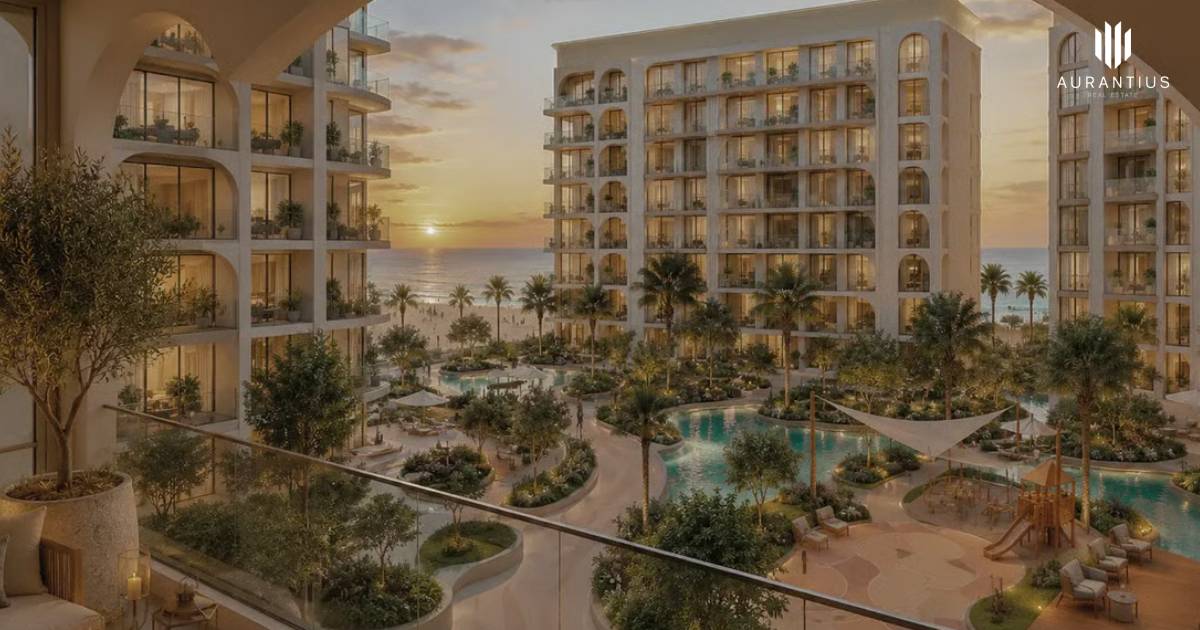
The clearest signal is the split between trophy real estate and standard commodity apartments. Ultra luxury homes Dubai demand remains strong because the supply of waterfront villas, branded residences, and super-prime penthouses is structurally limited. Prime buyers are competing for assets that cannot be easily replicated, especially in locations connected to waterfront access, established prestige, and global wealth migration. At the same time, standard high-density apartments in some outer and high-supply districts face softer pricing power as new handovers enter the market.
Dubai property market 2026 data shows that transaction activity remains significant even as the pace of price growth normalizes from previous peak gains. Property activity in May crossed a reported AED 51.81 billion, equivalent to about $14.11 billion, with luxury transactions reinforcing the strength of the upper end of the market. This supports the view that Dubai is not losing investor interest. It is becoming more segmented, where the strongest assets continue attracting capital and weaker or oversupplied stock requires sharper pricing.
Investors studying this shift should avoid broad assumptions. A luxury villa on Palm Jumeirah does not behave like a standard one-bedroom apartment in a high-supply corridor. A prime branded residence in Downtown Dubai has a different buyer base from a speculative suburban studio. A family home in Dubai Hills Estate follows different demand drivers from an investment apartment in a large delivery pipeline. The new Dubai real estate trends require asset-specific analysis rather than city-wide generalizations.
Top Ultra-Luxury Projects
| Rank | Property / Project Name | Location / Community |
|---|---|---|
| 1 | Solaya 5 | Jumeirah First |
| 2 | Solaya 6 | La Mer |
| 3 | Casa AHS | Dubai Water Canal |
| 4 | Orla by Omniyat | Palm Jumeirah |
The High-Speed Market: Scarce Luxury, Waterfront Assets and Prime Villas
The high-speed side of the Dubai market is being led by scarce assets. Waterfront villas, branded penthouses, luxury apartments with landmark views, and low-density family homes continue to command premium demand because supply is limited and buyer profiles are financially strong. These buyers are often less dependent on short-term financing conditions and more focused on capital preservation, lifestyle security, residency planning, and global portfolio diversification.
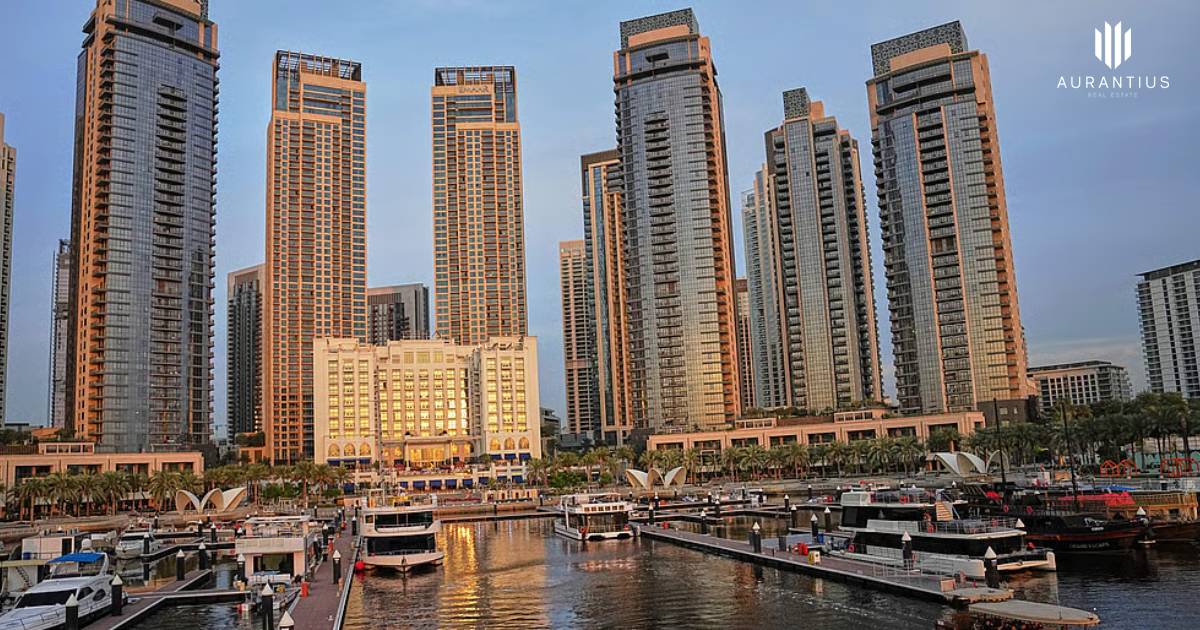
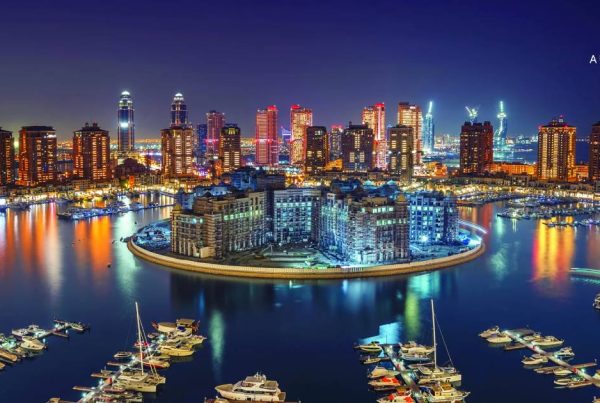
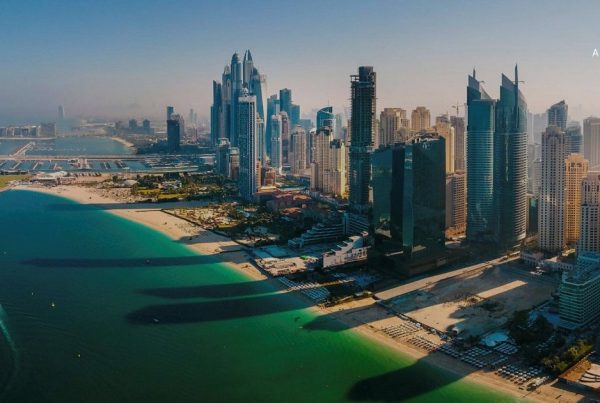
Palm Jumeirah real estate remains a central example of this trend. The island continues to attract high-net-worth buyers because direct beach access, scarcity, global recognition, and completed infrastructure create a defensive investment profile. This same scarcity logic also supports selected assets in Dubai Marina, Business Bay, and premium canal-front or waterfront corridors where high-quality stock is limited.
The luxury market is also supported by Dubai’s role as a global wealth hub. International investors continue to evaluate the city for tax efficiency, safety, connectivity, lifestyle, and long-term residency options. For these buyers, real estate is not only a rental-yield instrument. It is a hard asset, a lifestyle base, and a store of capital in a globally connected city. This is why the upper tier can remain resilient even when lower segments start to cool.
Developer quality is especially important in this segment. Buyers of luxury homes are studying projects by Emaar, DAMAC, Sobha Realty, Nakheel, Meraas, and Select Group because delivery history, brand strength, building management, and community depth influence long-term value. Investors comparing major developers can review Top 10 Real Estate Developers in Dubai for 2026 for a broader ranking of leading names and their positioning.
DUBAI PROPERTY MARKET SPLIT (2026)
HIGH SPEED: LUXURY & PRIMES
• Under-supplied waterfront/villas
• Fueled by global elite capital
• Prices rising 6% – 10% annually
LOW SPEED: STANDARD COMMODITIES
• Massive incoming apartment pipeline
• Facing localized price corrections
• Slower transaction velocity
The Low-Speed Market: Mid-Market Apartments and Supply-Led Price Pressure
The lower-speed side of the market is not weak across every location, but it is more exposed to supply. Mid-market apartments in high-density communities face rising competition as new units enter the market. This can reduce urgency among buyers and tenants, giving them more room to compare prices, negotiate terms, and reject weak layouts or poorly maintained buildings. The result is not a broad collapse, but a more rational pricing environment.
Dubai property price correction risk is most relevant in segments where inventory growth is high and differentiation is low. Standard apartments without strong views, transit access, developer reputation, or community infrastructure may face longer selling periods and more aggressive competition. Buyers are no longer accepting every launch or resale listing simply because it is in Dubai. They are asking whether the asset has a clear tenant base, realistic service charges, strong resale demand, and protection against future supply.
This cooling is healthy for serious buyers. During overheated cycles, momentum can hide weak fundamentals. In a mature market, price discipline returns. Buyers gain time to inspect comparable sales, review service charges, study handover schedules, and negotiate with sellers or developers. Landlords in high-supply areas also need to improve property condition and offer flexible rental terms to compete with newly handed-over units.
This is why the market should be understood as two-speed rather than distressed. Prime and scarce assets remain supported by strong demand, while high-supply segments are entering a more competitive phase. The broader explanation is covered in Dubai Property Market 2026: The End of the Boom or Start of a Mature Two-Tier Market, which highlights why Dubai’s shift is better described as maturity rather than collapse.
Off-Plan Dominance Shows Where Capital Is Moving
Dubai off-plan property sales remain one of the strongest forces in the market. Buyers continue to favour primary market launches because off-plan projects can offer flexible payment plans, lower initial entry costs, newer building specifications, and access to future growth corridors. In a market where ready properties can be expensive, off-plan gives investors a structured route to participate without paying the full property value immediately.
This dominance does not mean every off-plan project is attractive. It means buyers are actively choosing development pipelines where the developer, location, payment plan, and expected handover value make sense. The strongest investors are studying escrow protection, construction progress, surrounding infrastructure, future supply, exit timing, and rental demand before selecting a unit. Off-plan success now depends less on hype and more on disciplined project selection.
Projects in strong master-planned communities can benefit from this demand because buyers want future-ready assets in locations with infrastructure depth. Off-plan interest remains especially active where developers can combine payment flexibility with credible execution. This gives established developers an advantage because buyers are more cautious about delivery risk during a normalizing market cycle.
Developer strength becomes a major protection factor in this phase. Investors can use UAE Property Market 2026: Why Developer Strength Prevents a Crash to understand why strong balance sheets, delivery records, and escrow discipline matter more when supply increases. Flexible payment plans should support a good investment case, not replace due diligence.
DUBAI RESIDENTIAL TRANSACTION SHARE (Q1 2026)
73% – 75%
AED 105.5B+ In Volume
Why the Market Is Cooling Without Losing Confidence
Dubai real estate trends in 2026 show a clear moderation from peak growth conditions. Price gains are still visible in many areas, but buyers are more selective and sellers face more realistic negotiations. This is a normal stage after several years of rapid post-pandemic expansion. The market is not losing its core demand base. It is separating strong assets from average assets.
Luxury buyers remain active because prime supply is scarce. End-users remain active because Dubai continues to attract long-term residents, business owners, and skilled professionals. Off-plan buyers remain active because payment plans provide a structured entry route. Tenants remain active because population growth and employment demand continue to support occupancy. These factors help explain why transaction volumes can remain strong even as some segments cool.
The key difference is that broad momentum no longer protects every purchase. Investors must assess asset quality more carefully. A high-yield apartment in a secondary hub may still be attractive if entry price, occupancy, and operating costs are realistic. A luxury property may still be attractive if scarcity and buyer depth support long-term resale. A mid-market off-plan unit may still perform well if the location has infrastructure growth and limited competing handovers.
This is the real meaning of Dubai’s two-speed market. Growth has not disappeared. It has decentralized. Capital is moving toward assets that offer scarcity, income logic, strong developer backing, or structured affordability. Assets without clear differentiation are being tested by supply and buyer discipline.
What This Means for Buyers, Sellers and Investors
For buyers, this market creates more leverage. The urgency of the previous boom has reduced in several segments, allowing more time for due diligence. Buyers should compare recent transaction prices, building quality, handover schedules, service charges, nearby supply, and rental demand before making a decision. The best opportunities are likely to be found where sellers or developers adjust expectations but the long-term fundamentals remain strong.
For sellers, pricing accuracy is now more important. Premium assets in prime locations can still command strong demand, but standard units must be priced against real competition. Overpricing in a high-supply market can lead to longer listing periods and weaker negotiation outcomes. Sellers should focus on presentation, maintenance, documentation, and realistic comparable evidence.
For investors, the strategy depends on objective. Wealth-preservation buyers may prefer scarce waterfront or luxury assets with stronger capital stability. Yield-focused investors may look at affordable communities where gross rental returns remain higher, but they must monitor supply and tenant quality. Off-plan investors should prioritize credible developers, practical payment plans, and locations where future demand can absorb incoming supply.
The strongest portfolios in 2026 are likely to combine selectivity with patience. Dubai remains a global real estate market with strong liquidity and international visibility, but success now requires more than buying into the city name. It requires knowing which side of the two-speed market the asset belongs to.
FAQ: Dubai Property Market 2026
Question: Is Dubai’s property market crashing in 2026?
Answer: No. Dubai’s market is cooling from peak gains, but strong transaction activity, off-plan demand, luxury sales, and foreign investment indicate a mature adjustment rather than a broad collapse.
Question: Why is Dubai called a two-speed property market?
Answer: Dubai is moving at two speeds because scarce ultra-luxury homes, prime villas, and waterfront assets are still outperforming, while some high-supply apartment segments are seeing slower growth and stronger competition.
Question: Why are off-plan sales dominating Dubai real estate?
Answer: Off-plan sales are dominating because buyers are attracted to flexible payment plans, lower upfront entry costs, new product quality, and future growth areas. Strong developer selection remains essential.
Question: Are mid-market apartments still a good investment in Dubai?
Answer: Mid-market apartments can still be good investments when the entry price, location, rental demand, service charges, and supply outlook are favourable. Generic apartments in oversupplied areas require more caution.
Question: Which Dubai property segments are strongest in 2026?
Answer: Ultra-luxury waterfront homes, prime villas, branded residences, and well-located off-plan projects by credible developers remain among the strongest segments. Performance still depends on exact location and pricing.
Question: Should buyers wait for a Dubai property price correction?
Answer: Buyers should not wait blindly for a city-wide correction because Dubai’s market is fragmented. A better approach is to identify segments where pricing has softened, then negotiate on assets with strong long-term fundamentals.
Conclusion: Dubai’s Growth Has Decentralized, Not Disappeared
Dubai’s property market in 2026 is best understood as a two-speed market. Ultra-luxury assets, prime villas, and scarce waterfront homes continue to attract global capital, while parts of the mid-market apartment segment are adjusting to higher supply and more selective buyers. Off-plan sales remain a dominant force because they offer structured payment options and future growth exposure, but project quality now matters more than launch momentum.
The cooling phase is not a warning to exit the market. It is a signal to invest with greater precision. Buyers who understand location scarcity, developer credibility, payment-plan risk, rental demand, and supply pressure can still find strong opportunities. Sellers and landlords must adapt to a market where pricing, presentation, and quality are becoming more important than broad hype.
Aurantius Real Estate helps investors, end-users, and landlords navigate Dubai’s two-speed property market through data-led advisory, developer comparison, location analysis, and structured investment planning. In a market where luxury is soaring and off-plan remains dominant, the right strategy can help separate sustainable opportunity from oversupplied risk.