
Dubai Property Market After the 2008 Crisis and COVID-19: What Investors Should Know About Cycles, Regulation, and Today’s More Mature Market
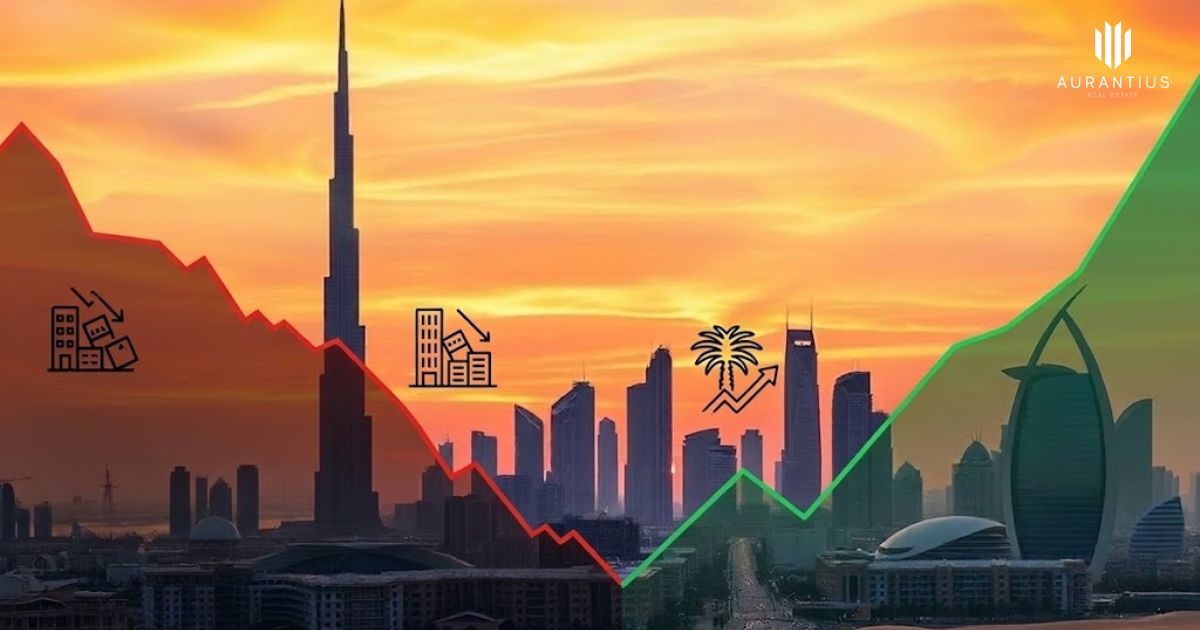
Dubai’s real estate market has been tested by major global shocks over the past two decades, with the 2008 global financial crisis and the COVID-19 pandemic in 2020 standing out as two defining stress events. Each episode disrupted transaction activity and investor sentiment, yet the recovery patterns were different because the market structure, buyer composition, and regulatory controls were different. For investors assessing Dubai in 2026, these two cycles offer a useful lens for understanding how the market behaves under stress, what risks have been reduced over time, and why performance now tends to be more segmented by asset quality and location.
The most practical lesson from both periods is that Dubai is a cyclical market that has repeatedly moved through downturns and recoveries. The market has not avoided corrections. It has adapted after corrections. Investors who focus on long-term fundamentals such as location, building quality, and tenant demand tend to outperform investors who attempt to time short-term bottoms. In 2026, this matters because the market is widely described as more mature, with a larger end-user share, greater transaction transparency, and stronger investor protection frameworks than the mid-2000s era.
How the 2008 Financial Crisis Impacted Dubai Real Estate
The 2008 crisis triggered a sharp correction in Dubai property values, with reported declines often described in the 50% to 60% range in certain segments. The downturn was closely linked to the market structure at the time. A large portion of buying activity was speculative, with heavy reliance on leverage and rapid resale expectations. When global liquidity tightened and financing became harder to access, transaction velocity dropped and price discovery moved downward quickly.
During that period, many projects faced delays and investor confidence weakened, which amplified the correction. Buyers who relied on quick flipping lost liquidity when resale demand slowed. Developers faced funding pressure when sales slowed. In such an environment, price declines can accelerate because the market is driven by short-horizon expectations rather than by long-duration end-user demand.
For investors, the main relevance of 2008 is not the exact percentage decline. The relevance is the mechanism: high leverage, speculative turnover, and limited regulation can create conditions where corrections become severe and broad. That cycle became a turning point because it pushed the market toward tighter rules, more oversight, and more structured buyer protections.
Regulatory Reforms After 2008: Why the Market Structure Changed
After the crisis, Dubai introduced reforms designed to strengthen transparency and reduce systemic risk. Regulatory bodies such as Dubai Land Department and the Real Estate Regulatory Agency implemented stricter frameworks for development approvals, transaction oversight, and buyer protection. One of the most important reforms was the use of mandatory escrow accounts for off-plan projects, which aimed to ensure that buyer funds were used for construction and not diverted.
Mortgage caps and tighter lending controls were also used to limit excessive borrowing and reduce leverage-driven speculation. Oversight of developers and project approvals increased, improving the quality of supply entering the market and reducing the probability of uncontrolled launch volume. These reforms changed investor behavior over time by raising the cost of non-compliance, improving the ability to verify transactions, and shifting the market closer to global standards for regulated real estate investment.
In practical terms, these reforms reduced certain risks for investors in later cycles. Off-plan risk became more manageable when escrow routing and project registration were enforceable. Mortgage risk became more controlled when leverage was capped. Market transparency improved as transaction systems and verification tools expanded.
The COVID-19 Shock in 2020 and the Faster Recovery Pattern
When COVID-19 began in 2020, Dubai’s market initially slowed and prices in some areas declined by roughly 10% based on common market commentary. The difference from 2008 was the recovery speed. The post-COVID rebound was widely described as one of the faster recoveries in global real estate, with demand accelerating as international buyers and relocating residents re-entered the market.
Several factors contributed to that rebound. Dubai’s policy environment remained pro-business and investor-friendly. Residency initiatives and visa pathways supported longer-term demand. Population inflows and relocation trends increased housing demand. Global buyers seeking safe jurisdictions and lifestyle options increased participation, especially in prime districts and well-managed communities. The market moved from a mild downturn into a strong growth phase within a relatively short window, often described as around 12 to 18 months for recovery momentum to become clear.
Compared with 2008, the COVID cycle was less about leverage collapse and more about temporary uncertainty. Once mobility resumed and confidence returned, demand reactivated quickly. For investors, this is an important distinction. A market that can recover quickly after a demand shock is typically supported by structural demand drivers rather than by short-lived speculation.
Comparative Recovery Overview
| Feature | 2008 Financial Crisis | COVID-19 Pandemic (2020) |
|---|---|---|
| Price Impact | -50% to -60% correction | -10% moderate decline |
| Recovery Time | ~6 to 7 years to stabilize | 12 to 18 months |
| Primary Driver | Speculative buying & high debt | End-user demand & HNWIs |
| Outcome | Structural regulatory reset | Record-breaking transaction volumes |
What Changed Between the Cycles: A Shift Toward a More Mature Market
One of the most important differences between the mid-2000s cycle and the current market is buyer composition. In earlier years, short-term speculation played a larger role. More recent market commentary often emphasizes a higher share of end-user demand and long-horizon buyers, which changes market behavior. End users purchase for residency, lifestyle, and household planning. They do not typically sell quickly based on short-term market noise.
Another major shift is the high share of cash transactions in recent years. A cash-heavy market is generally less vulnerable to interest rate spikes and credit tightening because fewer owners are forced to sell due to debt servicing pressure. This does not prevent corrections. It can reduce the probability of rapid, leverage-driven liquidation cycles.
Market segmentation has also increased. In a mature market phase, performance is not uniform across the city. Prime, scarcity-driven assets can remain resilient while oversupplied corridors can see slower growth or modest corrections. For investors, segmentation reinforces the need to underwrite by building and corridor, not by citywide averages.
Investment Drivers in the Current Market: Why Dubai Still Attracts Global Capital
Dubai continues to attract global investors through a combination of residency incentives, competitive rental yields, and population growth. Golden Visa pathways tied to qualifying property values are frequently discussed as a factor that encourages longer holding periods and adds residency utility to ownership. This can shift buyer decisions from short-term trading into long-duration allocation.
Rental yields remain another major draw, with common market ranges often cited at 6% to 8% for apartments and 5% to 7% for villas depending on location and unit type. Yield differentials matter because they support income-driven strategies and provide a buffer when price growth moderates. Investors often evaluate yield performance across key districts such as Dubai Marina, Downtown Dubai, Business Bay, and yield-led corridors such as Jumeirah Village Circle. Family-oriented master plans can also support longer tenancies and stable leasing in communities such as Dubai Hills Estate.
Population growth remains a fundamental demand driver. The milestone of surpassing four million residents in 2025 is commonly referenced as a structural support for leasing demand and long-term housing absorption. Population inflows expand the tenant pool and support end-user conversion from renting to buying, which can stabilize market behavior over time.
What Investors Should Expect in 2024–2026: Moderation and Selectivity
As Dubai enters a more balanced phase, market forecasts often describe moderate annual price growth ranges in mid single digits to around 10% depending on location and property type. Investors should expect more selective outcomes. Prime assets can remain firm, especially where land scarcity and global recognition support demand. Mid-market segments can be more sensitive to supply delivery and tenant affordability ceilings.
Geopolitical events can introduce short-term caution, yet Dubai has often been positioned as a safe-haven market within the region. In such periods, transaction timelines can slow as international buyers wait for clarity, yet demand can remain active in quality developments and established communities. Investors who can underwrite conservatively and focus on strong locations often use these periods to secure better terms rather than exiting the market entirely.
What Investors Can Learn From Past Crises
First, cycles are normal. Investors should model vacancy buffers, service charges, and realistic rent assumptions rather than relying on best-case outcomes. Second, regulation matters. Post-2008 reforms strengthened investor protection and reduced systemic risk, especially in off-plan transactions through escrow discipline and project oversight. Third, Dubai’s post-COVID rebound showed how quickly demand can reactivate when structural drivers remain strong and global buyers view the jurisdiction as stable and investable.
The best-performing strategies across cycles usually share the same traits: strong locations with broad tenant demand, buildings with disciplined management, realistic underwriting, and a holding horizon that can absorb short-term volatility. Investors who treat property as a long-term asset rather than a short-term trade tend to capture the recovery phase that often follows uncertainty periods.
Dubai’s property market has faced major global disruptions over the past two decades, including the 2008 financial crisis and the COVID-19 pandemic. While the 2008 downturn triggered a significant price correction, the market later stabilized after stronger regulations were introduced and investor protections improved. In contrast, the post-COVID recovery was much faster as global investors, entrepreneurs, and high-net-worth individuals moved capital into Dubai real estate. Today the sector continues to show strong fundamentals supported by rising population, international demand, and steady rental yields. Investors looking to understand the market in more detail can explore insights on Dubai property price trends, learn about real estate ROI in Dubai, review forecasts such as Fitch’s outlook for Dubai property prices, and read a deeper analysis of how the Dubai property market recovered after the 2008 crisis and COVID-19.
Conclusion
Dubai’s property market today is structurally different from the speculative environment that existed before 2008. The 2008 downturn exposed the risks of leverage and speculative turnover, leading to reforms that strengthened escrow controls, developer oversight, and lending discipline. The COVID-19 cycle showed a faster, demand-driven recovery supported by international inflows, residency-linked demand, and a more mature regulatory environment. In 2026, investors evaluating Dubai benefit from understanding these two cycles because they explain why the market is more resilient, why outcomes are more segmented, and why disciplined selection and long-duration strategy remain the most reliable path to performance.
For location research, investor-focused market context, and structured comparisons across Dubai districts, use Aurantius Real Estate to evaluate opportunities using fundamentals and real-world demand drivers.