
Dubai Real Estate 2026: Risk, Resilience, and Investor Strategy Amid Regional Uncertainty
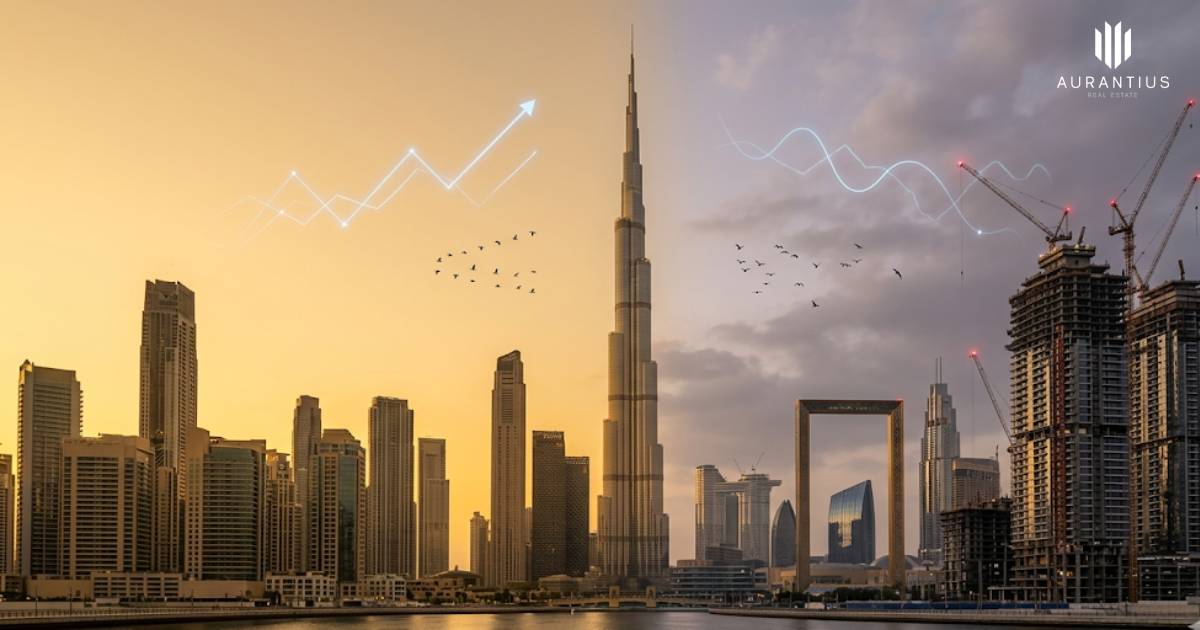
Dubai real estate in 2026 is experiencing short-term uncertainty due to regional geopolitical tensions, but the market’s long-term fundamentals remain strong. Investors are increasingly focusing on high-demand locations, stable rental yields, and sustainable ROI strategies. Prime areas such as Dubai Marina, Downtown Dubai, and Palm Jumeirah continue to perform well, attracting both local and international buyers. For those considering Dubai property investment in 2026, the market presents a balance of risk and opportunity driven by strong demand and global capital inflows.
Dubai’s real estate market in 2026 is undergoing a period of heightened scrutiny as regional geopolitical tensions introduce short-term uncertainty into investor sentiment. Transaction volumes have shown temporary slowdowns, with some reports indicating a noticeable drop in early March as buyers adopt a more cautious approach. Despite this, the underlying fundamentals of the market remain intact, supported by strong demand, tax advantages, and continued global capital inflows. Prime districts such as Dubai Marina and Downtown Dubai continue to attract both investors and tenants, reinforcing the resilience of established urban hubs.
Market Impact: Sentiment vs Structural Performance
The current market environment highlights the difference between sentiment-driven reactions and actual property performance. While listed developer stocks have experienced volatility, physical real estate pricing has remained relatively stable in most segments. Analysts suggest that potential price adjustments of 7% to 15% may occur in oversupplied areas if uncertainty persists, yet these changes are expected to be localized rather than market-wide. Areas such as Business Bay continue to maintain strong rental demand and transaction liquidity, indicating that core districts are less affected by short-term sentiment shifts.
Q1 2026 Price Comparison (AED per Square Foot)
Property prices per square foot in Dubai vary significantly depending on location, asset type, and demand dynamics.
Palm Jumeirah commands premium pricing due to its exclusivity and waterfront positioning, while Dubai Hills Estate offers comparatively lower entry points with strong end-user demand.
Below is a side-by-side comparison across key property categories.
| Property Type | Palm Jumeirah (Avg. psf) | Dubai Hills Estate (Avg. psf) |
|---|---|---|
| Apartments (Ready) | AED 4,153 – 5,200 | AED 2,442 – 2,626 |
| Villas (Ready) | AED 6,159 – 7,531 | AED 2,876 – 2,953 |
| Off-Plan (New Launches) | AED 5,800 – 5,910+ | AED 2,350 – 2,598 |
Segmented Resilience Across Key Locations
Dubai’s property market continues to operate as a collection of micro-markets, with performance varying significantly across segments. Ultra-luxury properties in Palm Jumeirah remain highly resilient due to limited supply and strong demand from high-net-worth individuals seeking capital preservation. Family-oriented communities such as Dubai Hills Estate continue to benefit from long-term residency demand and infrastructure development. Mid-market areas like Jumeirah Village Circle maintain strong transaction volumes due to affordability and high rental yields, supporting investor interest even during periods of market caution.
Rental Yields and ROI Stability
Rental yields remain a key pillar of Dubai’s real estate appeal, with average returns ranging between 6% and 8% across residential properties. Investors are increasingly focusing on net yield rather than gross returns, incorporating costs such as service charges and maintenance into their calculations. Tools such as Calculate ROI Dubai Property are essential for evaluating realistic returns and aligning investment strategies with long-term financial objectives. Stable rental demand continues to support income generation across both premium and mid-market segments.
For 3-bedroom villas, Dubai Hills Estate (specifically the Maple and Sidra clusters) generally offers a higher rental ROI than Palm Jumeirah.
While the Palm commands significantly higher absolute rental values, its premium property prices compress the overall percentage yield, making Dubai Hills more attractive for yield-focused investors.
3-Bedroom Villa Rental ROI (Q1 2026)
This comparison highlights the difference between yield-driven communities and luxury capital preservation zones.
Investors targeting steady returns typically lean toward Dubai Hills Estate, while ultra-high-net-worth buyers prioritize Palm Jumeirah for prestige and lifestyle.
| Metric | Dubai Hills Estate (Maple/Sidra) | Palm Jumeirah (Garden Homes) |
|---|---|---|
| Average Annual Rent | AED 240,000 – 280,000 | AED 580,000 – 1,230,000+ |
| Estimated Gross ROI | 4.8% – 6.0% | 3.0% – 5.0% |
| Primary Driver | High demand from expat families | Luxury lifestyle and scarcity |
Mortgage Trends and Financing Considerations
Financing conditions in 2026 remain favorable, with mortgage rates stabilizing between approximately 4% and 5.5%. Residents can access financing of up to 80% loan-to-value, while non-residents typically qualify for 50% to 60%. Fixed-rate mortgage products are increasingly preferred as they provide protection against potential interest rate fluctuations. Investors can explore detailed financing structures through the Mortgage Loans in Dubai for Residents and Non-Residents 2026 Guide, which outlines eligibility, costs, and strategic considerations for property financing.
Developer Role and Off-Plan Market Activity
Developer strategy continues to play a central role in maintaining market momentum, with flexible payment plans and incentives supporting transaction activity. Leading developers such as Emaar, DAMAC, Sobha Realty, Nakheel, Meraas, and Select Group continue to deliver projects that attract both investors and end-users. Developments such as Breez by Danube, Pearl House 4, Golf Verge, Sera at Rashid Yachts & Marina, and Marina Cove, along with projects like Peace Lagoons, Rove Home Marasi Drive, Twilight by Binghatti, Samana Resorts, and Iconic Tower, highlight the diversity of opportunities available across the market.
Investment Outlook and Strategic Positioning
Dubai’s real estate market continues to demonstrate resilience due to its structural strengths, including strong regulation, investor-friendly policies, and global connectivity. Insights from Dubai Real Estate 2026 and the broader Dubai Real Estate Blog indicate that long-term investors are focusing on asset quality, location fundamentals, and rental income stability. While short-term volatility may impact transaction timing, the overall trajectory of the market remains supported by sustained demand and economic diversification.
Conclusion
Dubai real estate in 2026 is navigating short-term uncertainty while maintaining strong long-term fundamentals. Investors who adopt a data-driven approach, focusing on location, yield, and financing structure, are well positioned to capitalize on opportunities across this evolving market cycle.
FAQs
Q: Is Dubai real estate at risk due to geopolitical tensions?
A: The market is experiencing short-term sentiment shifts, but strong fundamentals continue to support long-term stability.
Q: Which areas are most resilient in 2026?
A: Palm Jumeirah, Dubai Hills Estate, Business Bay, and Dubai Marina are among the most resilient due to strong demand and limited supply.
Q: What is the average rental yield in Dubai?
A: Rental yields typically range between 6% and 8%, depending on property type and location.
Q: Are mortgage options still attractive in 2026?
A: Yes, mortgage rates remain competitive, and financing options are accessible for both residents and non-residents.
Q: Should investors buy during market uncertainty?
A: Long-term investors may find opportunities during periods of uncertainty, particularly in high-demand and well-located assets.
Aurantius Real Estate provides strategic insights to help investors navigate Dubai’s property market with confidence.