
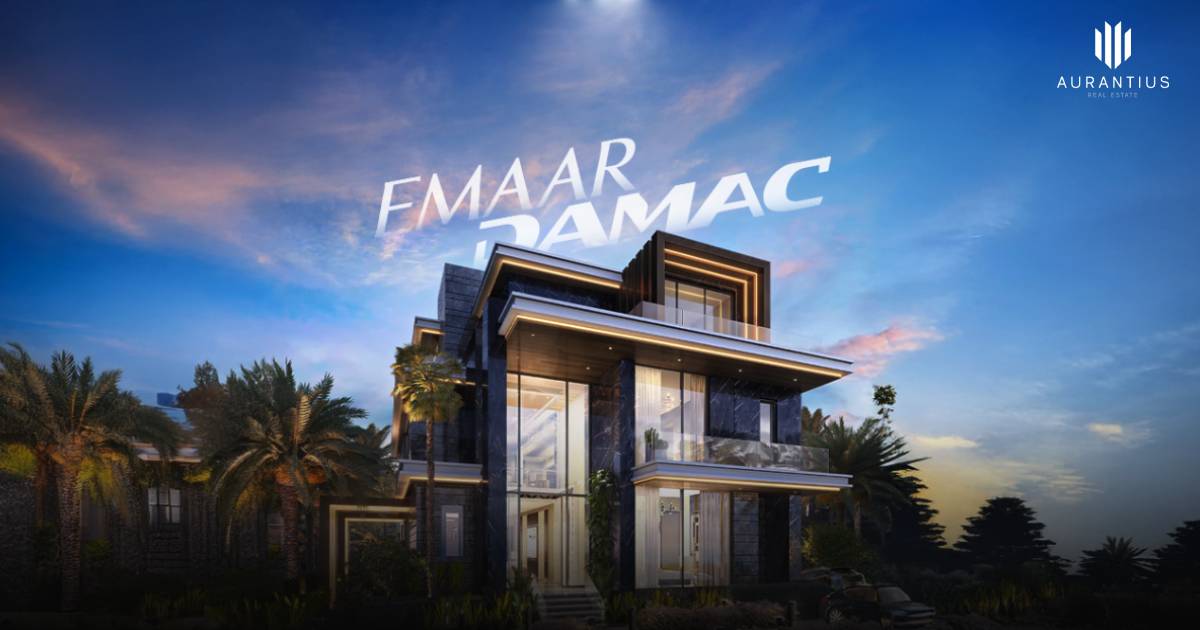

Emaar vs DAMAC Capital Appreciation: Which Dubai Developer Holds Value Better in 2026?
Investing in Dubai real estate in 2026 requires looking beyond glossy brochures, branded launch campaigns, and short-term payment-plan excitement. As the UAE property market enters a more normalised phase after several years of extraordinary growth, the question for serious investors is no longer simply “Which project is selling fastest?” It is “Which developer model is better aligned with my capital preservation, resale liquidity, and long-term appreciation goals?”
This is why the Emaar vs DAMAC capital appreciation debate matters. Both developers are central to Dubai’s modern property story, but they operate through very different investment philosophies. Emaar is typically associated with large-scale master-planned communities, recurring-income assets, and stronger institutional ratings. DAMAC is associated with aggressive sales velocity, bold branded concepts, flexible off-plan structures, and a more high-beta investor profile. In a cooling market, these differences become more important, not less.
Developer Power Rankings
| Developer | 2025 Sales Value | Market Position & Specialty | Avg. Price PSF (AED) | Financial Risk Profile |
|---|---|---|---|---|
| Emaar Properties | ~AED 100B+ | Master-planned communities & mega-landmarks | ~2,200 | Very Low (Investment Grade, huge cash backup) |
| DAMAC Properties | ~AED 46B | Aggressive luxury & branded concepts | ~1,500 | Low–Moderate (Upgraded via disciplined debt) |
| Nakheel / Meraas (Dubai Holding) |
~AED 59B combined | Waterfront luxury, coastal assets & lifestyle hubs | ~1,800–2,500 | Low (Strong government backing) |
| Sobha Realty | ~AED 23B | Vertically integrated premium quality | ~2,000 | Low (Insulated by in-house construction) |
| Binghatti Developers | ~AED 19B | High-volume, fast delivery, designer towers | ~1,500 | Moderate (Highly reliant on quick off-plan sales) |
| Aldar Properties | ~AED 9.7B (Dubai sales) |
Abu Dhabi market leader, expanding into Dubai | ~1,900+ | Very Low (Investment Grade, dominant market shares) |
Why Developer Selection Matters More in a Softer 2026 Market
Moody’s Ratings expects a modest cooling in UAE residential prices and developer sales over the next 12 to 18 months as new supply comes online, particularly in Dubai. The agency also highlighted that around 180,000 new residential units are expected to be completed in Dubai between 2026 and 2028, which may temper price growth in some segments, especially mid-market apartments.
In this environment, Dubai property investment ROI depends more heavily on asset quality, delivery credibility, location strength, and secondary market depth. A strong market can make many developers look good during the launch phase. A more selective market reveals which brands continue to attract buyers after the hype fades. This is where Emaar and DAMAC begin to separate into different investor categories.
Why Developers are Far Stronger in This Cycle
| Past Cycles (2008 / 2014) | VS | Current 2026 Cycle |
|---|---|---|
| High financial leverage | VS | Low-to-moderate leverage |
| Unregulated collections | VS | Strict Escrow regulation |
| High buyer default risk | VS | Massive presale backlogs |
| Speculative flipping | VS | High equity/cash funding |
Moody’s: Developers Are Stronger Than in Previous Cycles
The wider backdrop is important. Moody’s does not describe the 2026 market as a repeat of the 2008 or 2014 downturns. Instead, it says rated UAE developers are entering the softer cycle from a stronger position, supported by healthier balance sheets, strong presales, good liquidity, and lower refinancing pressure. Recent reporting citing Moody’s also noted that completed-unit transaction volumes softened sharply in March and April 2026, but developers are better equipped to absorb stress than in earlier periods.
This matters for both Emaar and DAMAC. The comparison is not between a “safe” developer and a “weak” developer. It is between two strong but structurally different investment profiles. Investors should therefore choose based on objective, not brand emotion.
Emaar: The Blue-Chip Capital Preservation Model
Emaar’s strongest investment attribute is institutional stability. As of 31 March 2026, Emaar reported revenue backlog of approximately AED 163.4 billion, up 29% year-on-year, alongside Q1 property sales of AED 22.4 billion. The company also carries investment-grade credit ratings, including Baa1 from Moody’s and BBB+ from S&P Global on its published ratings page.
For property buyers, this financial profile supports confidence in long-term delivery, project continuity, and market trust. Emaar also benefits from a differentiated development style: it often builds entire ecosystems rather than isolated buildings. Communities such as Downtown Dubai, Dubai Hills Estate, Arabian Ranches, Dubai Creek Harbour, and Emaar Beachfront are not only housing clusters. They are integrated districts supported by retail, leisure, transport access, parks, and public realm investment. This type of community planning tends to support stronger end-user demand over time.
Emaar Secondary Market Liquidity: Why Long-Hold Investors Care
Emaar secondary market liquidity is one of the main reasons conservative investors gravitate toward the brand. In uncertain periods, resale depth matters. A buyer does not want only theoretical capital appreciation; they want confidence that future purchasers will recognise the community, trust the developer, and secure financing for the asset. Emaar’s scale, brand visibility, and enduring presence in Dubai’s most established communities generally help support that liquidity.
This does not mean every Emaar project automatically outperforms every DAMAC project. Entry price still matters. A buyer can overpay for a strong brand and weaken returns. However, for investors prioritising lower execution risk, broader resale audiences, and more defensive long-term positioning, Emaar frequently fits the brief more naturally than higher-volatility off-plan strategies. Readers comparing wider developer strength can also review top Dubai property developers and their iconic projects.
DAMAC: The Higher-Beta Growth and Launch Momentum Model
DAMAC presents a different investment case. S&P Global upgraded DAMAC Real Estate Development to BB+ in November 2025, citing its strong order book, business performance, and growing revenue backlog. At the time, S&P reported DAMAC’s backlog at about USD 20 billion as of 30 September 2025, up from USD 18 billion at year-end 2024, with strong visibility for 2025–2026.
DAMAC is especially strong at creating investor excitement through themed master communities, branded residences, resort-style concepts, and aggressive market positioning. Its appeal is often strongest among buyers who want higher launch momentum, flexible payment plans, and concepts designed to generate immediate demand during the off-plan phase. This creates a different return profile from Emaar. Where Emaar often sells trust and long-term ecosystem value, DAMAC often sells energy, lifestyle differentiation, and speed of market capture.
DAMAC vs Emaar Historical CAGR: What Can Actually Be Said
The phrase “DAMAC vs Emaar historical CAGR” is widely searched, but publicly available primary data does not support a simple universal 10-year CAGR ranking that applies across every community, unit type, and launch cohort. Project-level performance can vary significantly depending on entry price, handover timing, location, payment structure, and wider market cycle. It would therefore be misleading to declare a single fixed appreciation spread as universally true.
What can be said with more confidence is that Emaar’s model usually appeals to investors seeking stronger long-term price preservation and secondary-market defensiveness, while DAMAC’s model can appeal to investors seeking higher-beta growth potential through launch timing, branded concepts, and aggressive demand creation. This is a risk-profile comparison more than a one-line performance ranking.
Where Emaar May Have the Edge on Capital Preservation
Emaar often benefits from stronger community durability. Integrated developments with mature infrastructure, retail, schools, open spaces, and established resident demand can maintain relevance across market cycles. This is particularly valuable when speculative activity cools because end-users become the anchor of pricing. Emaar’s wider recurring-income platform and stronger credit ratings also reinforce the perception of institutional durability.
For investors with a five-to-ten-year horizon, Emaar may therefore be better aligned with goals such as capital preservation, easier resale, lower perceived project risk, and exposure to communities that remain attractive to families and owner-occupiers. This broader shift toward long-hold investing is explored further in Dubai real estate market trends from flip market to long-term wealth hub.
Where DAMAC May Offer Stronger Upside
DAMAC can be attractive when the investment thesis is based on early access to a high-demand launch, a strong thematic concept, or a location where branded positioning creates a premium. The developer has been particularly effective at turning lifestyle narratives into sales velocity, which can support investor interest during construction phases. Its strong backlog and upgraded rating also show that it is not merely a marketing machine; it has meaningful operational strength behind its pipeline.
The trade-off is that higher upside typically comes with higher sensitivity to market sentiment. Branded or concept-driven projects can perform extremely well when demand is strong, but they may also become more dependent on buyer psychology, launch pricing discipline, and post-handover market acceptance. Investors seeking aggressive off-plan opportunities should therefore assess DAMAC projects individually rather than assuming brand-wide outperformance.
Payment Plans and Investor Psychology
One of the clearest differences between Emaar and DAMAC is how they attract investors financially. Emaar usually relies more heavily on brand trust, location strength, and proven demand. DAMAC has historically been more aggressive in using appealing payment structures and high-impact concept launches to widen the buyer pool. This difference matters because payment flexibility can improve entry accessibility, but it can also attract more speculative buyers when underwriting is weak.
In a cooler 2026 market, investors should not judge a project only by how low the initial payment is. A lower entry point may help liquidity management, but capital appreciation depends on final price, demand at resale, delivery quality, and the position of that project within its community. For broader market risk context, see why Dubai’s market redesign is reducing bust risk in 2026.
Which Developer Fits Which Investor?
Emaar may be better suited to investors who value defensive positioning, established community demand, resale liquidity, and a more institutional capital-preservation profile. It often fits long-hold portfolios, end-user buyers, and investors who prefer lower drama with clearer secondary-market recognition.
DAMAC may be better suited to investors who want a more opportunistic strategy focused on lifestyle concepts, launch-stage upside, flexible entry, and potentially stronger paper gains when buyer enthusiasm is high. It may suit investors comfortable with more project-level variation and a higher sensitivity to timing.
Head-to-Head Performance Metrics
| Performance Metric | Emaar Properties | DAMAC Properties |
|---|---|---|
| Historical 10-Yr CAGR | ~5.8% | ~4.2% |
| Resale Value Premium | 12% to 18% higher than community averages | 0% to 5% below/at community averages |
| Secondary Market Liquidity | Extreme (Standardized bank valuations) | Moderate (Highly reliant on retail investors) |
| On-Time Project Delivery | ~85% to 90% | ~75% to 80% |
| Off-Plan Flip Potential | Moderate (Rigid standard payment plans) | High (Up to 30%–50% pre-handover paper gains) |
| Average Gross Rental Yields | 6.0% to 8.0% (Highly stable, low vacancy) | 6.5% to 9.0% (Lower entry price per sq. ft.) |
How the 2026 Forecast Changes the Comparison
The Dubai real estate forecast 2026 matters because a cooling market rewards discipline. Moody’s expects softer sales and moderate price pressure as new supply arrives, while major developers remain better capitalised than in previous cycles. This means the right developer selection becomes more important, not because one brand will avoid every market fluctuation, but because stronger balance sheets, backlog visibility, and buyer trust can shape how assets behave when momentum slows.
Investors who want to align their buying decisions with the wider market outlook can also review Dubai real estate forecast 2026: prices, supply, and ROI.
Conclusion
The Emaar vs DAMAC capital appreciation debate is best understood as a comparison of investment style. Emaar generally offers a more defensive profile built on master-planned communities, stronger institutional ratings, and deep long-term brand trust. DAMAC offers a more opportunistic profile built on branded demand, bold concept execution, and strong off-plan sales momentum backed by a large revenue backlog. Neither should be bought blindly. The right choice depends on whether the investor prioritises lower-risk capital preservation or higher-beta appreciation potential. In a more selective 2026 Dubai market, that distinction matters more than ever.
FAQs
Q: Which has better capital appreciation, Emaar or DAMAC?
A: There is no single universal answer across all projects. Emaar generally suits lower-risk long-term capital preservation and resale liquidity, while DAMAC may offer stronger upside in selected branded or high-demand off-plan launches.
Q: Is Emaar safer for long-term Dubai property investment?
A: Emaar’s investment-grade ratings, large revenue backlog, and master-planned community model make it attractive to investors prioritising stability, long-term demand, and secondary-market liquidity.
Q: Is DAMAC stronger for off-plan investors?
A: DAMAC can appeal to off-plan investors because of its strong launch momentum, lifestyle concepts, and large backlog, but project-level due diligence remains essential.
Q: Does the 2026 UAE property cooling phase make developer selection more important?
A: Yes. As supply increases and prices normalise, buyers need to focus more carefully on developer credibility, community strength, resale depth, and delivery confidence.
Q: Should investors choose Emaar or DAMAC in 2026?
A: Investors seeking lower-volatility, long-hold exposure may lean toward Emaar, while investors seeking more aggressive off-plan growth opportunities may consider selected DAMAC projects. The final decision should depend on project pricing, location, payment plan, and exit strategy.
Aurantius Real Estate helps investors compare Dubai developers, assess long-term resale potential, and select projects aligned with capital preservation, rental performance, and growth strategy.