
Etihad Rail Effect: How UAE Property Prices & Rents are Surging in 2026
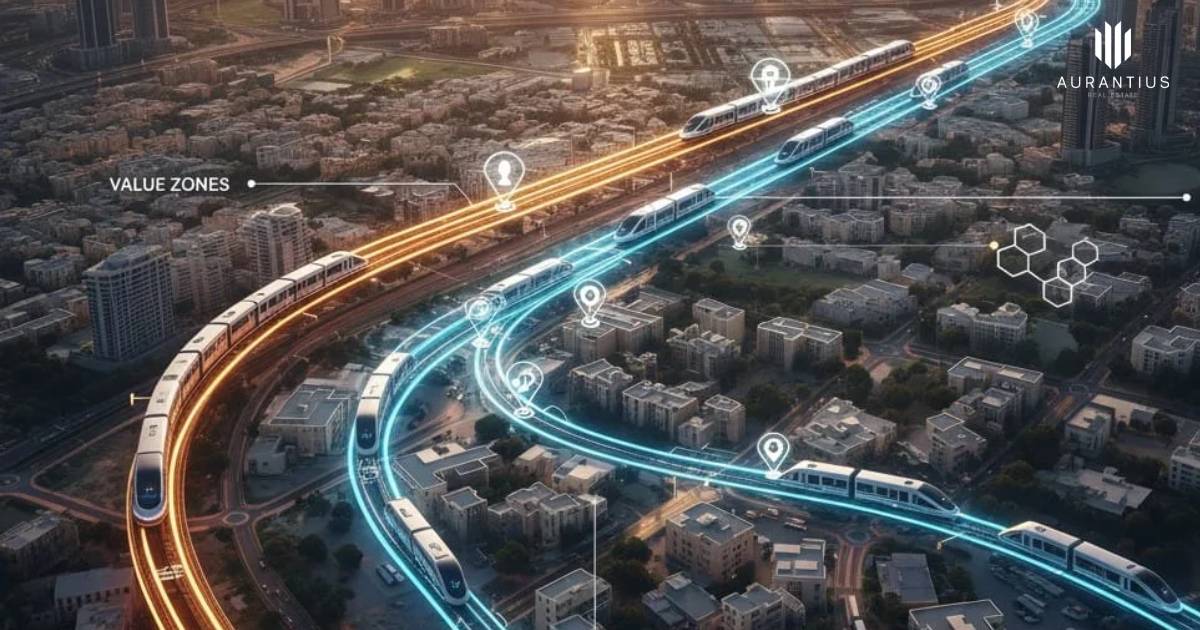
The UAE real estate market has long been defined by its skyline and luxury, but in 2026, a new driver is taking center stage: the Etihad Rail. As the national network transitions from a freight powerhouse to a fully functional passenger reality, it is fundamentally reshaping the geography of value across all seven emirates. Experts are already observing a “connectivity premium,” with property prices near major stations jumping by as much as 25% and rental rates climbing by 15% as residents swap long highway drives for a high-speed commute. From the rising hubs of Dubai South and Al Jaddaf to the emerging residential corridors of Fujairah and Abu Dhabi’s Saadiyat Island, the “smart money” is moving into transit-oriented developments. This is more than just a transportation project; it is a structural shift that is unlocking new investment frontiers and defining the next golden era of UAE real estate.
Key Real Estate Hotspots to Watch
| Community | Impact Detail |
|---|---|
| Dubai South | Predicted growth of ~17% due to proximity to Al Maktoum Airport and rail links. |
| Jumeirah Golf Estates | Set to be a major transport hub connecting the rail to the existing Dubai Metro. |
| Al Jaddaf | High potential for capital growth (~30%) as it connects directly to the Dubai–Abu Dhabi line. |
| Saadiyat & Yas Island | Expected to outperform in Abu Dhabi due to enhanced intercity connectivity. |
| Dubai Investments Park | Recently seen property values rise by 17% as it integrates into the national network. |
Redefining Prime Location Through Accessibility
Traditionally, prime real estate in the UAE was defined by proximity to central business districts or waterfront views. The Etihad Rail real estate impact is changing this definition, shifting focus toward accessibility and travel efficiency. By connecting all seven emirates, the rail network expands the daily commuter radius, allowing residents to live in more affordable areas while maintaining access to major economic hubs such as Dubai and Abu Dhabi. This shift is fundamentally altering the geography of value.
Property Value Growth and the Connectivity Premium
One of the most immediate effects of the rail network is the increase in property values near stations. Analysts forecast that properties within a 500 to 800 meter radius of major hubs could see price appreciation between 15% and 25% as accessibility improves. Early data already shows significant growth in areas such as Dubai South and Al Jaddaf, where demand has increased ahead of full passenger operations. This trend mirrors the historical impact of metro expansions, where connectivity consistently drives price growth.
Strategic Investment Hotspots
| Location | Price Growth (2025) | Market Sentiment |
|---|---|---|
| Dubai Festival City | +18% | High demand for “ready” properties near Al Jaddaf station. |
| Dubai South | +17% | Bolstered by both the rail and Al Maktoum Airport expansion. |
| Dubai Investments Park | +17% | Evolving from industrial focus to a prime residential corridor. |
| Al Safouh | +286%* | Exceptional outlier growth driven by intensive redevelopment near transit nodes. |
UAE Rental Market Growth and Yield Stability
The UAE rental market growth is also being influenced by the Etihad Rail. Properties located transit corridors are experiencing higher rental demand and reduced vacancy rates. Rental increases of 10% to 15% are being observed in key, with some locations recording even higher spikes as tenants prioritize convenience and reduced commute times. This dynamic is particularly attractive for investors seeking stable income streams.
Transit-Oriented Development UAE and New Communities
The concept of transit-oriented development UAE is becoming central to urban planning. Developers are launching integrated communities around rail stations that combine residential, commercial, and retail spaces. These developments are designed to maximize accessibility and create self-sustaining environments where residents can live, work, and commute efficiently. As highlighted in infrastructure updates, this approach is shaping the next generation of UAE.
Unlocking Tier-2 Cities and Regional Growth
One of the most significant impacts of the rail network is the unlocking of Tier-2 cities such as Fujairah, Al Ain, and Ras Al Khaimah. These areas, previously considered too distant for daily commuting, are now becoming viable residential options as travel times decrease significantly. This shift is creating new investment opportunities and redistributing demand across the UAE, supporting broader economic growth.
Key Investment Hotspots Along the Rail Corridor
Several locations are emerging as high-potential investment hotspots due to their proximity to rail stations. Dubai South is expected to benefit from both rail connectivity and airport expansion, while Jumeirah Golf Estates is set to become a major transport hub linking rail and metro networks. In Abu Dhabi, Saadiyat Island and Yas Island are positioned for strong growth as intercity connectivity improves. Additional insights can be found in community growth analysis.
Commercial and Industrial Real Estate Transformation
The Etihad Rail real estate impact extends beyond residential properties to commercial and industrial sectors. Logistics hubs such as Jebel Ali and Dubai Investments Park are gaining value due to improved freight efficiency and connectivity. This development is enhancing the attractiveness of industrial land and warehouses, supporting the UAE’s position as a global trade hub.
Dubai Real Estate Trends and Long-Term Outlook
Dubai real estate trends in 2026 indicate a shift toward infrastructure-driven growth. Connectivity projects such as Etihad Rail are becoming central to investment decisions, influencing both pricing and demand patterns. As explored in multi-emirate expansion analysis, this trend is expected to continue as the network expands and integrates with other transport systems.
Risk Considerations and Strategic Investment Approach
While the outlook is positive, investors should consider potential risks such as supply concentration in specific corridors and short-term price fluctuations. A balanced strategy that combines established with emerging rail-linked locations can help mitigate these risks while maximizing returns. The key is to align investments with long-term infrastructure development rather than short-term market trends.
Conclusion
The Etihad Rail real estate impact represents a fundamental shift in how value is created in the UAE property market. By redefining accessibility and unlocking new, the rail network is driving both price growth and rental demand. For investors, this connectivity premium offers a unique opportunity to position assets in areas that will benefit from long-term infrastructure-driven appreciation.
FAQs
Q: How is Etihad Rail affecting UAE property prices?
A: Properties near rail stations are expected to see price increases of 15% to 25% due to improved accessibility.
Q: What impact does the rail have on rental yields?
A: Rental rates in rail-linked areas are rising by 10% to 15%, with lower vacancy rates.
Q: Which areas benefit the most from Etihad Rail?
A: Dubai South, Al Jaddaf, Jumeirah Golf Estates, and Saadiyat Island are key hotspots.
Q: What is transit-oriented development?
A: It is a planning approach that builds communities around transport hubs to maximize accessibility and efficiency.
Q: Is Etihad Rail a good investment driver?
A: Yes, it creates long-term value by improving connectivity and expanding the real estate market.
Aurantius Real Estate helps investors identify high-growth opportunities driven by UAE infrastructure and connectivity trends.