
Geopolitical Resilience and the Safe Haven Paradox
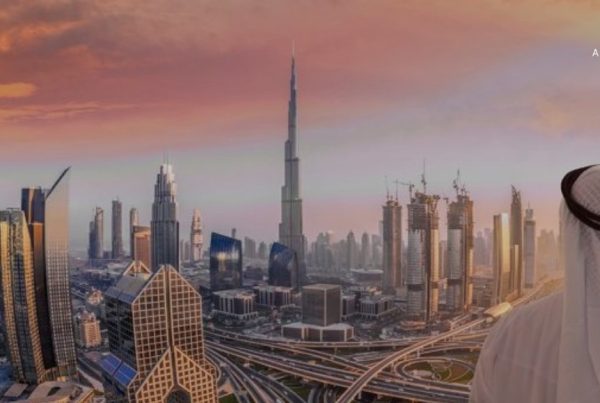
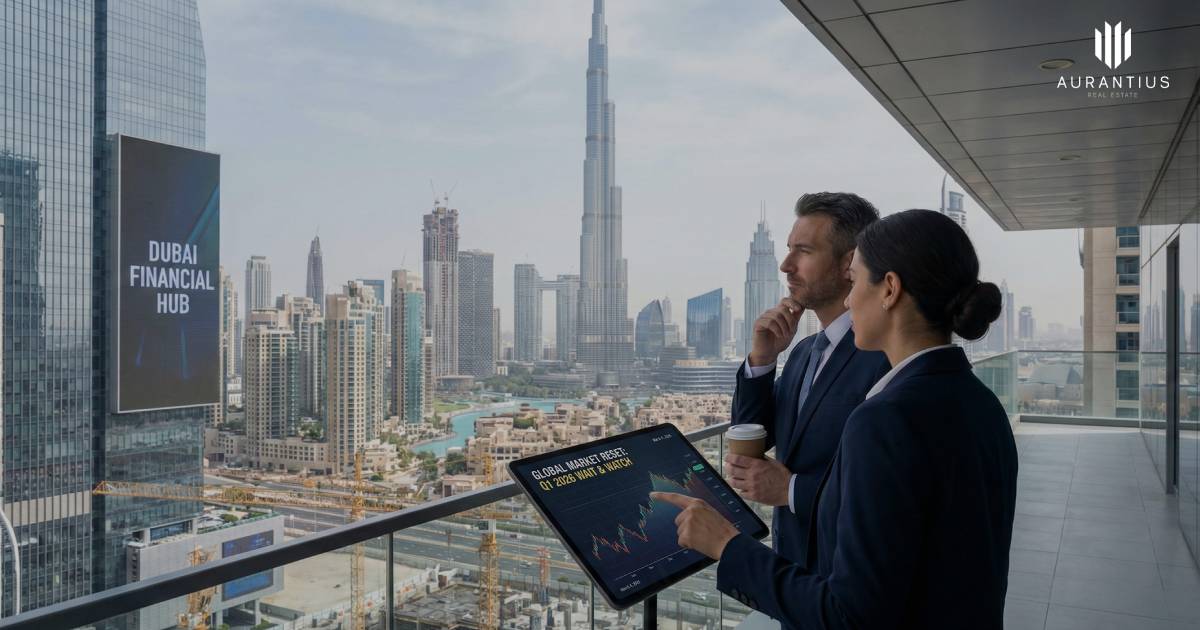
As of March 2026, Dubai’s real estate market is navigating a complex environment where regional geopolitical tensions intersect with strong structural growth. Conflicts involving Iran, Israel, and the United States have created short term uncertainty across global markets, prompting some international investors to adopt a cautious wait and watch approach.
However, despite slower transaction velocity and delayed deal closures in certain segments, the Dubai property market continues to demonstrate strong resilience. The underlying fundamentals supporting the market remain intact, including population growth, international capital inflows, and government driven infrastructure expansion.
The Safe Haven Effect
One of the most interesting dynamics currently shaping the market is what analysts describe as the safe haven paradox. While geopolitical instability often creates uncertainty in global markets, it has historically strengthened Dubai’s appeal as a secure destination for wealth preservation.
Investors from regions experiencing instability frequently move capital into Dubai real estate to protect assets. The UAE’s political neutrality, strong regulatory environment, and currency stability supported by the UAE dirham’s peg to the US dollar contribute significantly to investor confidence.
As a result, regional tensions may temporarily slow transaction activity but can also generate new inflows of international capital seeking stability.
Segment Performance Across the Market
Mid Market Segment (AED 1M to AED 3M)
The mid market residential sector remains the core engine of Dubai’s real estate market. Demand in this price range is supported by professionals relocating to the UAE and residents transitioning from renting to ownership.
Golden Visa programs and long term residency options continue to encourage buyers to build equity rather than remain in the rental market. Communities offering strong infrastructure and connectivity remain particularly attractive to this group.
Luxury and Prime Locations
High end property markets such as Palm Jumeirah, Downtown Dubai, and Dubai Hills Estate continue to attract global high net worth investors. Many buyers in this segment purchase with cash and focus on long term capital preservation rather than short term market fluctuations.
Because of this investment profile, luxury properties tend to be less sensitive to temporary geopolitical shocks.
Supply and Pricing Dynamics
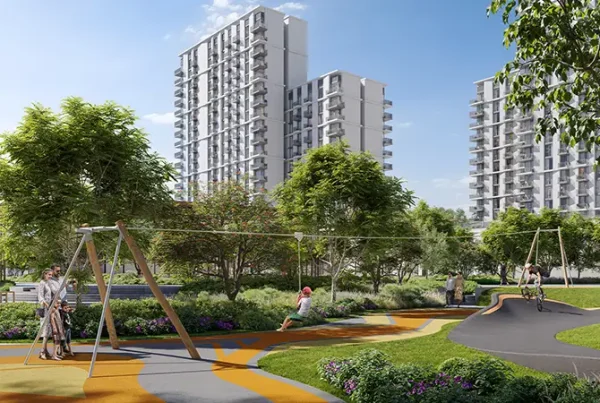
The Dubai market is gradually transitioning into a more mature equilibrium phase. A large pipeline of nearly 130,000 residential units is expected to be delivered throughout 2026, increasing buyer choice and improving negotiating power in some communities.
Despite this increase in supply, long term infrastructure investment continues to support property values. Major projects such as the expansion of Al Maktoum International Airport, estimated at approximately 35 billion dollars, are expected to strengthen Dubai South and surrounding residential zones.
These developments reinforce the city’s long term economic vision and provide a strong foundation for future real estate demand.
Current Market Performance
Recent market data shows that Dubai real estate continues to maintain strong activity levels despite global uncertainty.
- Total transactions reached approximately AED 43.49 billion in a single recent week.
- More than 4,470 property sales were recorded during that period.
- Average prices remain stable at around AED 1,924 per square foot.
- Rental yields continue to average between 6.4% and 7% across many communities.
Demand is also balanced between investors and end users, with approximately 56% investor participation and 44% end user buyers. This distribution indicates a structurally healthy market rather than purely speculative activity.
Key Market Hotspots
Several areas continue to stand out for both investment value and transaction volume.
- Luxury and High Value Areas: Palm Jumeirah, Dubai Hills Estate, Downtown Dubai.
- High Yield Communities: Jumeirah Village Circle, Business Bay, Dubai Marina.
- Emerging Investment Zones: Dubai South due to proximity to logistics hubs and the expanding Al Maktoum Airport.
Another notable trend is the persistent shortage of villas. Only around 19,700 new villas were expected to be delivered by the end of 2025, which continues to support price strength in this segment.
Does the Regional Conflict Affect Dubai Real Estate?
The regional conflict does influence market sentiment in the short term. Some investors delay site visits or contract signings while assessing geopolitical risks. Travel disruptions and airspace adjustments can also slow the physical process of closing deals.
However, construction activity across Dubai remains uninterrupted, and developers continue to launch projects according to schedule.
Rather than causing structural damage to the property market, the conflict appears to be creating a temporary pause in decision making.
Investor Strategy in 2026
For experienced investors, the current environment may present a tactical buying opportunity. Periods of hesitation often allow buyers to negotiate more favorable pricing or secure units in high demand projects before the next growth cycle begins.
Strategic investors are focusing on projects with strong developer reputations, established communities, and proximity to major infrastructure developments.
2026 Market Outlook
Analysts generally expect Dubai’s property market to continue growing at a moderate pace. Prime locations may see annual price growth between 6% and 10%, while mid market communities could experience growth in the range of 2% to 7%.
Although the large supply pipeline may create temporary pressure in certain areas, the city’s population expansion, economic diversification, and international investor appeal continue to support long term demand.
Final Perspective
Dubai’s real estate market in 2026 reflects a unique balance between short term geopolitical uncertainty and long term structural strength. While regional tensions have introduced caution among some investors, they have also reinforced Dubai’s global reputation as a secure destination for capital.
The current environment is less about market weakness and more about strategic patience. As clarity returns to global markets, Dubai’s real estate sector is expected to remain one of the most resilient and attractive investment destinations worldwide.