
Investing in Dubai Real Estate With AED 500: How Fractional Property Is Changing the Market
Dubai’s ultra-luxury property market regularly attracts global attention through record-breaking villas, branded penthouses, and multimillion-dirham waterfront transactions. A quieter transformation is taking place through mobile platforms that allow investors to gain exposure to income-producing Dubai properties without purchasing an entire apartment or arranging a traditional mortgage.
Selected regulated property crowdfunding platforms now allow eligible investors to start with approximately AED 500. Instead of funding the full purchase price, registration charges, furnishing costs, and large down payment associated with direct ownership, investors purchase a fractional interest in a legal structure that owns a specific property. Rental income and eventual sale proceeds are then distributed according to each investor’s ownership percentage, after applicable costs and platform fees.
This model should not be viewed only as a substitute for people who cannot afford a complete property. Fractional ownership can also serve as a portfolio-construction tool for investors who prefer to spread capital across several buildings, communities, tenant profiles, and investment strategies rather than concentrating a large amount in one unit.
Dubai’s broader digital property transformation is examined in Fractional Ownership and Tokenisation Reshaping Dubai Real Estate. The central change is that real estate is becoming more accessible, data-driven, and digitally managed, while remaining connected to physical, income-producing assets.
Can You Really Invest in Dubai Property With AED 500?
Yes, selected Dubai-based fractional property platforms advertise entry points starting at approximately AED 500. The investor is not buying an entire studio, apartment, or villa for that amount. The investment usually represents a small share in a special-purpose company or investment vehicle that holds the underlying property.
The legal structure matters. In a conventional fractional crowdfunding model, each property may be placed into a separate special-purpose vehicle. Investors purchase shares in that vehicle, and the vehicle owns the property registered through the relevant Dubai property system. This helps separate the underlying asset from the platform’s wider operating business.
Dubai’s official tokenisation initiative is a related but distinct model. The Dubai Land Department launched its real estate tokenisation project in partnership with the Virtual Assets Regulatory Authority, the Central Bank of the UAE, Dubai Future Foundation, and technology partners. The official pilot introduced tokenised interests in ready properties from AED 2,000 rather than AED 500.
Investors should therefore avoid treating every fractional property app as a DLD tokenisation platform. A platform may be regulated by the Dubai Financial Services Authority as a property crowdfunding operator, while another product may operate within the DLD and VARA tokenisation framework. Both can provide fractional exposure, but the ownership structure, regulator, documentation, exit process, and investor rights may differ.
Why Fractional Property Is a Diversification Strategy, Not a Budget Compromise
Traditional Dubai property ownership can require hundreds of thousands of dirhams in initial capital. Even when a buyer uses mortgage finance, the transaction may involve a substantial down payment, Dubai Land Department charges, agency commission, valuation costs, mortgage registration, furnishing expenses, and ongoing service charges.
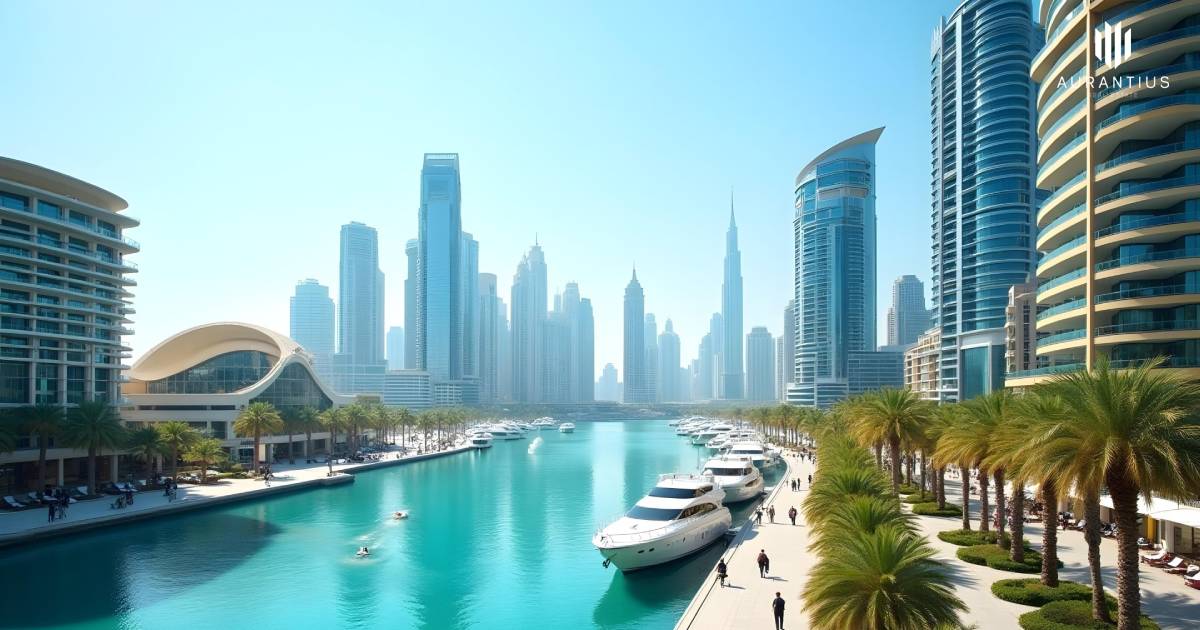
A fractional investor can allocate a smaller amount across several properties. Capital that might otherwise be concentrated in one studio can be distributed across an apartment in Dubai Marina, a professionally occupied unit in Business Bay, a centrally located residence in Downtown Dubai, and a family-focused property in Dubai Hills Estate.
This creates diversification across locations and tenant segments. A temporary vacancy or maintenance issue in one property has less impact when the investor owns fractions in several assets. The investor can also combine income-focused properties with assets selected for potential long-term appreciation.
The strategy fits within the broader options discussed in Best Property Investment Strategies in Dubai for 2026. Fractional ownership is not automatically better than direct ownership. It serves a different purpose by reducing concentration, management responsibilities, and initial capital exposure.
How Monthly Rental Income Is Generated
Fractional income is generally generated when the underlying property is rented to a tenant. The platform or appointed property manager collects the rent, pays property-related expenses, and distributes the remaining income to investors according to their ownership percentage.
The amount received is based on net rather than headline rental performance. Service charges, maintenance, insurance, property management, vacancy, leasing expenses, platform administration, and other costs can reduce the distributable income. Investors should compare projected gross yield with projected net yield before committing capital.
Monthly distribution does not mean a fixed or guaranteed monthly return. Income can change if the property becomes vacant, the tenant pays late, maintenance costs rise, or the rental rate changes. A property undergoing renovation or being prepared for sale may not produce monthly income at all.
Rental assumptions should also reflect the changing leasing market. The analysis in Dubai Rent Outlook for 2026 explains why rental performance is becoming more dependent on the exact building, community, unit condition, and local supply pipeline.
Fractional Ownership and Tokenisation Are Not Exactly the Same
Fractional ownership is the broad concept of several investors holding economic interests in one property. Tokenisation is a technology and legal framework that represents those interests digitally, often using blockchain-based records or digitally issued ownership certificates.
In a traditional fractional platform, investors may hold shares in an SPV that owns the property. The investor’s rights come from company documents, platform agreements, and the legal structure holding the asset. In a tokenised model, the investor receives a digitally recorded interest connected to the property and the approved tokenisation framework.
Dubai’s DLD-backed initiative introduced Property Token Ownership Certificates and recorded strong early demand from first-time property investors. The project is designed to expand access while improving traceability, governance, and digital transaction efficiency.
A deeper comparison is available in Fractional Ownership and Real Estate Tokens: A New Era of Property Ownership. Investors should understand what they legally own before focusing on the technology used to display the investment.
How Dubai’s Regulatory Framework Protects Fractional Investors
Regulation is one of the most important differences between a legitimate fractional platform and an unverified online investment scheme. Investors should check the regulator’s public register rather than relying only on claims displayed inside an app or advertisement.
Property crowdfunding platforms operating from the Dubai International Financial Centre may be authorised by the Dubai Financial Services Authority. Their permissions can include operating a property investment crowdfunding platform, serving retail clients, and holding or controlling client assets, subject to the conditions listed in the regulatory register.
The DLD tokenisation model operates through a separate collaboration involving the Dubai Land Department, VARA, the Central Bank of the UAE, and approved technology and banking partners. The objective is to link digital investment access with a controlled property-registration framework.
Regulation reduces certain operational, custody, and transparency risks. It does not remove property-market risk. Rental values can decline, assets can remain vacant, sale prices can disappoint, and an investor may be unable to exit at the desired time or price.
Is Fractional Dubai Real Estate a High-Liquidity Investment?
Fractional ownership can provide more flexible exit options than owning an entire property, but it should not be described as instantly liquid. Investors cannot always sell their fractions at any moment in the same way they might sell a heavily traded listed share.
Some platforms provide scheduled exit windows or share-transfer facilities. These may open only during specific periods, such as twice each year. A successful sale still depends on another investor agreeing to purchase the fraction at the offered price.
Other investments follow a defined holding period, often linked to an eventual vote or planned sale of the complete property. If market conditions are weak, the sale may take longer than expected. An investor seeking emergency access to cash could therefore face delays.
Dubai’s tokenisation project entered a second phase that introduced controlled resale activity in a pilot secondary market. This is an important development for future liquidity, but it remains part of a gradual regulatory and operational rollout rather than an unlimited, always-open public exchange.
The Fees Investors Must Calculate Before Committing AED 500
A low minimum investment does not mean the investment is free of charges. Platforms may apply an entry fee when the fraction is purchased, an annual administration or management charge while the investment is held, and an exit fee when the property or investor’s shares are sold.
Property-level costs can also reduce distributions. These may include service charges, maintenance, insurance, leasing commission, repairs, vacancy periods, and property management expenses. Investors should read the property-specific financial model instead of relying only on the platform’s general marketing material.
An AED 500 investment can be useful for learning how the platform works, but the absolute monthly income will naturally be small. The strategic benefit comes from making repeated investments, reinvesting distributions, and building diversified exposure over time rather than expecting AED 500 to produce immediate financial independence.
Historical platform returns should not be interpreted as guaranteed future performance. Property values, tenant demand, operating expenses, and exit conditions can all change during the holding period.
Are Dubai Fractional Property Returns Tax-Free?
The UAE does not generally impose personal income tax on individual rental income in the same way many other jurisdictions do. This can make Dubai property income attractive to residents and international investors.
“Tax-free” should not be treated as a universal promise. An investor may still have tax-reporting or payment obligations in their country of residence, citizenship, domicile, or tax registration. The legal structure of the investment can also affect how distributions and capital gains are classified outside the UAE.
Investors should therefore assess returns after platform fees, property expenses, foreign-exchange costs, bank charges, and any home-country taxation. A lower headline yield with clear reporting and stable occupancy may be more valuable than a higher projection that ignores these deductions.
How Modern Investors Can Build a Fractional Dubai Portfolio
A disciplined fractional portfolio should not be built by selecting only the property displaying the highest projected yield. Higher yields can reflect greater vacancy risk, weaker locations, older buildings, short-term rental volatility, or a lower expected resale value.
Income-focused investors may favour established rental districts with broad tenant demand. Growth-focused investors may consider developing communities such as Jumeirah Village Circle, where entry values can be lower but future supply requires close analysis. Luxury-focused investors may seek exposure to scarce areas such as Palm Jumeirah, though percentage yields can be lower than mid-market districts.
A balanced approach could combine several investment types: one property targeting stable long-term rent, another positioned for capital appreciation, and a third linked to furnished or holiday-home demand. Diversification should also include investments outside real estate so that the portfolio is not exposed entirely to one property market.
The wider social impact of this model is discussed in Now Everyone Can Be a Landlord Through Tokenisation. The important shift is not that everyone will become wealthy from a small investment. It is that regulated digital infrastructure allows a wider group of investors to participate in an asset class that previously required substantial capital.
What Investors Must Check Before Using a Fractional Property App
The first check is regulatory status. The company name, licence number, authorised activity, and any restrictions should be confirmed through the regulator’s official public register.
The second check is ownership structure. Investors should understand whether they own SPV shares, property tokens, fund units, or another financial interest. They should also review what happens to the asset if the platform stops operating.
The third check is the complete fee schedule. Entry, administration, management, maintenance, and exit costs can materially affect net performance, especially on smaller investments.
The fourth check is liquidity. Investors should know the expected holding period, exit-window frequency, transfer restrictions, voting rules, and what happens if no buyer accepts the offered fraction.
The fifth check is property-level data. Purchase price, current valuation, rental status, service charges, building age, maintenance history, tenant profile, net yield, and comparable transactions should all be reviewed before investing.
FAQ: Investing in Dubai Real Estate With AED 500
Question: Can I genuinely invest in Dubai real estate with AED 500?
Answer: Yes. Selected DFSA-regulated property crowdfunding platforms allow investments from approximately AED 500. You receive a fractional interest through the platform’s legal structure rather than direct ownership of an entire property.
Question: Is the AED 500 product directly regulated by the Dubai Land Department?
Answer: Not necessarily. AED 500 products are commonly offered through DFSA-regulated crowdfunding platforms. The official DLD tokenisation pilot launched with a separate structure and an entry point starting from AED 2,000.
Question: Will I receive rental income every month?
Answer: Some income-focused fractional properties distribute rental income monthly. Payments depend on occupancy, rent collection, expenses, and the platform’s distribution policy. Monthly returns are not guaranteed.
Question: Can I sell my fractional property investment whenever I want?
Answer: Usually not instantly. Platforms may provide scheduled exit windows or share-transfer facilities, and a sale depends on buyer demand. Some investments are designed to be held until the complete property is sold.
Question: Is fractional Dubai property completely passive?
Answer: The platform usually manages tenant sourcing, rent collection, maintenance, and reporting. Investors still need to monitor performance, review documents, understand fees, and participate in certain sale or ownership decisions.
Question: Is fractional real estate safer than buying a full Dubai property?
Answer: Fractional ownership reduces the amount concentrated in one asset and can improve diversification. It introduces platform, structure, fee, governance, and liquidity risks that do not apply in exactly the same way to direct ownership.
Conclusion: AED 500 Is an Entry Point, Not a Shortcut to Wealth
Dubai’s fractional property market is changing how investors access real estate. Through regulated crowdfunding platforms and the expanding DLD tokenisation framework, investors can gain exposure to professionally managed properties without arranging a large down payment or managing an entire unit.
The strongest benefit is not simply affordability. It is the ability to divide capital across several assets, test different income strategies, reinvest distributions, and build property exposure gradually. This can make fractional ownership useful for both new investors and experienced portfolio owners seeking lower concentration.
The model still carries risk. Rental income can change, platform charges reduce returns, property values can fall, and exits may be limited to specific windows. Investors must distinguish DFSA-regulated crowdfunding from DLD-backed tokenisation and understand the legal rights attached to each investment.
Aurantius Real Estate helps investors compare Dubai’s traditional ownership, off-plan, ready-property, and emerging fractional investment options through data-led market guidance. Before allocating capital, investors should assess the property, platform, legal structure, net yield, fees, and exit process rather than relying only on a low minimum investment or projected return.