
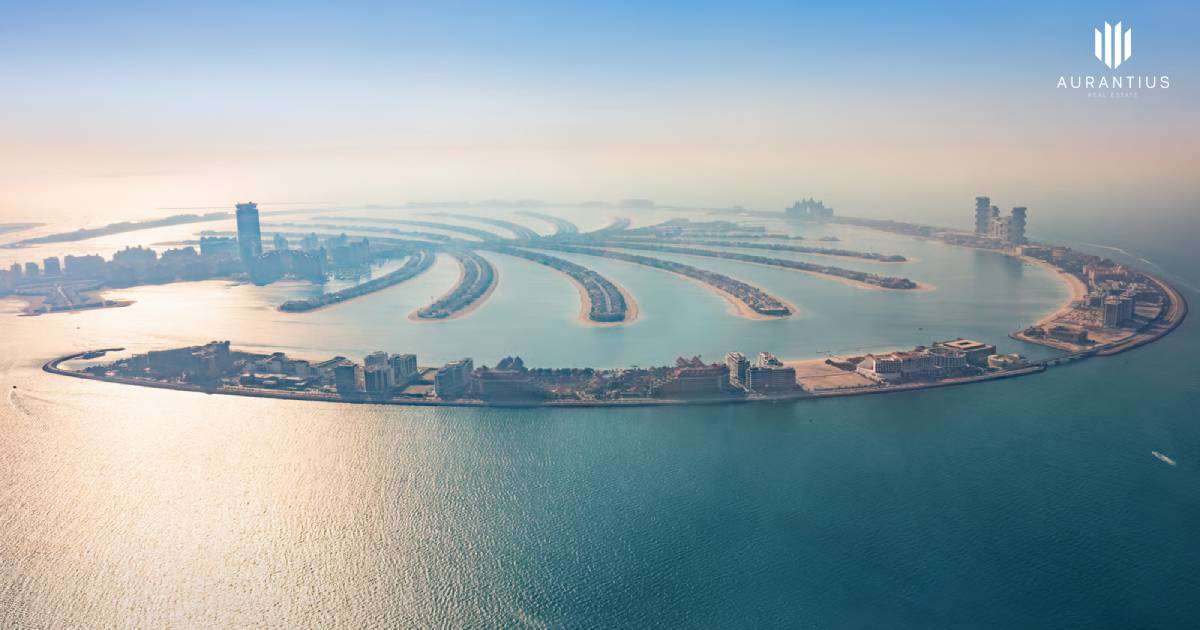

Palm Jebel Ali vs Wynn Al Marjan Island: Where Should UAE Investors Allocate Capital in 2026?
The UAE real estate landscape is experiencing a major capital rush, driven by two developments that are redefining investor expectations: Nakheel’s Palm Jebel Ali in Dubai and Wynn Al Marjan Island Resort in Ras Al Khaimah.
Both projects are waterfront mega-developments. Both are attracting regional and international capital. Both are being discussed as once-in-a-cycle opportunities. But they are not the same investment.
Palm Jebel Ali is a long-horizon capital preservation and appreciation play. It gives investors exposure to scarce Dubai beachfront land at a lower per-square-foot entry point than mature Palm Jumeirah assets. The thesis is generational wealth building: buy early, hold through infrastructure delivery, and benefit as the island matures into a full ultra-luxury destination.
Wynn Al Marjan Island is different. It is a condensed yield and tourism-growth play anchored by the UAE’s first federally licensed commercial gaming resort. The thesis is faster: buy into Ras Al Khaimah’s most visible tourism catalyst before the resort opens, then capture rental demand, hospitality spillover and potential capital repricing.
The question for investors is not simply which project is better. The real question is which financial engine matches your capital objective: long-term legacy ownership or aggressive short-term ROI.
For Palm Jebel Ali context, read Dubai Palm Jebel Ali on Course for 2026 Launch as 700 Homes Sold.
The Strategic Capital Arbitrage
The core investment angle is strategic capital arbitrage. Palm Jebel Ali and Wynn Al Marjan Island are not competing for the same investor profile in the same way. They represent two different methods of exploiting pricing gaps before the market fully matures.
Palm Jebel Ali offers a Dubai waterfront scarcity discount. Investors are betting that early-phase pricing on a massive master development will reprice upward as infrastructure, handovers, amenities and community maturity catch up.
Wynn Al Marjan Island offers a tourism-yield arbitrage. Investors are betting that Ras Al Khaimah’s current price base has not fully priced in the long-term impact of a globally recognised integrated resort, regulated gaming, branded residences and visitor demand.
Both strategies can work, but they reward different capital behaviour. Palm Jebel Ali rewards patience. Wynn Al Marjan rewards timing.
Palm Jebel Ali Investment: The Long-Horizon Wealth Play
Palm Jebel Ali is one of Dubai’s most important ultra-luxury waterfront expansions. The project is designed across seven islands and 16 fronds, adding a major new supply of coastline and beachfront living to Dubai’s long-term urban plan.
The investment thesis is clear: Dubai’s established ultra-prime waterfront villa supply is limited, while global wealth migration into the city remains strong. Buyers who want beachfront villas, private plots and large-format family homes have limited mature options.
Palm Jebel Ali therefore gives investors something rare: early access to a new Dubai waterfront address before it fully matures. This is why the project is being compared with Palm Jumeirah’s original long-term appreciation story.
However, the comparison must be handled carefully. Palm Jebel Ali is not Palm Jumeirah today. It is a developing island with phased handovers, infrastructure timelines and a long master-community runway. That makes it more suitable for patient capital than short-term yield seekers.
Why Palm Jebel Ali Is Attracting HNWIs
High-net-worth buyers are attracted to Palm Jebel Ali for three reasons: scarcity, scale and price spread.
Scarcity matters because ready beachfront villa supply in Dubai is limited. Palm Jumeirah, Emirates Hills, Jumeirah Bay Island and other ultra-prime areas already command strong pricing because their best plots are largely fixed.
Scale matters because Palm Jebel Ali is not a small gated community. It is a new waterfront district with villas, beaches, coastline, infrastructure and long-term lifestyle planning.
The price spread matters because Palm Jebel Ali villas are still trading below equivalent mature Palm Jumeirah pricing on a per-square-foot basis in many comparisons. For investors, that discount is the arbitrage.
The thesis is not immediate rental income. The thesis is long-term capital expansion as the island moves from construction site to live ultra-prime destination.
Nakheel Palm Jebel Ali Villas: Pricing and Product Logic
Palm Jebel Ali’s main investor product has been ultra-luxury beachfront villas, including large-format homes with five, six and seven-bedroom layouts.
The Beach Collection generally targets buyers seeking high-end waterfront family living with large plots, private beach access and resort-style residential design. The Coral Collection moves further into mansion-style territory, with larger built-up areas and more premium architectural positioning.
Entry pricing for villas sits in the multi-million-dirham luxury category, making Palm Jebel Ali unsuitable for small-ticket investors. It is a capital-heavy allocation for buyers seeking legacy assets, large-format waterfront ownership and future scarcity premiums.
Palm Jebel Ali should therefore be evaluated as a high-conviction, long-duration property investment rather than a short-term rental-yield product.
Palm Jumeirah vs Palm Jebel Ali Price: The Discount Thesis
The strongest financial argument for Palm Jebel Ali is the price gap against mature Palm Jumeirah.
Palm Jumeirah is already a globally recognised completed island with deep resale liquidity, hospitality infrastructure, mature retail, established beach clubs and global brand value. Palm Jebel Ali is earlier in the development cycle, which creates a lower entry point but also a longer wait for full maturity.
That is the trade-off. Palm Jumeirah offers established certainty at a higher price. Palm Jebel Ali offers early-stage discount with infrastructure and delivery risk.
For long-term investors, this discount can be attractive if they believe Palm Jebel Ali will eventually become a fully established luxury island. For shorter-term investors, the absence of immediate rent and the extended master-plan timeline may be less appealing.
The investor must decide whether they are buying today’s utility or tomorrow’s maturity premium.
Palm Jebel Ali Risk: No Immediate Cash Flow
Palm Jebel Ali is not a cash-flow-first investment during construction. Buyers should expect zero rental income before handover, and even after initial handovers, rental performance will depend on infrastructure, access, community activation and tenant demand.
This makes liquidity planning essential. Investors must be comfortable with payment schedules, Dubai Land Department fees, opportunity cost, resale timing and potential market fluctuations before the island is fully operational.
Palm Jebel Ali also carries long-horizon development risk. Even if early villas hand over, the broader island experience will mature in phases. Retail, hospitality, schools, public spaces and leisure facilities will not all arrive at once.
This does not make the investment weak. It simply means investors must treat it as a multi-year capital appreciation strategy, not an income instrument from day one.
Wynn Al Marjan Island Real Estate: The Yield Engine
Wynn Al Marjan Island is a different type of investment story. It is not mainly about long-term villa scarcity. It is about tourism compression, hospitality spillover and the pricing impact of a landmark integrated resort.
Ras Al Khaimah has been building its identity as an adventure, beach, hospitality and leisure destination. Wynn Al Marjan Island accelerates that positioning dramatically.
The resort introduces a global hospitality brand, major tourism infrastructure, luxury accommodation, restaurants, entertainment, meetings and events, and a licensed commercial gaming component that is unique in the UAE market.
For investors, the appeal is clear: buy residential property near the tourism catalyst before the resort opens, then benefit from increased visitor demand, short-term rental activity and capital repricing.
For the connectivity side of the Wynn story, read Name Announced for New Bridge Connecting Wynn Al Marjan Island to Dubai and Beyond.
Wynn Resort Ras Al Khaimah Opening: Why 2027 Matters
The 2027 opening window matters because real estate markets often reprice before a major catalyst becomes fully operational.
Investors buying on Al Marjan Island are not only buying current rents. They are buying the expectation of a future demand shock: resort employees, tourists, high-spending visitors, conference guests, branded residence buyers and hospitality spillover.
The resort tower has already topped out structurally, which gives investors more confidence than a project that exists only as a concept. As opening approaches, the market is likely to focus increasingly on supply, price per square foot, branded inventory, short-term rental rules and occupancy assumptions.
That makes 2026 and 2027 critical timing years for Al Marjan Island. The risk is that some of the upside may already be priced in. The opportunity is that the full tourism effect has not yet been tested.
UAE Casino Real Estate Yield: The Monopoly Premium
The most unusual feature of Wynn Al Marjan Island is its regulated gaming component. This creates a different investment logic from standard beachfront property.
In most UAE real estate markets, demand is driven by residents, tourists, offices, schools, lifestyle, infrastructure and capital inflow. In Al Marjan Island, there is an additional anchor: a licensed integrated resort expected to attract new tourism categories.
That gives nearby residential property a potential yield advantage. Apartments can benefit from short-term rental demand, branded-hospitality spillover and visitor compression during peak periods.
However, investors should be precise. “Casino real estate yield” is not guaranteed. Returns depend on occupancy, nightly rates, management fees, service charges, tourism seasonality, competition from hotels and holiday-home regulation.
The Wynn effect can raise demand, but investors still need conservative underwriting.
Al Marjan Island Property Prices: The Entry-Point Advantage
The key advantage of Al Marjan Island is that its entry price remains lower than Dubai’s mature beachfront markets.
A beachfront apartment in Ras Al Khaimah can still be acquired at a significantly lower absolute ticket than comparable prime waterfront stock in Dubai Marina, Palm Jumeirah or Jumeirah Bay. This makes Al Marjan Island more accessible for retail investors and smaller international buyers.
The lower entry point also means a stronger potential yield profile. If rental demand improves after Wynn opens, the income generated relative to purchase price can be attractive.
But lower entry is not the same as lower risk. RAK has a thinner resale market than Dubai, fewer public price-data layers and more dependency on a single tourism catalyst.
That is why Al Marjan is best suited for investors who understand hospitality-led cycles and can tolerate volatility.
Palm Jebel Ali vs Wynn Al Marjan Island: Side-by-Side Investment Matrix
| Investment Metric | Palm Jebel Ali | Wynn Al Marjan Island |
|---|---|---|
| Core Play | Long-term capital preservation and appreciation | Tourism-driven yield and shorter-cycle ROI |
| Primary Product | Ultra-luxury beachfront villas and emerging residences | Beachfront apartments and branded residences |
| Capital Requirement | High; villas typically require large-ticket capital | Lower entry compared with Dubai ultra-prime waterfront |
| Income Timing | No rental income until handover and community activation | Potential short-term rental demand around 2027 resort opening |
| Best Holding Period | 10+ years | 3–6 years for aggressive investors; longer if RAK matures deeply |
| Key Risk | Long infrastructure timeline and liquidity during construction | Speculation, supply risk and reliance on tourism catalyst execution |
Which Investor Should Choose Palm Jebel Ali?
Palm Jebel Ali is more suitable for investors with large capital reserves, a long holding period and a preference for Dubai-backed waterfront scarcity.
It fits HNWIs, family offices, legacy buyers and investors who want to own an irreplaceable Dubai asset before the island matures. It is also attractive for buyers who believe Dubai’s ultra-prime villa market will remain structurally undersupplied.
The investor should be comfortable with staged payments, construction waiting periods and no immediate rental income. This is not a quick-flip rental yield strategy.
The right Palm Jebel Ali buyer is asking: “Where can I preserve capital for the next decade while buying into Dubai’s next major waterfront address?”
Which Investor Should Choose Wynn Al Marjan Island?
Wynn Al Marjan Island is more suitable for investors seeking a sharper yield story, lower entry ticket and exposure to Ras Al Khaimah’s tourism transformation.
It fits buyers who want beachfront apartments, branded residences, holiday-home potential and a shorter catalyst window tied to the resort opening.
This does not mean the strategy is low risk. Al Marjan Island is still a smaller and less mature market than Dubai. Investors must check developer quality, payment plan, service charges, holiday-home rules, management structure and realistic occupancy assumptions.
The right Wynn Al Marjan investor is asking: “Can I enter before the full tourism catalyst is priced in and capture higher rental demand as the destination matures?”
For emirate-level comparison, read Best Emirate to Buy Property in the UAE: Dubai vs Abu Dhabi, Sharjah and Ras Al Khaimah.
Payment Plans and Capital Timing
Palm Jebel Ali and Al Marjan Island also differ in capital timing.
Palm Jebel Ali villa purchases usually require large capital commitments, even when structured through off-plan payment plans. The buyer must have sufficient liquidity to meet construction-linked instalments and hold the asset without income until handover.
Al Marjan Island apartments may offer lower entry points and more flexible off-plan structures, making them more accessible to retail investors. However, smaller ticket size can attract more speculative buyers, which may increase volatility if too much similar inventory enters the market.
Investors should not compare only headline price. They should compare payment schedule, holding cost, expected rental start date, exit window and capital-at-risk before completion.
Dubai Real Estate Investment 2026: Why These Projects Matter
Palm Jebel Ali and Wynn Al Marjan Island matter because they show how UAE real estate is becoming more segmented.
Dubai continues to attract capital through global-city infrastructure, freehold ownership, prime villa scarcity and mature institutional liquidity. Ras Al Khaimah is attracting attention through a concentrated tourism catalyst and a lower beachfront entry point.
This is no longer a market where investors simply ask, “Should I buy in the UAE?” The better question is, “Which emirate, which catalyst, which asset type and which timeline fit my capital strategy?”
Palm Jebel Ali and Wynn Al Marjan are both powerful, but they are powerful for different reasons.
For developer and handover trends, read UAE Real Estate 2026: Top Developers Prioritize Handovers.
Risk 1: Palm Jebel Ali Requires Patience
The main Palm Jebel Ali risk is time.
Even as villa handovers begin in phases, the full island experience will mature over years. Investors should expect phased infrastructure, phased amenities and gradual community activation.
This means the investor needs capital patience. A buyer expecting immediate yield may be disappointed. A buyer with a 10-year view may be better positioned to capture the compounding effect of a new Dubai waterfront district.
The safest Palm Jebel Ali strategy is to underwrite it as a long-term scarce-land asset, not as a short-term rental product.
Risk 2: Al Marjan Island Can Become Overpriced
The main Al Marjan Island risk is overpricing before the demand fully arrives.
When a market becomes catalyst-driven, prices can move ahead of fundamentals. Buyers may start paying for projected tourism demand before that demand has been proven through actual occupancy and rental performance.
This is why investors must compare price per square foot, branded premium, service charges, holiday-home management costs, realistic occupancy and resale depth.
If a unit is already priced as if Wynn’s full impact is guaranteed, the upside may be thinner than marketing suggests.
Risk 3: Short-Term Rental Yield Is Not Automatic
Al Marjan Island’s yield story is attractive, but investors must calculate net yield rather than rely on gross projections.
Holiday-home income depends on nightly rate, occupancy, seasonality, furnishing cost, management fee, platform commission, service charges, maintenance, licensing and competition from hotel inventory.
A strong gross yield can become a moderate net yield after costs. Investors should request realistic operator forecasts and compare them with current market evidence, not only post-opening optimism.
The Wynn effect can drive demand, but the investment still needs disciplined rental underwriting.
Risk 4: Exit Liquidity Is Different in Dubai and RAK
Dubai has deeper resale liquidity than Ras Al Khaimah. That matters.
Palm Jebel Ali benefits from Dubai’s broader institutional buyer base, international brokerage depth, mature transaction systems and proven ultra-prime demand. Even though the island is still developing, it sits inside the region’s most liquid real estate market.
Al Marjan Island offers higher potential yield, but the resale market is thinner. If many investors try to exit around the same time, liquidity may become more sensitive to pricing and buyer sentiment.
This does not make RAK unattractive. It means exit planning matters more.
Investor Decision Framework
Choose Palm Jebel Ali if: you have high capital capacity, want Dubai waterfront scarcity, prefer a 10-year hold, can tolerate no immediate rental income and want a legacy asset.
Choose Wynn Al Marjan Island if: you want a lower entry point, are comfortable with RAK market risk, seek tourism-driven rental upside and prefer a 3-to-6-year catalyst window.
Avoid Palm Jebel Ali if: you need immediate income, cannot handle large instalments or may need to exit before the island matures.
Avoid Al Marjan Island if: you are uncomfortable with speculative pricing, thinner resale data, holiday-home operating risk or reliance on one major tourism catalyst.
The strongest decision is not based on excitement. It is based on matching the project’s risk-return profile to your capital timeline.
Portfolio Strategy: Why Some Investors May Buy Both
For larger portfolios, Palm Jebel Ali and Wynn Al Marjan Island can play complementary roles.
Palm Jebel Ali can act as the long-duration capital preservation asset. It anchors the portfolio in Dubai’s ultra-prime waterfront market and targets appreciation over a long holding period.
Wynn Al Marjan Island can act as the yield and catalyst exposure. It offers a lower ticket size, hospitality-linked rental potential and possible faster repricing around the 2027 opening window.
A family office or HNWI investor may therefore allocate across both: one for legacy capital, one for tactical ROI.
For market-wide capital rotation, read Dubai Property in 2026: Scarcity Premiums, Smarter Pricing and Abu Dhabi Gaining Investor Share.
Aurantius View: Two Projects, Two Different Financial Engines
Palm Jebel Ali and Wynn Al Marjan Island are both major UAE real estate stories, but they should not be judged by the same metric.
Palm Jebel Ali is about Dubai scarcity, waterfront land, large-format luxury villas and long-term value compounding. It is best suited to investors who can wait.
Wynn Al Marjan Island is about tourism compression, branded residences, short-term rental demand and a 2027 catalyst. It is best suited to investors who can underwrite yield and exit timing carefully.
The mistake is treating both as “hype projects.” They are not. They are different capital engines.
The disciplined investor asks: do I want long-term capital preservation in Dubai, or do I want a more aggressive yield strategy in Ras Al Khaimah?
FAQ: Palm Jebel Ali vs Wynn Al Marjan Island Investment
Question: Is Palm Jebel Ali a good investment in 2026?
Answer: Palm Jebel Ali can be a strong long-term investment for buyers seeking Dubai waterfront scarcity, capital preservation and ultra-luxury villa appreciation. It is better suited to patient capital than immediate rental-income investors.
Question: Is Wynn Al Marjan Island good for rental yield?
Answer: Wynn Al Marjan Island has strong potential for short-term rental demand because of the upcoming integrated resort and tourism catalyst. However, actual net yield will depend on purchase price, service charges, occupancy, management costs and holiday-home regulation.
Question: Which is safer: Palm Jebel Ali or Al Marjan Island?
Answer: Palm Jebel Ali sits inside Dubai’s deeper, more liquid market and is more suitable for capital preservation. Al Marjan Island may offer higher yield potential but carries more tourism-catalyst and resale-liquidity risk.
Question: When is Wynn Al Marjan Island expected to open?
Answer: Wynn Al Marjan Island is positioned for a 2027 opening. The resort tower has already topped out structurally, making the project one of the most visible tourism catalysts in the UAE property market.
Question: What is the main risk of Palm Jebel Ali?
Answer: The main risk is time. Investors must wait through construction, phased handovers and community activation before the island reaches mature value and income potential.
Question: What is the main risk of Al Marjan Island?
Answer: The main risk is speculative pricing. If too much upside is already priced in before Wynn opens, investors may face weaker capital gains or rental returns than projected.
Question: Can foreign buyers own property in Palm Jebel Ali and Al Marjan Island?
Answer: Both markets offer freehold opportunities for foreign buyers in designated areas. Buyers should still verify project-specific title terms, payment plans and ownership documents before purchase.
Question: Can Aurantius help compare Palm Jebel Ali and Wynn Al Marjan investments?
Answer: Yes. Aurantius Real Estate helps investors compare Dubai and Ras Al Khaimah opportunities, review payment plans, assess yield assumptions, evaluate exit timing and select assets aligned with capital strategy.
Conclusion: Generational Wealth or Aggressive ROI?
Palm Jebel Ali and Wynn Al Marjan Island are two of the UAE’s most important real estate investment stories in 2026, but they are not interchangeable.
Palm Jebel Ali is a long-term capital preservation play built around Dubai waterfront scarcity, villa demand and future island maturity. It requires patience, liquidity and a long investment horizon.
Wynn Al Marjan Island is a shorter-cycle yield and tourism catalyst play built around Ras Al Khaimah’s transformation, lower beachfront entry prices and the UAE’s first licensed integrated resort.
The best choice depends on your capital profile. If you want generational wealth building, Palm Jebel Ali is the cleaner fit. If you want aggressive rental-yield exposure with a 2027 catalyst, Wynn Al Marjan may be more aligned.
The disciplined investor does not chase both blindly. The disciplined investor matches each project to a clear objective: preservation, yield, exit timing or portfolio diversification.
Aurantius Real Estate helps investors compare Palm Jebel Ali, Wynn Al Marjan Island, Dubai waterfront villas, Ras Al Khaimah branded residences, off-plan payment plans, rental-yield projections and long-term UAE portfolio strategy.
Choosing Between Palm Jebel Ali and Wynn Al Marjan? Speak with an Aurantius adviser to compare entry prices, payment plans, handover timelines, rental assumptions, resale liquidity and the best UAE property strategy for your capital goals.
Related reading: Dubai Palm Jebel Ali on Course for 2026 Launch, Wynn Al Marjan Island Bridge Update, UAE Real Estate 2026: Top Developers Prioritize Handovers, Best Emirate to Buy Property in the UAE and Dubai Property in 2026: Scarcity Premiums and Smarter Pricing.