
RTA Accelerates Trade Centre Roundabout Upgrade as New Bridges Open Ahead of Schedule
Early Bridge Openings Signal Faster Infrastructure Delivery in Central Dubai
Dubai’s Roads and Transport Authority has opened two major bridges at the Trade Centre Roundabout ahead of the planned mid-January timeline, marking a significant milestone in one of the city’s most critical transport upgrades. The early delivery reflects Dubai’s infrastructure-led growth strategy, where mobility improvements directly support commercial activity, residential demand, and long-term urban efficiency.
Bridge Specifications and Traffic Capacity Improvements
The newly opened bridges connect 2nd December Street with Sheikh Rashid Road and Al Majlis Street, which links directly to Al Mustaqbal Street. Each bridge carries two lanes in both directions, with a combined length of 2,000 metres and an estimated capacity of 6,000 vehicles per hour. These upgrades materially enhance traffic flow across a junction that serves some of Dubai’s most heavily used corridors.
Journey Time Reductions Across Key Urban Routes
The early opening has reduced travel times from 2nd December Street to Al Majlis Street, Al Mustaqbal Street, and Zabeel Palace Street from approximately ten minutes to two minutes. Congestion at the Trade Centre Roundabout has eased significantly, improving reliability for commuters, logistics traffic, and visitors moving between central business districts and residential communities.
Strategic Importance of the Trade Centre Roundabout
The Trade Centre Roundabout connects Sheikh Zayed Road with Sheikh Khalifa bin Zayed Street, Sheikh Rashid Road, 2nd December Street, Zabeel Palace Street, and Al Majlis Street. This intersection plays a pivotal role in linking Dubai’s commercial spine with surrounding residential and institutional areas, reinforcing accessibility to economic hubs near Downtown Dubai and adjacent districts.
Project Scope and Capital Investment
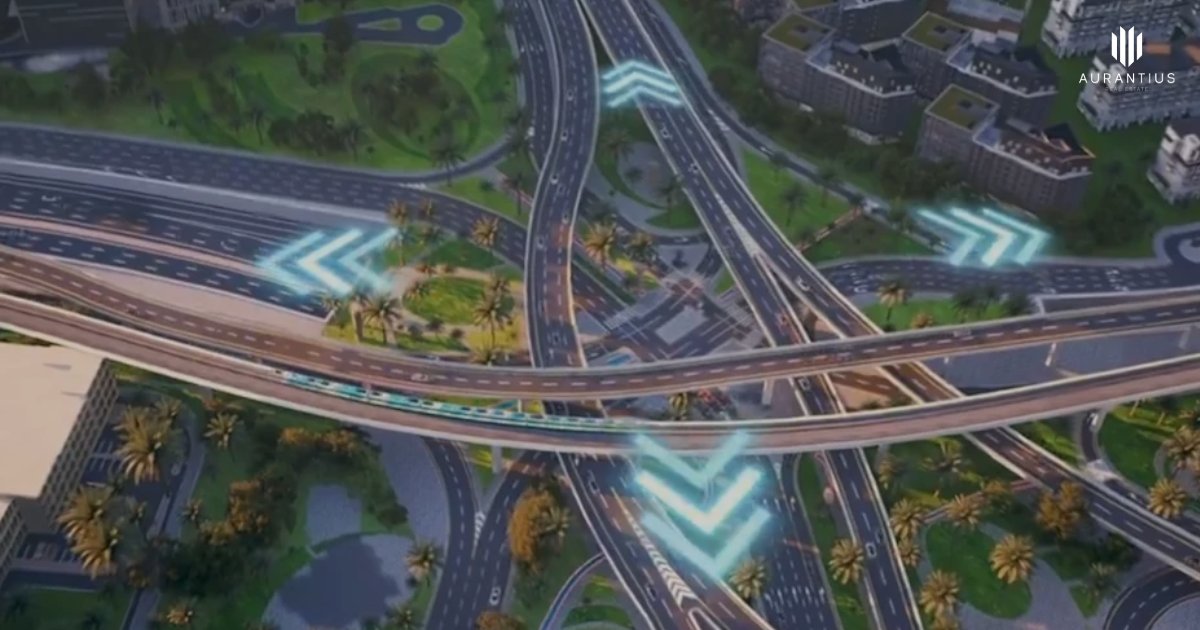
The Trade Centre Roundabout Development Project carries a total investment exceeding AED 696 million. The scope includes five bridges with a combined length of 5,000 metres and the conversion of the existing roundabout into a signalised at-grade intersection. These upgrades enable uninterrupted traffic movement across multiple directions while reducing delays during peak periods.
Phased Openings and Construction Progress
Overall project completion has reached nearly 50 percent, with phased openings planned to maintain traffic continuity. A bridge linking Sheikh Zayed Road to Sheikh Khalifa bin Zayed Street is scheduled to open in March, while two additional bridges serving Sheikh Rashid Road and Al Majlis Street toward 2nd December Street are expected by October 2026. Upon full completion, average delays at the intersection are projected to fall from twelve minutes to ninety seconds.
Free-Flow Traffic Design Across Multiple Levels
The five-bridge configuration enables free-flow traffic across key directions. A second-level bridge from Sheikh Zayed Road toward Sheikh Khalifa bin Zayed Street spans 1,000 metres and supports approximately 3,000 vehicles per hour. Additional bridges connect Sheikh Rashid Road with 2nd December Street and Al Majlis Street with 2nd December Street, each designed to accommodate around 6,000 vehicles per hour.
Connectivity to Major Commercial and Financial Districts
The project directly supports access to Dubai World Trade Centre and Dubai International Financial Centre, two of the region’s most important commercial hubs. Improved connectivity strengthens linkages to surrounding residential districts and reinforces Dubai’s ability to host large-scale global exhibitions, conferences, and financial activity. Areas such as Business Bay benefit indirectly through improved network efficiency across central Dubai.
Impact on Residential Communities and Daily Mobility
Communities including Zabeel, Al Satwa, Al Karama, Al Jafiliya, and Al Mankhool are expected to experience improved daily mobility. More than half a million residents and visitors are projected to benefit from reduced congestion, improved safety, and shorter commute times. Infrastructure upgrades of this scale tend to support residential stability and long-term demand across adjacent housing markets.
Al Mustaqbal Street Upgrade as Part of the Master Plan
The roundabout project forms part of a wider master plan that includes the upgrade of Al Mustaqbal Street from Zabeel Palace Street to Financial Centre Street, targeted for completion by 2027. The plan includes bridges and tunnels totalling 1,500 metres and the widening of Al Mustaqbal Street from three to four lanes in each direction, increasing capacity by 33 percent.
Additional Tunnels, Ramps, and Pedestrian Infrastructure
The Al Mustaqbal Street phase includes three tunnels totalling 1,100 metres at the Trade Centre Street intersection and a 400-metre bridge serving traffic from Dubai World Trade Centre. Further works cover free-flow ramps at Exhibition Street and Trade Centre Street, a pedestrian bridge on Al Sukook Street, and upgrades to existing intersections along the corridor.
Infrastructure Investment and Real Estate Market Confidence
Large-scale transport upgrades reinforce confidence in Dubai’s urban planning model. Improved accessibility supports commercial density and residential appeal across central locations such as Dubai Marina and emerging corridors linked to employment and infrastructure investment. Consistent delivery timelines contribute to predictable growth patterns valued by investors.
Long-Term Urban Efficiency and Capacity Planning
By reducing travel times and increasing road capacity, the Trade Centre Roundabout Development Project strengthens Dubai’s ability to accommodate population growth and economic expansion. Infrastructure-led planning remains a core driver of real estate demand, particularly in mature and well-connected districts.
Strategic Perspective for Property Investors
Transport connectivity remains a key variable in property valuation and long-term demand. Projects of this scale provide structural support to surrounding residential and commercial assets, reinforcing Dubai’s appeal as a global investment destination. Aurantius Real Estate supports investors with location-specific insight and infrastructure-driven analysis, helping align property strategies with Dubai’s evolving urban framework.