

Will Middle East Tensions Affect Dubai’s Tourism and Real Estate Market in 2026?
What Early Signals Suggest About Demand, Liquidity, and Recovery Timing
No, As of March 2026, Middle East tensions are creating short-term operational disruption that investors and travelers can observe in real time through flight schedules, booking patterns, and transaction timelines. The immediate effect is not best measured by citywide price moves. The more reliable early indicators are decision delays, slower closing cycles, and volatility in travel-linked occupancy. Market participants describe this phase as a sentiment-driven shock, where caution rises before any structural change in demand fundamentals can be confirmed.
In real estate, the first impact is typically transactional friction. International buyers postpone site visits, pause negotiation stages that require in-person meetings, and extend due diligence windows. Brokers report longer closure timelines and selective cancellations in cases where buyers face travel uncertainty or prefer to wait for clearer regional visibility. These behaviors reduce transaction velocity for a limited period. They do not automatically translate into broad market weakness because the buyer pipeline can remain intact, then re-activate when conditions stabilize.
A second variable is supply. Analysts were already discussing a potential 10% to 15% price correction in 2026 in some segments due to a large delivery pipeline often estimated around 131,000 new units. This creates a baseline risk that exists with or without geopolitical tension. When uncertainty rises, oversupplied pockets can feel pressure earlier because buyers become more selective on building quality, location fundamentals, and handover clarity. Pricing sensitivity tends to show up first where competing inventory is high and where tenant demand is more price-driven than lifestyle-driven.
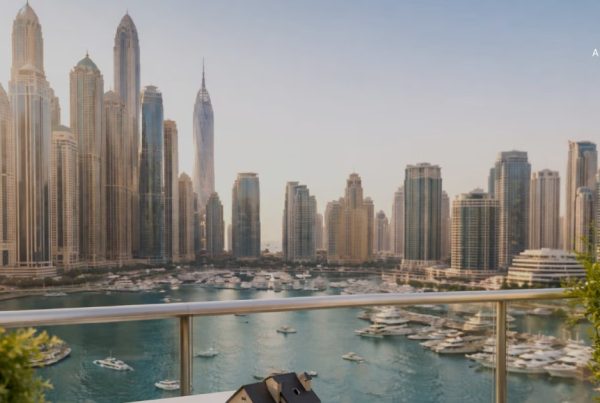
Prime markets behave differently under the same headlines. Safe-haven narratives often strengthen demand in premium zones when regional risk rises, especially among high-net-worth buyers focused on capital preservation and jurisdiction selection. This demand tends to concentrate in recognized luxury corridors and waterfront markets, which can maintain liquidity even when the broader market slows. References to ongoing interest in Palm Jumeirah and Dubai Marina reflect that pattern, where scarcity, lifestyle infrastructure, and global recognition support buyer intent.
Financial market movement can influence sentiment as well. Reports of short-term volatility in local equities, including a sharp decline and temporary trading halts in early March, highlight investor sensitivity to fast-moving headlines. For real estate investors, this is less about direct linkage between stocks and housing and more about risk perception. When sentiment swings, buyers raise their standards for documentation, compliance clarity, and the credibility of exit assumptions.
Tourism and Short-Term Rentals: Why Travel Disruption Hits Occupancy Before It Hits Pricing
Tourism is typically the most immediate channel of impact because it depends on flight continuity and travel confidence. Dubai’s tourism momentum, described as record-level in 2025, faces a high-visibility test when military activity disrupts regional travel corridors. Airspace restrictions and mass flight cancellations create an abrupt demand shock for arrivals, which can feed directly into hotel bookings and short-stay rental occupancy.
Short-term rentals react quickly because they are priced dynamically and because bookings can be cancelled or delayed with minimal friction. Occupancy can fluctuate week to week, especially in tourist-heavy areas. When arrivals slow, hotel pricing can soften in pockets where competition for demand rises. Some forecasts referenced a potential regional decline in international arrivals in the double-digit range if hostilities persist, which would be expected to pressure daily rates in certain corridors. This type of pressure usually affects cash flow first, then sentiment in investor segments that rely on high turnover and nightly pricing.
Government and operator responses can reduce second-order risk. Instructions for hotels to extend stays for stranded guests and support mechanisms for accommodation during disruption can stabilize reputational risk and maintain service continuity. For real estate investors, these measures matter because they influence Dubai’s operational credibility. Operational credibility supports faster recovery once travel corridors normalize, especially when the city is positioned as a safe, functional hub for business and leisure.
Recovery expectations often rely on how quickly connectivity normalizes. When flights return to stable schedules, deferred travel demand can re-enter quickly. Dubai’s demand base is also supported by regional travel from Gulf markets, which can provide partial offset when long-haul travel slows. Domestic demand for retail and hospitality also matters because it keeps the service economy functioning even when international arrivals fluctuate.
Flights and Malls: A Split Reality in March 2026
Operational status in March 2026 is described as split between international travel and domestic life. Flight activity has been recovering gradually under restrictions, with limited operations and frequent schedule adjustments. Guidance from airlines and airports has emphasized that passengers should only go to the airport with confirmed departure details. This environment increases friction for international buyers and for tourists, which can delay site visits, reduce short-stay occupancy, and slow the pace of transaction execution for overseas purchasers.
Retail and mall operations have been described as normal, with major shopping destinations operating as usual under seasonal timing patterns. Normal retail operations are a stabilizer for daily life and consumer confidence. For property markets, consumer confidence shows up in leasing retention, household mobility decisions, and the willingness of residents to commit to longer leases or ownership transitions during uncertainty windows.
This split reality can exist without contradicting the “resilience” narrative. A city can keep domestic systems operating while managing constrained international air traffic. Investors tend to differentiate between a disruption that impacts logistics and a disruption that undermines fundamentals. When employment continuity, residency inflows, and business formation remain active, real estate demand can stay resilient even if travel-linked segments experience temporary volatility.
What Investors Watch Next: Liquidity, Supply Absorption, and Timing of Deferred Demand
In the near term, investors are likely to focus on three measurable items. The first is liquidity, seen in transaction volumes and the speed of closings. The second is supply absorption, especially in mid-market corridors where new deliveries are concentrated. The third is the reactivation rate of delayed demand once travel visibility improves. A sentiment-driven pause often resolves through time rather than through a permanent demand reset, especially in markets with diversified buyer bases and steady population growth.
Asset selection becomes more quality-biased during uncertainty. Investors lean toward buildings with strong maintenance standards, stable community management, proven leasing depth, and clear exit liquidity. Strategies that rely heavily on short-term rental income may carry higher volatility until flight schedules normalize. Long-lease residential strategies can be more stable when tenant demand is anchored in employment and residency.
Conclusion
Middle East tensions in March 2026 are creating real short-term disruption in Dubai through travel constraints, sentiment shifts, and slower transaction execution. The evidence described by market participants points to a caution phase rather than a structural market collapse, with prime segments showing greater resilience and mid-market oversupply areas carrying higher correction risk. Tourism-linked performance is likely to remain sensitive until connectivity stabilizes, while domestic operations and retail continuity support broader confidence and faster recovery potential once conditions normalize.
For ongoing market context, investor-focused summaries, and Dubai real estate insights tied to demand drivers and transaction behavior, follow Aurantius Real Estate for structured coverage designed around fundamentals and decision-making clarity.