
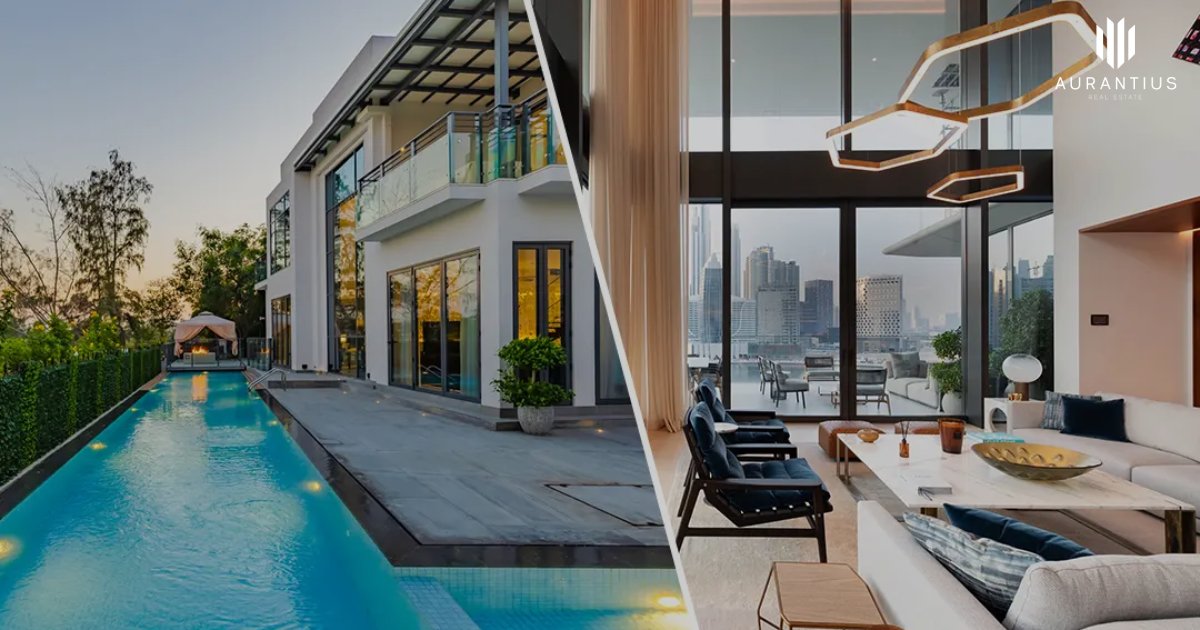

The Apartment–Villa Divide in Dubai: How Investors Are Positioning for 2026
As Dubai’s residential market advances toward 2026, the apartment versus villa discussion has evolved into a strategic assessment rather than a search for a universal winner. Record transaction values and volumes recorded in 2025 reflect sustained population growth, strong liquidity, and a clear transition toward long-term ownership. Investors are increasingly focused on how pricing, entry cost, and capital structure align with individual risk profiles and return objectives.
Apartments continue to dominate transaction volumes across the city, supported by affordability, depth of demand, and liquidity at both the primary and secondary market levels. Communities such as Jumeirah Village Circle and Business Bay remain active due to consistent rental absorption and broad appeal to end users and tenants. This volume-led activity reinforces apartments as the preferred entry point for investors seeking scalability and income visibility.
The villa and townhouse segment follows a different trajectory. Supply remains constrained in established family-oriented communities, contributing to pricing resilience despite lower transaction volumes. Locations with limited new stock and mature infrastructure continue to attract end users prioritising space and long-term occupancy. This dynamic has reduced short-term price sensitivity and anchored villa values more closely to demographic growth and household formation trends.
Off-plan apartments remain one of the most accessible routes into the market. New launches from established developers are commonly priced between AED 900,000 and AED 2 million, supported by staged payment plans that reduce initial equity requirements. These structures allow investors to secure exposure while deploying capital gradually, supporting strong off-plan participation across the apartment segment.
By contrast, the secondary market introduces a higher upfront capital profile. Buyers purchasing ready properties face mandatory down payments of 20 percent for assets priced below AED 5 million and 30 percent above this threshold. Additional acquisition costs typically total 7 to 7.25 percent of the purchase price, driven by Dubai Land Department fees, agency commission, and administrative charges. Mortgage buyers must also account for valuation fees, registration costs, and bank processing charges, which collectively define the true entry cost.
This distinction influences investor behaviour. Ready properties offer immediate certainty, allowing buyers to inspect assets, assess rental performance, and generate income from day one. Yield-focused investors often place a premium on this certainty, particularly in mature locations such as Dubai Marina and Downtown Dubai, where demand fundamentals remain stable.
Villas sit firmly within the higher-entry-cost category. Despite moderated volumes, pricing has remained firm due to limited supply and sustained end-user demand. In many established communities, new villa development is restricted, reinforcing value stability even as broader market conditions normalise. This resilience has positioned villas as a capital preservation play rather than a volume-driven yield strategy.
Apartments benefit from broader demand across both owner-occupiers and tenants. Transaction activity remains strongest in lower and mid-range price bands, particularly in apartment-led corridors where affordability and rental demand intersect. Gross rental yields in these areas commonly range between 7 and 8 percent, supporting liquidity and income-focused strategies. With a significant portion of future supply concentrated in apartments, performance is expected to become increasingly selective, placing greater emphasis on location, specification, and developer credibility.
Financing strategy further differentiates the two segments. Cash buyers retain negotiating leverage and pricing flexibility, while mortgage buyers preserve liquidity and expand exposure at scale within loan-to-value constraints. Off-plan structures allow staged capital deployment during construction, reducing immediate equity outlay relative to the secondary market. Some developers continue to offer post-handover payment plans, extending affordability while increasing long-term commitment.
Location remains a decisive factor across both asset classes. Mature master-planned communities command higher entry prices but offer greater stability, while emerging districts linked to infrastructure expansion and phased development present lower initial pricing with longer-term growth potential. Areas such as Palm Jumeirah and Dubai Hills Estate illustrate how scarcity, planning quality, and lifestyle integration influence long-term value.
At the upper end of the market, pricing dynamics diverge further. Ultra-prime villas and luxury residences are less sensitive to yield metrics and more closely tied to scarcity, branding, and international demand. Buyers in this segment typically prioritise capital preservation and global positioning, reinforcing the distinction between volume-led apartment markets and value-led villa assets.
Developer reputation remains a key variable in both segments. Established developers such as Emaar, DAMAC, and Sobha Realty continue to shape pricing confidence through delivery track records and asset quality. Large-scale master planning by Nakheel, lifestyle destinations by Meraas, and waterfront developments by Select Group further support segmentation across Dubai’s residential landscape.
As Dubai approaches 2026, pricing, entry cost, and capital structure are increasingly central to investment decision-making. The apartment–villa divide reflects strategy rather than hierarchy, underscoring the importance of selectivity in a more mature market environment.
For investors navigating these choices, Aurantius Real Estate provides advisory-led insight across Dubai’s apartment and villa markets, supporting informed decisions through location analysis, developer assessment, and capital-structure guidance. Aurantius Real Estate helps investors align strategy with long-term market fundamentals as Dubai’s residential sector continues to evolve.