
Chinese and Russian Capital Is Reshaping Dubai’s Luxury Property Market in 2026
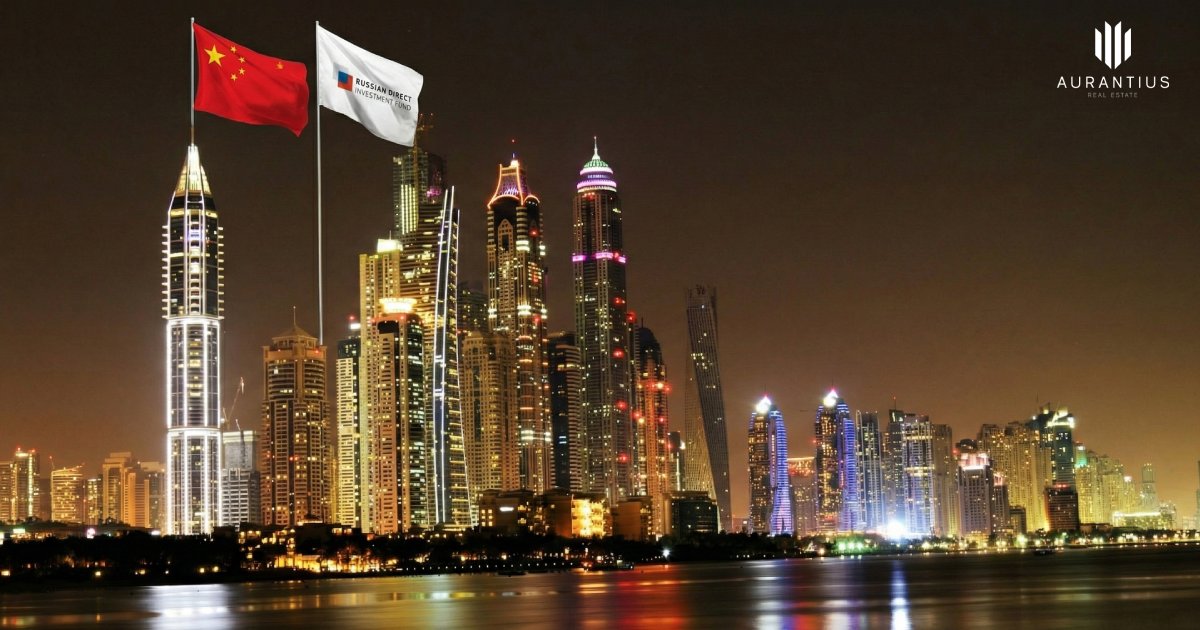
Chinese and Russian investors have significantly deepened their footprint across emerging markets over the past two years. Nowhere is this more visible than in Dubai. While bilateral investment between China and Russia has become more complex due to geopolitical and sanctions pressures, both investor groups are deploying capital confidently into the UAE particularly into Dubai’s luxury real estate sector.
For property investors, this is not just a headline trend. It is a structural capital shift that continues to reinforce Dubai’s position as a global safe-haven market.
Dubai: A Strategic Safe Haven for BRICS Capital
Chinese and Russian nationals have emerged as dominant forces in Dubai’s premium and ultra-luxury segments. The combination of the UAE Golden Visa program, political neutrality, currency stability, and tax efficiency has created a powerful magnet for international wealth.
In 2024–2025:
- Chinese investment into Dubai real estate rose by approximately 15%, making China the third-largest source of foreign buyers.
- Russian investment increased by roughly 20%, with strong demand in both villa and high-yield apartment segments.
By 2026, analysts expect these two groups combined to account for more than 30% of Dubai’s luxury transaction volume.
Where Chinese Investors Are Buying
Chinese buyers initially concentrated on branded high-rise apartments and waterfront towers. In 2026, their strategy has evolved toward diversification into premium villa communities.
Prime destinations include:
- Palm Jumeirah – trophy beachfront villas and ultra-luxury residences
- Downtown Dubai – branded residences and high-rise prestige towers
- Jumeirah – established villa districts with long-term capital stability
Off-plan opportunities such as Six Senses Residences, Iconic Tower, and premium waterfront projects are particularly attractive to institutional and high-net-worth Chinese buyers seeking lifestyle assets with appreciation potential.
Russian Investors Target Yield and Security
Russian capital, meanwhile, continues flowing strongly into Dubai as a hedge against currency volatility and geopolitical risk.
Russian investors are prioritising:
- High-yield apartments in Dubai Marina and Business Bay
- Villas above AED 30 million in waterfront communities
- Residency-linked investments above the AED 2 million Golden Visa threshold
Projects like Binghatti Skyrise, Rove Home Dubai Marina, and Aquarise by Binghatti appeal to yield-driven investors seeking 7–9% gross rental returns.
Dubai Market Indicators (2026 Snapshot)
| Indicator | Chinese Investors | Russian Investors |
|---|---|---|
| 2024–2025 Investment Growth | +15% | +20% |
| Preferred Assets | Waterfront villas & branded towers | Luxury villas & high-yield apartments |
| Golden Visa Route | AED 2M+ property or institutional | AED 2M+ residential investment |
| Projected 2026 Market Share | Growing toward 30% combined share | Growing toward 30% combined share |
Bilateral China–Russia Investment: A More Complex Picture
Trade between China and Russia reached approximately $240 billion in 2025. However, direct cross-border investment is more complicated due to sanction exposure and banking restrictions.
In May 2025, both countries signed a revised Bilateral Investment Treaty (BIT) aimed at protecting assets and improving dispute resolution mechanisms. Over 90% of bilateral trade is now settled in Yuan or Rubles.
However, as of early 2026, some major Chinese banks have become cautious in processing direct Yuan payments from Russia to avoid secondary Western sanctions.
This complexity has indirectly strengthened Dubai’s role as a neutral financial and real estate hub for capital allocation.
Russian Far East vs Dubai: Where Capital Is Flowing
Russia launched its International Advanced Development Zone (IAD) regime in January 2026, offering zero corporate profit tax for ten years to attract Chinese capital into infrastructure and agro-industrial projects.
Yet while large-scale infrastructure remains important, private wealth and mobile capital are clearly favouring Dubai real estate over industrial long-horizon projects.
In Dubai, liquidity, asset ownership transparency, rental yield, and resale flexibility provide significantly lower friction than cross-border industrial ventures.
Why This Matters for Real Estate Investors
The influx of Chinese and Russian capital is not speculative. It is strategic wealth preservation and portfolio diversification.
Key reasons Dubai continues to win:
- Zero personal income tax
- Stable currency (AED pegged to USD)
- Golden Visa residency pathway
- Strong rental yields relative to global cities
- Political neutrality and regulatory transparency
Luxury communities such as Palm Jumeirah, Meydan City, and Jumeirah Village Circle continue benefiting from sustained international demand.
Investor Perspective: What 2026 Signals
Dubai is not simply attracting opportunistic buyers. It is attracting capital seeking long-term jurisdictional safety.
As geopolitical complexities persist in Eastern Europe and Asia, Dubai’s property market is increasingly viewed as a balance sheet stabiliser for global investors.
For disciplined real estate investors, this capital inflow provides structural support to premium pricing and liquidity in well-located projects.
Conclusion
While China and Russia continue to deepen economic ties and industrial collaboration, private wealth from both nations is flowing decisively into Dubai real estate.
For investors positioned in prime developments or emerging high-demand communities, this international demand wave reinforces long-term resilience.
Dubai in 2026 is not just a lifestyle hub it is a capital preservation hub. And global investors are voting with their wallets.