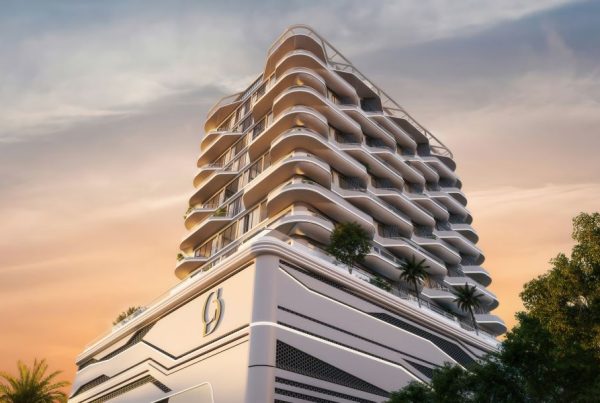


UAE Property Market 2026: Why Developer Strength Prevents a Crash
The UAE real estate market is transitioning into a structural normalization phase in 2026, shifting away from the hyper-growth of recent years toward a sustainable, buyer-friendly equilibrium. While transaction velocity and secondary market prices show minor localized corrections, the foundational credit profile of the region’s major developers remains highly resilient. Backed by multi-billion dollar cash buffers, multi-year pre-sale backlogs, and stringent RERA escrow regulations, corporate developers are insulated from the systemic liquidity shocks that triggered previous cyclical downturns. For institutional allocators, this consolidation phase represents a healthy maturation of the market, opening up highly defensive entry points for income-generating assets, logistics infrastructure, and structured build-to-rent portfolios.
Institutional risk committees tend to default to the 2008 narrative when a market cools. The UAE in 2026 is structurally different from that cycle. The market is not experiencing uncontrolled credit expansion supported by fragile developer balance sheets. Credit commentary in 2026 emphasizes a shift toward equity-driven funding, stronger liquidity, and reduced dependence on short-term bank financing compared to prior boom-bust eras.
The headline story for 2026 is cooling, not collapsing. Transaction momentum for completed residential units has softened, and selective price moderation has appeared in some indices. A minor quarterly dip has been cited as part of the market’s move toward balance. The key for institutional allocators is what is driving the correction. It is not a systemic funding freeze. It is a normalization of demand after an intense growth phase, combined with localized supply competition in specific submarkets.
Why Developers Are Stronger in This Cycle
| Financial Indicator | 2008–2009 / 2014–2015 Cycles | Current 2026 Position |
|---|---|---|
| Funding Model | High-risk, highly leveraged debt | Equity-driven; funded by cash flows |
| Cash Reserves | Low liquidity, dependent on banks | Massive escrow buffers (e.g., Emaar holds $11.7B; DAMAC holds $7.7B) |
| Revenue Visibility | Short-term speculative sales | Years of secured pre-sale backlogs |
| Regulatory Guardrails | Lax early-stage project protection | Enforced RERA escrow laws preventing abandoned projects |
Developer Liquidity Is the Core Shock Absorber in This Cycle
In institutional real estate, the first question in any correction is counterparty risk. The 2026 thesis centers on the fact that leading developers have substantial cash cushions and strong revenue visibility from pre-sold backlogs. This lowers the probability of abandoned projects and disorderly asset repricing. In a cooling phase, strong developers preserve price integrity by adjusting terms, not by collapsing headline pricing across the board.
Payment structure evolution is a key mechanism. Developers have been using flexible payment plans to sustain sales momentum without devaluing existing inventory. This matters for institutional allocators because it keeps price discovery orderly. It also protects loan collateral values, supports valuation stability in comparable assets, and reduces the chance of forced selling cascades that typically follow sudden liquidity shortages. credit event.
Institutional investors can use this phase to shift from narrative-based allocation to underwriting-based allocation. The correct lens is yield stability, exit liquidity, and sponsor strength. This is covered in depth through investor frameworks and ROI logic in Dubai Real Estate Investment Strategy 2026 and the market mechanics view in Flip Market to Long-Term Wealth Hub.
For allocators focused on pricing and supply balance, the forward-looking view is the intersection of deliveries, absorption, and rent performance. Structured forecasts and segmentation frameworks are addressed in Dubai Real Estate Forecast 2026. Return modeling and net performance considerations, including cost lines that compress yield, are outlined in Dubai Real Estate ROI 2026.
Comparison for Your Portfolio
| Feature | Off-Plan Purchase in 2026 | Resale Purchase in 2026 |
|---|---|---|
| Primary Advantage | Staged, interest-free capital outlay | Immediate cash flow and rental yield |
| Main Risk | Market supply peak at handover | Minor short-term price corrections |
| Buyer Leverage | High (incentives, waived fees) | High (motivated individual sellers) |
Institutional Implications: Defensive Entry Points and New Allocation Buckets
In a cooling market with strong developer balance sheets, institutional capital often pivots toward defensive income strategies rather than short-term appreciation bets. Single-owner residential blocks can be underwritten using stable occupancy assumptions and conservative exit cap rate widening. Logistics and last-mile infrastructure can be evaluated as a separate allocation bucket because it is less sensitive to residential handover surges and more linked to trade, distribution, and e-commerce demand.
Build-to-rent models become more relevant in a normalization phase. A higher end-user share reduces speculative churn, and stabilized rental dynamics support institutional underwriting. This market structure favors portfolios designed for long-duration income rather than rapid resale. It also creates opportunities to acquire blocks where retail investors may prefer liquidity, while institutions can hold through stabilization and capture income yield.
Risk still exists. Heavy delivery pipelines test absorption, especially in mid-tier communities. Global capital costs can raise refinancing friction for mid-sized firms. Supply chain shocks can push material costs and timelines. These are the monitored risks in 2026. They do not define a systemic crash narrative when top-tier developers remain liquid and regulated.
Comparative Framework for Market Reports
| Research Variable | High-Risk Signal (Bubble) | Current 2026 Signal (Cooling) |
|---|---|---|
| Transaction Velocity | Driven by rapid off-plan contract resales (flipping before construction) | Driven by genuine end-users and long-term yield investors |
| Mortgage Leverage | High loan-to-value (LTV) ratios across macro-markets | Mostly cash-rich transactions; strict central bank lending caps |
| Pricing Trends | Exponential, uniform spikes across all secondary communities | Fragmented corrections; prime areas hold value while outer communities soften |
Conclusion
The UAE property market in 2026 is best framed as a healthy cooling phase with structural safeguards, not a pre-crash setup. Developer liquidity and multi-year pre-sale visibility reduce counterparty risk. RERA escrow enforcement protects delivery integrity and reduces systemic project failure probability. Price moderation is localized and tied to supply-demand rebalancing, which is consistent with market maturity rather than credit distress. For institutional allocators, the opportunity is a more rational entry environment for income assets, logistics exposure, and structured build-to-rent portfolios.
For institutional-grade market interpretation, underwriting frameworks, and Dubai-specific allocation insights, follow Dubai Property Crash: No and the broader strategy coverage at Aurantius Real Estate.
Frequently Asked Questions
Is the UAE property market likely to crash in 2026?
The UAE property market in 2026 is better described as cooling and normalizing rather than heading toward a crash.
Strong developer liquidity, pre-sale backlogs, and regulatory safeguards reduce the likelihood of a 2008-style downturn.
Why is a 2008-style UAE property crash considered unlikely in 2026?
The market structure is different from earlier boom-bust cycles. Leading developers have stronger cash positions,
lower dependence on short-term financing, and better revenue visibility, while RERA escrow regulations provide additional project-level protection.
How does developer liquidity support the UAE real estate market?
Strong liquidity allows major developers to manage slower sales periods without aggressive price cuts or project disruption.
This helps preserve market confidence, protect asset values, and lower the risk of distressed selling.
What role do RERA escrow regulations play in market stability?
RERA escrow rules help ring-fence project funds and improve delivery discipline.
These regulations reduce the risk of systemic project failures and strengthen buyer and investor confidence in the UAE property market.
Does market cooling create opportunities for institutional investors?
Yes. A more balanced market can create disciplined entry points for institutional investors focused on income-producing assets,
logistics infrastructure, and build-to-rent strategies rather than short-term speculative gains.
Which risks should investors still watch in the UAE property market?
Key risks include heavy delivery pipelines in selected communities, higher refinancing pressure for mid-sized firms,
and possible construction cost or supply chain disruptions. These risks require careful underwriting but do not automatically indicate a systemic crash.
What is the main investment takeaway for 2026?
The main takeaway is that the UAE property market is moving toward maturity.
Investors may benefit from focusing on sponsor quality, rental income durability, liquidity, and long-term asset performance.