
Emaar Launches Dh200-Billion Megaproject Redefine Sustainable Luxury Living
Emaar Properties is preparing to unveil its most ambitious Dubai masterplan to date: an AED 200-billion urban development designed to accommodate nearly 150,000 residents. Described as a self-sustaining city within a city, the forthcoming district will combine landmark residential towers, signature villas, statement mansions, Grade-A offices, retail destinations, luxury hospitality, schools, healthcare facilities, cultural spaces and major public amenities.
The development will provide more than 4.5 million square metres of gross floor area, placing it among the largest integrated masterplans conceived in Dubai. Emaar has positioned the project as more than another collection of high-rise buildings. Its design combines the commercial energy of a central urban district with the privacy of gated villa communities, extensive landscapes, swimmable lagoons and technology-led mobility.
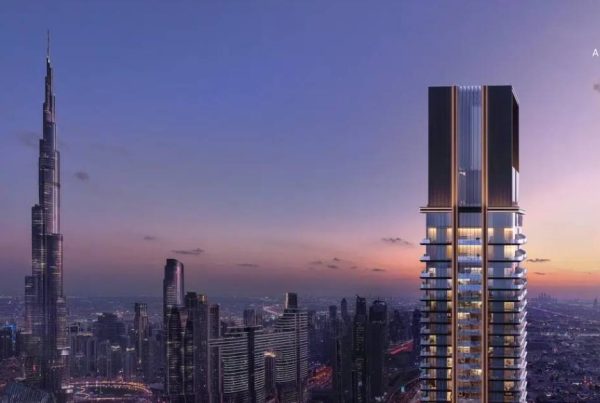
Residential towers are planned to frame views towards the Burj Khalifa, Burj Al Arab and Palm Jumeirah. At the premium end of the development, an exclusive villa enclave will offer expansive five and six-bedroom residences and mansions with private gardens, water features and resort-style amenities.
The announcement arrives as the Dubai property market enters a more mature two-tier phase. Investors are becoming increasingly selective, placing greater value on developer strength, infrastructure, scarcity, community planning and long-term end-user demand. Emaar’s proposed district appears designed to respond directly to that shift.
The Scale of Emaar’s New Dubai Masterplan
The AED 200-billion development value reflects the scale of an entire urban district rather than a single residential project. Emaar plans to introduce a mix of housing, commercial space, hospitality, cultural venues and civic infrastructure capable of supporting a population similar to that of a substantial city.
Nearly 150,000 people will eventually be able to live within the district. That target population requires more than residential inventory. Schools, healthcare facilities, mosques, retail centres, offices, transport connections, parks, recreation facilities and daily services must be delivered in coordination with the housing phases.
This integrated approach is central to Emaar’s established development model. The company has previously built master communities such as Downtown Dubai, Dubai Hills Estate and Dubai Creek Harbour, where residential property is supported by retail, hospitality, landscaping, transport and public amenities.
The new masterplan takes that model further by combining several distinct residential and commercial environments inside one connected ecosystem. This could allow the development to serve professionals, young couples, families, corporate tenants, international investors and ultra-high-net-worth buyers without depending on one property segment.
What Are the Five Zones Inside Emaar’s New Project?
Emaar has divided the masterplan into five character zones. Each area will have a different purpose, atmosphere and target resident profile, while remaining connected through pedestrian routes, landscapes, smart mobility and shared community infrastructure.
Business Hub: This zone will provide a professional environment built around Grade-A offices, modern corporate facilities and workspaces for local and international businesses. Its presence could create a direct employment base inside the community, reducing the need for residents to commute to a separate business district.
Urban District: The Urban District will form the energetic centre of the masterplan. A major high street and grand boulevard are expected to accommodate retail boutiques, restaurants, cafes, entertainment, hospitality and cultural activity. This area is likely to offer the project’s most active mixed-use environment.
Young Families Cluster: Designed as an active, creative and forward-looking neighbourhood, this zone will target younger households seeking modern apartments or family homes close to parks, schools, recreation areas and daily services.
Family Living Zone: This area will place greater emphasis on stability, community life, larger homes and access to education, healthcare and open spaces. It could attract long-term owner-occupiers and tenants seeking a quieter residential setting.
Exclusive Villa Enclave: The premium residential zone will contain five and six-bedroom villas and statement mansions. Private gardens, cascading water features, controlled access and resort-calibre facilities will position the enclave at the highest end of the project’s housing market.
How the Project Compares With Downtown Dubai
Downtown Dubai is a globally recognised high-density urban centre built around Burj Khalifa, Dubai Mall, hospitality, offices and premium apartment towers. It remains one of the city’s most liquid and internationally recognisable property districts.
Emaar’s new project appears to apply some of Downtown Dubai’s successful mixed-use principles to a broader and more environmentally integrated format. Instead of depending mainly on vertical apartment living, the new masterplan will combine towers, villas, mansions, offices and several family-oriented neighbourhoods.
Water is also planned differently. Downtown Dubai is defined partly by the Dubai Fountain and Burj Lake, while the new district will include swimmable community lagoons, tranquil lakes, streams, beach areas and landscaped water corridors distributed across residential neighbourhoods.
The community is also designed around a 20-minute-city model. Schools, shops, healthcare facilities, mosques, parks and cultural spaces should be reachable within a short walk or cycle. Proposed Metro connectivity, EV-friendly routes and app-integrated management could reduce dependence on private vehicles compared with older high-density developments.
This does not mean the new project will replace Downtown Dubai. The two districts could serve different needs. Downtown will retain its established prestige and central landmark status, while the new development may appeal to buyers seeking a newer combination of urban activity, family housing, landscape and smart infrastructure.
What Types of Property Could Be Released?
Emaar has confirmed a broad property mix but has not yet released unit counts, floor plans or prices. Landmark residential towers will form part of the skyline, creating potential inventory ranging from one-bedroom apartments to larger family residences, penthouses or branded units.
Family-oriented zones are expected to include signature villas or larger homes close to schools, parks, cycling paths and community facilities. These units could appeal to residents looking for alternatives to established villa markets such as Dubai Hills Estate, Arabian Ranches and other low-density family districts.
The gated villa enclave will represent the project’s most exclusive housing segment. Five and six-bedroom residences and mansions are expected to offer private gardens, water features and resort-style amenities. These properties will compete more directly with luxury homes on Palm Jumeirah, Jumeira Bay Island and other scarce high-end communities.
Grade-A offices inside the Business Hub may also create opportunities for companies and commercial investors. Retail units, hospitality components and serviced residences could eventually form part of the development, although detailed ownership and sales structures have not yet been announced.
The 20-Minute City and Smart Mobility Strategy
The 20-minute-city principle is one of the masterplan’s most important features. It is intended to place everyday services within walking or cycling distance, allowing residents to reach education, healthcare, worship, shopping, leisure and community facilities without making long car journeys.
Proposed Metro connectivity could strengthen the project’s access to the wider city. The announcement describes advanced mobility systems, EV-friendly pathways, cycling networks and soft-mobility routes, but the exact Metro line, station locations and delivery schedule have not yet been confirmed.
Smart building systems, digital connectivity, app-integrated community management and data-driven public services are expected to support daily operations. These systems may be used for visitor access, maintenance requests, community bookings, transport information, security and energy management.
Walkability and transport access are increasingly important investment considerations as Dubai’s population and residential supply expand. Communities that reduce commuting pressure and connect housing to employment can achieve stronger long-term appeal than isolated projects dependent on congested road networks.
Swimmable Lagoons, Parks and Resort-Style Landscapes
Emaar has positioned nature as a core part of the community rather than a secondary amenity. The development will include parks, swimmable lagoons, tranquil lakes, linear gardens, shaded promenades, cycling routes and water streams moving through the neighbourhoods.
A major central park will provide sports courts, event lawns, splash parks, beach areas and outdoor wellness zones. Public plazas, art installations and cultural programmes are also planned to create activity beyond residential and commercial buildings.
This approach follows a wider shift in Dubai development. Buyers increasingly evaluate the complete community environment rather than only the internal size and finishes of a property. Parks, landscaping, schools, retail, recreation and pedestrian access can influence tenant retention, resale demand and long-term liveability.
The new district may therefore compete with lifestyle-led communities developed by Meraas, waterfront destinations created by Nakheel, and premium master communities from Sobha Realty, DAMAC and Select Group.
Why Emaar’s Financial Strength Matters
A project of this scale requires strong financing capacity, phased execution and long-term demand. Emaar has an established record of delivering large master communities and operating recurring-revenue assets across retail, hospitality, leisure and commercial property.
The company reported record property sales and a substantial revenue backlog before announcing the new district. Investors can review Emaar Development’s financial and sales performance for further context on the developer’s scale, although project-specific financing details for the AED 200-billion masterplan have not been disclosed.
Developer strength can reduce certain delivery and execution risks, but it cannot make a purchase risk-free. A strong developer may still launch units at aggressive prices, experience construction changes or introduce substantial competing supply over several phases.
The role of established developers in protecting confidence is examined in UAE Property Market 2026: Why Developer Strength Prevents a Crash. Buyers should assess both the developer’s record and the economics of the individual property.
What the Megaproject Could Mean for Dubai Investors
The first phase of a major master community can offer investors access before the district reaches full maturity. Early buyers may benefit if infrastructure, occupancy, retail and future phases increase the area’s desirability over time.
Early entry also carries uncertainty. The first buyers must assess a community before its transport links, schools, retail destinations and wider public spaces are complete. Returns may depend on long holding periods rather than rapid resale.
Investors should compare launch pricing with established communities such as Business Bay, Dubai Marina and Jumeirah Village Circle. A new project should offer a rational balance between future potential and the risks attached to an uncompleted district.
Investors should also examine the unit’s position within the masterplan. A tower near the proposed Metro station or Business Hub may appeal to professionals, while a villa near schools and parks may attract long-term family occupants. Units overlooking major roads, future construction zones or dense phases may follow a different performance profile.
A wider comparison of Dubai’s major development companies is available through Top 10 Real Estate Developers in Dubai for 2026. Brand reputation should be combined with price, location, unit quality, supply and exit strategy.
What Emaar Has Not Announced Yet
Emaar has not yet revealed the official project name or exact map location. The company has described it only as being in the heart of Dubai, with towers positioned to provide views towards Burj Khalifa, Burj Al Arab and Palm Jumeirah.
No official apartment, villa or mansion prices have been released. Buyers should not treat speculative social-media pricing, unofficial broker advertisements or estimated starting prices as confirmed Emaar rates.
The developer has also not announced the number of units, first sales date, payment structure, handover date, construction phases or completion timeline. Investors should wait for the official brochure, project registration, payment schedule and sales documentation.
Emaar commonly uses construction-linked off-plan plans across its communities, but that does not confirm that this project will use an 80/20, 90/10 or any other specific structure. The official plan may differ between towers, villas and future phases.
How Buyers Should Prepare Before the First Launch
Buyers interested in the first phase should define their objective before selecting a unit. An end-user may prioritise schools, transport and community completion, while a rental investor may focus on employment access, apartment efficiency and tenant demand.
A realistic budget should include more than the reservation amount. Buyers must account for the required down payment, construction instalments, Dubai Land Department registration, possible administrative charges, handover balance, service charges, furnishing and mortgage eligibility.
Investors should request only official documentation. The project name, location, RERA registration, escrow account, price list, floor plans, payment schedule and handover target should be verified before any funds are transferred.
The first launch should also be compared with ready and off-plan alternatives. A new Emaar tower may offer future appreciation, while an established property could provide immediate rental income and clearer evidence of service charges, occupancy and resale value.
FAQ: Emaar’s New AED 200-Billion Dubai Masterplan
Question: Where is Emaar’s new AED 200-billion project located?
Answer: Emaar has described the development as being in the heart of Dubai, but its official name and precise map location have not yet been disclosed.
Question: What are the five zones inside the masterplan?
Answer: The five zones are the Business Hub, Urban District, Young Families Cluster, Family Living Zone and Exclusive Villa Enclave. Each zone will have a different residential, commercial or lifestyle focus.
Question: What properties will be available?
Answer: Emaar has confirmed residential towers, signature villas, five and six-bedroom residences and statement mansions. The development will also contain offices, retail, hospitality and civic amenities.
Question: What makes the development a 20-minute city?
Answer: Schools, healthcare, mosques, retail, parks and cultural facilities are intended to be accessible within a short walk or cycle. Proposed Metro connectivity and smart mobility systems will connect the district internally and with wider Dubai.
Question: How many people will live in the project?
Answer: The completed masterplan is designed to accommodate nearly 150,000 residents across more than 4.5 million square metres of gross floor area.
Question: When will Emaar release official prices and launch the first properties?
Answer: As of June 12, 2026, Emaar has not announced official prices, launch dates or payment plans. The company has stated that the complete unveiling is imminent.
Question: Is the project a guaranteed investment opportunity?
Answer: No property investment is guaranteed. Emaar’s reputation and master-planning experience can reduce certain risks, but buyers must still evaluate launch pricing, payment obligations, delivery schedule, unit position, future supply and resale demand.
Conclusion: A New Urban District, Not Simply Another Emaar Launch
Emaar’s AED 200-billion announcement represents a major expansion of Dubai’s master-planned property market. With capacity for nearly 150,000 residents, five character zones and more than 4.5 million square metres of gross floor area, the development is designed to function as a complete urban district rather than an isolated residential project.
Its combination of high-rise living, family neighbourhoods, ultra-luxury villas, offices, retail, hospitality, green landscapes and swimmable lagoons could create a distinctive alternative to Dubai’s existing central and suburban communities. The proposed Metro connection and 20-minute-city structure may become equally important to its long-term value.
Investors should separate confirmed information from speculation. The scale, population target, property mix, five zones and lifestyle concept are official. The location, prices, payment plans, first launch and delivery schedule remain unannounced.
Aurantius Real Estate helps local and international buyers evaluate Dubai’s major off-plan launches through developer analysis, community comparison, payment-plan assessment and data-led investment guidance. Once Emaar releases the official project details, buyers should compare each unit against its exact zone, view, price, payment structure and long-term demand rather than relying only on the scale of the masterplan.