
Dubai South Leads Off-Plan Sales for 7 Straight Months: Should Investors Still Buy in 2026?
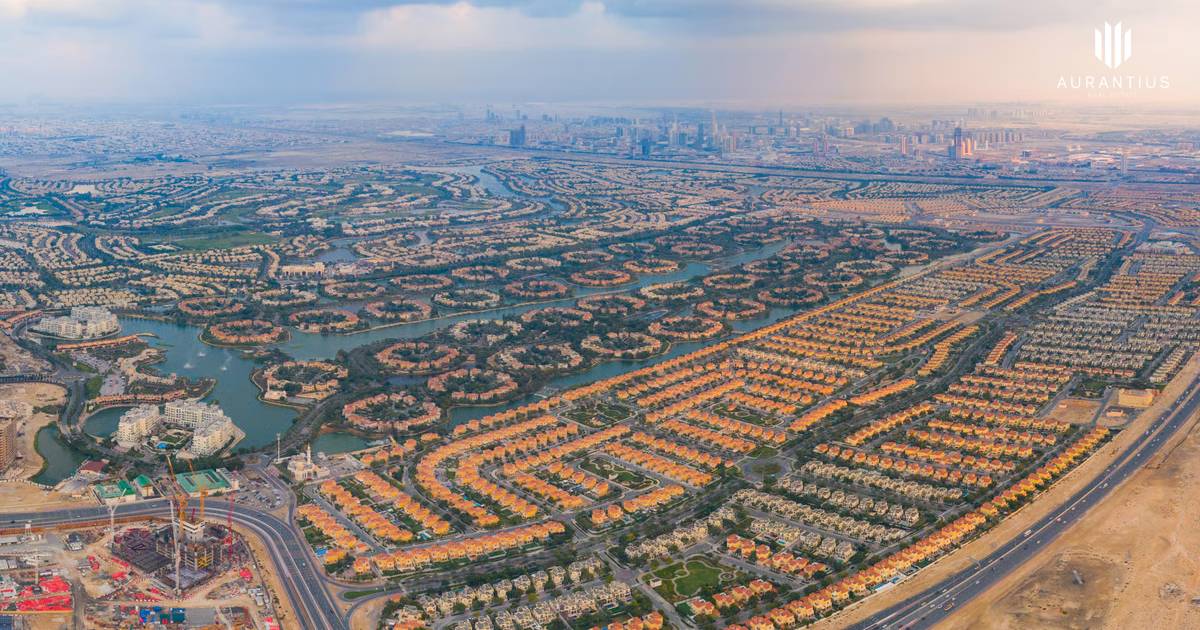
Dubai South entered the final quarter of 2026 as one of the strongest transaction stories in Dubai property. In September alone, the district recorded 737 off-plan transactions worth AED 980.5 million, marking the seventh consecutive month in which Dubai South led the emirate by primary-market sales volume.
The momentum extends beyond one month. Q3 2026 data placed Dubai South as Dubai’s most active residential location with 5,165 transactions at an average of approximately AED 1,690 per square foot. These figures show substantial buyer activity, but they do not answer the more important investor question: after seven months at the top, is Dubai South still attractively priced, or are buyers beginning to pay in advance for future growth?
The answer depends heavily on strategy. Dubai South’s investment case is increasingly supported by physical infrastructure, aviation investment, employment creation and long-term urban development. At the same time, a large future development pipeline means investors need to be far more selective about project, purchase price, handover timing and eventual resale competition.
Dubai South 2026: Key Numbers
September 2026 off-plan sales: 737 transactions
September off-plan value: AED 980.5 million
Primary-market leadership: 7 consecutive months by transaction volume
Q3 residential transactions: 5,165
Reported Q3 average: approximately AED 1,690 per sq. ft.
Major long-term catalyst: AED 128 billion Al Maktoum International Airport expansion
Why Dubai South Is Leading Dubai’s Primary Property Market
Dubai South’s transaction performance is not being driven by a single project. The district combines residential development with aviation, logistics, business activity and major transport infrastructure across a very large master-planned area.
That gives it a different investment thesis from a purely residential suburban community. The underlying argument is that employment, infrastructure and business activity should gradually create a larger resident population requiring nearby housing.
Dubai South also sits within a price range that aligns with a large portion of Dubai’s active buyer base. Across Dubai’s Q3 2026 residential market, 84.28% of transactions captured in the reported price-band data were below AED 3 million. Dubai South offers a substantial amount of new inventory within that mainstream segment.
That combination of accessible ticket sizes and infrastructure-led growth helps explain why transaction volumes have remained high even as buyers elsewhere in Dubai become more selective.
The AED 128 Billion Airport Expansion Is the Main Long-Term Catalyst
The most important infrastructure project supporting the Dubai South investment thesis is the expansion of Al Maktoum International Airport. The AED 128 billion development is designed to create an airport with an eventual capacity of up to 260 million passengers annually when the wider master plan is completed.
The first major phase is planned to provide capacity for approximately 150 million passengers annually, with the wider airport development progressing through the coming years. A major nearer-term infrastructure milestone is the planned opening of the second runway by the end of 2027.
Airport development matters to residential property because aviation infrastructure creates more than passenger traffic. It supports airlines, logistics companies, freight businesses, aviation services, hotels, retail, maintenance operations and other employment-intensive activities.
For investors, the relevant relationship is:
Infrastructure → Business Activity → Employment → Residents → Housing Demand
Dubai is also investing directly in roads and connectivity around the southern corridor. Aurantius’ analysis of the AED 636 million South Dubai infrastructure upgrade provides additional context on how transport investment can support the area’s longer-term accessibility.
Employment Growth Strengthens the Residential Thesis
The airport development is already creating a substantial construction ecosystem. Around 9,000 workers were reported on site during 2026, with the workforce expected to expand significantly as major airport packages enter peak construction.
Dubai South’s wider business ecosystem is also expanding. The master development reported attracting 653 new companies during 2025, bringing the number of operational businesses to more than 4,200, while new business licences increased by 65% year on year.
These figures are relevant because residential demand is more sustainable when a community has genuine employment drivers. A district that produces jobs can create demand from people who value living closer to their workplace rather than commuting daily from central or northern Dubai.
This does not mean every employee will live in Dubai South or that every residential project will achieve high occupancy. Price, building quality, public transport, schools, retail and lifestyle amenities still determine which individual developments attract residents.
Infrastructure Premium vs. Speculative Premium
Dubai South provides a useful example of the difference between buying on infrastructure fundamentals and buying on speculative expectations.
Infrastructure can create real value when it reduces travel friction, supports business formation, creates jobs and expands the number of people who realistically want to live in an area. But investors still need to determine how much of that future improvement is already reflected in the launch price.
A developer can correctly highlight a major airport expansion while still asking too much for an individual apartment. Infrastructure quality and property valuation are separate questions.
This distinction is explored further in Aurantius’ Dubai real estate infrastructure-premium analysis, which looks at whether buyers are paying for measurable fundamentals or mainly for a marketing narrative.
The Biggest Risk: Dubai South Can Build a Lot More Property
The same scale that makes Dubai South attractive creates its largest investment risk. This is a very large development corridor with capacity for significant additional residential construction.
Strong population and employment growth can absorb new housing, but investors should not assume every future handover will be absorbed immediately. If multiple projects deliver similar studios or one-bedroom apartments at roughly the same time, landlords may compete aggressively for the same tenant base.
This is why future supply needs to be analysed at micro-market level rather than citywide. Aurantius’ Dubai Property Supply Stress Test 2026 examines the critical question investors should ask: which communities have enough real demand to absorb additional homes?
For Dubai South, an investor should examine not only total future units but also how many directly competing apartments are expected within the same sub-community, bedroom category, handover period and rental price range.
Primary-Market Strength Does Not Automatically Mean Easy Resale
Another important distinction is between developer sales and secondary-market liquidity. Dubai South’s recent leadership has been driven heavily by primary off-plan transactions.
A developer can generate significant sales through launch campaigns, payment plans, international distribution networks and large brokerage partnerships. An individual owner trying to resell before handover competes against those same developers, who may still have fresh inventory available with attractive payment structures.
That makes a short-term flipping strategy less dependable than the headline transaction volume might suggest. Buyers expecting to resell during construction should verify assignment rules, minimum payment requirements and the volume of competing developer stock before assuming there will be an easy exit.
Aurantius’ analysis of the shift from quick off-plan flips toward strategic property investment explains why longer holding periods are becoming increasingly relevant in Dubai’s maturing market.
Why Holding Through Handover May Be More Rational
For many Dubai South investors, the stronger thesis may be to hold through construction and allow the area’s infrastructure and resident population to mature rather than depending on a pre-handover resale.
This strategy creates its own risks. The buyer needs enough liquidity to complete the payment plan and may face a large final instalment at handover. Once the property completes, the investor also needs sufficient tenant demand to generate the expected income.
The advantage is that the investment decision becomes less dependent on finding another speculative buyer during construction. Instead, the property can eventually compete on observable fundamentals such as actual rent, building quality, community maturity and transport access.
Aurantius has examined this wider trend in its analysis of why many Dubai off-plan owners are holding rather than selling in 2026.
Handover Risk Matters More as Dubai South’s Pipeline Grows
Investors focusing on a five- to ten-year infrastructure story still need to survive the much shorter period between booking and completion.
A property can have an attractive long-term location thesis but still create financial stress if the buyer cannot meet construction instalments or a large handover payment. Investors should therefore map every scheduled payment against expected liquidity before signing the booking form.
They should also model what happens if completion occurs during a period of heavy competing supply. A successful investment cannot depend entirely on refinancing, immediate resale or unusually high rent at handover.
The issue becomes even more important as Dubai moves toward a larger 2027–2030 completion pipeline. Aurantius’ guide to Dubai off-plan handover risk from 2027 to 2030 explains why the final payment can matter more than the initial booking amount.
Apartments vs. Townhouses and Villas: Different Investment Cases
Investors should also avoid treating all Dubai South property as one asset class. Compact apartments and family homes depend on different tenant and buyer pools.
Studios and one-bedroom apartments generally offer lower entry tickets and access to a broad pool of individuals, couples and employees. Their weakness is competition: developers can create large numbers of similar compact units relatively quickly.
Townhouses and villas target a smaller but different end-user market. Families may prioritise schools, parks, private outdoor space, community facilities and longer-term stability. Lower-density supply can provide differentiation, but the acquisition price and ongoing maintenance burden are usually higher.
The correct choice depends on the objective. An investor focused on rental cash flow should compare realistic rent with total ownership costs. A buyer focused on long-term capital value should place more weight on scarcity, family demand, community maturity and resale competition.
Do Not Buy Based on an Advertised Yield Alone
Dubai South is frequently marketed using high rental-yield projections, particularly for studios and smaller apartments. Those numbers should be treated as assumptions until supported by comparable completed rents.
Gross yield can look attractive because it divides annual rent by purchase price, but it ignores service charges, maintenance, management fees, furnishing, insurance, vacancy and other recurring expenses.
A Better Dubai South Yield Test
Achievable Annual Rent
− Service Charges
− Maintenance
− Property Management
− Vacancy Allowance
− Other Recurring Costs
Estimated Net Income ÷ Total Acquisition Cost = Estimated Net Yield
Investors can use the Aurantius Dubai property ROI calculator to structure the analysis around income and ownership costs rather than an advertised headline percentage.
What to Look for in a Dubai South Off-Plan Project
The district’s strong sales performance makes project selection more important, not less important. Investors now have many developments competing for the same capital.
Developer delivery history should be reviewed alongside payment terms. A long payment plan can improve cash flow, but it does not automatically mean the property is attractively priced.
Location inside Dubai South also matters. Investors should assess practical proximity to employment districts, current and planned transport links, schools, supermarkets, parks and community services. A project sitting inside the same broad master development can perform differently from another development several kilometres away.
The purchase should also be compared with ready or near-complete alternatives wherever possible. If a new launch carries a substantial premium, the buyer should understand exactly what improved specification, payment flexibility or future positioning justifies that difference.
Buyers researching the wider launch market can browse Aurantius’ Dubai off-plan property directory to compare projects rather than evaluating a single launch in isolation.
The Exit Strategy Should Be Decided Before the Booking
An investor’s exit strategy should not be decided after the market changes. It should be part of the acquisition decision.
For a short holding period, the buyer needs strong secondary liquidity and a property that can compete against unsold developer inventory. For a long holding period, rental demand, operating costs and building durability become more important.
A family villa intended for a long-term end-user market may have a completely different liquidity profile from a studio purchased during a large apartment launch. Transaction volume at community level does not guarantee the same resale speed for both assets.
Aurantius’ analysis of the best Dubai communities for resale liquidity explains why the ability to exit an investment should be evaluated separately from potential rental yield or long-term appreciation.
FAQ: Dubai South Property Investment in 2026
Question: Is Dubai South still a good property investment in late 2026?
Answer: Dubai South retains a credible long-term investment case because of aviation, logistics, infrastructure and employment growth. Whether an individual property is attractive depends on its purchase price, developer, location within the district, payment plan, future supply and expected rental or resale demand.
Question: How many off-plan properties sold in Dubai South in September 2026?
Answer: Dubai South recorded 737 primary off-plan transactions worth AED 980.5 million during September 2026 and led Dubai’s primary market by sales volume for the seventh consecutive month.
Question: How important is Al Maktoum International Airport to Dubai South property?
Answer: It is one of the area’s largest long-term economic catalysts. The AED 128 billion airport development is expected to expand aviation, logistics and related employment significantly, although infrastructure investment does not guarantee appreciation for every nearby property.
Question: Is Dubai South suitable for property flipping?
Answer: Buyers should be cautious about depending on a short-term flip. A large share of activity is driven by developer sales, so resale investors may need to compete against new launches and developer payment plans. Assignment conditions should also be checked before purchasing.
Question: Are apartments or villas better investments in Dubai South?
Answer: They serve different strategies. Smaller apartments may offer lower entry prices and a wider tenant pool, while villas and townhouses can benefit from family demand and lower-density positioning. The better option depends on price, rent, future supply, holding period and exit strategy.
Question: What is the biggest risk of investing in Dubai South?
Answer: One major risk is future competing supply. Dubai South has considerable development capacity, so investors need to assess how many similar properties may complete around the same time and whether tenant and end-user demand can absorb them.
Question: How long should investors plan to hold Dubai South property?
Answer: There is no universal holding period. Investors buying primarily for infrastructure-led growth should generally be prepared for a longer horizon than buyers relying on short-term resale. The appropriate period depends on handover timing, infrastructure progress, rental performance and the investor’s financial position.
Conclusion: Dubai South Still Has a Strong Case, but 2026 Buyers Need to Be More Selective
Dubai South’s seven-month leadership in primary-market sales is meaningful. September’s 737 off-plan transactions worth AED 980.5 million and the district’s strong Q3 transaction volume show that buyers are actively allocating capital to the southern growth corridor.
The underlying investment case is also stronger than a simple sales ranking. Al Maktoum International Airport, logistics expansion, business formation, employment growth and road infrastructure provide tangible long-term economic drivers.
The main risk is that strong fundamentals can encourage too much development. Investors purchasing in late 2026 should therefore avoid assuming that every Dubai South launch will benefit equally from the area’s growth. Future supply, individual project quality, developer history, handover obligations and resale competition can materially change the result.
For investors with adequate liquidity and a long enough holding period, Dubai South can remain a credible infrastructure-led investment market. Buyers relying on an immediate flip, guaranteed rental yield or automatic appreciation need a much more cautious strategy.
Aurantius Real Estate helps buyers evaluate Dubai off-plan property using transaction evidence, developer assessment, payment-plan analysis, infrastructure, competing supply, realistic rental assumptions and exit liquidity. In Dubai South, the strongest investment is not necessarily the newest launch or the cheapest unit—it is the property whose price, location and future demand remain defensible when the surrounding market reaches maturity.
Before buying in Dubai South: Compare the launch price with competing projects and completed stock, review every future payment, investigate nearby handovers, calculate realistic net rental income and decide in advance whether your strategy is resale, rental income or long-term infrastructure-led appreciation.