
Dubai’s AED 2 Billion Urban Centres Plan: What the AED 20 Billion Property Value Target Really Means
Dubai has approved a major new urban-development programme designed to concentrate more homes, jobs and public services around mass-transit infrastructure while increasing the economic value of targeted parts of the city.
Approved by The Executive Council of Dubai on 27 October 2026, the Urban Centres Development Plan carries a budget exceeding AED 2 billion and covers six main urban centres and 42 supporting sub-centres.
Together, the 48 centres represent approximately 12% of Dubai’s urban area. The government projects that the plan will contribute to an increase of around AED 20 billion in real estate value across the targeted centres by 2040.
For property investors, that AED 20 billion headline needs to be interpreted carefully. It is a government target for the combined targeted centres over the period to 2040. It is not a forecast that individual apartments, villas or offices will automatically appreciate by a fixed percentage.
The more important property story is the structure behind the target: higher density around Metro stations, more mixed-use development, homes located closer to employment centres and wider access to public services.
Dubai Urban Centres Development Plan — Key Numbers
Approval date: 27 October 2026
Budget: More than AED 2 billion
Main urban centres: 6
Supporting sub-centres: 42
Total targeted centres: 48
Share of Dubai urban area: Approx. 12%
Targeted real estate value increase: AED 20 billion by 2040
Residents living around Metro stations: 52% → 74%
Public services coverage: 74% → 85%
What Is Dubai’s Urban Centres Development Plan?
The programme is a transit-oriented urban-development strategy overseen by the Supreme Committee for Urban Planning and Dubai Municipality in collaboration with other relevant government entities.
Its objective is not simply to construct isolated new projects. Instead, it aims to improve how different parts of Dubai function by concentrating population, employment, transport and public services around defined urban centres.
The government identifies three main pillars:
Quality of life: Bringing services, jobs and homes closer together.
Economic returns: Improving the productivity and value of established urban locations.
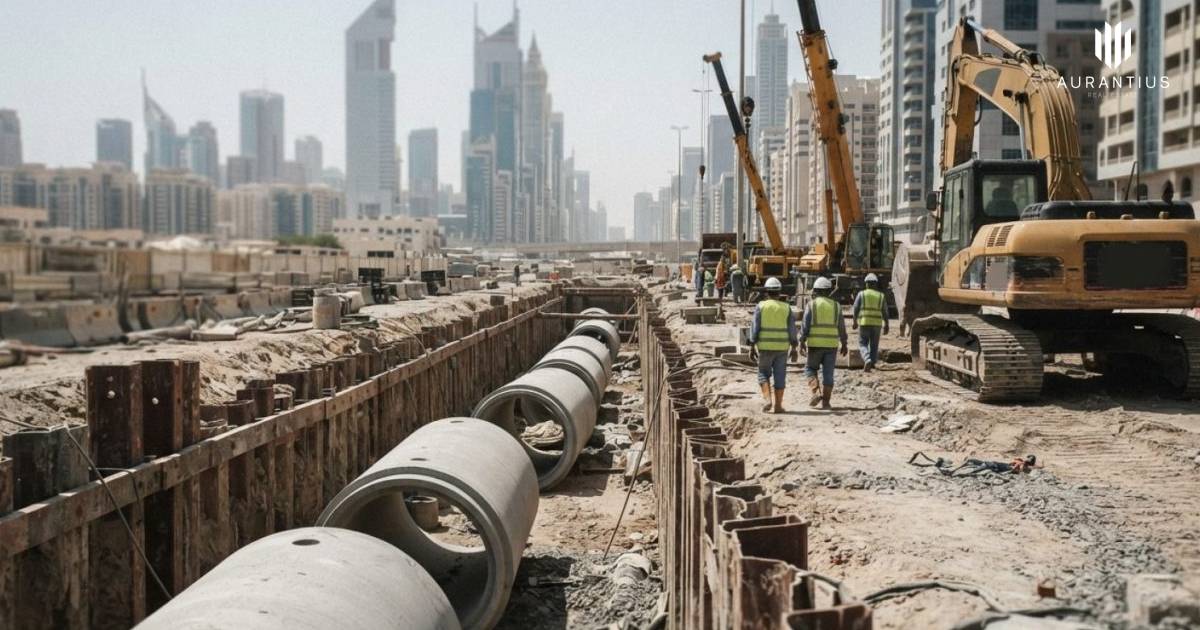
Infrastructure efficiency and cost: Concentrating development around transport and existing service networks rather than relying only on outward urban expansion.
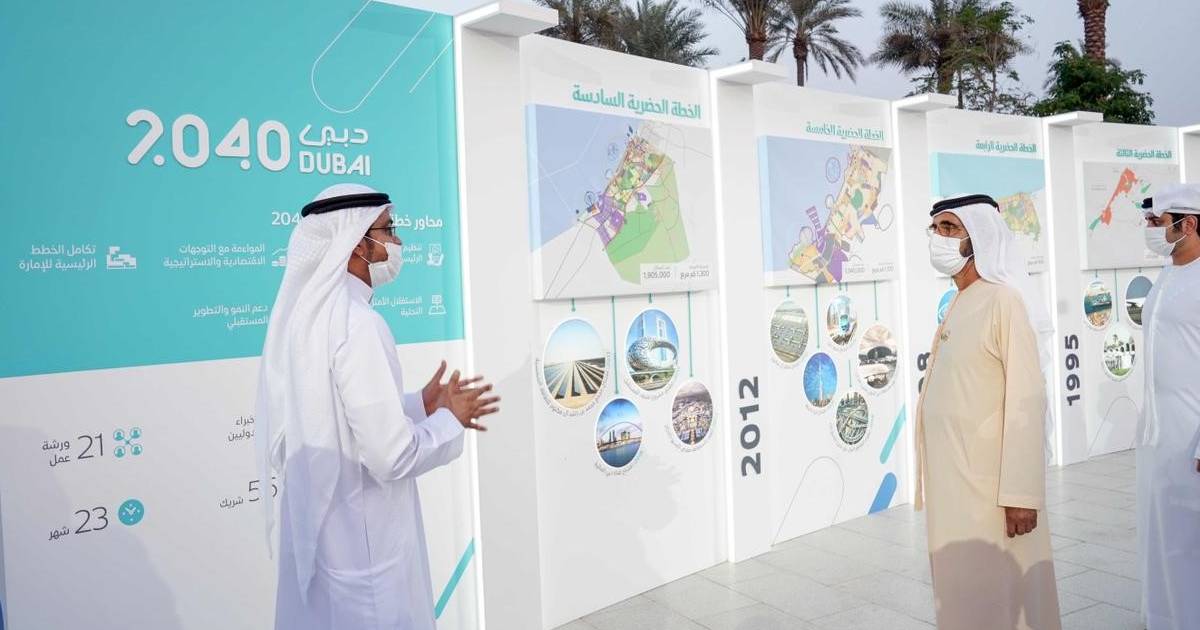
This approach closely matches the broader logic of the Dubai 2040 Urban Master Plan, which prioritises higher-density, mixed-use communities around major transport nodes.
Aurantius has previously examined how this infrastructure-led model is reshaping demand in Dubai Infrastructure Push: Blue Line, Roads & Hubs.
Are the Six Main Urban Centres Already Named?
This is an important distinction because some early reports have begun attaching specific neighbourhood names to the new six-centre programme.
The official 27 October announcement confirms six main urban centres and 42 supporting sub-centres, but it does not publish the full list of their names.
The earlier Dubai 2040 Urban Master Plan was structured around five major centres:
| Dubai 2040 Centre | Original Strategic Role |
|---|---|
| Deira & Bur Dubai | Historic and heritage urban centre |
| Downtown / Business Bay / Financial Corridor | Business, financial and commercial core |
| Dubai Marina / JBR Area | Tourism and leisure centre |
| Expo Centre | Exhibitions, tourism, logistics and future growth |
| Dubai Silicon Oasis | Technology, knowledge and innovation centre |
Those earlier centres provide useful planning context, but buyers should not automatically assume that they are identical to the six main centres under the newly approved 2026 programme until Dubai publishes the updated centre map.
The Biggest Target: More Residents Living Near Metro Stations
One of the clearest measurable targets is public-transport proximity.
The plan aims to increase the share of Dubai residents living around Metro stations from 52% to 74%.
This does not simply mean constructing more stations. It also means concentrating additional housing, employment and services around mass-transit nodes so that a larger share of the city’s population can live and work within connected urban centres.
| Metric | Current / Starting Level | Plan Target |
|---|---|---|
| Residents living around Metro stations | 52% | 74% |
| Public services coverage | 74% | 85% |
Why Metro Proximity Matters to Real Estate
Transport accessibility can influence real estate because it changes the practical usefulness of a location.
A residential building within convenient walking distance of reliable mass transit can appeal to a broader tenant and buyer pool than a comparable property requiring a long daily car commute.
Commercial properties can also benefit because Metro connectivity expands the employee catchment and can make offices more attractive to businesses that prioritise staff accessibility.
But investors should avoid using a universal “Metro premium” percentage. Performance differs by station, property type, walkability, competing supply, building quality and entry price.
This is why infrastructure should be assessed alongside fundamentals. Aurantius’ Dubai Real Estate 2026: Brand Premium vs Infrastructure Premium explores how buyers can distinguish real accessibility value from marketing-driven premiums.
The Blue and Gold Lines Strengthen the Transit-Oriented Strategy
The urban-centres plan is arriving while Dubai is significantly expanding the Metro network.
The AED 20.5 billion Blue Line is scheduled to open in September 2029 and will serve expanding areas including Dubai Silicon Oasis, Dubai Creek Harbour, International City and parts of Mirdif.
Dubai has also announced the AED 34 billion Gold Line, a 42-kilometre underground route expected to open in September 2032. It is planned to connect major urban areas and integrate with the Red Line, Green Line and Etihad Rail.
Together, these projects make the 74% Metro-proximity target more understandable: Dubai is simultaneously adding rail capacity and shaping development around transport nodes.
Why the AED 20 Billion Property Value Target Should Not Be Misread
The most marketable number in the announcement is the projected AED 20 billion increase in real estate value by 2040.
But it is important to understand what the figure does and does not mean.
| What the AED 20B Figure Means | What It Does Not Mean |
|---|---|
| Government projection for the targeted centres collectively | Every property will rise in value |
| Long-term target extending to 2040 | AED 20B of immediate appreciation in 2026 |
| Linked to urban improvements and transit-oriented development | A guaranteed investment return |
| Applies across multiple targeted centres | A forecast for one specific community or tower |
Business Bay and Downtown Remain Important Transit-Oriented Examples
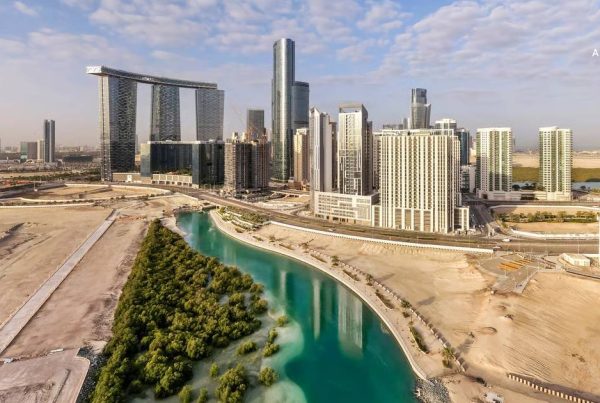
Even though the official 2026 announcement has not yet named all six centres, Downtown Dubai and Business Bay show why mixed-use, transit-oriented planning matters to property demand.
Both combine employment, residential towers, hospitality, retail and Metro access within a relatively concentrated urban footprint.
Buyers researching these established central districts can compare the Business Bay property market and Downtown Dubai property market through Aurantius’ location guides.
Public Services Coverage Is Targeted to Rise to 85%
The plan is not limited to Metro proximity.
Dubai also aims to increase public-services coverage across the targeted centres from 74% to 85%.
For property markets, this can matter as much as transport. Access to schools, healthcare, government services, public spaces and daily amenities influences whether a community functions well for long-term residents rather than simply attracting speculative investment.
The combination of transit and services supports a broader planning objective: reducing the distance between where people live, work and access essential facilities.
Dubai Also Approved a Sustainable Population Planning Policy
The Urban Centres Development Plan was approved alongside a separate Sustainable Population Planning Policy.
That policy links demographic forecasts with economic and urban planning so that infrastructure and services can be planned around expected population growth rather than reacting after demand emerges.
This matters to real estate because population growth alone does not guarantee strong investment performance. Markets also need enough jobs, schools, hospitals, transport, utilities and community infrastructure to support the additional housing supply.
A New Digital Authorisation System Was Approved at the Same Meeting
The Executive Council also approved a Digital Authorisation System operated by Digital Dubai.
The platform is intended to allow individuals and companies to digitally authorise another party to complete qualifying low-risk government transactions on their behalf without conventional paper-based authorisation processes.
UAE PASS will be used for verification.
The official announcement does not state that every property transaction will become delegable through the platform. Buyers should therefore avoid treating it as a replacement for all notarisation, conveyancing or property-registration requirements unless a specific service is formally included.
What Should Property Investors Watch Next?
1. The official map identifying the six main centres and 42 sub-centres.
2. Which centres receive the earliest physical infrastructure investment.
3. New zoning or land-use changes around Metro stations.
4. Residential density permitted near Blue and Gold Line stations.
5. Public-service projects improving schools, healthcare and community facilities.
6. Whether infrastructure delivery is matched by sufficient job creation.
7. New supply entering each targeted centre before paying an infrastructure premium.
8. Actual transaction prices rather than asking-price speculation after major government announcements.
Which Properties Could Benefit Most?
Until Dubai publishes the detailed centre map, it is too early to produce a definitive list of “winning communities.”
However, the planning logic suggests that properties are more likely to benefit where several factors overlap:
| Positive Factor | Why It Matters |
|---|---|
| Walkable Metro access | Expands the potential resident, tenant and employee catchment. |
| Employment nearby | Supports genuine residential demand rather than transport access alone. |
| Mixed land use | Creates all-day demand for housing, offices, retail and services. |
| Better public services | Improves long-term liveability and family appeal. |
| Controlled future supply | Reduces the risk that new density overwhelms demand. |
| Reasonable entry price | Infrastructure can be valuable without justifying any purchase price. |
FAQ: Dubai Urban Centres Development Plan 2026
Question: What is Dubai’s new Urban Centres Development Plan?
Answer: It is a Dubai government programme approved on 27 October 2026 to develop six main urban centres and 42 supporting sub-centres through transit-oriented, mixed-use and service-led urban planning.
Question: How much will Dubai spend on the plan?
Answer: The approved budget exceeds AED 2 billion.
Question: Will the plan increase Dubai property values by AED 20 billion?
Answer: The government projects that the targeted centres collectively will see an AED 20 billion increase in real estate value by 2040. It is not a guaranteed return for individual properties.
Question: Which Dubai areas are included?
Answer: The official announcement confirms six main centres and 42 supporting sub-centres but does not yet publish the full list by name. Earlier Dubai 2040 centres provide context but should not automatically be treated as the final 2026 list.
Question: What is the Metro target?
Answer: Dubai aims to increase the proportion of residents living around Metro stations from 52% to 74%.
Question: What is the public-services target?
Answer: Public-services coverage in the targeted centres is intended to rise from 74% to 85%.
Question: Should investors immediately buy property near every Metro station?
Answer: No. Metro access is one investment factor. Buyers should also examine entry price, walkability, future supply, employment, building quality, service charges and actual transaction evidence.
Conclusion: Follow the Infrastructure, but Do Not Buy the Headline
Dubai’s Urban Centres Development Plan is a significant extension of the city’s long-term strategy to concentrate more people, jobs and services around connected urban centres.
The numbers are substantial: more than AED 2 billion of planned investment, 48 targeted centres, Metro proximity rising from 52% to 74%, public-services coverage increasing to 85%, and a projected AED 20 billion increase in real estate value by 2040.
But investors should avoid turning those targets into a simple “buy these six areas now” strategy.
The government has not yet published the complete list of the six main centres and 42 sub-centres in the approval announcement. Nor has it provided a community-by-community forecast showing how much individual property values should rise.
The strongest investment signal will come later, when specific centre maps, zoning changes, public-service projects and transport connections can be matched against actual property prices and future supply.
Investor takeaway: Treat the AED 20 billion figure as a city-planning target, not a guaranteed return. The better strategy is to identify properties where genuine Metro access, employment, mixed-use planning, public services and controlled supply overlap — and then make sure the purchase price does not already assume all of the future infrastructure upside.