
Best Dubai Areas for Capital Growth and Rental Yields in 2026
As the Dubai property market transitions into a more sophisticated, community-centric phase, investors face a familiar dilemma: should they chase short-term capital appreciation or secure long-term rental yield?
Historically, real estate investors were often forced to choose between the two. High-yield areas produced stronger annual income but slower capital growth. Luxury and scarce locations delivered better appreciation but lower rental yield because purchase prices were high.
In Dubai’s 2026 market, the smarter strategy is more nuanced. Instead of chasing speculative hype or bottom-tier cash flow, investors should look for hybrid communities: areas where infrastructure growth, end-user demand, limited quality supply and active rental markets work together.
These communities can deliver a stronger total return profile. They may not always offer the highest gross yield or the fastest price jump, but they can balance rental income, capital preservation, liquidity and future growth.
This guide explains how to identify Dubai’s best hybrid real estate markets in 2026, including Dubai Hills Estate, Dubai Creek Harbour, Business Bay, Downtown borders and Jumeirah Village Circle.
For a deeper return framework, read Dubai Real Estate ROI: How to Target 8% to 15% Returns.
Dubai Property Investment Strategy: Why Total ROI Matters
A strong Dubai property investment strategy should not focus only on annual rent or only on resale price. It should focus on total ROI.
Total ROI combines rental yield, capital appreciation, vacancy risk, service charges, maintenance, liquidity and exit value. A property that generates high rent but is difficult to sell may not be a strong investment. A luxury unit with strong appreciation but weak rental income may also underperform if the holding cost is too high.
The strongest assets are those that can do both reasonably well. They attract tenants today and resale buyers tomorrow. They sit in communities with real demand, not only launch hype. They remain liquid even when the market becomes more selective.
This is why the best Dubai property strategy in 2026 is not “buy the cheapest” or “buy the most famous address.” It is to buy a property that balances income, growth and exit security.
Dubai Property Price Forecasts Are Now Community-Based
Dubai is no longer a one-direction property market where every community rises at the same speed. The market is now highly localised. Some areas are benefiting from scarcity, infrastructure and family demand, while others are facing pressure from new handovers and competing launches.
Palm Jumeirah and Dubai Hills Estate are more resilient because replacement stock is limited and end-user demand remains strong. Downtown Dubai continues to benefit from international recognition and branded residence demand. Dubai Creek Harbour has long-term waterfront and master-community upside.
At the same time, areas such as JVC, Business Bay, Arjan and Dubai South require more careful asset selection because supply is higher and tenants have more choices. These communities can still perform well, but investors must buy the right building at the right price.
The lesson is simple: do not invest based on Dubai averages. Invest based on community-level supply, tenant demand, service charges, handover pipeline and resale liquidity.
For a full 2026 market overview, read Dubai Real Estate 2026: Market Shifts, Yields and Top Neighborhoods.
The Hybrid Investor Strategy Explained
The hybrid investor strategy targets areas that can support both capital appreciation and rental yield. These are not pure cash-flow zones and not pure luxury trophy markets. They sit between both extremes.
A hybrid community usually has five traits: strong tenant demand, active resale liquidity, improving infrastructure, limited high-quality supply and a clear end-user story.
For example, Dubai Hills Estate offers strong family demand and mature infrastructure. Dubai Creek Harbour offers waterfront growth and Emaar-led master planning. JVC offers high rental demand and broad liquidity. Business Bay and Downtown-border assets offer corporate and short-term rental demand when the unit is well selected.
The hybrid approach is not about finding one perfect area. It is about matching the right asset to the right risk profile.
Dubai Hills Estate: Balanced Growth and Family Demand
Dubai Hills Estate is one of Dubai’s strongest balanced investment communities. It combines rental demand, family appeal, Emaar master planning, Dubai Hills Mall, Dubai Hills Park, healthcare access, schools, golf-course positioning and strong road connectivity.
For capital appreciation, Dubai Hills benefits from end-user demand and limited premium family-community supply. Families, executives and long-term residents continue to view the area as one of Dubai’s most practical lifestyle communities.
For rental yield, apartments are generally stronger than villas. Villas in Dubai Hills can be excellent capital-preservation assets, but their high prices compress gross rental yield. One- and two-bedroom apartments near the park, mall or key community facilities may offer a more balanced income-and-growth profile.
The best Dubai Hills strategy is to buy practical layouts in buildings with strong tenant appeal, controlled service charges and good resale liquidity. Do not overpay only because the community name is strong.
Dubai Creek Harbour: Waterfront Capital Appreciation With Rental Depth
Dubai Creek Harbour is a strong hybrid candidate for investors seeking long-term capital appreciation with reasonable rental demand. It is a waterfront Emaar master community positioned as a future lifestyle and skyline district.
The capital appreciation case is based on district maturity. As retail, hospitality, waterfront infrastructure, public spaces and community facilities expand, the area may become more attractive to both tenants and resale buyers.
The rental case is supported by professional tenants, young families and residents who want waterfront living without the same pricing as Downtown or Palm Jumeirah.
However, investors must be selective. View quality matters heavily in Creek Harbour. A waterfront or skyline view can materially improve resale demand, while a weaker view may struggle to justify premium pricing.
The best strategy is to target efficient one- and two-bedroom layouts with clear views, strong building quality and realistic entry prices.
Business Bay and Downtown Border: Central Demand With Careful Selection
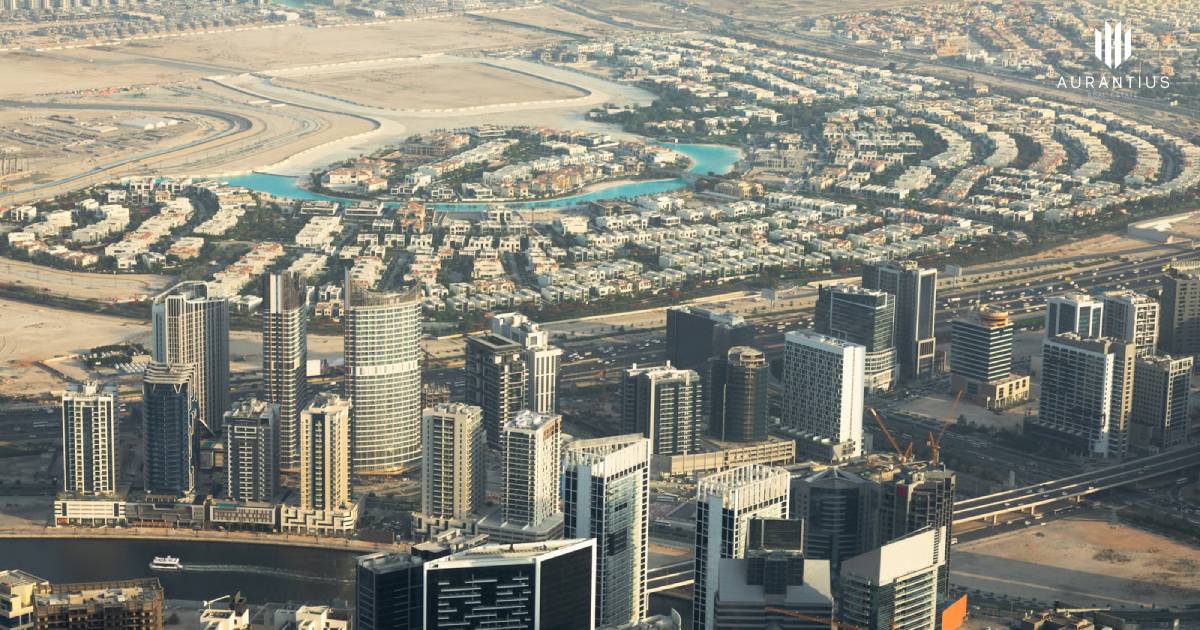
Business Bay is not a simple market. Some parts face supply pressure and softer absorption, while premium buildings along the Dubai Canal or near Downtown continue to benefit from corporate demand, tourism demand and central connectivity.
For hybrid investors, the best opportunities are not generic Business Bay units. They are specific assets with strong views, walkability, good tower management, parking, lower service-charge risk and short-term rental potential where permitted.
Downtown-border properties can also perform well because they benefit from proximity to Burj Khalifa, Dubai Mall, DIFC and major business districts without always carrying the full Downtown premium.
This strategy is strongest for investors who want flexibility. A well-located central apartment can work as a long-term corporate rental, a furnished executive lease or a managed holiday-home unit, depending on building rules and licensing.
The warning is service charges. Central luxury and branded buildings can have high annual costs, and those costs directly reduce net yield.
Jumeirah Village Circle: Yield-Leaning Hybrid With Liquidity
JVC is traditionally known as a high-yield apartment market, but in 2026 it also deserves attention as a yield-leaning hybrid community. It offers broad tenant demand, large transaction volume, affordability compared with prime districts and improving internal infrastructure.
JVC’s main strength is rental depth. It attracts young professionals, couples, small families and budget-conscious tenants who want central access without paying Dubai Marina or Downtown rents.
The challenge is supply. JVC has many completed and upcoming buildings, which can limit capital appreciation if investors buy weak stock or overpay during launch hype.
The best JVC strategy is to avoid mass-market oversupply and focus on buildings with strong finishing, sensible service charges, good facilities, parking, strong rental history and active resale demand.
JVC is not the safest prestige play, but it remains one of Dubai’s most practical income markets when the exact building is selected correctly.
Palm Jumeirah: Scarcity and Capital Preservation
Palm Jumeirah is not a classic high-yield play. It is a scarcity and capital-preservation market. Land is limited, global recognition is extremely strong, and luxury buyers continue to view the Palm as one of Dubai’s most iconic addresses.
For short-term capital appreciation, Palm Jumeirah can remain resilient because supply is structurally limited and demand comes from high-net-worth buyers, lifestyle end-users and international investors.
For rental yield, the picture is more mixed. Purchase prices are high, which compresses percentage yields. Short-term rental or luxury furnished rental strategies can improve income in the right building, but service charges, furnishing, management and seasonality must be included.
Palm Jumeirah is best suited to investors who prioritise capital preservation, prestige and scarcity over maximum annual cash flow.
Downtown Dubai: Branded Demand and Global Recognition
Downtown Dubai remains one of Dubai’s most globally recognised locations. Burj Khalifa, Dubai Mall, the Dubai Fountain, luxury hotels and international tourism keep the area highly visible.
For capital appreciation, Downtown’s strongest assets are branded residences, prime-view units, high-quality towers and properties with direct lifestyle access. Generic or poorly maintained units may not perform as strongly.
For rental yield, Downtown usually delivers lower percentages than mid-market communities because entry prices are higher. However, liquidity, tourism demand and corporate demand can support consistent leasing if the unit is priced correctly.
Downtown is a quality-selection market. Buy the wrong tower or overpay for a weak view, and the investment can disappoint. Buy a strong unit at a realistic entry price, and the asset can remain highly liquid.
Dubai South: Long-Term Infrastructure Growth, Near-Term Supply Pressure
Dubai South is one of the most important long-term growth stories in Dubai because of Al Maktoum International Airport, Expo City, logistics infrastructure and future population expansion.
For capital appreciation, the long-term thesis is strong. As airport expansion, transport links, logistics activity and community infrastructure mature, demand may deepen over time.
For near-term rental yield, investors must be careful. New supply is significant, and large handover pipelines can create tenant choice and pricing pressure. That means the investment must be bought at the right entry price.
Dubai South is best for patient investors. It is not always ideal for buyers seeking immediate premium liquidity. It can work when the project is well located, well priced, near key infrastructure and backed by a credible developer.
Al Jaddaf: Mid-Market Momentum Near the Creek
Al Jaddaf is gaining investor attention because it sits close to Dubai Creek, Healthcare City, Downtown access corridors and maturing waterfront districts. It offers a different profile from luxury areas: more affordable than Downtown, but better positioned than many outer suburbs.
The capital appreciation case is based on location improvement, district maturity and proximity to central Dubai. As surrounding infrastructure and lifestyle offerings improve, Al Jaddaf can attract buyers looking for better value close to premium zones.
The rental case depends on building quality and access. Tenants may include healthcare workers, professionals, families and residents seeking centrality without prime-area rent levels.
The risk is inconsistency. Not every building or plot in Al Jaddaf has the same appeal. Investors should focus on walkability, views, metro access, building quality and realistic service charges.
Villas vs Apartments: Which Offers Better Total ROI?
Villas and apartments behave differently in Dubai’s 2026 market.
Villas and townhouses often have stronger capital appreciation potential because land is limited and family housing demand is deep. Communities such as Dubai Hills Estate, Arabian Ranches, The Valley, The Springs, The Meadows and Damac Lagoons can benefit from end-user demand and limited family-sized supply.
Apartments often deliver stronger rental yields because entry prices are lower and tenant pools are larger. Communities such as JVC, Dubai Sports City, Dubai Silicon Oasis, Al Furjan and Business Bay can produce stronger income percentages when bought well.
For total ROI, the best choice depends on your objective. If you want cash flow, apartments usually win. If you want land-linked appreciation and family-tenant stability, townhouses and villas may be stronger.
Off-Plan vs Secondary Market Dubai: Which Works Better?
Off-plan and secondary-market investments serve different purposes.
Off-plan can support capital appreciation if the buyer enters early, chooses a strong developer, secures a good launch price and exits or holds as the project approaches completion. It can also offer flexible payment plans that reduce immediate cash pressure.
The risk is delivery timing, future supply, resale restrictions, service-charge uncertainty and market changes before handover.
Secondary-market property offers clearer numbers. The investor can inspect the actual unit, check service charges, compare real transactions and earn rent immediately if the property is ready and rentable.
For hybrid investors, the ideal approach may be a combination: a ready apartment for income and a near-handover or early-stage off-plan asset for capital growth.
For a complete investment framework, read Property Investment in Dubai: The Complete 2026 Investor Guide.
How to Identify the Best Hybrid Real Estate Markets in Dubai
A hybrid market should not be judged by marketing claims. It should be judged by fundamentals.
First, check rental demand. Are tenants actively leasing in the area? Are rents supported by real demand or only by temporary shortage?
Second, check supply. If thousands of similar units are coming, future rent and resale values may be pressured.
Third, check infrastructure. New malls, roads, metro links, schools, parks, airports and waterfront developments can support future value.
Fourth, check liquidity. A property is stronger when there is a broad pool of future buyers and tenants.
Fifth, check net yield. Gross yield is useful, but service charges, vacancy, maintenance and management costs decide real income.
The Service-Charge Trap
Service charges are one of the most underestimated factors in Dubai real estate ROI. Two properties with the same rent and purchase price can produce very different net returns if one building has significantly higher annual charges.
High service charges are common in luxury towers, hotel-style buildings, branded residences and amenity-heavy communities. These charges can be justified if the property achieves higher rent and better resale liquidity, but they must be included in the calculation.
A property with 8% gross yield and heavy service charges may net less than a 6.5% gross-yield asset with lower running costs.
Before buying, investors should request the latest service-charge statement and calculate net yield, not only advertised ROI.
Short-Term Rental Flexibility
Some hybrid assets become stronger when they can shift between long-term rental and short-term holiday-home use. This flexibility is useful during local supply cycles.
Downtown Dubai, Business Bay, Dubai Marina, JBR and Palm Jumeirah are stronger short-term rental candidates because of tourism, business travel and lifestyle demand.
However, short-term rentals require licensing, professional management, furnishing, cleaning, guest communication, platform fees and seasonal pricing control. Higher gross revenue does not automatically mean higher net profit.
For hybrid investors, short-term rental flexibility is a useful option, but it should never be the only reason to buy.
Community Strategy Matrix
Capital-leaning hybrid: Dubai Hills Estate, Dubai Creek Harbour and Downtown Dubai prime-view assets.
Yield-leaning hybrid: JVC, Al Furjan, Dubai Sports City, Dubai Silicon Oasis and selected Arjan buildings.
Scarcity and preservation: Palm Jumeirah, prime Downtown, waterfront Dubai Marina and selected villa communities.
Infrastructure-led growth: Dubai South, Dubai Creek Harbour, Dubai Islands and selected emerging masterplans.
High-supply value hunting: JVC, Business Bay, Arjan and Dubai South, but only where entry price, building quality and service charges support the numbers.
Investor Checklist for Yield and Appreciation
Check community trajectory: Is the area maturing, oversupplied, scarce or infrastructure-led?
Compare actual transactions: Use real sale prices, not only asking prices.
Calculate net yield: Deduct service charges, maintenance, management, vacancy and furnishing costs.
Study future supply: Heavy handovers can pressure rents and resale prices.
Check tenant depth: Identify who will rent the property and why they will choose it.
Review developer quality: A strong developer can improve confidence, delivery and resale liquidity.
Prioritise liquidity: A property must be easy to rent and reasonably easy to sell.
Avoid emotional premiums: A famous address is useful only if the unit-level numbers still work.
For ongoing price and investment updates, visit Dubai Real Estate Market Trends.
FAQ: Dubai Capital Growth and Rental Yield Strategy
Question: Which Dubai communities offer both capital growth and rental yield?
Answer: Dubai Hills Estate, Dubai Creek Harbour, JVC, Business Bay, Downtown-border locations and selected Al Furjan or Arjan buildings can offer a balance, depending on price, service charges, supply and tenant demand.
Question: Is Dubai Hills Estate good for rental yield in 2026?
Answer: Dubai Hills Estate is stronger for balanced ROI than pure high yield. Apartments can offer reasonable rental demand, while villas are usually more capital-growth and family-demand assets than high-yield income properties.
Question: Is Dubai Creek Harbour good for capital appreciation?
Answer: Dubai Creek Harbour can be a strong long-term capital appreciation play because of waterfront positioning, Emaar master planning and district maturity. Investors should focus on views, layout, entry price and resale liquidity.
Question: Is JVC still good for ROI?
Answer: JVC remains strong for rental yield and liquidity, but supply is high. Investors should choose better buildings with strong layouts, controlled service charges and proven rental demand.
Question: Should I buy off-plan or ready property in Dubai?
Answer: Off-plan can work for capital growth and payment flexibility, while ready property works better for immediate rental income and clearer due diligence. A hybrid portfolio can include both.
Question: Which is better for ROI: villas or apartments?
Answer: Apartments usually offer stronger rental yield, while villas and townhouses may offer better capital appreciation and family-tenant stability. The better choice depends on your strategy and holding period.
Question: What is the biggest mistake investors make when chasing both yield and appreciation?
Answer: The biggest mistake is assuming one property will deliver maximum yield, maximum appreciation and minimum risk. Strong investors balance income, growth, service charges, supply and liquidity instead of chasing one headline number.
Conclusion: The Best Dubai Investment Is a Dual-Engine Asset
Dubai’s 2026 market rewards investors who understand community-level performance. The era of buying anything and expecting broad-based appreciation is fading. The market is now more selective, more data-driven and more dependent on local supply, tenant demand and infrastructure growth.
For investors seeking both short-term capital appreciation and long-term rental yield, the answer is a hybrid strategy. Dubai Hills Estate offers balanced end-user demand and liquidity. Dubai Creek Harbour offers waterfront growth potential. JVC provides yield and liquidity if the building is selected carefully. Business Bay and Downtown-border properties can work when views, service charges and rental flexibility are strong.
Pure yield areas can produce income but may lack growth. Ultra-luxury areas can preserve capital but may deliver lower yield. The best total ROI often sits between both extremes.
The smart investor does not chase hype. They buy communities with real tenant demand, infrastructure support, manageable supply, realistic service charges and a clear future buyer pool.
In Dubai real estate, capital growth and rental yield are not always opposites. With the right community, the right unit and the right entry price, they can work together.
Aurantius Real Estate helps investors compare Dubai rental yields by community, capital appreciation forecasts, off-plan and secondary market opportunities, service charges, developer quality and total ROI strategies.
Build a Dual-Growth Dubai Portfolio: Speak with an Aurantius adviser to compare Dubai Hills Estate, Dubai Creek Harbour, JVC, Business Bay, Downtown, ready property, off-plan opportunities and hybrid investment strategies based on your budget and risk profile.