

Dubai Property Investment 2026: Stable Prices Create Rare Investment Window
With developers holding prices despite rising costs, investors have a limited window to buy Dubai property before future price increases hit the market. In a defiant response to global inflationary pressures, Dubai’s real estate sector is demonstrating a level of resilience rarely seen in international markets. Despite a sharp 50% increase in construction costs driven by supply chain disruptions and logistics challenges, major developers have chosen to absorb these increases rather than pass them on to buyers. This strategic decision is reinforcing Dubai’s position as a stable investment destination, particularly for off-plan property Dubai investors seeking predictable pricing and delivery certainty.
Construction Costs Dubai Surge: Breaking Down the 50% Increase
The construction costs Dubai surge is largely attributed to rising material prices, freight disruptions, and logistical challenges linked to geopolitical tensions affecting regional trade routes. Key inputs such as steel, concrete, and mechanical systems have experienced significant cost inflation, while shipping delays have further increased project expenses. These factors have created a challenging environment for developers globally, yet Dubai’s market response has been notably different.
Developer Price Protection Strategy and Market Stability
Rather than increasing prices or delaying projects, developers such as Danube Properties and Dubai Properties have committed to maintaining original pricing and delivery schedules for existing buyers. This “price protection” strategy is designed to preserve investor trust and prevent a slowdown in market activity. By prioritizing long-term credibility over short-term margins, developers are reinforcing confidence in off-plan property Dubai as a reliable investment vehicle.
Off-Plan Handover Projections
| Project Name | Location | Estimated Handover | Starting Price (Studio/1BR) |
|---|---|---|---|
| Lucky Oasis Residence | JVC | June 2026 | ~AED 800k |
| Binghatti Elite | Production City | Q2 2026 | ~AED 1.08M |
| Residences Du Port | Dubai Marina | Q4 2026 | Premium |
| Azizi Sikander | Various | Q4 2027 | ~AED 1M+ |
| Avant Garde Residences 2 | JVC | Q3 2028 | ~AED 678k |
| Alta View | Various | Q4 2028 | ~AED 1.2M |
| Alta View Skyhomes | Various | June 2029 | ~AED 1.5M |
In-House Construction Control and Delivery Assurance
One of the key strategies enabling this stability is the shift toward in-house construction management. Developers are increasingly internalizing operations or securing contractors before project launches to maintain control over timelines and costs. This approach reduces dependency on external contractors and minimizes the risk of delays, ensuring that Dubai project delivery dates remain consistent even under challenging conditions.
Off-Plan Property Dubai as a Stability Anchor
The resilience of off-plan property Dubai is further supported by strong market activity. Transaction values have continued to grow, with the market recording significant increases in overall sales volume despite external pressures. Flexible payment plans, including options like the Danube Properties 1% payment plan, are also playing a critical role in sustaining demand. These structures allow investors to manage cash flow effectively while securing assets at fixed prices.
Business Bay vs JVC Investment: Pricing and Yield Comparison
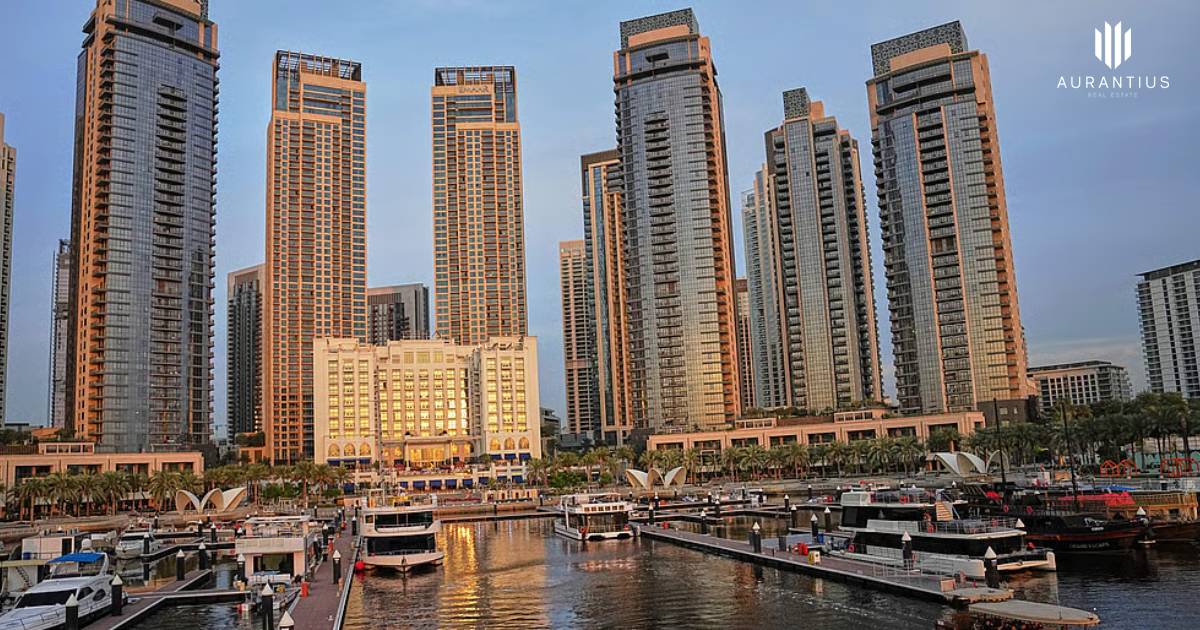
When evaluating opportunities, the comparison between Business Bay vs JVC investment highlights different strategic advantages. Business Bay offers premium pricing and strong demand due to its central location, making it suitable for capital preservation. In contrast, Jumeirah Village Circle provides lower entry prices and higher rental yields, often reaching 7% to 9%, making it attractive for income-focused investors. This distinction allows investors to align their choices with specific financial objectives.
| Neighborhood | Typical Starting Price (Studio/1BR) | Average Price per Sq. Ft. | Rental Yield (Gross) |
|---|---|---|---|
| JVC | AED 600k – 900k | ~AED 1,300 – 1,500 | 6.5% – 9% |
| Business Bay | AED 1.1M – 1.8M | ~AED 2,000+ | 6% – 8% |
UAE Real Estate Market Resilience in a Global Context
The UAE real estate market resilience is evident in how it has managed to maintain growth despite global economic challenges. While other markets are experiencing delays and cost pass-throughs, Dubai continues to deliver projects on schedule and maintain pricing stability. Insights from market resilience analysis highlight how this approach is attracting international capital and reinforcing Dubai’s reputation as a safe haven.
Investor Strategy: The Current Buffer Window
For investors, the current environment represents a strategic “buffer period.” With developers absorbing cost increases, buyers have a limited window to secure properties at prices that do not yet reflect the new cost base. As future launches are likely to incorporate higher construction costs, early entry into off-plan projects can provide a pricing advantage. Strategic insights from market stabilization analysis emphasize the importance of timing in maximizing returns.
Flexible Payment Plans and Buyer Accessibility
Flexible payment plans remain a cornerstone of Dubai’s property market, enabling broader participation from investors. Options such as post-handover plans and monthly installment structures reduce upfront financial pressure and improve accessibility. Detailed insights can be found in payment plan strategies, where the focus is on aligning financing with investment goals.
| Plan Type | Typical Structure | Primary Benefit |
|---|---|---|
| Post-Handover | e.g., 60% during construction, 40% over 2–3 years after completion | Reduces immediate mortgage pressure. |
| 1% Monthly | 1% of property value paid every month for 70–80 months | Highly accessible for salaried professionals. |
| Standard Milestone | e.g., 50/50 or 70/30 linked to construction stages | Balanced risk for both developer and buyer. |
Risk Considerations and Future Pricing Outlook
While the current stability is advantageous, investors should consider potential risks. Future projects may reflect higher construction costs, leading to increased launch prices. Additionally, supply pipeline dynamics and global economic conditions could influence demand patterns. However, the current approach of price protection and delivery assurance provides a strong foundation for market stability, reducing downside risk for existing investments.
Conclusion
Dubai real estate price trends 2026 highlight a market that is prioritizing stability and investor confidence despite significant external pressures. By absorbing cost increases and maintaining delivery timelines, developers are reinforcing Dubai’s position as a resilient and reliable investment destination. For investors, the current environment offers a rare opportunity to secure assets at stable prices before future cost adjustments reshape the market.
FAQs
Q: Why have construction costs increased in Dubai?
A: Costs have risen due to supply chain disruptions, higher material prices, and logistics challenges.
Q: Are developers increasing property prices these costs?
A: No, many developers are maintaining existing prices to protect investor confidence.
Q: What is the advantage of off-plan property in this market?
A: Off-plan properties offer fixed pricing, flexible payment plans, and potential for capital appreciation.
Q: Which areas offer better investment opportunities, Business Bay or JVC?
A: Business Bay is suited for premium investments, while JVC offers higher rental yields and lower entry prices.
Q: Is now a good time to invest in Dubai real estate?
A: Yes, the current market provides a window to secure properties before future price adjustments.
Aurantius Real Estate helps investors secure high-value opportunities in Dubai’s most resilient and strategically positioned property markets.