
Oud Maitha Road Project Complete: What the 20-to-5-Minute Journey Means for Al Jaddaf Property
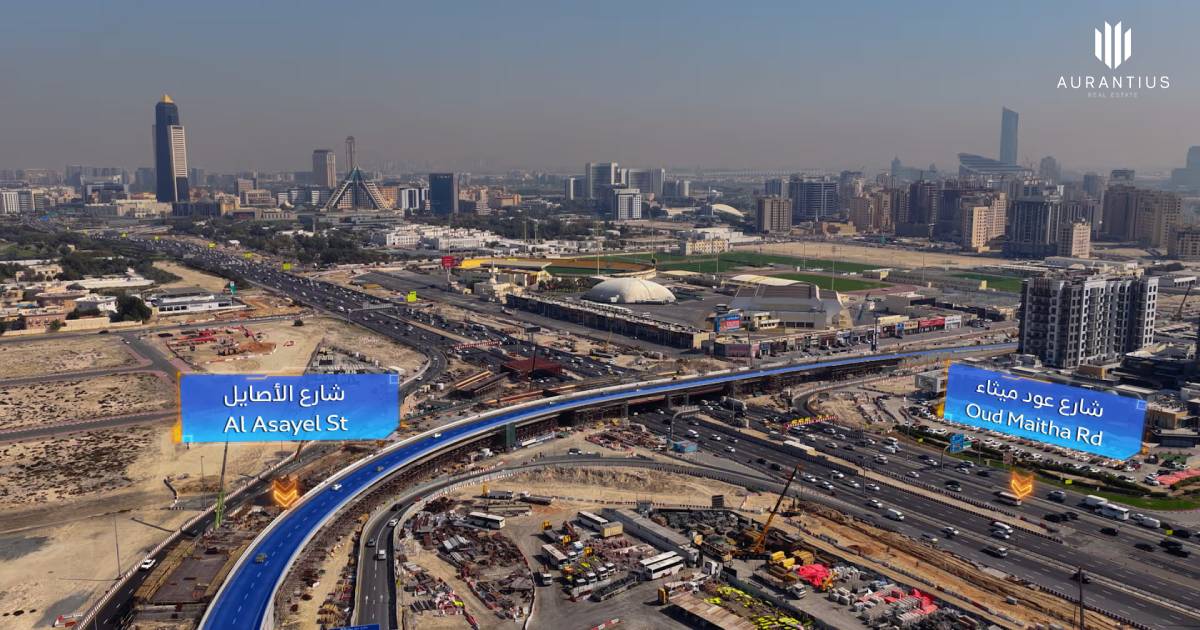
The completion of Dubai’s Oud Maitha Road and Al Asayel Street Development Project removes an important transport constraint affecting Al Jaddaf and surrounding central Dubai districts. The road programme increases the capacity of Oud Maitha Road from 10,400 to 15,600 vehicles per hour in both directions while reducing the stated journey time across the upgraded corridor from 20 minutes to five minutes.
For Al Jaddaf property, the important point is not that a new road automatically creates higher prices. It is that an existing location close to major employment, healthcare and commercial districts has become easier to access. That improvement can strengthen the practical case for living in Al Jaddaf and may widen the pool of tenants and buyers willing to consider the area.
The distinction matters in Dubai’s more selective 2026 property market. Infrastructure has value when it changes real daily utility. Aurantius has explored this principle in its analysis of the difference between a brand premium and an infrastructure premium.
Oud Maitha–Al Asayel Project at a Glance
Road works: 14 kilometres
Major intersections upgraded: 4
New bridges: 4
Tunnels: 2, spanning a combined 4,300 metres
Oud Maitha Road capacity: 10,400 to 15,600 vehicles per hour in both directions
Journey time: 20 minutes to 5 minutes across the upgraded corridor
Why the Road Upgrade Matters Specifically to Al Jaddaf
Al Jaddaf’s location has never been its main weakness. It sits within central Dubai, close to Dubai Healthcare City, Za’abeel, major highways and the wider Downtown–Business Bay employment corridor. The challenge has been that physical proximity does not always translate into a predictable commute when road access becomes congested at peak periods.
The upgraded network changes part of that equation. Four major intersections were improved, while new bridges and tunnels are designed to separate different traffic movements and reduce pressure at key junctions. The project also strengthens connections between Oud Maitha Road, Al Asayel Street, Al Khail Road and surrounding corridors.
That makes Al Jaddaf more relevant to households that want central access without necessarily choosing a property directly inside Downtown Dubai or Business Bay. The comparison should still be made property by property because price, building quality, service charges and unit layout can outweigh an area’s general connectivity advantage.
The Stronger Investment Case Is Utility, Not Instant Appreciation
Infrastructure announcements are often converted too quickly into claims about future property appreciation. A road opening can improve the fundamentals of a location, but there is no fixed percentage by which nearby apartments should increase in value.
The more defensible investment argument is based on utility. If residents can enter and leave the area more efficiently, Al Jaddaf becomes more practical for a wider range of households. Better access can increase the number of people willing to rent or buy there, strengthen viewing interest and make the location easier to compare against other central districts.
Price performance still depends on what an investor pays today. Infrastructure can be positive while an individual property remains overpriced. This is particularly relevant in a market where buyers are becoming more selective about price, payment terms and competing stock, a shift examined in the Aurantius guide to Dubai off-plan prices and buyer selectivity in 2026.
Healthcare, Employment and the Al Jaddaf Rental Market
The road project serves more than residential neighbourhoods. It improves access around important facilities and districts, including Latifa Hospital and areas close to Dubai Healthcare City. That matters because Al Jaddaf’s rental demand is not dependent on one tenant profile.
Healthcare professionals, employees working in central Dubai, hospitality staff, corporate tenants and households wanting access to established city districts can all form part of the area’s demand base. Improved driving conditions strengthen that proposition because commute friction is one of the practical factors tenants consider when comparing apartments with similar rents.
Al Jaddaf also benefits from public transport access through Dubai’s Metro network. Combining rail access with a higher-capacity road system gives residents more than one commuting option. For tenants, that flexibility can be more valuable than a headline promise of future appreciation.
Landlords should nevertheless avoid assuming that better roads justify an immediate rent increase. Actual rental performance depends on the building, apartment condition, view, furnishing, amenities, competing listings and the supply of newly completed units entering the same micro-market.
Al Jaddaf Is Not One Property Market
Investors should be careful with area-wide averages. Al Jaddaf contains different types of residential stock, and two apartments located only a short distance apart can produce very different investment results.
Waterfront or creek-facing residences may appeal to buyers prioritising views and lifestyle, while buildings closer to transport connections may attract tenants focused more heavily on commuting convenience. Newer off-plan developments compete with established completed buildings, while premium residences operate in a different segment from smaller investment apartments.
Building quality, service charges, usable internal area, parking, maintenance, developer reputation and the amount of competing inventory should therefore be analysed alongside road connectivity. Al Jaddaf has previously featured among Aurantius’ emerging Dubai property locations, but an attractive district does not make every building within it equally investable.
What the Upgrade Means for Ready-Property Buyers
Ready-property buyers can evaluate the impact of the infrastructure upgrade more directly because the asset and surrounding transport system already exist. They can inspect the building, test the commute, review actual service charges and compare current rental evidence with the purchase price.
That creates a useful advantage over buying purely on a future-location story. A buyer can visit Al Jaddaf during morning or evening traffic periods, test access to Al Khail Road and surrounding employment districts, compare multiple buildings and determine whether the improved network materially changes daily convenience.
In Dubai’s increasingly selective market, that type of evidence-based comparison is becoming more important. The broader shift is covered in the Dubai Property Market 2026 buyer’s playbook, where property-level fundamentals matter more than relying on general market momentum.
What It Means for Al Jaddaf Off-Plan Buyers
The completed road network is also relevant to off-plan buyers, but the benefit should be described carefully. The infrastructure itself is now more tangible than a future road promise, reducing one element of location uncertainty. It does not remove construction, pricing, developer, handover or future-supply risk from an off-plan purchase.
A buyer considering an Al Jaddaf launch should still compare the off-plan price with completed alternatives in the district. Payment-plan convenience should be analysed separately from property value. A development can offer manageable instalments while still being expensive relative to comparable ready stock.
The eventual handover environment also matters. Investors purchasing projects scheduled several years ahead should consider how many competing apartments may complete at a similar time, what rents those units would need to achieve and whether the market can absorb that inventory. Aurantius examines this issue in its analysis of Dubai off-plan handover risk from 2027 to 2030.
A Road Project Designed for Future Population Growth
The wider infrastructure programme is not being built solely for today’s traffic volumes. The population across the areas served by the project is expected to exceed 420,000 by 2030. That figure relates to the broader serviced corridor rather than Al Jaddaf alone, but it explains why road capacity has been expanded before further population and development growth fully materialise.
For property investors, this is relevant because infrastructure capacity and residential growth need to be considered together. Population expansion can increase housing demand, but it can also lead to more construction. Strong investment performance depends on whether demand grows fast enough to absorb additional competing supply.
The best interpretation is therefore not that Al Jaddaf has become immune to congestion or property-market cycles. It is that a meaningful piece of transport infrastructure is now in place to support a larger residential and commercial population.
FAQ: Oud Maitha Road Upgrade and Al Jaddaf Property
Question: How much has the Oud Maitha Road journey time been reduced?
Answer: The upgraded corridor is designed to reduce journey time from approximately 20 minutes to five minutes, representing a 75% reduction.
Question: How much road capacity was added?
Answer: Oud Maitha Road’s stated capacity increased from 10,400 to 15,600 vehicles per hour in both directions, an increase of up to 50%.
Question: Will the new road automatically increase Al Jaddaf property prices?
Answer: No. Better infrastructure can strengthen accessibility and end-user demand, but property performance still depends on entry price, building quality, rental economics, service charges, competing supply and wider market conditions.
Question: Is Al Jaddaf suitable for rental-property investors?
Answer: It can suit rental investors because of its central location, healthcare and employment access and transport connectivity. Investors should calculate returns using the specific property’s achievable rent and ownership costs rather than relying on area-wide yield claims.
Question: Is ready or off-plan property better in Al Jaddaf?
Answer: Neither is automatically better. Ready property offers observable rents, building condition and service-charge history, while off-plan property can provide staged payment structures and newer stock. The correct choice depends on purchase price, holding period, cash flow and competing supply.
Question: What should buyers check before purchasing in Al Jaddaf?
Answer: Compare recent transactions, building quality, service charges, achievable rent, competing listings, future supply, parking, actual road access, developer history and the difference between the asking price and comparable completed property.
Conclusion: Better Connectivity Strengthens Al Jaddaf, but Property Selection Still Decides the Return
The completed Oud Maitha Road and Al Asayel Street upgrade gives Al Jaddaf a stronger infrastructure foundation. A reduction in stated corridor journey time from 20 minutes to five, a 50% increase in road capacity and new bridges, tunnels and intersection improvements address a genuine mobility issue rather than creating a purely marketing-led property story.
For tenants, the most immediate benefit is practical: easier movement through central Dubai. For owners and landlords, improved accessibility may broaden the potential end-user and rental audience. For investors, the opportunity is more nuanced. Infrastructure can support demand, but it cannot compensate for an excessive purchase price, weak building quality, high recurring costs or heavy competing supply.
The strongest Al Jaddaf investment case is therefore likely to be a property where improved connectivity is combined with sensible pricing, a competitive building, realistic rental economics and sufficient resale demand.
Aurantius Real Estate helps buyers and investors compare Dubai properties using location fundamentals, infrastructure access, transaction evidence, building-level differences, developer assessment, rental demand, payment structures and competing supply. For Al Jaddaf, the road upgrade is an important positive factor, but the final investment decision should still be based on the individual property rather than the infrastructure headline alone.
Evaluating Al Jaddaf property? Compare ready and off-plan options on purchase price, building quality, realistic rent, ownership costs, road access and future competing inventory before committing capital.