
The Park Dubai Signals a New Phase of Human-Centric Urban Development in the Emirate
Reimagining a Historic Site at the Heart of Dubai
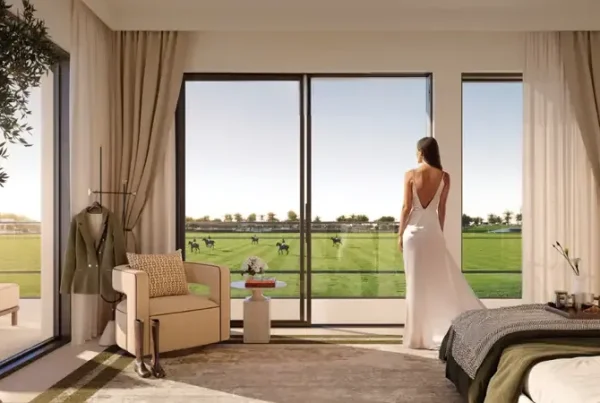
Dubai’s urban landscape is set to enter a new phase with the announcement of The Park Dubai, a five-square-kilometre master-planned development by A.R.M. Holding at the historic Jebel Ali Racecourse. Long associated with the emirate’s equestrian heritage, the site is being repositioned as a large-scale urban district designed around walkability, environmental performance, and long-term liveability rather than conventional density-driven real estate models.
The project represents a significant intervention in Dubai’s growth trajectory, reflecting a broader shift toward integrated, people-first urban environments. Located within reach of key growth corridors linking central Dubai to emerging districts such as Dubailand and Expo Living, the site benefits from scale, connectivity, and long-term strategic relevance.
A Masterplan Aligned With Dubai 2040
The Park Dubai has been designed in alignment with the Dubai 2040 Urban Master Plan, which prioritises green space, community wellbeing, and sustainable density. The development replaces traditional gated layouts with a network of walkable neighbourhoods, shaded boulevards, and public plazas. Every resident is planned to live within a five-minute walk of green space and a ten-minute reach of education, healthcare, retail, and employment.
This planning approach reflects global best practices in urban design and mirrors the evolution seen in established communities such as Dubai Hills Estate and Jumeirah Garden City, where mixed-use planning and accessibility have supported long-term demand stability.
Design Philosophy Rooted in Landscape and Heritage
The masterplan has been developed in collaboration with BIG, Bjarke Ingels Group, and is described as an “archipelago of urban islands in a sea of green.” At its centre lies a 1.5-square-kilometre park, positioning the former racetrack as a cultural and environmental spine rather than a residual landmark.
Architectural language draws from Emirati vernacular principles such as courtyards, shaded colonnades, and mashrabiyya screens, reinterpreted through contemporary construction methods. This integration of heritage and modernity reflects a wider trend in Dubai’s premium urban districts, where cultural continuity increasingly forms part of long-term value perception.
Human-Centric Infrastructure and Environmental Performance
The Park Dubai places environmental and human performance at the core of its design strategy. Passive cooling systems, native landscaping, and local materials are employed to reduce emissions, improve air quality, and lower water consumption. Walkable areas are designed to achieve a temperature reduction of up to 5°C, supporting outdoor activity throughout the year.
Soft mobility loops, cycling paths, and tree-lined streets encourage non-vehicular movement, reinforcing the concept of a five-to-ten-minute city. These measures position the development within a growing class of climate-responsive communities emerging across Dubai’s future-facing districts.
Measurable Quality-of-Life Benchmarks
A.R.M. Holding has defined success through measurable human-centric indicators rather than purely financial metrics. The project is guided by 15 key performance indicators across sustainability, vibrancy, community, and wellbeing. Targets include full accessibility for people of determination, universal access to workplaces and social services within ten minutes, and the promotion of daily physical activity through a “city-as-gym” philosophy.
This KPI-driven framework reflects a shift toward performance-based urban development, where long-term social and health outcomes are increasingly recognised as drivers of asset resilience and desirability.
Cultural Continuity and Social Integration
Equestrian heritage remains a defining element of the masterplan. Riding trails, equine museums, and public cultural programming are integrated into the urban fabric, ensuring that the legacy of the Jebel Ali Racecourse is preserved and made accessible. This approach reinforces Dubai’s dual identity as a globally diverse city with a deeply rooted local character.
Traditional architectural motifs coexist with contemporary cultural, educational, and creative spaces, reflecting Dubai’s position as one of the world’s most multicultural cities. This balance between global openness and local authenticity has historically supported long-term demand in communities such as Jumeirah and Meydan City.
Economic Platform Rather Than Static Development
The Park Dubai is conceived as an evolving economic and social platform rather than a fixed real estate product. Commercial districts, co-working hubs, hospitality assets, and SME-focused spaces are embedded within walkable neighbourhoods, supporting diversified economic activity aligned with national development priorities.
Each development phase introduces new social infrastructure including schools and clinics, allowing the district to mature organically over time. Long-term stewardship by A.R.M. Holding is intended to maintain adaptability as demographic and economic conditions evolve.
Strategic Implications for Dubai’s Real Estate Market
The announcement of The Park Dubai comes against the backdrop of record transaction volumes and values across the emirate’s property market. As supply expands, differentiation increasingly rests on quality of planning, liveability, and alignment with long-term urban strategies rather than short-term pricing advantages.
Large-scale, human-centric masterplans are expected to play a growing role in shaping Dubai’s next growth cycle, complementing established residential hubs and supporting sustained population inflows.
Conclusion: From Development to Enduring Urban Value
The Park Dubai represents a strategic redefinition of large-scale development in the emirate, prioritising human experience, environmental performance, and cultural continuity alongside economic viability. By repositioning a historic site into a living urban ecosystem, the project reflects Dubai’s broader transition toward more balanced, resilient, and people-focused urban growth.
Aurantius Real Estate advises investors and end users on Dubai’s evolving master-planned communities through research-led insights, location analysis, and long-term value assessment. By focusing on fundamentals, urban strategy, and developer stewardship, Aurantius Real Estate supports informed decisions aligned with the next chapter of Dubai’s real estate landscape.