
Dubai Property Market 2026: Transactions, Golden Visa Impact & Top Developer Delivery Records
Why Transactions Continue During Uncertainty, What Investors Track, and How Golden Visa and Developer Delivery Records Shape Decisions
Dubai’s property market in early 2026 is operating under a visible theme: transaction momentum continues even when regional headlines increase uncertainty. Many buyers are taking longer to decide, yet the market is still recording meaningful activity across residential sales, luxury deals, and rental demand. This pattern is often described as a sentiment pause rather than a structural decline. Investors generally look beyond daily news cycles and focus on measurable signals such as transaction volume, value, buyer composition, and the strength of the regulatory environment.
February 2026 activity provides one of the clearest snapshots of this behavior. Dubai recorded 15,369 residential transactions valued at AED 45.39 billion. The year-on-year comparison points to growth in both volume and value, showing that the market is still processing deals while decision timelines extend for some buyers. In a risk-sensitive environment, the market tends to slow through longer due diligence and delayed closings rather than through immediate repricing across the entire city.
| Developer | Established | Units Delivered (2020–24) | Delivery Profile |
|---|---|---|---|
| Emaar Properties | 1997 | ~27,000+ | High Consistency: Generally completes within announced schedules; market leader in secondary liquidity. |
| DAMAC Properties | 2002 | ~20,000+ | Volume Leader: Specializes in lifestyle and branded luxury; maintains high sales and delivery volume. |
| Sobha Realty | 2003 | ~6,000+ | Precision & Quality: Widely recognized for the strongest on-time completion record (85–90% adherence). |
| Nakheel | 2000 | ~8,000+ | Infrastructure Focused: Government-backed; phasing usually aligns with major infrastructure readiness. |
| Danube Properties | 2014 | ~8,000+ | Accessible Luxury: Known for rapid sell-outs and consistent delivery in the mid-tier segment. |
Disclaimer: The information presented above is based on publicly available data and market research.
Delivery volumes and timelines are approximate and may vary depending on project phases, regulatory approvals, and market conditions.
This content is intended for informational purposes only and should not be considered financial or investment advice.
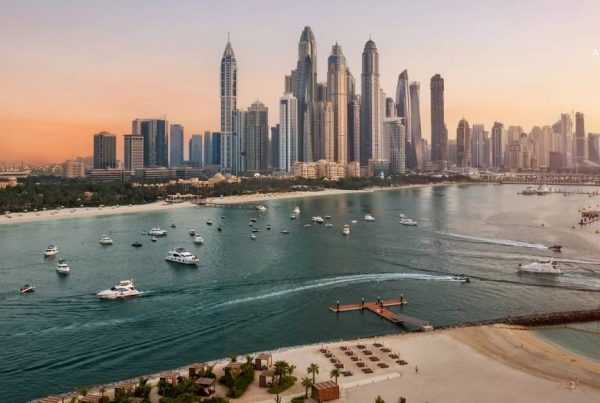
Investors also track where demand remains active. Prime lifestyle districts and employment-linked hubs usually keep stronger liquidity when uncertainty rises, because buyer demand is diversified across end users, long-horizon investors, and internationally mobile capital. Locations such as Dubai Marina and Palm Jumeirah often sit in this category due to global recognition and scarcity characteristics. Urban core demand tied to offices and amenity density supports liquidity in Downtown Dubai and Business Bay. Value-led rental corridors with broad tenant pools often remain active, including Jumeirah Village Circle. Family-oriented master plans with integrated amenities can also maintain demand during cautious phases, including Dubai Hills Estate.
Luxury activity remains an important signal because ultra-high-value purchases require long-duration confidence in jurisdictional stability, title security, and operational continuity. A Dh422 million apartment deal recorded in early March 2026 is frequently referenced as evidence that the top end remains liquid. Ultra-prime demand does not define the whole market, yet it acts as a confidence marker for global wealth allocation and for branded, scarcity-driven segments.
2026 Market Direction: Moderation, Segmentation, and Rental Yield Support
Market commentary for 2026 often frames price movement as moderation rather than acceleration. Forecast ranges are typically presented in mid single digits to low double digits, with performance diverging by segment. Villa markets are often expected to show stronger resilience in established areas where supply is limited. Apartment markets can show more modest growth in corridors with higher delivery volumes. Rental performance is also expected to vary by location, with stronger demand and firmer rent levels in prime districts, while high-supply areas can see neutral rent movement.
Gross rental yields remain a central support for investor demand. Many investor summaries cite yields around 6% to 8% across well-performing residential segments, with higher yields possible in specific unit types and corridors. Yield matters because it provides a buffer when capital appreciation slows. Yield also supports long-horizon strategy because income can offset service charges, vacancy gaps, and routine maintenance costs. Investors typically convert gross yield assumptions into net yield by modeling building service charges, maintenance provisions, property management costs, and realistic occupancy rates.
Infrastructure timelines remain part of the long-term investment story. Large projects tied to mobility, airport capacity, and city planning influence corridor demand by improving connectivity and supporting new residential ecosystems. Investors also track supply pipeline visibility. Large unit delivery expectations across 2026 to 2028 can create segment-level pressure in oversupplied pockets, increasing the value of quality filters and building-level selection.
Golden Visa for Property Owners in 2026: Practical Eligibility and Documentation Logic
Golden Visa eligibility is widely viewed as a demand stabilizer because it encourages longer holding periods and converts part of investor demand into residency-linked ownership. A commonly cited baseline for the ten-year Golden Visa is a total property value of AED 2 million or more. Both ready and off-plan properties can be eligible when they meet the required valuation threshold and are properly registered.
Mortgaged properties are frequently discussed in Golden Visa planning. Buyers usually need the total value on the Title Deed or Oqood record to meet the minimum threshold. A bank no-objection confirmation is typically required in mortgage cases, since the property is encumbered. Portfolio aggregation is also frequently referenced, where multiple properties can be combined to reach the threshold under applicable rules. Joint ownership between spouses is also commonly discussed, where shares can be considered toward the qualifying value if documentation is aligned and legally valid.
Processing is often described as moving through Dubai Land Department channels and authorized centers, with fees and timelines varying by applicant profile and documentation readiness. Investors should validate the current process at the time of application, since administrative requirements and fee schedules can change based on policy updates and service center procedures.
Developer Delivery Track Records: Why Execution History Matters More in a High-Handover Period
With a high volume of deliveries expected across 2026 and beyond, developer execution becomes a primary risk filter. Buyers in off-plan projects face timeline risk, handover quality risk, and competition risk at completion if multiple projects deliver into the same corridor at the same time. A developer with consistent delivery behavior and strong community management standards typically improves resale liquidity and tenant retention after handover.
Investors commonly benchmark tier-one developers for delivery consistency and secondary-market liquidity, including Emaar for large master plans and established resale depth. Volume-focused developers often remain active across lifestyle and branded formats, including DAMAC. Quality positioning and delivery reputation are frequently associated with Sobha Realty. Infrastructure-linked master planning and phased delivery are often part of the evaluation for Nakheel. Lifestyle community development is frequently tied to Meraas. Waterfront and high-density residential delivery is often part of the profile for Select Group.
Project-level verification remains essential in all cases. Investors should confirm that the project is registered, that escrow accounts are valid for off-plan payments, and that broker credentials are legitimate. This process reduces exposure to misinformation and fraud, especially during uncertainty cycles where fake discount narratives can circulate. Developer reputation is a strong filter, yet each project still needs its own due diligence on timelines, contract terms, service charge expectations, and handover standards.
Conclusion
Dubai property in March 2026 is showing a clear pattern: uncertainty is extending decision timelines for some buyers, while transaction activity continues across residential, luxury, and rental-driven segments. February transaction value and volume illustrate ongoing market function. 2026 is often framed as a moderation year with stronger segmentation by asset type and corridor, where yields remain a key support for investor demand. Golden Visa pathways continue to influence longer holding periods, and developer delivery track records become more decisive as the handover pipeline grows.
For research on locations, developers, and project comparisons built for investor decision-making, use Aurantius Real Estate to navigate district-level demand drivers, verify developer profiles, and align strategy with realistic cash-flow and exit assumptions.