
Dubai Metro Gold Line Investment Guide: Top Areas & High ROI Projects (2026)
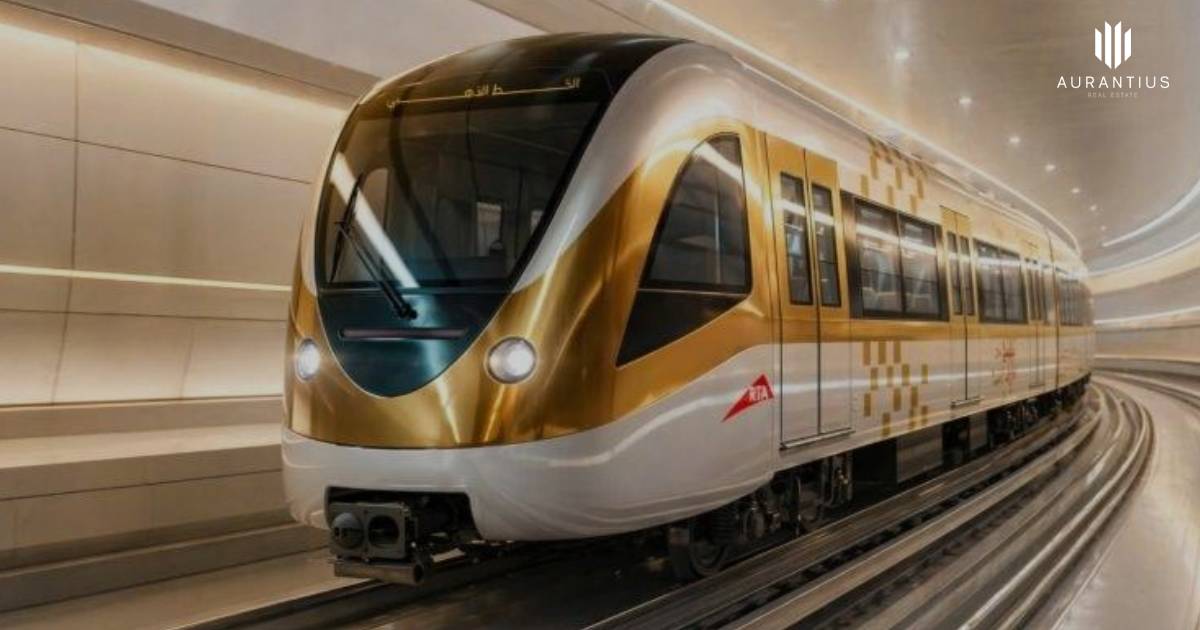
Dubai officially greenlit its most ambitious transit project to date: the AED 34 billion Gold Line. Stretching 42 kilometres and serving 15 strategic districts, this fully underground metro line is more than a transport update—it is a massive catalyst for real estate value. Historically, properties near Dubai Metro stations have commanded a 20-30% price premium, and with the Gold Line set to connect 55 major developments, the map of Dubai’s high-yield corridors is being rewritten. For savvy investors, the road to September 9, 2032, offers a unique window to secure assets in high-growth zones like JVC, Business Bay, and Meydan before the “transport premium” fully takes hold.
Infrastructure-Driven Logic and the Wealth Redistribution Effect
The Dubai Metro Gold Line investment narrative is grounded in infrastructure-driven logic rather than speculation. Historically, metro-linked properties in Dubai have achieved price premiums of 20% to 30%, with some corridors experiencing even higher appreciation. The Gold Line is expected to serve over 1.5 million residents and support 55 major developments, effectively redistributing value across new. Investors who enter early in these zones can capture equity gains before infrastructure completion drives prices upward.
Route Mapping and Strategic District Coverage
The Gold Line will connect key economic and residential hubs, starting from Al Ghubaiba and extending to Jumeirah Golf Estates. Major areas served include Business Bay, Meydan, Dubai Hills, Al Barsha South, JVC, and Dubai Sports City. The integration with existing Red and Green Lines, along with direct links to Etihad Rail, creates a multi-layered transport network that enhances accessibility across the city. This connectivity is a critical factor in determining future property value.
High-ROI Investment Zones: JVC and Business Bay
Among the most attractive areas for real estate near Gold Line stations are Jumeirah Village Circle and Business Bay. JVC currently offers rental yields between 7% and 8.5%, making it a strong choice for income-focused investors. Business Bay, with yields ranging from 8% to 9% in prime towers, combines high rental demand with capital appreciation potential. Insights from yield analysis highlight why these areas are central to Dubai property investment strategies.
Interchange Power and Super-Node Locations
Interchange hubs such as Meydan and Jumeirah Golf Estates are expected to become “super-nodes” due to their connectivity with both the Gold Line and Etihad Rail. These locations benefit from multi-modal transport integration, significantly increasing their attractiveness for both residential and commercial developments. As explored in rail connectivity analysis, such nodes often deliver the highest long-term returns.
Off-Plan Opportunities and Payment Plan Leverage
The Gold Line announcement has triggered a wave of new off-plan launches in strategically aligned areas. Developers are offering flexible payment structures, including 70/30 and post-handover plans, allowing investors to secure assets with relatively low upfront capital. This aligns with broader trends in Dubai off-plan projects, where accessibility and long-term appreciation are key drivers. Additional insights can be found in investment location analysis.
Timeline Advantage and Strategic Entry Window
The project timeline provides a clear investment horizon. With tenders issued in 2026, construction beginning in 2027, and completion scheduled for 2032, investors have a 5 to 7-year window to position their portfolios. This period allows for capital appreciation during the construction phase, followed by rental yield optimization post-completion. The long-term nature of the project reduces short-term volatility and supports strategic planning.
Impact on Traffic, Mobility, and Urban Efficiency
Beyond property values, the Gold Line is expected to reduce road congestion by millions of journeys annually, improving overall urban efficiency. This aligns with Dubai’s broader infrastructure strategy, as detailed in transport planning analysis. Improved mobility enhances quality of life, which in turn drives demand for properties in well-connected areas.
Comparative Advantage Over Other Infrastructure Projects
When compared to other transport initiatives such as the Blue Line, the Gold Line’s scale and integration make it a more significant driver of long-term value. While shorter-term projects may deliver quicker gains, the Gold Line’s extensive network and deeper integration with national rail systems position it as a cornerstone of future urban development. Insights from metro impact analysis provide a useful benchmark for understanding this effect.
Risk Considerations and Investment Discipline
While the opportunity is significant, investors should consider factors such as project timelines, supply concentration, and developer credibility. Properties located within a 10-minute walk of confirmed stations typically deliver the highest returns, but careful due diligence is essential. A disciplined approach that combines location analysis with developer reputation can help mitigate risks.
Conclusion
The Dubai Metro Gold Line investment opportunity represents a classic case of infrastructure-driven value creation. By identifying and securing assets near key station nodes before completion, investors can capitalize on the connectivity premium that has historically defined Dubai’s real estate growth. This project is not just about transportation; it is about reshaping the city’s economic geography and unlocking new high-yield corridors.
FAQs
Q: What is the Dubai Metro Gold Line?
A: It is a 42 km underground metro project connecting 15 key districts, scheduled for completion in 2032.
Q: How does the Gold Line impact property prices?
A: Properties near stations can see price increases of 20% to 30% due to improved connectivity.
Q: Which areas are best for investment?
A: JVC, Business Bay, Meydan, and Jumeirah Golf Estates are key hotspots.
Q: What is the expected return on the project?
A: The Gold Line is projected to achieve a 430% cumulative economic return over 20 years.
Q: When is the best time to invest?
A: Early entry during the pre-construction phase offers the highest potential for capital appreciation.
Aurantius Real Estate helps investors secure high-growth opportunities near Dubai’s most strategic infrastructure developments.