
Dubai Real Estate Distress Deals: Myth vs. Reality in 2026
Investors are hunting for Dubai real estate distress deals, but sellers are holding firm. Discover why the 2026 market stalemate is defying buyer expectations. As the second quarter of 2026 unfolds, the Dubai property market is presenting a complex picture defined by a clear disconnect between buyer expectations and seller behavior. While global uncertainty has encouraged opportunistic investors to re-enter the market searching for discounts, they are encountering a resilient seller base unwilling to adjust pricing significantly. This dynamic has created a temporary stalemate, where transaction volumes fluctuate but property values remain stable, reinforcing the perception of Dubai as a mature and fundamentally strong real estate market.
Comparative Market Performance
| Metric | Pre-War Peak (Late 2025) | Current Market (Q1 2026) | Trend |
|---|---|---|---|
| Total Transaction Value | AED 917B (Full Year 2025) | AED 252B (Q1 alone) | +31% YoY |
| Transaction Volume | ~50k per quarter | 60,303 (Q1 2026) | +6% YoY |
| Median Price / sq. ft. | ~AED 1,655 | AED 1,770 | +14% YoY |
| Investor Entry | – | 29,312 new investors | +14% YoY |
The Buyer-Seller Disconnect in Dubai property market trends
The current Dubai property market trends highlight a tug-of-war between cash buyers anticipating price corrections and high-equity sellers holding firm. Approximately 85% of property owners are maintaining their asking prices, supported by substantial capital gains accumulated over recent years This resistance has slowed deal flow in certain segments, particularly in the ready property market, without triggering a broad-based price decline. The result is a market characterized by negotiation rather than distress.
Are Genuine Dubai Distress Deals 2026 Emerging?
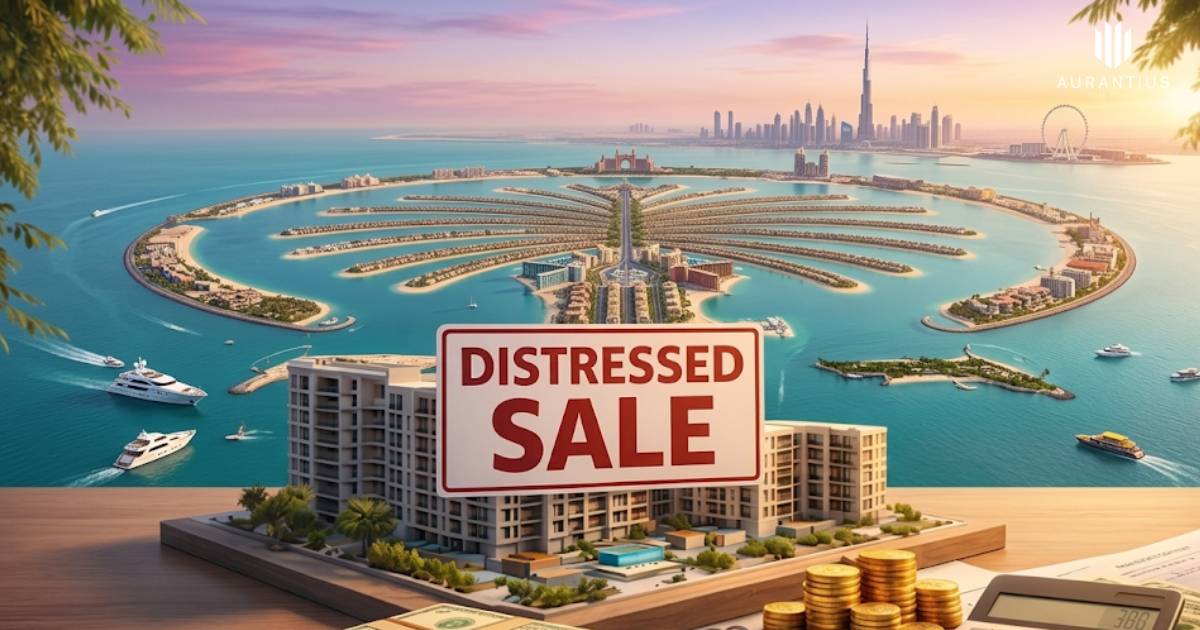
Genuine Dubai distress deals 2026 do exist, but they remain selective rather than widespread. Discounts typically range between 10% and 50% below market value, primarily for ready-to-transfer properties where sellers prioritize speed over price. These opportunities are often off-market and accessed through private broker networks rather than public listings, making them less visible to the average investor. This reinforces the idea that distress in Dubai is situational rather than systemic.
Drivers Behind Selective Distressed Sales
The emergence of distressed transactions is linked to specific circumstances rather than broader market weakness. Key drivers include off-plan payment pressures, personal liquidity needs, and short-term geopolitical concerns affecting individual investors. In many cases, sellers are exiting positions to meet financial obligations or reallocate capital rather than reacting to falling property values. This distinction is critical for understanding why the overall market remains stable despite isolated discount opportunities.
Transaction Volumes Versus Price Stability
While transaction volumes have shown periods of decline, particularly in the secondary market, price levels have remained relatively stable. In some reports, ready-property transactions have fallen between 17% and 37% year-on-year, yet median prices have softened by only around 3% citywide. This divergence confirms that the current slowdown is driven by sentiment rather than structural weakness, aligning with broader observations in market stress analysis.
Off-Plan Market Strength and Buyer Behavior
Off-plan developments continue to provide stability to the broader market, accounting for a significant share of total transactions. Flexible payment plans and developer incentives are attracting investors even during periods of uncertainty. As discussed in off-plan dominance insights, this segment benefits from long-term growth expectations and reduced reliance on immediate liquidity, helping to balance the slowdown in ready property transactions.
Dubai as a Safe Haven Investment Market
The persistence of seller confidence is closely linked to Dubai’s reputation as a safe haven investment destination. Strong rental yields, tax advantages, and long-term residency incentives continue to support demand. Insights from safe haven analysis highlight how these factors enable property owners to hold assets through periods of uncertainty rather than selling at discounted prices.
Investor Strategy: Navigating the Stalemate
For investors, the current environment requires a targeted and disciplined approach. Cash buyers with the ability to close quickly are best positioned to secure genuine distress deals, particularly in premium locations such as Dubai Marina and Palm Jumeirah. However, verifying the authenticity of discounts is essential, as not all below-market listings represent true distress. Strategic insights from investment strategy analysis emphasize the importance of due diligence and market data.
Short-Term Outlook: Stalemate or Transition Phase?
The current stalemate is likely to be temporary, reflecting a transition rather than a long-term condition. As geopolitical uncertainty stabilizes, buyer confidence is expected to increase, leading to a convergence between expectations and pricing. Early indicators suggest that demand is already returning, as explored in post-ceasefire market insights, pointing toward renewed market activity in the coming months.
Conclusion
Dubai distress deals 2026 are real but limited, existing within a broader market defined by resilience and stability. The current stalemate between buyers and sellers reflects a mature market where pricing is supported by strong fundamentals rather than speculative cycles. For investors, the opportunity lies not in expecting widespread discounts but in identifying targeted deals within a market that continues to demonstrate long-term strength.
FAQs
Q: Are there real distress deals in Dubai in 2026?
A: Yes, but they are selective and typically driven by individual seller circumstances rather than market-wide factors.
Q: How much discount can investors expect?
A: Genuine deals can range from 10% to 50% below market value, depending on urgency and property type.
Q: Why are most sellers not reducing prices?
A: High equity positions and strong rental yields allow sellers to hold assets without financial pressure.
Q: Which areas have the most distress opportunities?
A: Investor-heavy locations like Dubai Marina, Palm Jumeirah, and Downtown Dubai show higher activity.
Q: Is this a good time to invest in Dubai real estate?
A: Yes, for strategic buyers who can identify genuine opportunities and act quickly.
Aurantius Real Estate helps investors identify genuine opportunities within Dubai’s evolving and resilient property market.