
Etihad Rail Real Estate Impact: Best High-Yield UAE Areas to Invest
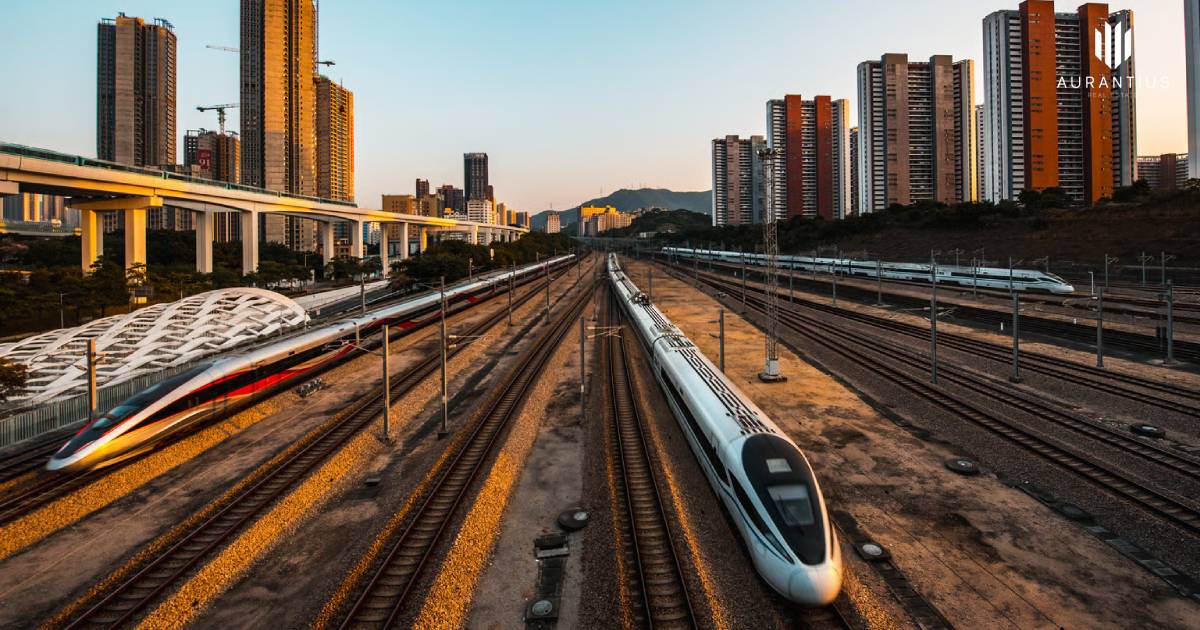
The full activation of the UAE’s national rail network is no longer just a transport story. It is becoming one of the most important real estate catalysts in the country’s 2026 investment landscape.
Etihad Rail is changing how investors think about location. For decades, UAE real estate value was mostly judged by emirate borders, car commute times, waterfront access and proximity to central business districts. The railway introduces a new layer: national connectivity.
As passenger rail expands from Abu Dhabi and Fujairah toward Dubai, Al Dhaid, Al Dhafra and Sharjah, property investors are starting to assess homes, plots and commercial assets based on future station access, first-and-last-mile connectivity, employment corridors and cross-emirate commuter demand.
This is the core Etihad Rail real estate impact: communities that were once seen as peripheral may become more investable if they offer lower entry prices, stronger future accessibility and practical rental demand.
But investors must be disciplined. A rail station does not automatically make every nearby property a good investment. The real opportunity sits in specific micro-markets where infrastructure, price, supply, tenant demand and long-term urban planning align.
For a related Dubai transit-investment guide, read Dubai Metro Gold Line Investment Guide.
Why Etihad Rail Matters for UAE Property Investment in 2026
Major rail infrastructure changes real estate because it changes time. When a trip becomes faster, more predictable and less dependent on road congestion, the map of desirable property begins to shift.
A community that once felt too far from Abu Dhabi, Dubai or Fujairah may become more realistic for daily or weekly travel. A coastal market that previously depended mainly on local demand may gain a stronger commuter and weekend-resident profile. A southern Dubai district may become more attractive if it connects to airport, logistics, metro and national rail infrastructure.
This is why transit-oriented development matters. Property value is not created by the track alone. It is created when rail access is combined with residential supply, retail, offices, schools, roads, buses, pedestrian routes, parking and job growth.
For investors, the opportunity is to identify areas where the rail premium is not fully priced in yet. Premium hubs may already reflect future connectivity. Emerging corridors may still offer stronger upside if they mature properly.
Etihad Rail Passenger Station Locations: What Investors Should Track
The Etihad Rail passenger rollout is being delivered in phases. The network begins with Abu Dhabi and Fujairah, then expands to Dubai and Al Dhaid, followed by Al Dhafra and Sharjah.
The key locations investors should monitor include Mohammed Bin Zayed City in Abu Dhabi, Fujairah, Dubai Station near the Jumeirah Golf Estates area, Al Dhaid in Sharjah, Al Dhafra stations and the later Sharjah station rollout.
For property investors, the relevant question is not only whether a station exists. The more important question is what surrounds the station.
Does the area have housing supply? Is there a feeder road network? Are there buses, taxis, parking and pedestrian links? Is the station connected to employment hubs? Are developers building mixed-use communities nearby? Is the area already expensive, or is there still an early-entry pricing gap?
The best rail-adjacent investments are usually not the properties closest to the tracks. They are the properties with convenient access, livable surroundings and enough distance from noise or heavy rail infrastructure to remain attractive to tenants and buyers.
The Rail Premium: What Dubai Metro Already Taught Investors
Dubai investors have seen this playbook before. The Dubai Metro showed that transport access can become a measurable part of real estate value.
Communities with strong transit access often attract stronger tenant depth, better occupancy, higher buyer interest and more resilient pricing because transport convenience solves a daily-life problem.
The Etihad Rail premium will not behave exactly like the Dubai Metro premium because the network is national, intercity and longer-distance. But the principle is similar: accessibility changes value.
The highest premium is likely to form where rail access connects with real urban demand. A station surrounded by housing, jobs, roads and retail is more valuable than a station isolated from daily-use infrastructure.
This is why the strongest investor approach is micro-market analysis, not broad speculation.
How Rail Infrastructure Affects Rental Yields in Dubai and the UAE
Rail infrastructure affects rental yields through tenant demand, occupancy, commute efficiency and future resale expectations.
When a tenant can reduce commute time or access more employment hubs from one location, that community becomes more competitive. This can support rent stability and reduce vacancy, especially in mid-market areas where tenants are price-sensitive but still value convenience.
Rail access can also widen the tenant pool. A resident may live in Fujairah and work partially in Abu Dhabi. A family may live near Dubai South while one member commutes toward Abu Dhabi or Sharjah. A professional may choose a more affordable home outside the most expensive central districts if rail travel becomes predictable.
For landlords, this can improve rental absorption. But it does not automatically guarantee higher net yield. Service charges, property management, maintenance, vacancy, furnishing and supply competition still matter.
The best yield strategy is to buy rail-accessible property where rent demand is real, entry price is still reasonable and future supply does not overwhelm the market.
Dubai South Property Values: Why the Rail Story Supports the Southern Corridor
Dubai South is one of the most important infrastructure-led property markets to watch because it sits at the intersection of several major growth forces: Al Maktoum International Airport, logistics expansion, Expo City, industrial activity, residential development and future transport connectivity.
The Etihad Rail story supports Dubai South because the wider southern corridor is becoming more strategically connected. Investors are not only buying today’s rent profile. They are buying future accessibility, employment growth and urban expansion.
However, Dubai South should be analysed carefully. It is not always the strongest immediate yield market compared with more established communities. Much of the opportunity is long-term and depends on infrastructure delivery, population growth, tenant absorption and handover timing.
For off-plan investors, Dubai South can make sense if the project is priced correctly, the developer is credible, payment terms are realistic and there is a clear future tenant profile.
For ready buyers, the focus should be rental evidence. Do not buy only because the area is “future growth.” Check actual rents, service charges, occupancy, road access and nearby amenities.
Jumeirah Golf Estates Rail Premium: Already Priced or Still Upside?
Jumeirah Golf Estates is one of the most important Dubai rail-adjacent premium hubs because of its expected role as a major transport connection point.
But investors must be realistic. Jumeirah Golf Estates is already an established, high-end residential community. It has mature villa stock, golf-course prestige, strong family appeal and limited prime supply. That means much of the infrastructure premium may already be reflected in current pricing.
The investment case here is not aggressive yield. It is wealth preservation, location quality, long-term liquidity and improved accessibility.
A buyer seeking maximum rental yield may find stronger percentage returns in mid-market areas. A buyer seeking a scarce, premium, family-oriented community with future transport upside may still study Jumeirah Golf Estates.
The right question is not whether JGE will benefit. It likely will. The better question is whether the current entry price still leaves enough margin for the investor’s objective.
Fujairah Property Price Growth 2026: The Coastal Commuter Thesis
Fujairah is one of the most interesting Etihad Rail-linked markets because the passenger service materially changes its accessibility profile.
Historically, Fujairah property was often analysed as a local market, a coastal lifestyle market or a lower-entry alternative to Dubai and Abu Dhabi. Rail connectivity gives investors a new thesis: Fujairah may become more attractive for residents who want affordability, coastal living and improved access to the capital.
This does not mean Fujairah will become Dubai overnight. It will not. The opportunity is different. Fujairah may benefit from lower entry prices, improving visibility, tourism potential, coastal lifestyle demand and rail-linked commuter optionality.
For investors, the strongest assets are likely to be well-located apartments, coastal developments, serviced assets and practical rental units with clear tenant demand.
The risk is liquidity. Fujairah can be more affordable, but the resale buyer pool may be narrower than Dubai. Investors should buy with a longer holding period and avoid assuming immediate Dubai-style exit liquidity.
Al Dhaid and Sharjah: The Commuter Affordability Angle
Al Dhaid and wider Sharjah-linked station areas represent a different type of rail opportunity. These are not only luxury or high-rise apartment plays. They are affordability, land, commuter and long-term urbanisation plays.
If rail connectivity makes cross-emirate travel more predictable, some residents may consider living further from Dubai or Abu Dhabi employment hubs while benefiting from lower housing costs.
For investors, this can create demand for mid-market housing, family homes, plots and future mixed-use development. But the timing is important. Some areas may need years for rail usage, station-area planning and surrounding infrastructure to mature.
Al Dhaid should be treated as a long-term infrastructure hold rather than a quick-flip strategy. The upside may be meaningful, but it depends on local planning, community development and buyer adoption.
Abu Dhabi and Mohammed Bin Zayed City: Stability and Network Anchoring
Mohammed Bin Zayed City is significant because it anchors the Abu Dhabi side of the passenger rail network. It is not simply a station. It is part of the wider suburban growth pattern of Abu Dhabi.
For real estate investors, Abu Dhabi station-area property should be viewed through stability, family housing demand, commute convenience and long-term government-led infrastructure planning.
The investment case may differ from Dubai South or Fujairah. Abu Dhabi investors may prioritise stable residential demand, family occupancy, villas, townhouses and long-term tenant quality.
Rail access can strengthen the area’s connectivity, but investors should still check local supply, rental laws, community maturity and end-user demand before committing capital.
Buy Property Near Etihad Rail: The 1.5km Rule Needs Caution
Many investors talk about buying within a 1km to 1.5km radius of a station. This is a useful starting point, but it should not be treated as a universal rule.
Walking distance matters in dense urban districts. But for intercity rail stations, park-and-ride, taxis, buses, feeder roads and drop-off access may matter just as much as walking distance.
A property 800 metres from a station but separated by highways, poor pedestrian access or industrial land may be less valuable than a property three kilometres away with a clean road connection and better lifestyle infrastructure.
Investors should therefore evaluate station access, not just station distance.
The best target is usually a practical access zone: close enough to benefit from connectivity, but not so close that noise, congestion or heavy infrastructure weakens liveability.
Station-Area Investment Matrix
Dubai South: Best for long-term capital appreciation, off-plan opportunities, airport-linked growth and logistics corridor exposure. Risk: supply and maturity timeline.
Jumeirah Golf Estates: Best for premium stability, family demand and future multi-modal connectivity. Risk: much of the premium may already be priced in.
Fujairah: Best for lower entry pricing, coastal lifestyle, rental yield potential and commuter optionality. Risk: smaller resale market and longer hold requirement.
Al Dhaid: Best for land, long-term commuter growth and early infrastructure positioning. Risk: slower liquidity and more localised demand.
Mohammed Bin Zayed City: Best for Abu Dhabi suburban stability and family demand. Risk: property selection and local supply must be checked carefully.
Sharjah University City: Best for education-linked and future station-area demand. Risk: final impact depends on station integration, student/family demand and transport links.
Ready Property vs Off-Plan Near Etihad Rail
Ready and off-plan assets behave differently near infrastructure corridors.
Ready property gives investors immediate rental evidence. You can inspect the unit, check current tenant demand, calculate service charges and compare live rent levels. This is safer for income-focused buyers.
Off-plan property gives investors staged payments and potential capital appreciation before handover. This can work well if the project is genuinely aligned with future rail, airport, logistics or mixed-use growth. But it also carries delivery risk, resale risk and future supply risk.
Near Etihad Rail corridors, off-plan can be attractive when the project is priced before full infrastructure adoption. Ready property can be attractive when the rental market is already responding to improved access.
The choice depends on investor objective: immediate income or long-term compounding.
How to Underwrite the Etihad Rail Premium
Investors should underwrite the Etihad Rail premium with discipline. Do not pay extra simply because a project brochure mentions the rail network.
Start with the current market price. Compare actual transaction data, not just asking prices. Then calculate realistic rent using existing lease evidence where available.
Next, study future supply. If many similar units are launching in the same corridor, rent growth may be slower even if rail access improves.
Then test the access logic. How long will it take to reach the station? Is there a direct road? Will there be buses, taxis or parking? Is the station convenient for the likely tenant?
Finally, define the exit buyer. Will the future buyer be an investor, end-user, commuter, landlord, developer or family? A clear exit buyer makes the investment safer.
Investor Risk Checklist Before Buying Near Etihad Rail
Do not overpay for future promises: Rail access is valuable, but only at the right entry price.
Check first-and-last-mile connectivity: Station distance alone is not enough. Road, bus, taxi, pedestrian and parking access matter.
Check noise and rail adjacency: Being too close to active rail infrastructure can reduce liveability if planning is poor.
Check future supply: Infrastructure corridors often attract new development. Too much similar supply can cap rent growth.
Check service charges: Net yield matters more than gross yield.
Check developer credibility: For off-plan, delivery quality and timeline are critical.
Check rental evidence: Do not assume tenants will pay a premium until there is real demand.
Check holding period: Emerging corridors often require patience. Quick flips are riskier.
Best Areas to Invest in the UAE Rail Network by Strategy
For capital growth: Dubai South, Emaar South, Expo City-linked corridors and selected Al Dhaid land opportunities may offer long-term upside if bought early and held patiently.
For rental yield: Fujairah, selected affordable Abu Dhabi suburbs and rail-accessible mid-market residential areas may offer better percentage yield because entry prices are lower.
For wealth preservation: Jumeirah Golf Estates and other premium Dubai hubs may offer lower yields but stronger long-term liquidity and buyer confidence.
For land banking: Al Dhaid, Al Dhafra and emerging station-linked locations may appeal to investors who understand longer timelines and local planning risk.
For balanced portfolios: Pair one ready income asset with one infrastructure-led growth asset. This gives investors both current yield and future upside.
For broader market timing, read Dubai Property Market Moderates in Q2 2026.
The Smart Investor Formula: Rail + Jobs + Housing + Timing
The strongest Etihad Rail investment thesis combines four elements.
Rail access improves mobility and makes the location easier to justify.
Job growth creates real tenant demand. Rail access is stronger when connected to airports, ports, logistics, universities, government hubs or business districts.
Housing quality determines whether people actually want to live there. Transport is useful, but residents still need schools, retail, healthcare, safety, parking and lifestyle amenities.
Timing determines return. Buying after the premium is fully priced in can reduce upside. Buying too early in an undeveloped location can create long holding periods.
The correct strategy is not to chase every station. It is to buy where these four forces overlap.
How Aurantius Can Help With Etihad Rail Investment Strategy
Etihad Rail creates opportunity, but it also creates noise. Many projects will use rail connectivity in marketing, even when the actual investment case is weak.
Aurantius Real Estate can help investors separate true infrastructure-backed opportunity from marketing-driven speculation. The analysis should include station proximity, transport access, developer quality, current pricing, future supply, expected tenant profile, service charges, handover timing and exit liquidity.
For investors seeking high yield, the focus may be ready or near-ready assets with visible rental demand. For investors seeking capital growth, the focus may be off-plan or land opportunities in emerging rail-linked corridors. For international investors, the focus may be freehold eligibility, payment plans, Golden Visa suitability and long-term rental management.
The value is not simply buying near Etihad Rail. The value is buying the right asset near the right infrastructure at the right point in the pricing cycle.
For advisory support, visit Aurantius Real Estate Services.
FAQ: Etihad Rail Real Estate Impact
Question: Will property prices increase near Etihad Rail stations?
Answer: Some station-linked areas may see price and rental growth because rail improves accessibility. However, increases are not guaranteed and depend on supply, local transport links, tenant demand, entry price and surrounding infrastructure.
Question: Which UAE areas could benefit most from Etihad Rail?
Answer: Dubai South, Jumeirah Golf Estates, Fujairah, Al Dhaid, Mohammed Bin Zayed City and Sharjah station areas are important corridors to monitor. Each has a different investment profile and risk level.
Question: Is Dubai South a good Etihad Rail investment area?
Answer: Dubai South can be attractive for long-term capital growth because of Al Maktoum International Airport, logistics expansion and southern corridor development. Investors must still check supply, developer quality, service charges and rental evidence.
Question: Is Jumeirah Golf Estates already priced for the rail premium?
Answer: Much of the premium may already be reflected because Jumeirah Golf Estates is an established luxury community. The opportunity is more about stability and liquidity than aggressive yield.
Question: Is Fujairah property a good rail-linked investment?
Answer: Fujairah may benefit from lower entry prices, coastal lifestyle demand and improved Abu Dhabi connectivity. Investors should consider longer holding periods because liquidity may be lower than in Dubai.
Question: Should I buy within 1.5km of an Etihad Rail station?
Answer: Station distance is useful, but access quality matters more. Check roads, walkability, feeder buses, taxis, parking, noise, surrounding amenities and the actual tenant profile before buying.
Question: Does rail access improve rental yields?
Answer: Rail access can improve tenant demand and occupancy, which may support yields. But net returns still depend on purchase price, service charges, vacancy, maintenance, management and supply competition.
Question: Is off-plan or ready property better near Etihad Rail?
Answer: Ready property is better for immediate rental evidence and lower delivery risk. Off-plan can work for capital growth if the developer is strong, the price is fair and the station-area infrastructure has a clear timeline.
Conclusion: The Etihad Rail Premium Is Real, But Selective
Etihad Rail is one of the most important infrastructure shifts in UAE real estate. It is changing how investors think about distance, commute time, regional living, rental demand and long-term capital growth.
But the rail premium will not be evenly distributed. Some areas may benefit quickly. Others may need years to mature. Some premium hubs may already be priced for future access. Some emerging corridors may still offer early-entry upside but require patience.
The strongest opportunities are likely to be found where rail access overlaps with real housing demand, employment growth, quality development, first-and-last-mile connectivity and realistic pricing.
For investors, the best approach is not to buy blindly near every station. It is to compare micro-markets: Dubai South for long-term infrastructure growth, Jumeirah Golf Estates for premium connectivity, Fujairah for accessible coastal yield, Al Dhaid for land and commuter expansion, and Abu Dhabi station areas for family-oriented stability.
Etihad Rail will not make weak assets strong by itself. But it can make the right assets more valuable when purchased before the full connectivity premium is absorbed into pricing.
Aurantius Real Estate helps investors evaluate Etihad Rail real estate impact, Dubai South property values, rail-linked investment corridors, rental yields, off-plan projects, ready assets and long-term UAE property strategies.
Invest Before the Rail Premium Is Fully Priced In: Speak with an Aurantius adviser to compare Etihad Rail station zones, Dubai South projects, Fujairah opportunities, Jumeirah Golf Estates assets, Al Dhaid land potential and UAE transit-oriented investment strategies.
Related reading: Dubai Metro Gold Line Investment Guide, Aurantius Services, Dubai Property Market Moderates in Q2 2026 and Etihad Rail Set to Reshape UAE Real Estate.