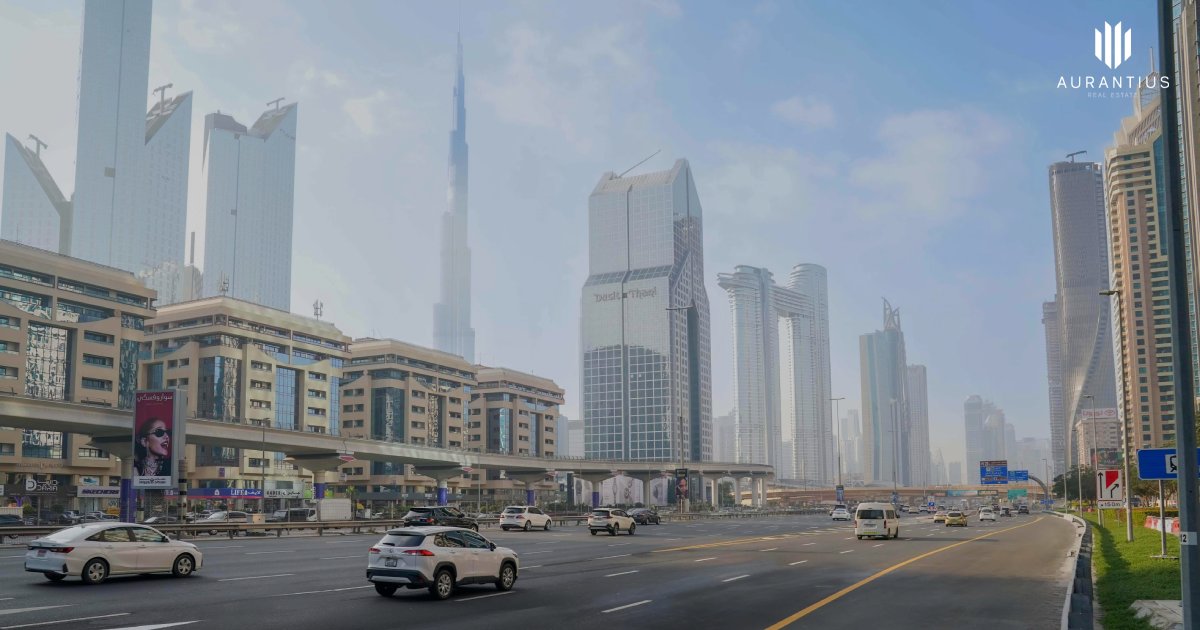

How Dubai Plans to Ease Traffic Congestion as Population and Property Growth Accelerate
Dubai is advancing one of its most comprehensive transport infrastructure programmes to date as the emirate responds to rising traffic volumes driven by population growth, expanding real estate districts, and increasing visitor numbers. Through a coordinated rollout of new metro corridors, station upgrades, and large-scale road and bridge projects, the Roads and Transport Authority is reshaping mobility to support long-term urban and economic expansion.
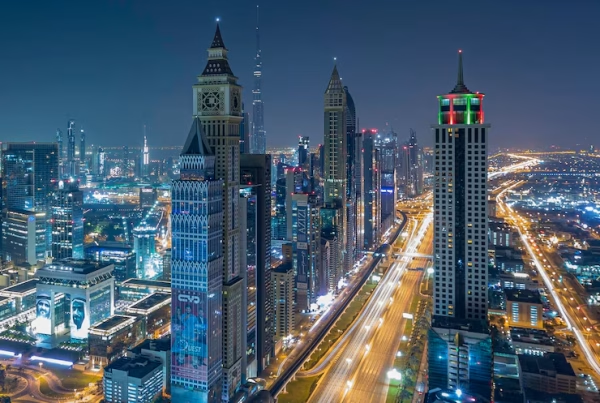
This transport strategy is closely aligned with Dubai’s real estate development trajectory, particularly in high-density residential and mixed-use areas such as Downtown Dubai, Business Bay, and Dubai Marina, where congestion has intensified alongside sustained transaction activity.
Dubai Metro Blue Line Set to Redefine Urban Connectivity
The upcoming Dubai Metro Blue Line represents the backbone of the city’s future public transport network. Scheduled to open in 2029, the line will connect 14 stations across key growth corridors, with a daily capacity exceeding 320,000 passengers.
The first route spans 21 kilometres from Creek Interchange Station through Dubai Festival City, Dubai Creek Harbour, Ras Al Khor, and International City before terminating at Academic City. This alignment directly supports residential expansion around emerging communities and waterfront districts.
The second route runs nine kilometres from Centrepoint Interchange Station in Al Rashidiya to International City 1, passing through Mirdif and Al Warqa. A new depot at Al Ruwayah 3 will anchor operations and long-term system scalability.
Gold Line Plans Signal Continued Metro Network Expansion
In parallel, planning for the Dubai Metro Gold Line underscores the city’s long-term commitment to rail-led mobility. The proposed route will run from Al Ghubaiba through Business Bay, Meydan, Global Village, and Dubailand, easing pressure on the Red Line while linking older districts to new residential zones.
This expansion mirrors the geographic shift in real estate development, as population growth increasingly spreads toward master-planned communities and mixed-use districts supported by developers such as Emaar, DAMAC, and Sobha Realty.
Burj Khalifa/Dubai Mall Metro Station Capacity Upgrade
To address immediate congestion, the RTA is expanding the Burj Khalifa/Dubai Mall Metro Station, one of the busiest transit hubs in the network. The station’s total area will increase from 6,700 to 8,500 square metres, raising hourly passenger capacity by 65% to more than 12,300 passengers.
The upgrade includes wider concourses, improved pedestrian bridges, additional escalators and lifts, and separated entry and exit flows. Daily handling capacity will reach up to 220,000 passengers, reinforcing Downtown Dubai’s role as a global tourism, business, and residential centre.
Dubai Harbour Bridge Project Nears Completion
Road infrastructure remains a critical component of Dubai’s congestion mitigation strategy. Construction is 65% complete on the 1.5-kilometre bridge linking Sheikh Zayed Road directly to Dubai Harbour, one of the Middle East’s most prominent waterfront destinations.
The bridge will carry two lanes in each direction, with a total capacity of 6,000 vehicles per hour. Once completed in the third quarter of 2026, travel time along the corridor is expected to fall from 12 minutes to just three minutes, significantly improving access to nearby residential towers and marina developments.
This connectivity boost is expected to support residential demand in surrounding areas, including Palm Jumeirah and Dubai Harbour’s expanding tower clusters.
Airport Access and Key Road Corridor Upgrades
Enhancing access to global gateways is another priority. The RTA has completed an expansion of the bridge leading to Dubai International Airport Terminal 1, increasing capacity by 33% and easing congestion for residents, tourists, and business travellers.
Further progress is underway on the Oud Maitha Road and Sheikh Rashid Corridor projects, which will serve more than 420,000 residents by 2030. These upgrades improve connectivity between Al Khail Road, Al Asayel Street, and central Dubai districts.
Major Capacity Expansion on Sheikh Zayed bin Hamdan Corridor
The development of the Sheikh Zayed bin Hamdan Al Nahyan Street corridor represents one of the most significant road upgrades in Dubai’s pipeline. Once completed in 2028, traffic capacity will rise by 176%, while travel times will be reduced from 20 minutes to approximately five minutes.
This corridor supports fast-growing residential areas and new developments across Dubailand and adjacent zones, reinforcing accessibility to large-scale master communities delivered by developers such as Nakheel, Meraas, and Select Group.
Mobility Infrastructure as a Driver of Real Estate Value
Dubai’s approach to easing traffic congestion reflects a broader strategy to align infrastructure investment with real estate growth. Improved connectivity enhances liveability, supports rental absorption, and reinforces long-term capital values across residential and mixed-use districts.
As Dubai advances into 2026, these transport initiatives are expected to play a decisive role in shaping buyer preferences, particularly for end-users prioritising commute efficiency and access to employment hubs.
At Aurantius Real Estate, we closely monitor infrastructure development alongside property market trends to help investors and homeowners identify locations where transport upgrades translate into long-term value, stronger demand, and sustained market resilience.